
Jadwiga Śliwka
@potato-science.bsky.social
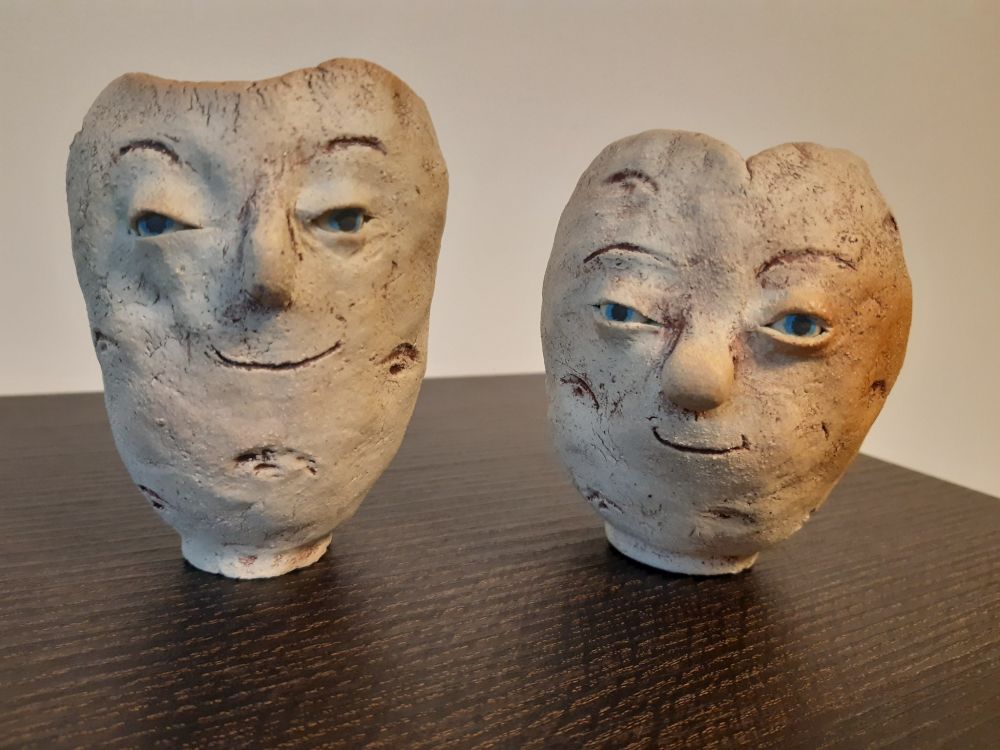
working on potatoes for so long, that potatoes are on my mind even at pottery classes...
Reposted by Jadwiga Śliwka

Warsaw to host 2026 joint EAPR meeting on agronomy, physiology and post-harvest potatoes
The European Association for Potato Research (EAPR) will host a joint Agronomy, Physiology and Post Harvest sections meeting in Warsaw, Poland, from 16–19 June 2026. The event will focus on field agronomy,…
The European Association for Potato Research (EAPR) will host a joint Agronomy, Physiology and Post Harvest sections meeting in Warsaw, Poland, from 16–19 June 2026. The event will focus on field agronomy,…

Warsaw to host 2026 joint EAPR meeting on agronomy, physiology and post-harvest potatoes
The European Association for Potato Research (EAPR) will host a joint Agronomy, Physiology and Post Harvest sections meeting in Warsaw, Poland, from 16–19 June 2026. The event will focus on field agronomy, plant physiology, storage and processing under changing climate and market conditions. Registration and abstract submission open in December 2025, with deadlines on 31 March 2026, and limited financial support planned for attending PhD students and early-career research community.
www.potatonewstoday.com
November 19, 2025 at 8:49 PM
Warsaw to host 2026 joint EAPR meeting on agronomy, physiology and post-harvest potatoes
The European Association for Potato Research (EAPR) will host a joint Agronomy, Physiology and Post Harvest sections meeting in Warsaw, Poland, from 16–19 June 2026. The event will focus on field agronomy,…
The European Association for Potato Research (EAPR) will host a joint Agronomy, Physiology and Post Harvest sections meeting in Warsaw, Poland, from 16–19 June 2026. The event will focus on field agronomy,…

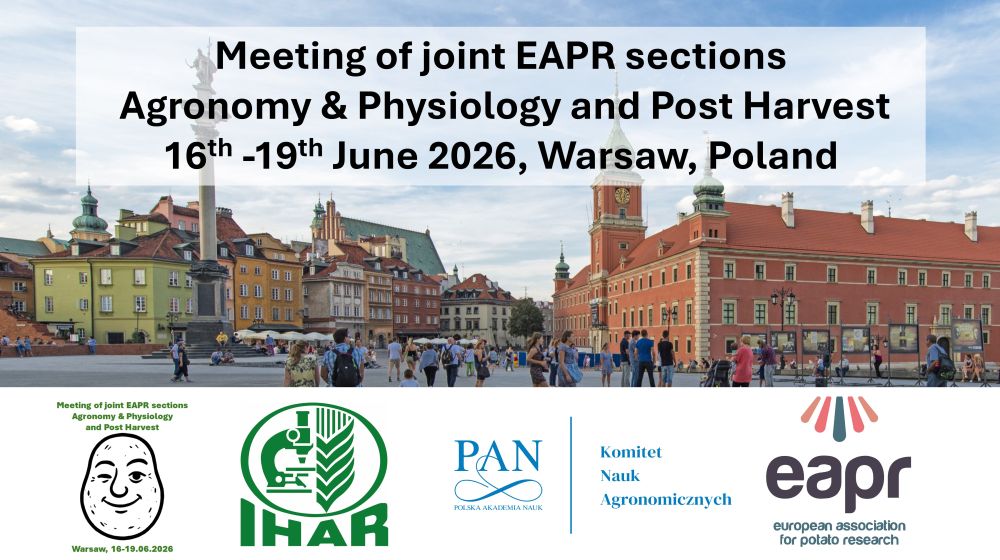
Meeting of the joint #EAPR (European Association for #Potato Research) sections Agronomy & Physiology and Post Harvest 2026
16th-19th June 2026, Warsaw, Poland
Website: ihar.edu.pl/en/news/conf...
Registration and abstract submission: December 2025.
Looking forward to meeting you in Warsaw!
🥔🥔🥔
16th-19th June 2026, Warsaw, Poland
Website: ihar.edu.pl/en/news/conf...
Registration and abstract submission: December 2025.
Looking forward to meeting you in Warsaw!
🥔🥔🥔
November 17, 2025 at 8:27 AM
Meeting of the joint #EAPR (European Association for #Potato Research) sections Agronomy & Physiology and Post Harvest 2026
16th-19th June 2026, Warsaw, Poland
Website: ihar.edu.pl/en/news/conf...
Registration and abstract submission: December 2025.
Looking forward to meeting you in Warsaw!
🥔🥔🥔
16th-19th June 2026, Warsaw, Poland
Website: ihar.edu.pl/en/news/conf...
Registration and abstract submission: December 2025.
Looking forward to meeting you in Warsaw!
🥔🥔🥔
Reposted by Jadwiga Śliwka

🚨𝐅𝐢𝐧𝐚𝐥 𝐑𝐞𝐦𝐢𝐧𝐝𝐞𝐫!🚨
𝟏𝟓 𝐍𝐨𝐯𝐞𝐦𝐛𝐞𝐫 is the last day to apply for the 𝐁𝐈𝐎𝐄𝐀𝐒𝐓 𝐎𝐩𝐞𝐧 𝐈𝐧𝐧𝐨𝐯𝐚𝐭𝐢𝐨𝐧 𝐂𝐡𝐚𝐥𝐥𝐞𝐧𝐠𝐞! 🌿💡
You have until 23:59 CET to send your innovative solutions that support the bioeconomy development across Central and Eastern Europe, 𝐚𝐥𝐥 𝐫𝐞𝐚𝐝𝐢𝐧𝐞𝐬𝐬 𝐥𝐞𝐯𝐞𝐥𝐬 𝐚𝐫𝐞 𝐰𝐞𝐥𝐜𝐨𝐦𝐞! 🌱✨
👉 bioeast.eu/open-innovat...
𝟏𝟓 𝐍𝐨𝐯𝐞𝐦𝐛𝐞𝐫 is the last day to apply for the 𝐁𝐈𝐎𝐄𝐀𝐒𝐓 𝐎𝐩𝐞𝐧 𝐈𝐧𝐧𝐨𝐯𝐚𝐭𝐢𝐨𝐧 𝐂𝐡𝐚𝐥𝐥𝐞𝐧𝐠𝐞! 🌿💡
You have until 23:59 CET to send your innovative solutions that support the bioeconomy development across Central and Eastern Europe, 𝐚𝐥𝐥 𝐫𝐞𝐚𝐝𝐢𝐧𝐞𝐬𝐬 𝐥𝐞𝐯𝐞𝐥𝐬 𝐚𝐫𝐞 𝐰𝐞𝐥𝐜𝐨𝐦𝐞! 🌱✨
👉 bioeast.eu/open-innovat...

November 14, 2025 at 9:23 AM
🚨𝐅𝐢𝐧𝐚𝐥 𝐑𝐞𝐦𝐢𝐧𝐝𝐞𝐫!🚨
𝟏𝟓 𝐍𝐨𝐯𝐞𝐦𝐛𝐞𝐫 is the last day to apply for the 𝐁𝐈𝐎𝐄𝐀𝐒𝐓 𝐎𝐩𝐞𝐧 𝐈𝐧𝐧𝐨𝐯𝐚𝐭𝐢𝐨𝐧 𝐂𝐡𝐚𝐥𝐥𝐞𝐧𝐠𝐞! 🌿💡
You have until 23:59 CET to send your innovative solutions that support the bioeconomy development across Central and Eastern Europe, 𝐚𝐥𝐥 𝐫𝐞𝐚𝐝𝐢𝐧𝐞𝐬𝐬 𝐥𝐞𝐯𝐞𝐥𝐬 𝐚𝐫𝐞 𝐰𝐞𝐥𝐜𝐨𝐦𝐞! 🌱✨
👉 bioeast.eu/open-innovat...
𝟏𝟓 𝐍𝐨𝐯𝐞𝐦𝐛𝐞𝐫 is the last day to apply for the 𝐁𝐈𝐎𝐄𝐀𝐒𝐓 𝐎𝐩𝐞𝐧 𝐈𝐧𝐧𝐨𝐯𝐚𝐭𝐢𝐨𝐧 𝐂𝐡𝐚𝐥𝐥𝐞𝐧𝐠𝐞! 🌿💡
You have until 23:59 CET to send your innovative solutions that support the bioeconomy development across Central and Eastern Europe, 𝐚𝐥𝐥 𝐫𝐞𝐚𝐝𝐢𝐧𝐞𝐬𝐬 𝐥𝐞𝐯𝐞𝐥𝐬 𝐚𝐫𝐞 𝐰𝐞𝐥𝐜𝐨𝐦𝐞! 🌱✨
👉 bioeast.eu/open-innovat...
Cytoplasmic and Nuclear Effects on Agronomic Traits in Diploid Interspecific Potato Hybrids
🥔🥔🥔
www.mdpi.com/1422-0067/26...
🥔🥔🥔
www.mdpi.com/1422-0067/26...

November 12, 2025 at 10:46 AM
Cytoplasmic and Nuclear Effects on Agronomic Traits in Diploid Interspecific Potato Hybrids
🥔🥔🥔
www.mdpi.com/1422-0067/26...
🥔🥔🥔
www.mdpi.com/1422-0067/26...
Reposted by Jadwiga Śliwka
🧩 𝐃𝐨 𝐧𝐨𝐭 𝐦𝐢𝐬𝐬 𝐨𝐮𝐭 𝐨𝐧 𝐥𝐞𝐚𝐫𝐧𝐢𝐧𝐠 𝐦𝐨𝐫𝐞 𝐚𝐛𝐨𝐮𝐭 𝐭𝐡𝐞 𝐁𝐈𝐎𝐄𝐀𝐒𝐓 𝐎𝐈𝐂!
Do you want to join the BIOEAST OIC, but want more information?
Join our 𝐈𝐧𝐟𝐨𝐫𝐦𝐚𝐭𝐢𝐯𝐞 𝐖𝐞𝐛𝐢𝐧𝐚𝐫 to learn about the 8 Themes, the application process, and the prizes!
🗓️ 31.10.2025
⌚ 10 CET
🖥️ OZoom
𝐫𝐞𝐠𝐢𝐬𝐭𝐞𝐫 𝐧𝐨𝐰 👉 forms.office.com/e/AFJEQWVZ5K
Do you want to join the BIOEAST OIC, but want more information?
Join our 𝐈𝐧𝐟𝐨𝐫𝐦𝐚𝐭𝐢𝐯𝐞 𝐖𝐞𝐛𝐢𝐧𝐚𝐫 to learn about the 8 Themes, the application process, and the prizes!
🗓️ 31.10.2025
⌚ 10 CET
🖥️ OZoom
𝐫𝐞𝐠𝐢𝐬𝐭𝐞𝐫 𝐧𝐨𝐰 👉 forms.office.com/e/AFJEQWVZ5K

October 21, 2025 at 10:06 AM
🧩 𝐃𝐨 𝐧𝐨𝐭 𝐦𝐢𝐬𝐬 𝐨𝐮𝐭 𝐨𝐧 𝐥𝐞𝐚𝐫𝐧𝐢𝐧𝐠 𝐦𝐨𝐫𝐞 𝐚𝐛𝐨𝐮𝐭 𝐭𝐡𝐞 𝐁𝐈𝐎𝐄𝐀𝐒𝐓 𝐎𝐈𝐂!
Do you want to join the BIOEAST OIC, but want more information?
Join our 𝐈𝐧𝐟𝐨𝐫𝐦𝐚𝐭𝐢𝐯𝐞 𝐖𝐞𝐛𝐢𝐧𝐚𝐫 to learn about the 8 Themes, the application process, and the prizes!
🗓️ 31.10.2025
⌚ 10 CET
🖥️ OZoom
𝐫𝐞𝐠𝐢𝐬𝐭𝐞𝐫 𝐧𝐨𝐰 👉 forms.office.com/e/AFJEQWVZ5K
Do you want to join the BIOEAST OIC, but want more information?
Join our 𝐈𝐧𝐟𝐨𝐫𝐦𝐚𝐭𝐢𝐯𝐞 𝐖𝐞𝐛𝐢𝐧𝐚𝐫 to learn about the 8 Themes, the application process, and the prizes!
🗓️ 31.10.2025
⌚ 10 CET
🖥️ OZoom
𝐫𝐞𝐠𝐢𝐬𝐭𝐞𝐫 𝐧𝐨𝐰 👉 forms.office.com/e/AFJEQWVZ5K
The most significant QTL for Globodera pallida resistance derived from wild potato species Solanum gourlayi mapped on chromosomes XII (Pa2) and VI (Pa3).
🥔🥔🥔
link.springer.com/article/10.1...
🥔🥔🥔
link.springer.com/article/10.1...

Quantitative trait loci for Globodera pallida resistance derived from wild potato species Solanum gourlayi - Journal of Applied Genetics
Globodera pallida is a major pest that is responsible for huge losses in potato yields worldwide. Expanding the gene pool of cultivated potatoes with clones resistant to this pest is made possible by ...
link.springer.com
October 27, 2025 at 9:12 AM
The most significant QTL for Globodera pallida resistance derived from wild potato species Solanum gourlayi mapped on chromosomes XII (Pa2) and VI (Pa3).
🥔🥔🥔
link.springer.com/article/10.1...
🥔🥔🥔
link.springer.com/article/10.1...
Fusarium spp. in potato
link.springer.com/article/10.1...
link.springer.com/article/10.1...

Identification and pathogenicity of Fusarium spp. associated with tuber dry rot and wilt of potato in Algeria - European Journal of Plant Pathology
Fusarium is one of the most important genera of phytopathogenic fungi, causing potato wilt in the field and potato tuber dry rot during storage. The objectives of this study were to identify Fusarium species associated with both potato diseases in different growing regions in Algeria, and to assess their pathogenicity. Among the 152 isolates collected from symptomatic potato plants and tubers in different provinces in Algeria, 13 species of Fusarium and Neocosmospora were identified. Among these three species were isolated only from plants showing symptoms of Fusarium potato wilt (F. oxysporum, F. venenatum, Neocosmospora solani). Two species (F. culmorum, N. tonkinensis) and an isolate of Neocosmospora sp. were found exclusively in tubers with potato dry rot and the remaining ones (F. redolens, F. cf. tricinctum, F. sambucinum, F. cf. incarnatum-equiseti, F. nygamai, F. brachygibbosum and N. falciformis) were associated with both sample types. Fusarium sambucinum was the most frequent species (52.6% of isolates). Fusarium oxysporum and F. nygamai isolates were the most aggressive in the potato wilt pathogenicity test, and F. sambucinum isolates were the most aggressive in the potato tuber pathogenicity test. This is the first study identifying and characterizing potato dry rot and potato wilt pathogens in Algeria.
link.springer.com
October 10, 2025 at 7:18 AM
Fusarium spp. in potato
link.springer.com/article/10.1...
link.springer.com/article/10.1...
237 Phytophthora infestans isolates were collected from a single field in Poland during 15 growing seasons (2000–2014) and assessed for mating type, mitochondrial haplotype, resistance to metalaxyl, virulence, and polymorphism of 14 SSR markers.
link.springer.com/article/10.1...
link.springer.com/article/10.1...

Population Structure of Phytophthora infestans from a Single Location in Poland Over a Long Period of Time in Context of Weather Conditions - Microbial Ecology
Phytophthora infestans (Mont.) de Bary is a destructive potato pathogen. Changing weather conditions are among the factors that influence the pathogen population structure. In this study, 237 P. infestans isolates were collected from a single unprotected experimental field in an area with high late-blight pressure located in Boguchwała in the southeastern part of Poland during 15 growing seasons (2000–2014). The isolates were assessed for mating type, mitochondrial haplotype, resistance to metalaxyl, virulence, and polymorphism of 14 single-sequence repeat markers (SSRs). The results revealed 89 unique genotypes among the 237 P. infestans isolates. Eighty-seven isolates belonged to genotype 34_A1, which was detected in all the years of research except 2012. Isolates of P. infestans from individual years were very similar to each other, as shown by Nei’s genetic identity based on 14 SSR markers. The obtained results on isolate characteristics were analyzed in terms of meteorological data (air temperature and precipitation) and indicated that frost, long winters, and hot, dry summers did not directly affect the P. infestans population structure. We described the variability in metalaxyl resistance and virulence among isolates of the P. infestans genotype 34_A1.
link.springer.com
October 9, 2025 at 10:27 AM
237 Phytophthora infestans isolates were collected from a single field in Poland during 15 growing seasons (2000–2014) and assessed for mating type, mitochondrial haplotype, resistance to metalaxyl, virulence, and polymorphism of 14 SSR markers.
link.springer.com/article/10.1...
link.springer.com/article/10.1...
Reposted by Jadwiga Śliwka

⏰ DEADLINE EXTENDED for the EPPO Jens-Georg Unger Fellowship - we have extended the deadline for the Fellowship by one month - apply now!
👉 Plant health professionals from EPPO member countries can apply here shorturl.at/jHRKd
⌚ New deadline OCTOBER 15th!
👉 Plant health professionals from EPPO member countries can apply here shorturl.at/jHRKd
⌚ New deadline OCTOBER 15th!

September 12, 2025 at 7:47 AM
⏰ DEADLINE EXTENDED for the EPPO Jens-Georg Unger Fellowship - we have extended the deadline for the Fellowship by one month - apply now!
👉 Plant health professionals from EPPO member countries can apply here shorturl.at/jHRKd
⌚ New deadline OCTOBER 15th!
👉 Plant health professionals from EPPO member countries can apply here shorturl.at/jHRKd
⌚ New deadline OCTOBER 15th!

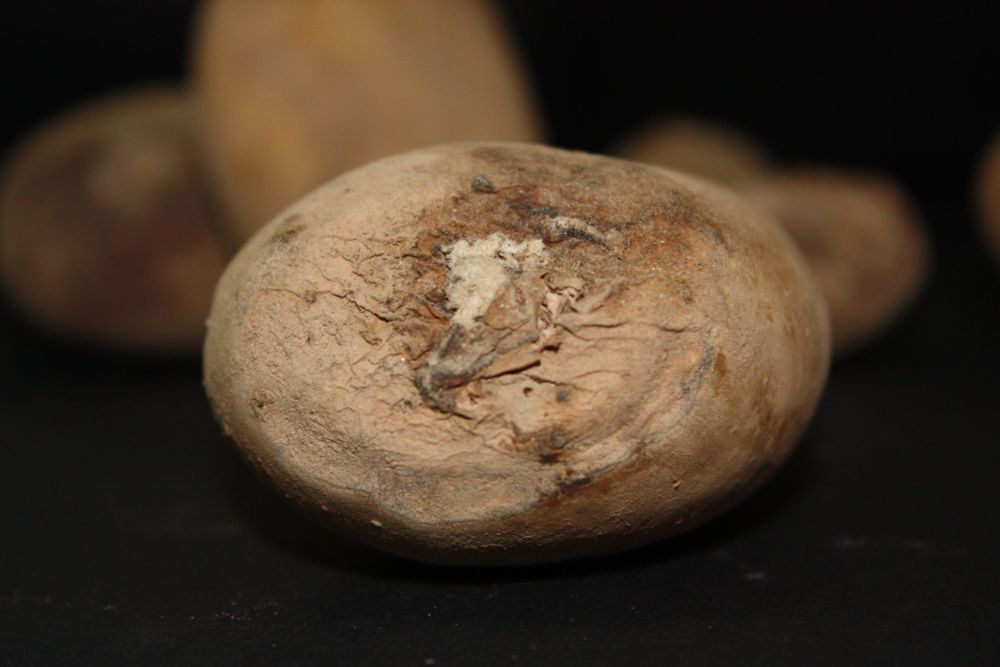
The most important and reproducible QTL for resistance to potato tuber dry rot caused by Fusarium sambucinum mapped on chromosome I and year- and population-specific QTL mapped on chromosomes II, VII, IX, XI, and XII.
www.mdpi.com/2073-4395/12...
www.mdpi.com/2073-4395/12...
October 7, 2025 at 6:59 AM
The most important and reproducible QTL for resistance to potato tuber dry rot caused by Fusarium sambucinum mapped on chromosome I and year- and population-specific QTL mapped on chromosomes II, VII, IX, XI, and XII.
www.mdpi.com/2073-4395/12...
www.mdpi.com/2073-4395/12...

Effect of Cytoplasm Types T and D on Quantitative Trait Loci for Chip Color and Proline Content in Potato Tubers in a Diploid Potato Population
www.mdpi.com/2073-4395/14...
www.mdpi.com/2073-4395/14...

October 3, 2025 at 12:48 PM
Effect of Cytoplasm Types T and D on Quantitative Trait Loci for Chip Color and Proline Content in Potato Tubers in a Diploid Potato Population
www.mdpi.com/2073-4395/14...
www.mdpi.com/2073-4395/14...

Using a diploid potato diversity panel of 246 breeding lines, a genotyping-by-sequencing and a GWAS approach, we mapped QTL for ten traits important to potato breeders, including two previously unmapped traits: boiled tuber taste and pollen fertility.
link.springer.com/article/10.1...
link.springer.com/article/10.1...

Historical data provide new insights into inheritance of traits important for diploid potato breeding - Planta
Key message Using a diploid potato diversity panel of 246 breeding lines, a genotyping-by-sequencing and a GWAS approach, we mapped QTL for ten traits important to potato breeders, including two previously unmapped traits: boiled tuber taste and pollen fertility. Abstract Potato breeding at the diploid level has a long history and has gained new impetus recently, when F1 hybrid breeding was made possible with the discovery of a dominant gene for self-compatibility. Our study deploys a unique diploid diversity panel with a broadened cultivated potato gene pool obtained as a result of introgressing valuable traits from wild potato relatives into the Solanum tuberosum background. Using historical phenotyping data collected between 1979 and 2017 for 246 diploid potato clones and high-density genotyping-by-sequencing, we mapped quantitative trait loci (QTL) for tuber yield, mean tuber weight, tuber shape and regularity, tuber eye depth, purple tuber skin colour, flesh colour, tuber starch content, boiled tuber taste (flavour) and pollen fertility. We found some QTL located in genomic regions described in earlier studies, e.g. the QTL for the tuber flesh colour on chromosome 3 overlapping with the location of beta-carotene hydroxylase gene. We identified novel QTL for mean tuber weight on chromosomes 8, 9 and 11 and for purple tuber skin colour on chromosomes 6, 7 and 8. QTL for boiled tuber taste and pollen fertility estimated by Lactofuchsin staining have not been mapped before. We found two regions on chromosome 10 affecting the boiled tuber taste, and QTL on chromosomes 2, 4, 5, 6, 9, and 12 for pollen fertility. Considering the increased interest in diploid hybrid potato breeding, the results presented here hold greater relevance and provide novel targets for potato breeding and research at the diploid level.
link.springer.com
October 1, 2025 at 9:15 AM
Using a diploid potato diversity panel of 246 breeding lines, a genotyping-by-sequencing and a GWAS approach, we mapped QTL for ten traits important to potato breeders, including two previously unmapped traits: boiled tuber taste and pollen fertility.
link.springer.com/article/10.1...
link.springer.com/article/10.1...
New host for PVY and new variants of the Rysto gene
bmcplantbiol.biomedcentral.com/articles/10....
bmcplantbiol.biomedcentral.com/articles/10....

Diversity of the Rysto gene conferring resistance to potato virus Y in wild relatives of potato - BMC Plant Biology
Background Potato virus Y (PVY) is among the economically most damaging viral pathogen in production of potato (Solanum tuberosum) worldwide. The gene Rysto derived from the wild potato relative Solan...
bmcplantbiol.biomedcentral.com
September 22, 2025 at 2:13 PM
New host for PVY and new variants of the Rysto gene
bmcplantbiol.biomedcentral.com/articles/10....
bmcplantbiol.biomedcentral.com/articles/10....