


@patentedhistory.bsky.social
Discovering History through Invention™
This page from @Purdue University has some wonderful pictures of old sets of Kennedy blocks, and even includes a photo of Kennedy himself, with his blocks!
https://buff.ly/4j7a3QC
#purdue
https://buff.ly/4j7a3QC
#purdue
www.cs.purdue.edu
January 10, 2025 at 12:14 AM
This page from @Purdue University has some wonderful pictures of old sets of Kennedy blocks, and even includes a photo of Kennedy himself, with his blocks!
https://buff.ly/4j7a3QC
#purdue
https://buff.ly/4j7a3QC
#purdue
Kennedy’s blocks weren’t just toys—they were tools for teaching. His invention reflects a broader movement in the late 19th century to make education more interactive. Think of them as the precursor to modern STEM toys like LEGO or robotics kits!
January 10, 2025 at 12:14 AM
Kennedy’s blocks weren’t just toys—they were tools for teaching. His invention reflects a broader movement in the late 19th century to make education more interactive. Think of them as the precursor to modern STEM toys like LEGO or robotics kits!
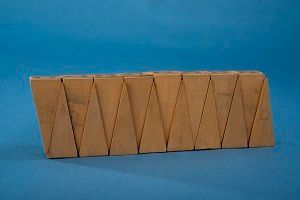
Kennedy appeared to find success with his blocks - The National Museum of American History at the Smithsonian maintains “Dissected Circle Transformable Parallelogram" in its collection.
https://www.si.edu/object/dissected-circle-transformable-parallelogram:nmah_1292520
https://www.si.edu/object/dissected-circle-transformable-parallelogram:nmah_1292520

January 10, 2025 at 12:14 AM
Kennedy appeared to find success with his blocks - The National Museum of American History at the Smithsonian maintains “Dissected Circle Transformable Parallelogram" in its collection.
https://www.si.edu/object/dissected-circle-transformable-parallelogram:nmah_1292520
https://www.si.edu/object/dissected-circle-transformable-parallelogram:nmah_1292520
This was groundbreaking in the late 1800s. Forget boring chalkboards—his blocks made math interactive and exciting! 🧩📊
January 10, 2025 at 12:14 AM
This was groundbreaking in the late 1800s. Forget boring chalkboards—his blocks made math interactive and exciting! 🧩📊
Kennedy's blocks paved the way for hands-on learning about mathematics and geometry. Basically, his blocks fostered spatial reasoning and geometry skills in children through play. They turned geometry into hands-on fun. ✋✨
January 10, 2025 at 12:14 AM
Kennedy's blocks paved the way for hands-on learning about mathematics and geometry. Basically, his blocks fostered spatial reasoning and geometry skills in children through play. They turned geometry into hands-on fun. ✋✨
Kennedy's blocks weren’t your average building blocks—they were hinged, and could be rearranged to form circles, parallelograms, and other shapes.
January 10, 2025 at 12:14 AM
Kennedy's blocks weren’t your average building blocks—they were hinged, and could be rearranged to form circles, parallelograms, and other shapes.
I can't uncover any evidence of success for Mr. Pemberton's cryolite soaps, and it seems that commercial extraction of the mineral ceased in the '80s or '90s.
So, perhaps cryolite is not the answer. The search continues!
🔎 🤔
So, perhaps cryolite is not the answer. The search continues!
🔎 🤔
January 8, 2025 at 7:54 PM
I can't uncover any evidence of success for Mr. Pemberton's cryolite soaps, and it seems that commercial extraction of the mineral ceased in the '80s or '90s.
So, perhaps cryolite is not the answer. The search continues!
🔎 🤔
So, perhaps cryolite is not the answer. The search continues!
🔎 🤔
The '250 patent describes the use of cryolite in the making of soap, and describes it as "found only in Greenland."
https://buff.ly/3PvwYHP
https://buff.ly/3PvwYHP
January 8, 2025 at 7:54 PM
The '250 patent describes the use of cryolite in the making of soap, and describes it as "found only in Greenland."
https://buff.ly/3PvwYHP
https://buff.ly/3PvwYHP
The '865 patent describes an Improved Sapnoifier
Mr. Pemberton "prefer[red] to use the mixture of aluminate and hydrate of soda obtained by the decomposition of the mineral known as cryolite...a whitish mineral found in Greenland."
https://patents.google.com/patent/US53865A/
Mr. Pemberton "prefer[red] to use the mixture of aluminate and hydrate of soda obtained by the decomposition of the mineral known as cryolite...a whitish mineral found in Greenland."
https://patents.google.com/patent/US53865A/
January 8, 2025 at 7:54 PM
The '865 patent describes an Improved Sapnoifier
Mr. Pemberton "prefer[red] to use the mixture of aluminate and hydrate of soda obtained by the decomposition of the mineral known as cryolite...a whitish mineral found in Greenland."
https://patents.google.com/patent/US53865A/
Mr. Pemberton "prefer[red] to use the mixture of aluminate and hydrate of soda obtained by the decomposition of the mineral known as cryolite...a whitish mineral found in Greenland."
https://patents.google.com/patent/US53865A/
Wikipedia describes Cryolite as:
"an uncommon mineral identified with the once-large deposit at Ivittuut on the west coast of Greenland, mined commercially until 1987."
https://en.wikipedia.org/wiki/Cryolite
"an uncommon mineral identified with the once-large deposit at Ivittuut on the west coast of Greenland, mined commercially until 1987."
https://en.wikipedia.org/wiki/Cryolite

January 8, 2025 at 7:54 PM
Wikipedia describes Cryolite as:
"an uncommon mineral identified with the once-large deposit at Ivittuut on the west coast of Greenland, mined commercially until 1987."
https://en.wikipedia.org/wiki/Cryolite
"an uncommon mineral identified with the once-large deposit at Ivittuut on the west coast of Greenland, mined commercially until 1987."
https://en.wikipedia.org/wiki/Cryolite
📍 Both patents reference "cryolite" and describe it as "found in Greenland."
🗺️
🗺️
January 8, 2025 at 7:54 PM
📍 Both patents reference "cryolite" and describe it as "found in Greenland."
🗺️
🗺️
And one last thing - while the Knaffl Madonna is in the public domain and you're free to use it as you wish, you can also buy prints and cards directly from the son of Josephine (the baby in the picture), who is Dr. Knaffl's great-grandson, here: https://buff.ly/429Ecsi
January 7, 2025 at 11:45 PM
And one last thing - while the Knaffl Madonna is in the public domain and you're free to use it as you wish, you can also buy prints and cards directly from the son of Josephine (the baby in the picture), who is Dr. Knaffl's great-grandson, here: https://buff.ly/429Ecsi
And, if you're ever in downtown Knoxville, be sure to visit the historical marker that honors Joseph Knaffl himself and the Knaffl Madonna.
https://buff.ly/40xa49r
https://buff.ly/40xa49r
January 7, 2025 at 11:45 PM
And, if you're ever in downtown Knoxville, be sure to visit the historical marker that honors Joseph Knaffl himself and the Knaffl Madonna.
https://buff.ly/40xa49r
https://buff.ly/40xa49r
If you want to know more about the Knaffl family, and the story behind the Knaffl Madonna, the following resources may be of interest:
https://buff.ly/3DLd7ll
https://buff.ly/402ZfKK
https://buff.ly/3DLd7ll
https://buff.ly/402ZfKK
January 7, 2025 at 11:45 PM
If you want to know more about the Knaffl family, and the story behind the Knaffl Madonna, the following resources may be of interest:
https://buff.ly/3DLd7ll
https://buff.ly/402ZfKK
https://buff.ly/3DLd7ll
https://buff.ly/402ZfKK
The photo has even been used, apparently without credit to (or interest in) Joseph or Josephine, on Hallmark Christmas cards. Hallmark is free to use the photo, of course, as it's in the public domain now. A little interest in the history behind it might be appreciated, though.
January 7, 2025 at 11:45 PM
The photo has even been used, apparently without credit to (or interest in) Joseph or Josephine, on Hallmark Christmas cards. Hallmark is free to use the photo, of course, as it's in the public domain now. A little interest in the history behind it might be appreciated, though.
Joseph worked as a portrait photographner in Knoxville and is best known for his 1899 photograph of a female model, Emma Franz, holding Knaffl's daughter (Rudolph's granddaughter). The photo is commonly known as "Knoffl's Madonna" was a commercial and prize-winning success.

January 7, 2025 at 11:45 PM
Joseph worked as a portrait photographner in Knoxville and is best known for his 1899 photograph of a female model, Emma Franz, holding Knaffl's daughter (Rudolph's granddaughter). The photo is commonly known as "Knoffl's Madonna" was a commercial and prize-winning success.
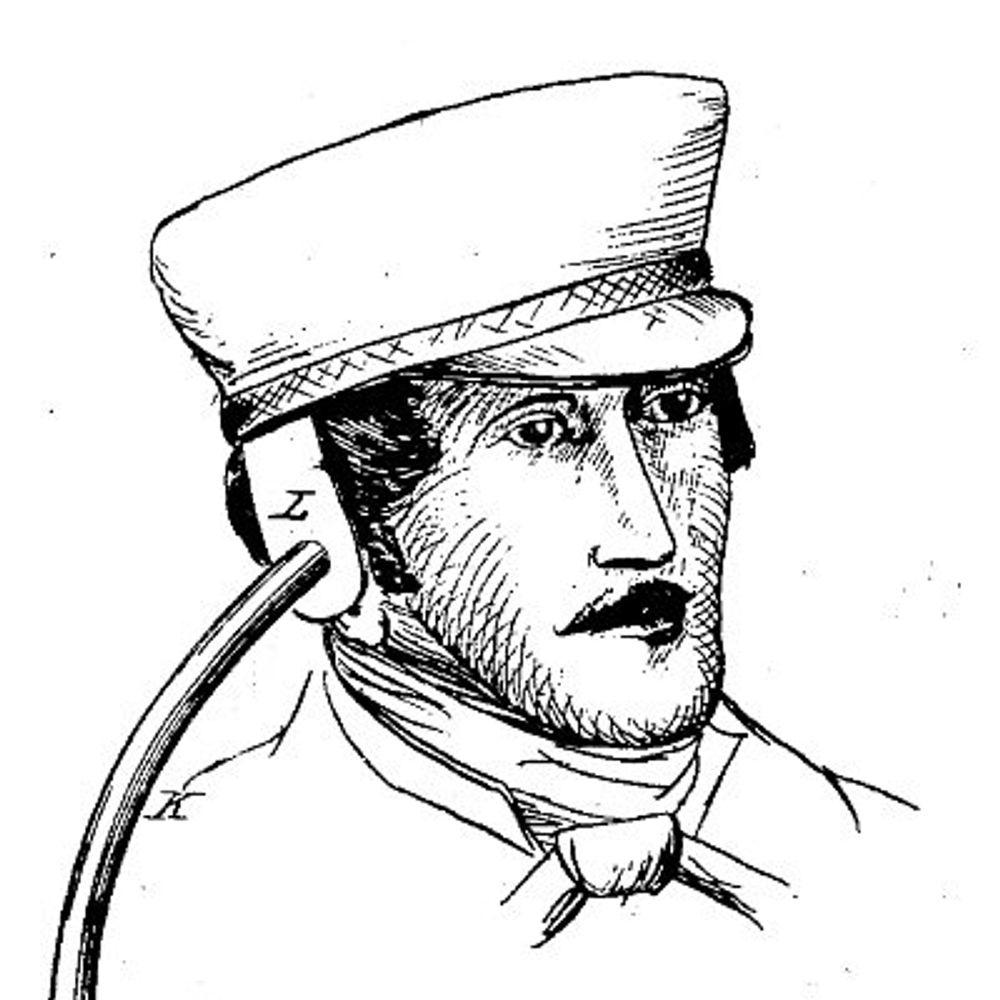
Joseph Knaffl was born in 1861, at the beginning of the Civil War, and would have been about 12 when Dr. Knaffl filed his patent application for what appears to be a foot-activated guitar capo.
January 7, 2025 at 11:45 PM
Joseph Knaffl was born in 1861, at the beginning of the Civil War, and would have been about 12 when Dr. Knaffl filed his patent application for what appears to be a foot-activated guitar capo.
Here's some additional resources for anyone interested in learning more:
https://buff.ly/3BJFqQA
https://buff.ly/4h2fLBA
https://buff.ly/3BY2hb2
https://buff.ly/426asg3
https://buff.ly/3BJFqQA
https://buff.ly/4h2fLBA
https://buff.ly/3BY2hb2
https://buff.ly/426asg3
January 6, 2025 at 7:54 PM
Here's some additional resources for anyone interested in learning more:
https://buff.ly/3BJFqQA
https://buff.ly/4h2fLBA
https://buff.ly/3BY2hb2
https://buff.ly/426asg3
https://buff.ly/3BJFqQA
https://buff.ly/4h2fLBA
https://buff.ly/3BY2hb2
https://buff.ly/426asg3
Roche's early work contributed to bringing aviation to the people, not as passengers, but as pilots! His legacy lives on in every student that takes a discovery flight.
Next time you see a small plane flying overhead, think of Jean Roche and the flying bathtub!
Next time you see a small plane flying overhead, think of Jean Roche and the flying bathtub!
January 6, 2025 at 7:54 PM
Roche's early work contributed to bringing aviation to the people, not as passengers, but as pilots! His legacy lives on in every student that takes a discovery flight.
Next time you see a small plane flying overhead, think of Jean Roche and the flying bathtub!
Next time you see a small plane flying overhead, think of Jean Roche and the flying bathtub!
The Aeronca design, a modification of Roche's original design, paved the way for the light aircraft industry, influencing planes like the Piper Cub.
January 6, 2025 at 7:54 PM
The Aeronca design, a modification of Roche's original design, paved the way for the light aircraft industry, influencing planes like the Piper Cub.
The C-2 cost about a year's salary and could be flown for as little as a penny a mile. It was the first truly successful "personal" airplane. Over 160 sold in just two and a half years.
And it had a lasting impact - Aeronca essentially created the market for personal planes.
And it had a lasting impact - Aeronca essentially created the market for personal planes.
January 6, 2025 at 7:54 PM
The C-2 cost about a year's salary and could be flown for as little as a penny a mile. It was the first truly successful "personal" airplane. Over 160 sold in just two and a half years.
And it had a lasting impact - Aeronca essentially created the market for personal planes.
And it had a lasting impact - Aeronca essentially created the market for personal planes.