




Nicolas Villain
@nvillain-alz.bsky.social
Neurologue Chercheur | Neurologist Researcher | #Alzheimer #Dementia #Neurodegeneration | @fac-sante-sorbonne.bsky.social | @sorbonne-universite.fr | @pitiesalpetriere.bsky.social | @ap-hp.bsky.social | @institutducerveau.bsky.social
It could also be argued that this subgroup hasn't proved efficacy. Therefore, the R/B ratio remains to be proven considering the significant safety signal

April 15, 2025 at 6:38 PM
It could also be argued that this subgroup hasn't proved efficacy. Therefore, the R/B ratio remains to be proven considering the significant safety signal
Paris 🇫🇷🗼 @institutducerveau.bsky.social Biomarker Group dinner with special guest!
Thanks Przemek (aka Przemysław Radosław Kac) for visiting us and continuing the biomarker innovation!
Thanks Przemek (aka Przemysław Radosław Kac) for visiting us and continuing the biomarker innovation!

February 13, 2025 at 6:05 AM
Paris 🇫🇷🗼 @institutducerveau.bsky.social Biomarker Group dinner with special guest!
Thanks Przemek (aka Przemysław Radosław Kac) for visiting us and continuing the biomarker innovation!
Thanks Przemek (aka Przemysław Radosław Kac) for visiting us and continuing the biomarker innovation!
Disease definitions are primarily a matter of semantics.
Do semantics really matter? I have an entire slide deck on the topic :)
www.dropbox.com/scl/fi/7i4n4...
Do semantics really matter? I have an entire slide deck on the topic :)
www.dropbox.com/scl/fi/7i4n4...

November 17, 2024 at 8:56 PM
Disease definitions are primarily a matter of semantics.
Do semantics really matter? I have an entire slide deck on the topic :)
www.dropbox.com/scl/fi/7i4n4...
Do semantics really matter? I have an entire slide deck on the topic :)
www.dropbox.com/scl/fi/7i4n4...
I would tend to agree with you. However when I read recent KOLs positions on drug approval, I see a significant risk that we the use purposedly the “A word” to justify approval in asymptomatic individuals w/o mentioning the need to taylor R/B
alz-journals.onlinelibrary.wiley.com/doi/10.1002/...
alz-journals.onlinelibrary.wiley.com/doi/10.1002/...

November 17, 2024 at 2:00 PM
I would tend to agree with you. However when I read recent KOLs positions on drug approval, I see a significant risk that we the use purposedly the “A word” to justify approval in asymptomatic individuals w/o mentioning the need to taylor R/B
alz-journals.onlinelibrary.wiley.com/doi/10.1002/...
alz-journals.onlinelibrary.wiley.com/doi/10.1002/...
1- Nick, this is the last paragraph of the paper: definitely!!
2- Distinguishing between 2 conditions, like in precancerous conditions vs cancer, demonstrates that you can have research in these populations. Furthermore you can tailor Dx, and Rx approaches. Rx can be the same but R/B is different
2- Distinguishing between 2 conditions, like in precancerous conditions vs cancer, demonstrates that you can have research in these populations. Furthermore you can tailor Dx, and Rx approaches. Rx can be the same but R/B is different

November 17, 2024 at 1:16 PM
1- Nick, this is the last paragraph of the paper: definitely!!
2- Distinguishing between 2 conditions, like in precancerous conditions vs cancer, demonstrates that you can have research in these populations. Furthermore you can tailor Dx, and Rx approaches. Rx can be the same but R/B is different
2- Distinguishing between 2 conditions, like in precancerous conditions vs cancer, demonstrates that you can have research in these populations. Furthermore you can tailor Dx, and Rx approaches. Rx can be the same but R/B is different

November 16, 2024 at 2:23 PM
We propose a theoretical Sankey diagram classifying individuals based on their clinical prognosis instead of their theoretical sequence of biological and clinical events, which may only be followed by less than half of the individuals, in contrast to the "Jack sigmoid curves”
44/
44/

January 21, 2025 at 11:58 AM
We propose a theoretical Sankey diagram classifying individuals based on their clinical prognosis instead of their theoretical sequence of biological and clinical events, which may only be followed by less than half of the individuals, in contrast to the "Jack sigmoid curves”
44/
44/
What about drug approval? The @US_FDA "acceleratedly approved" aducanumab based on its clearance of amyloid PET. The 2024 @alzassociation criteria further reinforce this confusion that amyloid PET=AD. Question: should the following drug be approved?
36/
doi.org/10.1056/nejmoa…
36/
doi.org/10.1056/nejmoa…

January 21, 2025 at 11:58 AM
What about drug approval? The @US_FDA "acceleratedly approved" aducanumab based on its clearance of amyloid PET. The 2024 @alzassociation criteria further reinforce this confusion that amyloid PET=AD. Question: should the following drug be approved?
36/
doi.org/10.1056/nejmoa…
36/
doi.org/10.1056/nejmoa…
How important is that problem? While we don't have figures for Parkinson, we do for Alzheimer: asymptomatic individuals represent ~75% of amyloid PET-positive individuals worldwide!
28/
doi.org/10.1002/alz.12…
28/
doi.org/10.1002/alz.12…

January 21, 2025 at 11:57 AM
How important is that problem? While we don't have figures for Parkinson, we do for Alzheimer: asymptomatic individuals represent ~75% of amyloid PET-positive individuals worldwide!
28/
doi.org/10.1002/alz.12…
28/
doi.org/10.1002/alz.12…
But this risk remains low: lifetime estimates of dementia are 5-31%, compared to 40-96% in individuals with MCI. This has been consistently shown by @RikOssenkoppele & @alexa_pichetb, @c_strikwerda and soon to be published by @erzimmer, @AlexisMoscoso9
25/
doi.org/10.1016/j.jalz…
25/
doi.org/10.1016/j.jalz…

January 21, 2025 at 11:57 AM
But this risk remains low: lifetime estimates of dementia are 5-31%, compared to 40-96% in individuals with MCI. This has been consistently shown by @RikOssenkoppele & @alexa_pichetb, @c_strikwerda and soon to be published by @erzimmer, @AlexisMoscoso9
25/
doi.org/10.1016/j.jalz…
25/
doi.org/10.1016/j.jalz…
What about the new @alzassociation & @MichaelJFoxOrg new biological diagnostic criteria? They propose diseases defined only by some pathological hallmarks and a continuum with stages from the very first protein aggregates to the most advanced clinical stages
22/
22/

January 21, 2025 at 11:57 AM
What about the new @alzassociation & @MichaelJFoxOrg new biological diagnostic criteria? They propose diseases defined only by some pathological hallmarks and a continuum with stages from the very first protein aggregates to the most advanced clinical stages
22/
22/
Why this distinction? Let’s take the example of MGUS and smoldering (asymptomatic) multiple myeloma: both have abnormal monoclonal serum protein and clonal plasma cell proliferation in the bone marrow. However, their prognoses strongly differ
17/
doi.org/10.1056/nejmoa…
17/
doi.org/10.1056/nejmoa…

January 21, 2025 at 11:56 AM
Why this distinction? Let’s take the example of MGUS and smoldering (asymptomatic) multiple myeloma: both have abnormal monoclonal serum protein and clonal plasma cell proliferation in the bone marrow. However, their prognoses strongly differ
17/
doi.org/10.1056/nejmoa…
17/
doi.org/10.1056/nejmoa…
One alternative is Nordenfelt's Holistic Theory of Health, which defines disease as the biological cause of abnormal functioning (according to a statistical norm). It is, for example, used in psychiatry.
11/
doi.org/10.1093/jmp/jh…
11/
doi.org/10.1093/jmp/jh…

January 21, 2025 at 11:56 AM
One alternative is Nordenfelt's Holistic Theory of Health, which defines disease as the biological cause of abnormal functioning (according to a statistical norm). It is, for example, used in psychiatry.
11/
doi.org/10.1093/jmp/jh…
11/
doi.org/10.1093/jmp/jh…
To simplify, let’s mention 2 of them/ Boorse's Biostatistical Theory proposes that a disease is an abnormal (according to a statistical norm) biological process, regardless of the clinical outcomes. It is, for example, used a lot in pathology: atheroma
10/
doi.org/10.1093/jmp/jh…
10/
doi.org/10.1093/jmp/jh…
January 21, 2025 at 11:56 AM
To simplify, let’s mention 2 of them/ Boorse's Biostatistical Theory proposes that a disease is an abnormal (according to a statistical norm) biological process, regardless of the clinical outcomes. It is, for example, used a lot in pathology: atheroma
10/
doi.org/10.1093/jmp/jh…
10/
doi.org/10.1093/jmp/jh…
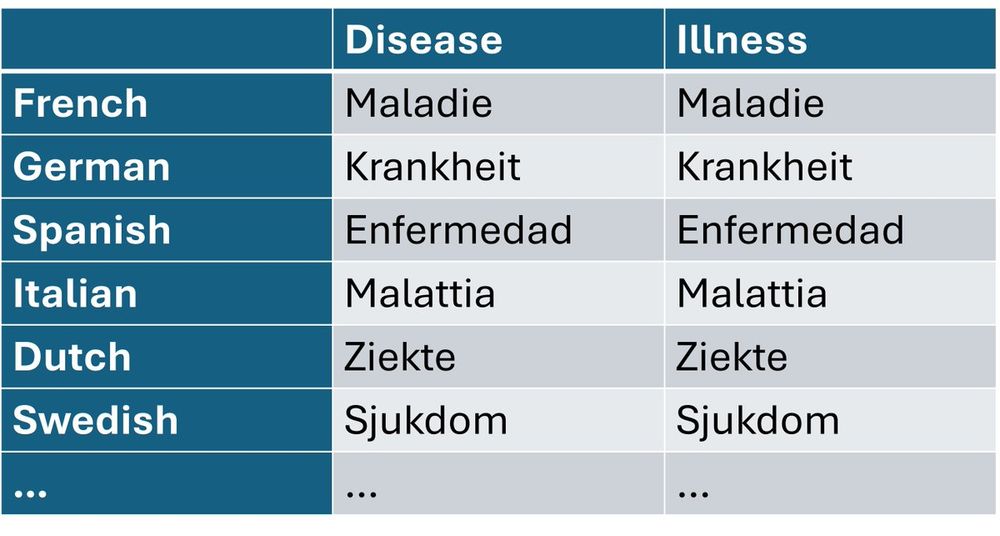
The @alzassociation often justifies the shift to biological definition referring to the difference between disease and illness. This semantic difference is actually mainly a proper English language subtlety that doesn't translate into many other languages
7/
7/
January 21, 2025 at 11:56 AM
The @alzassociation often justifies the shift to biological definition referring to the difference between disease and illness. This semantic difference is actually mainly a proper English language subtlety that doesn't translate into many other languages
7/
7/
🚨Paper Alert🚨
New piece with @VincentPlanche!
We discuss the risks of #Alzheimer #Parkinson biological definitions, emphasize linking disease definitions w/ clinical outcomes, and clinicobiological frameworks to disentangle multiple diseases
Thread👇🏻
1/
rdcu.be/dQmvo
New piece with @VincentPlanche!
We discuss the risks of #Alzheimer #Parkinson biological definitions, emphasize linking disease definitions w/ clinical outcomes, and clinicobiological frameworks to disentangle multiple diseases
Thread👇🏻
1/
rdcu.be/dQmvo
January 21, 2025 at 11:55 AM
🚨Paper Alert🚨
New piece with @VincentPlanche!
We discuss the risks of #Alzheimer #Parkinson biological definitions, emphasize linking disease definitions w/ clinical outcomes, and clinicobiological frameworks to disentangle multiple diseases
Thread👇🏻
1/
rdcu.be/dQmvo
New piece with @VincentPlanche!
We discuss the risks of #Alzheimer #Parkinson biological definitions, emphasize linking disease definitions w/ clinical outcomes, and clinicobiological frameworks to disentangle multiple diseases
Thread👇🏻
1/
rdcu.be/dQmvo
Chère @HAS_sante
Nous sommes en 2024, aucun pays n’a suivi votre décision de dérembourser les inhibiteurs de l’acétylcholinestérase en 2016. Les plus grandes revues médicales du monde continuent de les défendre. Serait il temps de revoir votre position ?
thelancet.com/journals/lance…
Nous sommes en 2024, aucun pays n’a suivi votre décision de dérembourser les inhibiteurs de l’acétylcholinestérase en 2016. Les plus grandes revues médicales du monde continuent de les défendre. Serait il temps de revoir votre position ?
thelancet.com/journals/lance…

January 21, 2025 at 11:55 AM
Chère @HAS_sante
Nous sommes en 2024, aucun pays n’a suivi votre décision de dérembourser les inhibiteurs de l’acétylcholinestérase en 2016. Les plus grandes revues médicales du monde continuent de les défendre. Serait il temps de revoir votre position ?
thelancet.com/journals/lance…
Nous sommes en 2024, aucun pays n’a suivi votre décision de dérembourser les inhibiteurs de l’acétylcholinestérase en 2016. Les plus grandes revues médicales du monde continuent de les défendre. Serait il temps de revoir votre position ?
thelancet.com/journals/lance…
After scam emails from predatory journals, conferences, a new level has been been reached: predatory requests for PhDs…

January 21, 2025 at 11:55 AM
After scam emails from predatory journals, conferences, a new level has been been reached: predatory requests for PhDs…
Peer reviewing is vital for scientific publication but can be time-consuming. We all have limited time but should decline a review if we don't have time to do it properly. This behavior 👇🏻 is neither ethical nor beneficial to the scientific community
(journal with significant IF
(journal with significant IF

January 21, 2025 at 11:55 AM
Peer reviewing is vital for scientific publication but can be time-consuming. We all have limited time but should decline a review if we don't have time to do it properly. This behavior 👇🏻 is neither ethical nor beneficial to the scientific community
(journal with significant IF
(journal with significant IF
Paris 🇫🇷🗼 Biomarker Group dinner with special guest!
Missing @McPotier!!
Missing @McPotier!!

January 21, 2025 at 11:55 AM
Paris 🇫🇷🗼 Biomarker Group dinner with special guest!
Missing @McPotier!!
Missing @McPotier!!
Beforehand either high levels of tau pathology alone (Alzheimer) and/or neuritic plaques (Terry/Roth) were considered neuropath characteristics of AD. For the 1st time in history AD definition is anchored on the β-amyloid cascade hypothesis despite its numerous limitations
14/21
14/21

January 21, 2025 at 11:54 AM
Beforehand either high levels of tau pathology alone (Alzheimer) and/or neuritic plaques (Terry/Roth) were considered neuropath characteristics of AD. For the 1st time in history AD definition is anchored on the β-amyloid cascade hypothesis despite its numerous limitations
14/21
14/21
The last 2023 AA proposal also breaks with the long-lasting neuropathological debates on the characteristic features of AD: only β-amyloid dysmetabolism now defines AD (Tau and clinic are only used for staging).
13/21
13/21

January 21, 2025 at 11:54 AM
The last 2023 AA proposal also breaks with the long-lasting neuropathological debates on the characteristic features of AD: only β-amyloid dysmetabolism now defines AD (Tau and clinic are only used for staging).
13/21
13/21
Conversely, in 2011, the NIA-AA first proposed breaking with the clinical-pathological/biological construct of AD and turning to a pure biological construct of AD (biological changes are the new anchor for disease definition, whatever the clinical prognosis).
12/21
12/21
January 21, 2025 at 11:54 AM
Conversely, in 2011, the NIA-AA first proposed breaking with the clinical-pathological/biological construct of AD and turning to a pure biological construct of AD (biological changes are the new anchor for disease definition, whatever the clinical prognosis).
12/21
12/21
In the 2010-20s the IWG stayed with the clinico-pathological/biological construct of AD: it differentiated between asymptomatic-at-risk and presymptomatic AD among biomarker-positive cognitively unimpaired individuals based on the clinical prognosis.
11/21
11/21

January 21, 2025 at 11:54 AM
In the 2010-20s the IWG stayed with the clinico-pathological/biological construct of AD: it differentiated between asymptomatic-at-risk and presymptomatic AD among biomarker-positive cognitively unimpaired individuals based on the clinical prognosis.
11/21
11/21
In the UK, Roth and his group considered AD as a multidimensional construct and proposed Type I and II AD to distinguish early-onset from late-onset cases.
9/21
9/21

January 21, 2025 at 11:54 AM
In the UK, Roth and his group considered AD as a multidimensional construct and proposed Type I and II AD to distinguish early-onset from late-onset cases.
9/21
9/21