



Hoffmanius
@nobodyh.bsky.social
Amateur paleoartist, skeletal maker and wildlife photographer, most interested in animal biogeography and phylogenetics.
He/him
He/him
Announcing my new #paleontology #blog – Fossilism;
The first post has already been published, a quick look at the recently described Mirasaura! 🦎
More posts and updates are sure to come, including quite a big one soon! 👀
Find the blog here: fossil-ism.blogspot.com?m=0
#paleoart #dinosaurs
The first post has already been published, a quick look at the recently described Mirasaura! 🦎
More posts and updates are sure to come, including quite a big one soon! 👀
Find the blog here: fossil-ism.blogspot.com?m=0
#paleoart #dinosaurs

July 26, 2025 at 12:36 PM
Announcing my new #paleontology #blog – Fossilism;
The first post has already been published, a quick look at the recently described Mirasaura! 🦎
More posts and updates are sure to come, including quite a big one soon! 👀
Find the blog here: fossil-ism.blogspot.com?m=0
#paleoart #dinosaurs
The first post has already been published, a quick look at the recently described Mirasaura! 🦎
More posts and updates are sure to come, including quite a big one soon! 👀
Find the blog here: fossil-ism.blogspot.com?m=0
#paleoart #dinosaurs

June 27, 2025 at 9:08 PM
For #FossilFriday :
Skull replicas of #Tyrannosaurus and #Triceratops from the Swedish Museum of Natural History, Stockholm.
Skull replicas of #Tyrannosaurus and #Triceratops from the Swedish Museum of Natural History, Stockholm.


June 27, 2025 at 9:04 PM
For #FossilFriday :
Skull replicas of #Tyrannosaurus and #Triceratops from the Swedish Museum of Natural History, Stockholm.
Skull replicas of #Tyrannosaurus and #Triceratops from the Swedish Museum of Natural History, Stockholm.
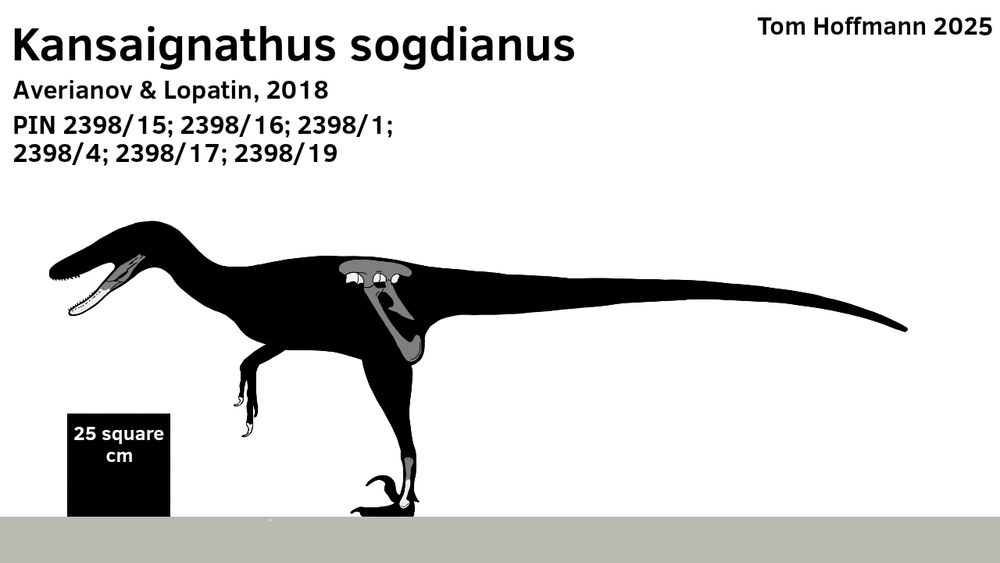
Been quite some time since I've posted here so have this Kansaignathus skeletal
#paleoart #dinosaurs
#paleoart #dinosaurs
June 19, 2025 at 9:54 PM
Been quite some time since I've posted here so have this Kansaignathus skeletal
#paleoart #dinosaurs
#paleoart #dinosaurs
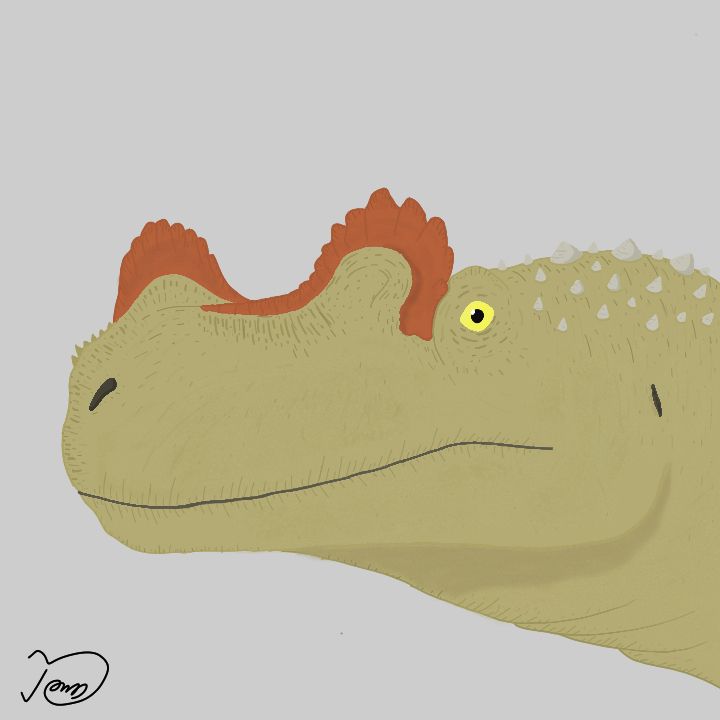
Wanted to make a quick 'introduction' post for bluesky: Hello! I'm an ameteur paleoartist, drawing various extinct dinos, crocs, inverts and other stuff. I also often make various illustrative diagrams like skeletals, maps and phylogenies. 🐊🦴
(I don't do comms btw)
#paleoart #dinosaur
(I don't do comms btw)
#paleoart #dinosaur


February 16, 2025 at 4:27 PM
The final didactyl theropod to talk about is the equally enigmatic Chilesaurus. Known from the Late Jurassic-aged Toqui Fm of Chile, most of the skeleton is preserved. Baron & Barrett 2017, Baron 2018 and Müller & Dias-da-Silva 2019 found Chilesaurus as a basal ornithischian, however, Muller et al.-

February 16, 2025 at 12:16 AM
The final didactyl theropod to talk about is the equally enigmatic Chilesaurus. Known from the Late Jurassic-aged Toqui Fm of Chile, most of the skeleton is preserved. Baron & Barrett 2017, Baron 2018 and Müller & Dias-da-Silva 2019 found Chilesaurus as a basal ornithischian, however, Muller et al.-
A more recent study found Gualicho in a completely different position - Ceratosauria. Specifically an elaphrosaurine in a polytomy with Deltadromeus, Aoniraptor & Bahariasaurus (Cau, 2024). Calvo et al. 2025 found that Gualicho was most likely not closely related to Megaraptora.

February 16, 2025 at 12:16 AM
A more recent study found Gualicho in a completely different position - Ceratosauria. Specifically an elaphrosaurine in a polytomy with Deltadromeus, Aoniraptor & Bahariasaurus (Cau, 2024). Calvo et al. 2025 found that Gualicho was most likely not closely related to Megaraptora.
but the subsequent study is yet to be published. The only known images of this therizinosaur are from a 2019 Twitter post. The aforementioned abstract only mentioned the 2 arms, though the images also show various vertebrae and a partial pelvis.

February 16, 2025 at 12:16 AM
but the subsequent study is yet to be published. The only known images of this therizinosaur are from a 2019 Twitter post. The aforementioned abstract only mentioned the 2 arms, though the images also show various vertebrae and a partial pelvis.
Interestingly, the didactyl condition would later reevolve in oviraptorosaurs in Oskoko & Heyuannia huangi, both from Asia. Both also show great reduction in their arms as a whole.

February 16, 2025 at 12:16 AM
Interestingly, the didactyl condition would later reevolve in oviraptorosaurs in Oskoko & Heyuannia huangi, both from Asia. Both also show great reduction in their arms as a whole.
The tiny, early oviraptorosaurs, the caudipterids (Caudipteryx, Xingtianosaurus and Similicaudipteryx) also had a two-fingered arm. All known members of Caudipteridae come from the Early Cretaceous of China.

February 16, 2025 at 12:16 AM
The tiny, early oviraptorosaurs, the caudipterids (Caudipteryx, Xingtianosaurus and Similicaudipteryx) also had a two-fingered arm. All known members of Caudipteridae come from the Early Cretaceous of China.
The second (non-?) avian didactyl is the ambiguous Romanian Balaur. Known from a mostly complete postracial skeleton lacking the skull, Balaur possesses a reduced third finger (Csiki et al. 2010). Some studies have suggested it to be a junior synonym of Elopteryx (Stoicescu et al. 2024)

February 16, 2025 at 12:16 AM
The second (non-?) avian didactyl is the ambiguous Romanian Balaur. Known from a mostly complete postracial skeleton lacking the skull, Balaur possesses a reduced third finger (Csiki et al. 2010). Some studies have suggested it to be a junior synonym of Elopteryx (Stoicescu et al. 2024)
Note that the Late Cretaceous eutyrannosaur Dryptosaurus, from the eastern US, also likely had a didactyl arm (Brusatte et al. 2011), suggesting this feature was ancestral to Eutyrannosauria.

February 16, 2025 at 12:16 AM
Note that the Late Cretaceous eutyrannosaur Dryptosaurus, from the eastern US, also likely had a didactyl arm (Brusatte et al. 2011), suggesting this feature was ancestral to Eutyrannosauria.
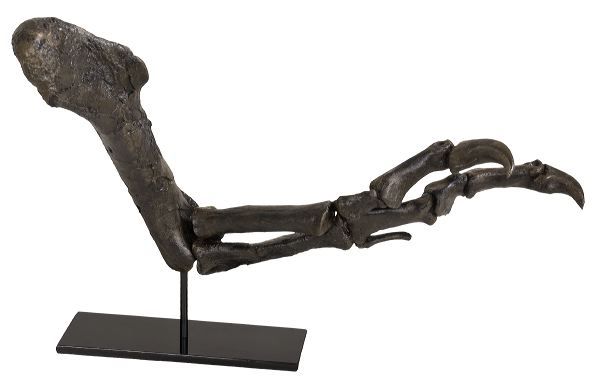
The aforementioned Tyrannosauridae is the most well-known example of didactylism in theropods. All members of Tyrannosauridae possessed 2 fingers, though despite this, their hand were still relatively strong, being able to lift ~200 kg (Padian, 2022), although their true function is still debated.

February 16, 2025 at 12:16 AM
The aforementioned Tyrannosauridae is the most well-known example of didactylism in theropods. All members of Tyrannosauridae possessed 2 fingers, though despite this, their hand were still relatively strong, being able to lift ~200 kg (Padian, 2022), although their true function is still debated.
Despite tyrannosaurids usually being associated with their small, didactyl (two-fingered) hands, they weren't the first, and only, clade of non-avian #theropods to develop this feature: 🧵
PS: happy late #valentinesday
#fossil #paleontology #dino #dinosaur #bird #jurassicworld
PS: happy late #valentinesday
#fossil #paleontology #dino #dinosaur #bird #jurassicworld
February 16, 2025 at 12:16 AM
Despite tyrannosaurids usually being associated with their small, didactyl (two-fingered) hands, they weren't the first, and only, clade of non-avian #theropods to develop this feature: 🧵
PS: happy late #valentinesday
#fossil #paleontology #dino #dinosaur #bird #jurassicworld
PS: happy late #valentinesday
#fossil #paleontology #dino #dinosaur #bird #jurassicworld
One of the most important #trilobite species: Triarthrus eotoni #fossils from the Beecher's Trilobite Bed, New York, show incredible preservation, with preserved gills & antennae known, including the specimen below:
#paleo #paleontology #fossil #arthropod
#paleo #paleontology #fossil #arthropod

February 9, 2025 at 12:33 PM
One of the most important #trilobite species: Triarthrus eotoni #fossils from the Beecher's Trilobite Bed, New York, show incredible preservation, with preserved gills & antennae known, including the specimen below:
#paleo #paleontology #fossil #arthropod
#paleo #paleontology #fossil #arthropod
Its shape reminds me of a pretzel... just without the knot

February 2, 2025 at 4:41 PM
Its shape reminds me of a pretzel... just without the knot
Titanosarcolites giganteus is a very large and unique species of extinct #bivalve from the Late Cretaceous of North America & the Caribbean.
T. giganteus was a rudist, an order of weird, reef-building bivalves which went extinct at the end of the Cretaceous.
Art by Joschua Knuppe
#BivalveDay
T. giganteus was a rudist, an order of weird, reef-building bivalves which went extinct at the end of the Cretaceous.
Art by Joschua Knuppe
#BivalveDay


February 2, 2025 at 4:41 PM
Titanosarcolites giganteus is a very large and unique species of extinct #bivalve from the Late Cretaceous of North America & the Caribbean.
T. giganteus was a rudist, an order of weird, reef-building bivalves which went extinct at the end of the Cretaceous.
Art by Joschua Knuppe
#BivalveDay
T. giganteus was a rudist, an order of weird, reef-building bivalves which went extinct at the end of the Cretaceous.
Art by Joschua Knuppe
#BivalveDay
Late #FossilFriday post: Asterolepis is a diverse genus of Devonian antiarch placoderm (armored fish). Similar to its close relatives, Asterolepis had a round body, elongate pectoral fins and a small head with which it would consume small seafloor detritus.
#paleontology
#paleontology


February 1, 2025 at 3:52 PM
Late #FossilFriday post: Asterolepis is a diverse genus of Devonian antiarch placoderm (armored fish). Similar to its close relatives, Asterolepis had a round body, elongate pectoral fins and a small head with which it would consume small seafloor detritus.
#paleontology
#paleontology
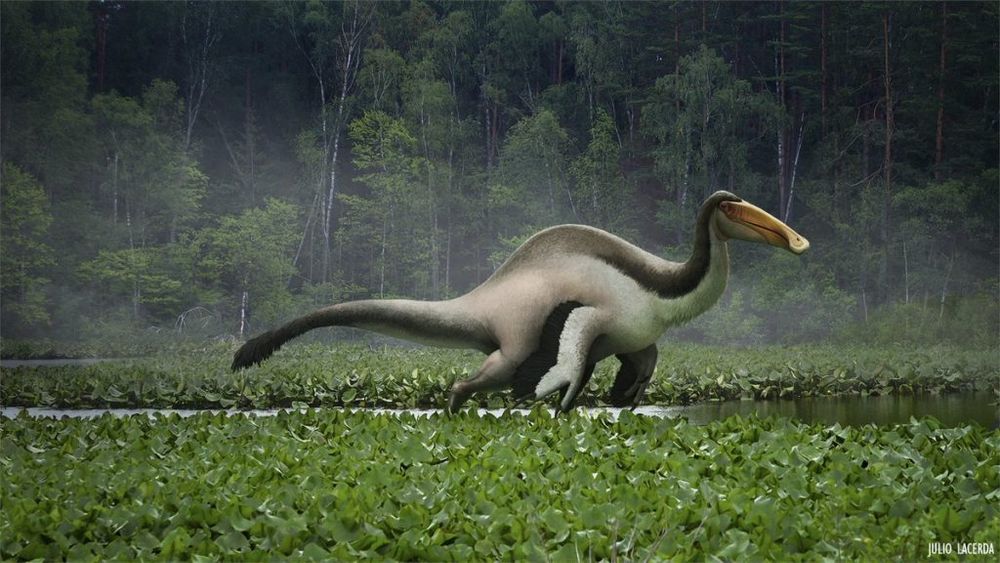
Despite their almost indentical name and shared trait of large arms, neither Dinocheirus (the #pseudoscorpion), nor Deinocheirus (the #theropod) are closely related
📷 Photo by Hjalte Kjærby
🎨 Art by Julio Lacerda
#paleontology #paleo #dinosaur #bug #spider #science
📷 Photo by Hjalte Kjærby
🎨 Art by Julio Lacerda
#paleontology #paleo #dinosaur #bug #spider #science

January 30, 2025 at 9:19 PM
Despite their almost indentical name and shared trait of large arms, neither Dinocheirus (the #pseudoscorpion), nor Deinocheirus (the #theropod) are closely related
📷 Photo by Hjalte Kjærby
🎨 Art by Julio Lacerda
#paleontology #paleo #dinosaur #bug #spider #science
📷 Photo by Hjalte Kjærby
🎨 Art by Julio Lacerda
#paleontology #paleo #dinosaur #bug #spider #science
The idea behind this piece comes from penguins, another group of aquatic birds which will sometimes perform a similar 'takeoff'.

January 27, 2025 at 9:05 PM
The idea behind this piece comes from penguins, another group of aquatic birds which will sometimes perform a similar 'takeoff'.
"Airborne Torpedo"
A Hesperornis, trying to escape a hungry marine reptile, 'launches' itself out of the water, in a quite goofy manner.
First art piece on this app, hope y'all enjoy!
#paleoart #paleontology #dinosaur #bird
A Hesperornis, trying to escape a hungry marine reptile, 'launches' itself out of the water, in a quite goofy manner.
First art piece on this app, hope y'all enjoy!
#paleoart #paleontology #dinosaur #bird

January 27, 2025 at 9:05 PM
"Airborne Torpedo"
A Hesperornis, trying to escape a hungry marine reptile, 'launches' itself out of the water, in a quite goofy manner.
First art piece on this app, hope y'all enjoy!
#paleoart #paleontology #dinosaur #bird
A Hesperornis, trying to escape a hungry marine reptile, 'launches' itself out of the water, in a quite goofy manner.
First art piece on this app, hope y'all enjoy!
#paleoart #paleontology #dinosaur #bird
Caletodraco ("Caleti Dragon") is the most recently described of the bunch, only being named in 2024. The holotype consists of a partial ilium, sacrum, a single caudal vertebra and possible rib elements, all of which were discovered in the Chalk of the Pays de Caux, northern France.

January 26, 2025 at 4:11 PM
Caletodraco ("Caleti Dragon") is the most recently described of the bunch, only being named in 2024. The holotype consists of a partial ilium, sacrum, a single caudal vertebra and possible rib elements, all of which were discovered in the Chalk of the Pays de Caux, northern France.
Known from a partial skull (including a braincase and teeth), three caudal vertebrae, a tibia and fibula, Arcovenator ("Arc River Hunter") is yet another abelisaur from France.

January 26, 2025 at 4:11 PM
Known from a partial skull (including a braincase and teeth), three caudal vertebrae, a tibia and fibula, Arcovenator ("Arc River Hunter") is yet another abelisaur from France.
Unlike all other genera discussed here, Genusaurus ("Knee Lizard") is the only one known from Early Cretaceous deposits (or "Middle Cretaceous"), specifically from France.

January 26, 2025 at 4:11 PM
Unlike all other genera discussed here, Genusaurus ("Knee Lizard") is the only one known from Early Cretaceous deposits (or "Middle Cretaceous"), specifically from France.
Tarascosaurus ("Tarasque Lizard") is a genus of French abelisaur described in 1991. The known material of this theropod consists of a femur, a few dorsal vertebrae and one caudal vertebra.

January 26, 2025 at 4:11 PM
Tarascosaurus ("Tarasque Lizard") is a genus of French abelisaur described in 1991. The known material of this theropod consists of a femur, a few dorsal vertebrae and one caudal vertebra.