



Niall Cooke
@niallcooke.bsky.social
Ancient geneticist. Working as a postdoctoral researcher with MPI-EVA, Leipzig. Formerly of Trinity College Dublin. Big in Japan. You may know me from my appearance on a Spanish travel show segment on the "Irish Breakfast".
Reposted by Niall Cooke

Also check out the dispatch by Shigeki Nakagome: www.cell.com/current-biol..., and (of course) our new preprint on the genome of a 200,000 year old Denisovan www.biorxiv.org/content/10.1...

Human evolution: Tracing ancient journeys through Denisovan DNA
Variation in Denisovan ancestry across East Asia reflects complex demography and multiple introgression waves. A new study reports that the Jomon population, early diverged ancient hunter-gatherers…
www.cell.com
October 20, 2025 at 6:14 PM
Also check out the dispatch by Shigeki Nakagome: www.cell.com/current-biol..., and (of course) our new preprint on the genome of a 200,000 year old Denisovan www.biorxiv.org/content/10.1...
Reposted by Niall Cooke

In a new paper led by Jiaqi Yang we trace the distribution of Denisovan introgressed DNA in ancient modern human genomes over time.
www.cell.com/current-biol...
www.cell.com/current-biol...

An early East Asian lineage with unexpectedly low Denisovan ancestry
Yang et al. study Denisovan ancestry in ancient and present-day humans. In contrast
to other East Asians, genomic comparisons suggest that the Jomon derived most of their
ancestry from a deep lineage ...
www.cell.com
October 20, 2025 at 7:39 PM
In a new paper led by Jiaqi Yang we trace the distribution of Denisovan introgressed DNA in ancient modern human genomes over time.
www.cell.com/current-biol...
www.cell.com/current-biol...
Reposted by Niall Cooke

A large-scale genomic study in Science of over 1500 individuals from 139 underrepresented Indigenous groups across northern Eurasia and the Americas sheds new light on the ancient migrations that shaped the genetic landscape of North and South America.
Learn more: scim.ag/4mi1yUf
Learn more: scim.ag/4mi1yUf

From North Asia to South America: Tracing the longest human migration through genomic sequencing
Genome sequencing of 1537 individuals from 139 ethnic groups reveals the genetic characteristics of understudied populations in North Asia and South America. Our analysis demonstrates that West Siberi...
scim.ag
May 19, 2025 at 6:32 PM
A large-scale genomic study in Science of over 1500 individuals from 139 underrepresented Indigenous groups across northern Eurasia and the Americas sheds new light on the ancient migrations that shaped the genetic landscape of North and South America.
Learn more: scim.ag/4mi1yUf
Learn more: scim.ag/4mi1yUf
Reposted by Niall Cooke

PhD positions available!
Join our lab at Trinity College Dublin to work on ancient human and pathogen genomics: www.findaphd.com/phds/project...
Join our lab at Trinity College Dublin to work on ancient human and pathogen genomics: www.findaphd.com/phds/project...

Ancient human and pathogen genomics at the insular edges of Eurasia at Trinity College Dublin on FindAPhD.com
PhD Project - Ancient human and pathogen genomics at the insular edges of Eurasia at Trinity College Dublin, listed on FindAPhD.com
www.findaphd.com
May 8, 2025 at 11:25 AM
PhD positions available!
Join our lab at Trinity College Dublin to work on ancient human and pathogen genomics: www.findaphd.com/phds/project...
Join our lab at Trinity College Dublin to work on ancient human and pathogen genomics: www.findaphd.com/phds/project...
Reposted by Niall Cooke

Out today in @sciencemagazine, we've journeyed into our shared history with Neandertals by analyzing over 300 present-day and ancient modern humans, including 59 individuals who lived between 2,000 and 45,000 years ago.
www.science.org/doi/10.1126/...
www.science.org/doi/10.1126/...
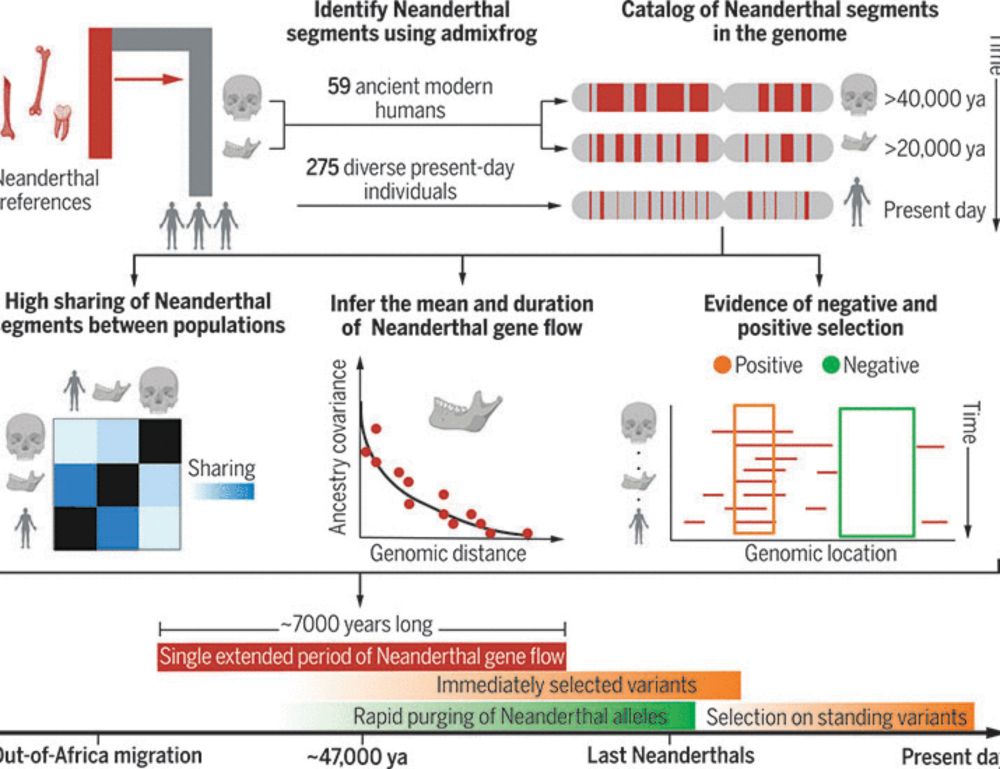
Neanderthal ancestry through time: Insights from genomes of ancient and present-day humans
Gene flow from Neanderthals has shaped genetic and phenotypic variation in modern humans. We generated a catalog of Neanderthal ancestry segments in more than 300 genomes spanning the past 50,000 year...
www.science.org
December 12, 2024 at 7:39 PM
Out today in @sciencemagazine, we've journeyed into our shared history with Neandertals by analyzing over 300 present-day and ancient modern humans, including 59 individuals who lived between 2,000 and 45,000 years ago.
www.science.org/doi/10.1126/...
www.science.org/doi/10.1126/...
Reposted by Niall Cooke

I am very happy to share our new paper on the genetics of some of the first modern humans who ever lived in Europe! We sequenced nuclear DNA from 13 specimens from Ranis in Germany, and found that they belonged to at least 6 individuals. www.nature.com/articles/s41... (1/n)
Earliest modern human genomes constrain timing of Neanderthal admixture - Nature
Nature - Earliest modern human genomes constrain timing of Neanderthal admixture
www.nature.com
December 12, 2024 at 7:00 PM
I am very happy to share our new paper on the genetics of some of the first modern humans who ever lived in Europe! We sequenced nuclear DNA from 13 specimens from Ranis in Germany, and found that they belonged to at least 6 individuals. www.nature.com/articles/s41... (1/n)
Reposted by Niall Cooke
In this comment piece with James Fellows Yates and Christina Warinner (@christinawarinner.bsky.social), we highlight the mounting problems with data archiving and metadata reporting in ancient DNA research. The field cannot afford to keep neglecting this issue.
www.nature.com/articles/d41...
www.nature.com/articles/d41...
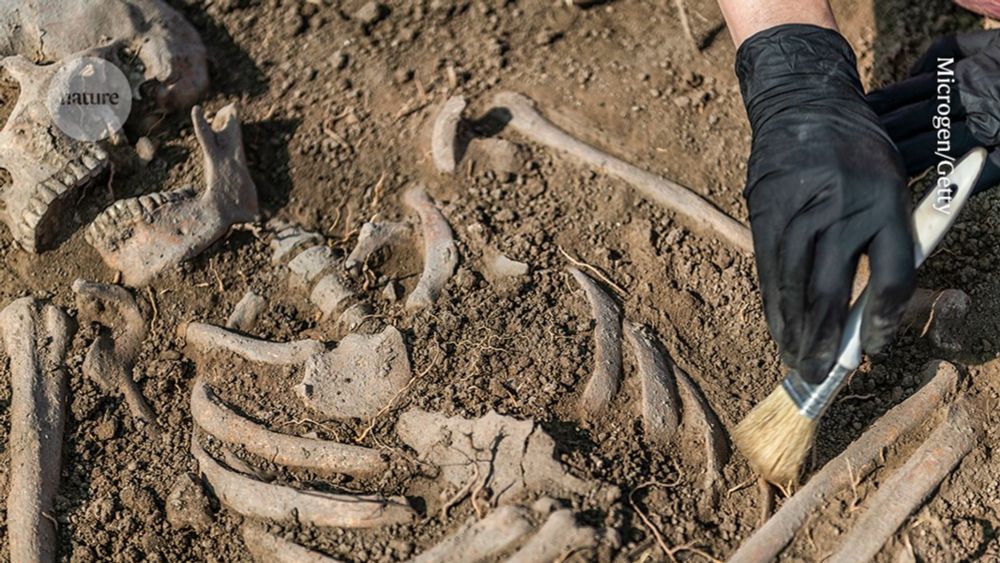
Ancient DNA data hold insights into past organisms and ecosystems — handle them with more care
DNA recovered from ancient remains is transforming our understanding of organisms and ecosystems from tens, thousands and even millions of years ago – but the growing volume of data must be better pre...
www.nature.com
December 10, 2024 at 2:49 PM
In this comment piece with James Fellows Yates and Christina Warinner (@christinawarinner.bsky.social), we highlight the mounting problems with data archiving and metadata reporting in ancient DNA research. The field cannot afford to keep neglecting this issue.
www.nature.com/articles/d41...
www.nature.com/articles/d41...