



Ned Hammond
@nedhammond92.bsky.social
Energy and environment policy
Reposted by Ned Hammond

In our October 2025 price cap edition of Energy UK Explains, we’ve outlined:
✉️ How the price cap works
💳 Where policy costs sit on GB energy bills
📢 Our recommendations to #BringDownBills for energy customers now
🔗 Read the explainer 👉 buff.ly/kiwsnWu
✉️ How the price cap works
💳 Where policy costs sit on GB energy bills
📢 Our recommendations to #BringDownBills for energy customers now
🔗 Read the explainer 👉 buff.ly/kiwsnWu
August 27, 2025 at 12:15 PM
In our October 2025 price cap edition of Energy UK Explains, we’ve outlined:
✉️ How the price cap works
💳 Where policy costs sit on GB energy bills
📢 Our recommendations to #BringDownBills for energy customers now
🔗 Read the explainer 👉 buff.ly/kiwsnWu
✉️ How the price cap works
💳 Where policy costs sit on GB energy bills
📢 Our recommendations to #BringDownBills for energy customers now
🔗 Read the explainer 👉 buff.ly/kiwsnWu
On the retail and demand side, hundreds of pounds of savings could be delivered for customers, while supporting Clean Power 2030, through a combination of:
1) Maximising flexibility
2) Rebalancing policy costs
3) Delivering on the Warm Homes Plan
1) Maximising flexibility
2) Rebalancing policy costs
3) Delivering on the Warm Homes Plan


April 1, 2025 at 3:54 PM
On the retail and demand side, hundreds of pounds of savings could be delivered for customers, while supporting Clean Power 2030, through a combination of:
1) Maximising flexibility
2) Rebalancing policy costs
3) Delivering on the Warm Homes Plan
1) Maximising flexibility
2) Rebalancing policy costs
3) Delivering on the Warm Homes Plan
Fortunately, there are several options available to the Government to reduce energy bills in the near term. Some of these require little public spending and, instead, involve optimising the energy system and cooperating closely with the EU. But the most impactful policies need some public money…

April 1, 2025 at 3:54 PM
Fortunately, there are several options available to the Government to reduce energy bills in the near term. Some of these require little public spending and, instead, involve optimising the energy system and cooperating closely with the EU. But the most impactful policies need some public money…
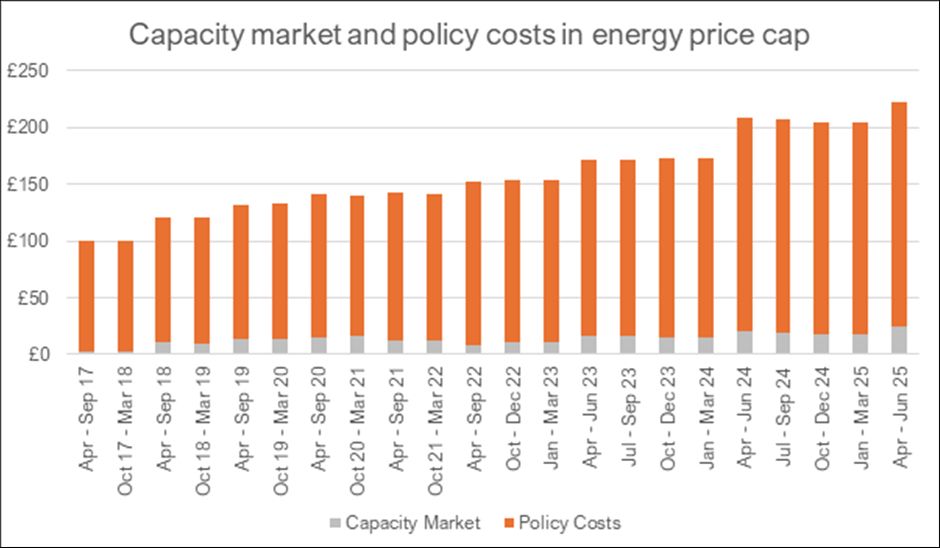
Another factor is transition costs being levied on energy bills rather than taxation. This includes several existing schemes, while new costs like nuclear will be added too. These investments will lower costs in time but unless gas prices fall there is nothing to drive energy bills down by 2030…
April 1, 2025 at 3:54 PM
Another factor is transition costs being levied on energy bills rather than taxation. This includes several existing schemes, while new costs like nuclear will be added too. These investments will lower costs in time but unless gas prices fall there is nothing to drive energy bills down by 2030…
Why are energy bills so high? Mostly due to high wholesale prices that are heavily influenced by volatile gas markets. While gas prices are far below their recent peak, they are comfortably above pre-crisis levels. Prices may fall in the coming years but they are volatile and difficult to predict…


April 1, 2025 at 3:54 PM
Why are energy bills so high? Mostly due to high wholesale prices that are heavily influenced by volatile gas markets. While gas prices are far below their recent peak, they are comfortably above pre-crisis levels. Prices may fall in the coming years but they are volatile and difficult to predict…
And third, greater interaction with nature should be encouraged by expanding Green Social Prescribing across the country, launching a new 'Nature's Classroom' programme, and ensuring parks are pleasant, safe spaces to visit.

November 21, 2024 at 8:54 AM
And third, greater interaction with nature should be encouraged by expanding Green Social Prescribing across the country, launching a new 'Nature's Classroom' programme, and ensuring parks are pleasant, safe spaces to visit.
Second, local nature ‘notspots’ need to be tackled by increasing public rights of way, introducing more access grant options in ELMs, harnessing the planning system and utilising innovative finance solutions.

November 21, 2024 at 8:54 AM
Second, local nature ‘notspots’ need to be tackled by increasing public rights of way, introducing more access grant options in ELMs, harnessing the planning system and utilising innovative finance solutions.
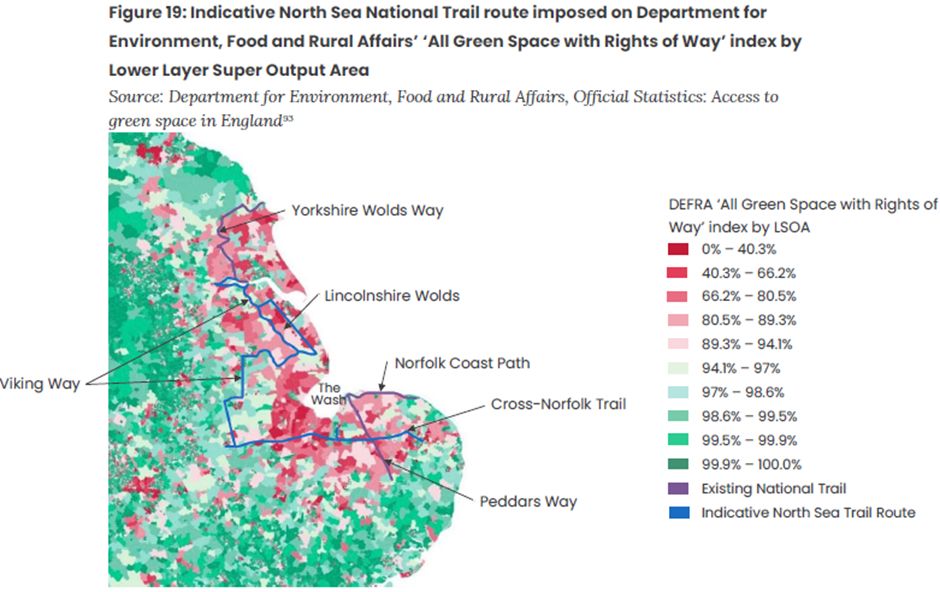
How do we overcome disparities to bring people closer to nature? First, create a North Sea National Trail to improve access in eastern England. This can be done without impinging on high grade farmland by focusing on upgrading existing paths and recording historic rights of way

November 21, 2024 at 8:54 AM
How do we overcome disparities to bring people closer to nature? First, create a North Sea National Trail to improve access in eastern England. This can be done without impinging on high grade farmland by focusing on upgrading existing paths and recording historic rights of way
Proximity is not the only thing affecting visits. People are put off by a lack of facilities and concerns about crime. Busy roads without pedestrian access and stiles are barriers to the disabled and elderly. Cuts to local gov and national park funding could worsen these issues

November 21, 2024 at 8:54 AM
Proximity is not the only thing affecting visits. People are put off by a lack of facilities and concerns about crime. Busy roads without pedestrian access and stiles are barriers to the disabled and elderly. Cuts to local gov and national park funding could worsen these issues
Other rural areas with poor access also suffer from unrecorded rights of way. And farmers are not incentivised to provide access through the Environmental Land Management schemes. Urban areas lacking greenspace are hit by limited focus on nature in planning decisions.

November 21, 2024 at 8:54 AM
Other rural areas with poor access also suffer from unrecorded rights of way. And farmers are not incentivised to provide access through the Environmental Land Management schemes. Urban areas lacking greenspace are hit by limited focus on nature in planning decisions.
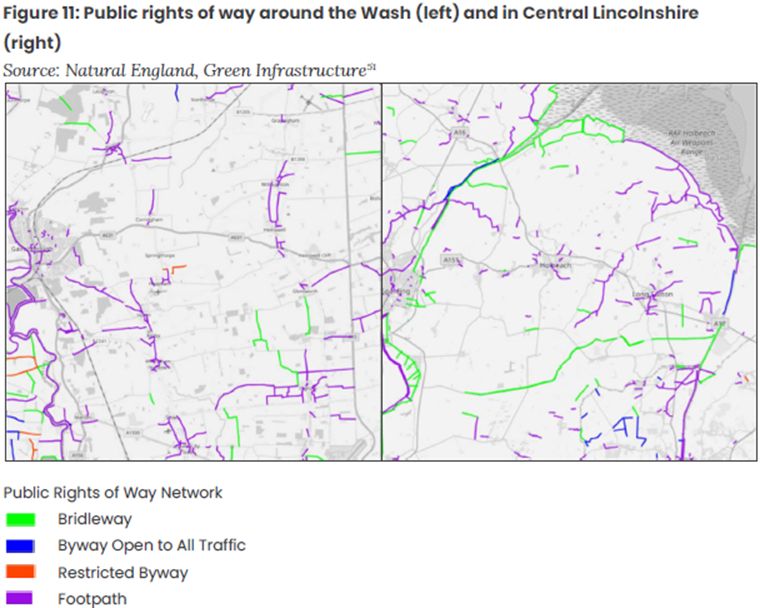
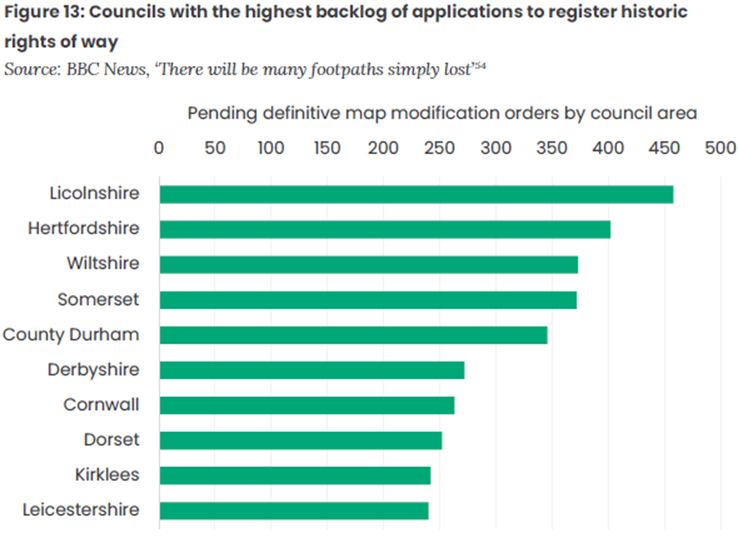
The drivers of access to nature disparities vary by location. Eastern England has far fewer rights of way than other parts of the country. This is partly due to its high grade agricultural land but also because of a major backlog of historical unrecorded rights of way

November 21, 2024 at 8:54 AM
The drivers of access to nature disparities vary by location. Eastern England has far fewer rights of way than other parts of the country. This is partly due to its high grade agricultural land but also because of a major backlog of historical unrecorded rights of way
There are also large disparities in access and visits by demographic. Ethnic minorities and those in deprived areas are far less likely to live within easy walking distance of greenspace. People that are older, in poorer health or on lower incomes visit nature much less


November 21, 2024 at 8:54 AM
There are also large disparities in access and visits by demographic. Ethnic minorities and those in deprived areas are far less likely to live within easy walking distance of greenspace. People that are older, in poorer health or on lower incomes visit nature much less
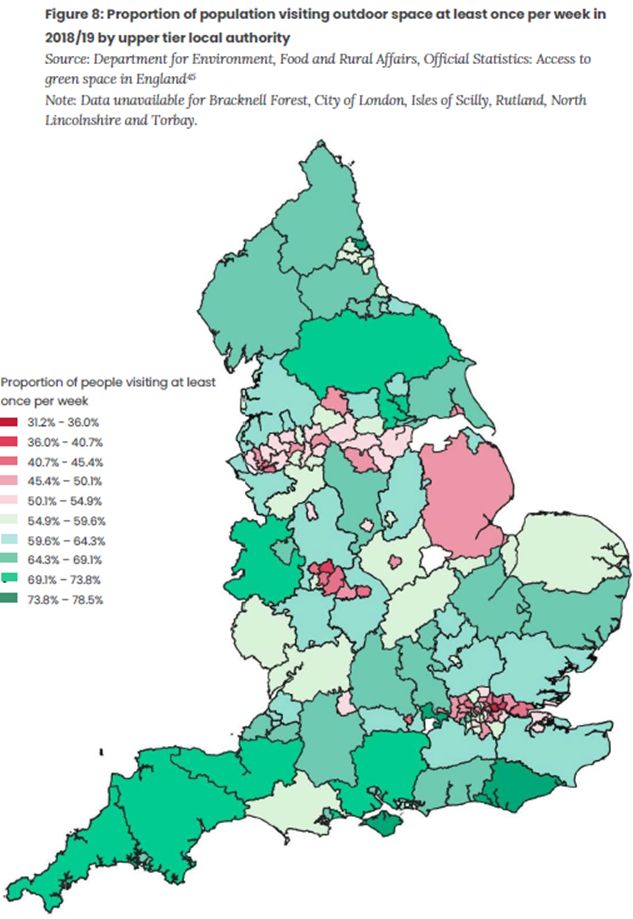
Overall, visits to nature have increased markedly in the past decade. But visits also see big differences across the country. People in London, the West Midlands and Lincolnshire visit greenspaces much less than other regions

November 21, 2024 at 8:54 AM
Overall, visits to nature have increased markedly in the past decade. But visits also see big differences across the country. People in London, the West Midlands and Lincolnshire visit greenspaces much less than other regions
England has thousands of parks, 140,000 miles of footpaths and rights of way, and dozens of national trails, parks and landscapes. But access to nature is unequal across the country. Access is particularly poor in eastern England and local ‘notspots’ like Blackpool and Darlington


November 21, 2024 at 8:54 AM
England has thousands of parks, 140,000 miles of footpaths and rights of way, and dozens of national trails, parks and landscapes. But access to nature is unequal across the country. Access is particularly poor in eastern England and local ‘notspots’ like Blackpool and Darlington
First, why should we care about access to nature?
1. Better physical and mental health, reducing strain on the NHS and potentially saving £2.1bn per year
2. Greater pride in place and community strength
3. Supporting biodiversity and mitigating climate change
1. Better physical and mental health, reducing strain on the NHS and potentially saving £2.1bn per year
2. Greater pride in place and community strength
3. Supporting biodiversity and mitigating climate change


November 21, 2024 at 8:54 AM
First, why should we care about access to nature?
1. Better physical and mental health, reducing strain on the NHS and potentially saving £2.1bn per year
2. Greater pride in place and community strength
3. Supporting biodiversity and mitigating climate change
1. Better physical and mental health, reducing strain on the NHS and potentially saving £2.1bn per year
2. Greater pride in place and community strength
3. Supporting biodiversity and mitigating climate change