



Sup Bichons
@myan00.bsky.social
Reposted by Sup Bichons
Lastly, I'll re-iterate: not every studio works this way, exactly. The roles exist, sure, but are not divided up so neatly or as easily identifiable. Even so, this should give you an idea what "lead" and "sub-lead" mean... and perhaps help you imagine what it's like existing further down the chain.
December 22, 2024 at 3:31 AM
Lastly, I'll re-iterate: not every studio works this way, exactly. The roles exist, sure, but are not divided up so neatly or as easily identifiable. Even so, this should give you an idea what "lead" and "sub-lead" mean... and perhaps help you imagine what it's like existing further down the chain.
Reposted by Sup Bichons
And there will be pain. Shit rolls downhill, as they say, and when the project encounters big issues that means those high up have the sad job of figuring out how to spread it out and who can afford to take the hardest hit. If you're that one, you take it on the chin and you deal. This is the job.
December 22, 2024 at 3:31 AM
And there will be pain. Shit rolls downhill, as they say, and when the project encounters big issues that means those high up have the sad job of figuring out how to spread it out and who can afford to take the hardest hit. If you're that one, you take it on the chin and you deal. This is the job.
Reposted by Sup Bichons
You also need to keep in mind that projects are constantly in flux. Problems that were thought solved need re-solving. The team falls behind schedule and scope needs to change. You are constantly in a dance, within your tiny box, trying to figure out sub-optimal solutions that cause the least pain.
December 22, 2024 at 3:30 AM
You also need to keep in mind that projects are constantly in flux. Problems that were thought solved need re-solving. The team falls behind schedule and scope needs to change. You are constantly in a dance, within your tiny box, trying to figure out sub-optimal solutions that cause the least pain.
Reposted by Sup Bichons
Anyhow, the point of all this is: the further you go down the chain, the smaller the box you can play in is. The less you have actual say over, and even then that say is subject to being overridden by ANYONE above... and must still play nicely with the needs and goals of the other departments.
December 22, 2024 at 3:30 AM
Anyhow, the point of all this is: the further you go down the chain, the smaller the box you can play in is. The less you have actual say over, and even then that say is subject to being overridden by ANYONE above... and must still play nicely with the needs and goals of the other departments.
Reposted by Sup Bichons
If you think this is easier with a smaller (or indie) project, the answer is "yes, but not really". The roles are still necessary but often get combined into one person. Or outsourced, and someone still needs to manage the outsourcing. Things fall off over-full plates. It's a different kind of hard.
December 22, 2024 at 3:30 AM
If you think this is easier with a smaller (or indie) project, the answer is "yes, but not really". The roles are still necessary but often get combined into one person. Or outsourced, and someone still needs to manage the outsourcing. Things fall off over-full plates. It's a different kind of hard.
Reposted by Sup Bichons
What conflicts could there be, you ask? Dependencies, for one. "I can't do X until Y is done, but Y is someone else's job". Or scope. "We need 20 doodads but the sub-lead said they only have time to make 10, what now?". Even outright differences in vision. Big projects means room for a LOT of egos.
December 22, 2024 at 3:30 AM
What conflicts could there be, you ask? Dependencies, for one. "I can't do X until Y is done, but Y is someone else's job". Or scope. "We need 20 doodads but the sub-lead said they only have time to make 10, what now?". Even outright differences in vision. Big projects means room for a LOT of egos.
Reposted by Sup Bichons
The sub-leads are handed their goals by the lead, and work out how they're going to produce their particular corner of the game and also, more importantly, how they're going to work with each other. Conflicts between sub-leads are handled by the lead, as are ANY conflicts with other departments.
December 22, 2024 at 3:30 AM
The sub-leads are handed their goals by the lead, and work out how they're going to produce their particular corner of the game and also, more importantly, how they're going to work with each other. Conflicts between sub-leads are handled by the lead, as are ANY conflicts with other departments.
Reposted by Sup Bichons
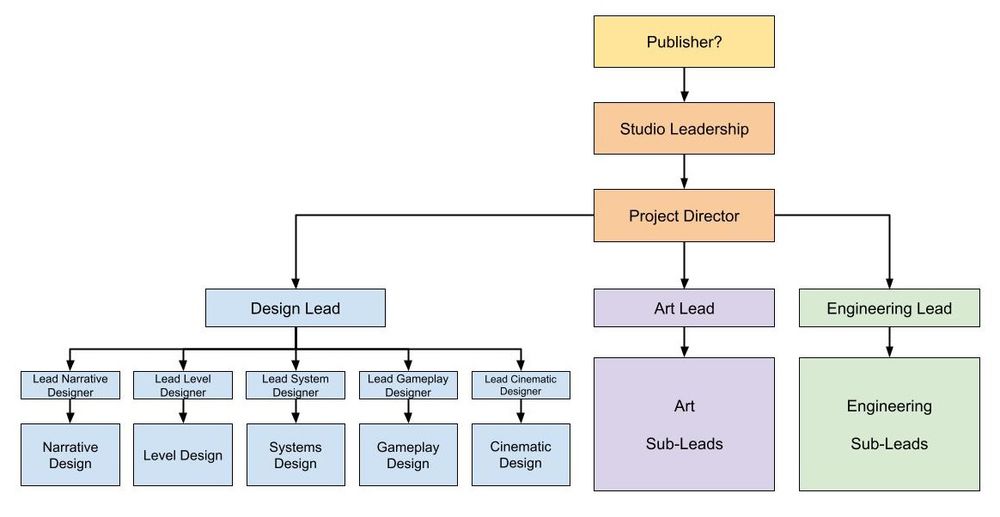
What does this mean? Well, let's look at the way BioWare broke up Design (as of 8 years ago, anyhow). Design consisted of Narrative Design, Level Design, Systems Design, Gameplay Design, and Cinematic Design (who worked in tandem with Cinematic Animation, which actually fell under the Art Lead).
December 22, 2024 at 3:30 AM
What does this mean? Well, let's look at the way BioWare broke up Design (as of 8 years ago, anyhow). Design consisted of Narrative Design, Level Design, Systems Design, Gameplay Design, and Cinematic Design (who worked in tandem with Cinematic Animation, which actually fell under the Art Lead).
Reposted by Sup Bichons
So while the PD is managing up, the Leads are managing down. With big projects, that means managing the "sub-leads"... those in charge of the individual sections of their department. It'd be unmanageable otherwise, and the bigger the project the more of these there are going to be.

December 22, 2024 at 3:28 AM
So while the PD is managing up, the Leads are managing down. With big projects, that means managing the "sub-leads"... those in charge of the individual sections of their department. It'd be unmanageable otherwise, and the bigger the project the more of these there are going to be.
Reposted by Sup Bichons
What does this mean? If the studio or publisher has concerns about the project, they're calling in the PD to explain. If the project needs more time or resources, it's on the PD to explain to them why and how and when. If there are a lot of layers above the PD... yes, it's a looot of meetings.
December 22, 2024 at 3:28 AM
What does this mean? If the studio or publisher has concerns about the project, they're calling in the PD to explain. If the project needs more time or resources, it's on the PD to explain to them why and how and when. If there are a lot of layers above the PD... yes, it's a looot of meetings.
Reposted by Sup Bichons
The studio leadership is going to be giving the PD their marching orders, often in the form of those strategic goals. If there's a publisher involved, that's where the studio leadership is likely getting those goals. The PD, then, ends up being the person who has to negotiate with everyone above.

December 22, 2024 at 3:28 AM
The studio leadership is going to be giving the PD their marching orders, often in the form of those strategic goals. If there's a publisher involved, that's where the studio leadership is likely getting those goals. The PD, then, ends up being the person who has to negotiate with everyone above.
Reposted by Sup Bichons
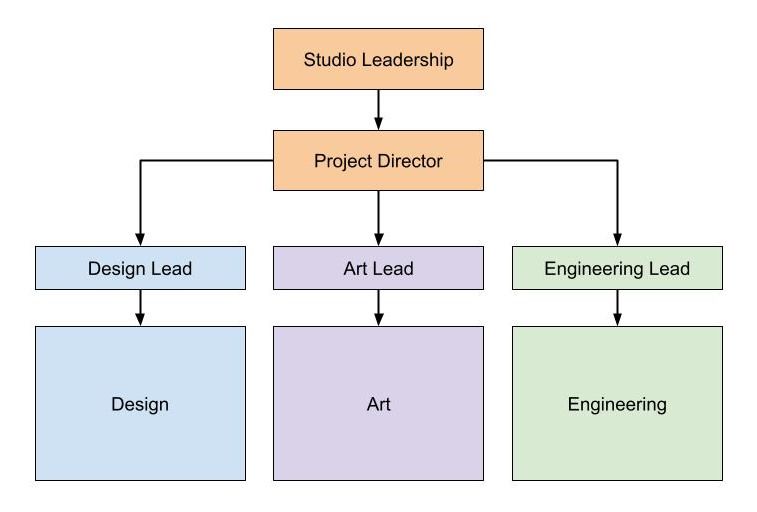
How much autonomy or ownership those Leads have is, like I said, really up to the individual PD and that studio's culture. Even in the case of a PD who has a lot of authority over the project, however, they still report to the studio leadership (unless it's the same person, like in a small studio).
December 22, 2024 at 3:27 AM
How much autonomy or ownership those Leads have is, like I said, really up to the individual PD and that studio's culture. Even in the case of a PD who has a lot of authority over the project, however, they still report to the studio leadership (unless it's the same person, like in a small studio).
Reposted by Sup Bichons
More importantly, it's the PD who hands down the project goals to the Leads: the strategic goals, the needed features, the shape of it all, etc. The Leads then figure out how their department is going to tackle those, and work with each other. If the Leads conflict, it's the PD's role to solve it.
December 22, 2024 at 3:27 AM
More importantly, it's the PD who hands down the project goals to the Leads: the strategic goals, the needed features, the shape of it all, etc. The Leads then figure out how their department is going to tackle those, and work with each other. If the Leads conflict, it's the PD's role to solve it.