



Matthew MacKisack
@mmcksck.bsky.social
Art and literature with a cognitive bias. Mostly imagining. artimescience.org
I'm going to be giving a talk on #art and #aphantasia on Tuesday 16th December, for the fine folk at Aphantasia Network - you can watch online here: aphantasia.com/event/019a92...

Live Science Talk with Researcher Matthew MacKisack - Aphantasia Community Event
Join researcher Matthew MacKisack as he discusses his study examining how aphantasia (absence of mental imagery) and hyperphantasia (extremely vivid mental imagery) influence artistic creation—and why...
aphantasia.com
December 11, 2025 at 2:21 PM
I'm going to be giving a talk on #art and #aphantasia on Tuesday 16th December, for the fine folk at Aphantasia Network - you can watch online here: aphantasia.com/event/019a92...
Very glad to have talked to Larissa MacFarquhar for this beautiful piece on extremes of imagining. Goes deep into the experiences of artists Clare Dudeney and Sheri Paisley; more on their and others' practices in our research article here medicine-vet-medicine.ed.ac.uk/sites/defaul...

Mental imagery is associated with a bewildering variety of human traits and capacities: a propensity to hold grudges; a vulnerability to trauma; emotional awareness; ways of making art; memory of one’s life. What happens if you can’t see it?

Some People Can’t See Mental Images. The Consequences Are Profound
Research has linked the ability to visualize to a bewildering variety of human traits—how we experience trauma, hold grudges, and, above all, remember our lives.
www.newyorker.com
October 31, 2025 at 10:51 PM
Very glad to have talked to Larissa MacFarquhar for this beautiful piece on extremes of imagining. Goes deep into the experiences of artists Clare Dudeney and Sheri Paisley; more on their and others' practices in our research article here medicine-vet-medicine.ed.ac.uk/sites/defaul...
#callforpapers I’m co-convening a session at The AAH 2026 Conference with the wonderful Whitney Davis. If you're interested in the relationship between images in the head and in the world, what constitutes a picture, etc, drop us a proposal! forarthistory.org.uk/images-and-p...
Images and Pictures - For Art History
The relationship between pictures and images – not only the retinal images processed in visual perception but also the mental images of memories, dreams and visualisations – have been objects of scien...
forarthistory.org.uk
October 3, 2025 at 3:12 PM
#callforpapers I’m co-convening a session at The AAH 2026 Conference with the wonderful Whitney Davis. If you're interested in the relationship between images in the head and in the world, what constitutes a picture, etc, drop us a proposal! forarthistory.org.uk/images-and-p...
How can you describe something if you can't visualise it?Fascinating insight into creative writing with #aphantasia by author Dustin Grinnell www.youtube.com/shorts/DAB-E...

Aphantasia: How to Write Without a Mind’s Eye
YouTube video by Dustin Grinnell, Sci-fi With Heart
www.youtube.com
September 14, 2025 at 7:40 AM
How can you describe something if you can't visualise it?Fascinating insight into creative writing with #aphantasia by author Dustin Grinnell www.youtube.com/shorts/DAB-E...
Love this. Another poke in the eye of the genius/hero/human template of creativity.
aeon.co/essays/did-a...
aeon.co/essays/did-a...
July 1, 2025 at 3:29 PM
Love this. Another poke in the eye of the genius/hero/human template of creativity.
aeon.co/essays/did-a...
aeon.co/essays/did-a...
Enjoying Adam Zeman's takeover of New Scientist this week with all things imagination #scicomm #psychscisky

Your imagination isn't just one thing. The latest neuroscience is untangling just how diverse this faculty really is, says cognitive neurologist Adam Zeman
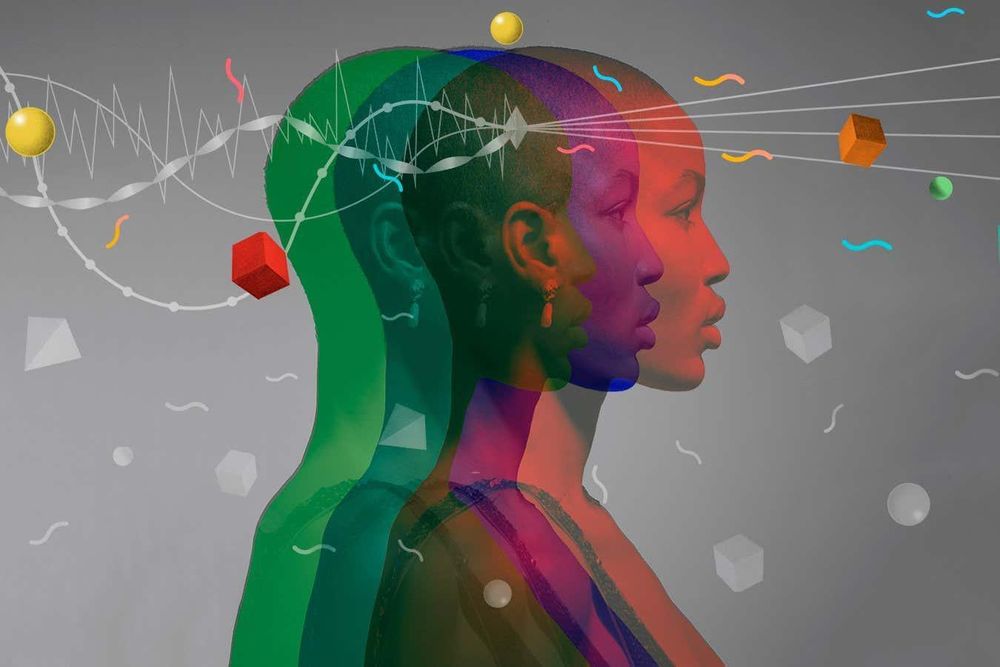
The four types of imagination and how they create our worlds
Your imagination isn't just one thing. The latest neuroscience is untangling just how diverse this faculty really is, says cognitive neurologist Adam Zeman
www.newscientist.com
May 30, 2025 at 8:53 AM
Enjoying Adam Zeman's takeover of New Scientist this week with all things imagination #scicomm #psychscisky
Very happy to declare that 'Global Culture after Gombrich: Art, Mind, World', is out!
Published by Intellect: www.intellectbooks.com/global-cultu...
Launch at the Warburg Institute on the 24th of June: warburg.sas.ac.uk/events/tradi...
#ArtHistory #Art #History #Culture
Published by Intellect: www.intellectbooks.com/global-cultu...
Launch at the Warburg Institute on the 24th of June: warburg.sas.ac.uk/events/tradi...
#ArtHistory #Art #History #Culture

May 30, 2025 at 8:42 AM
Very happy to declare that 'Global Culture after Gombrich: Art, Mind, World', is out!
Published by Intellect: www.intellectbooks.com/global-cultu...
Launch at the Warburg Institute on the 24th of June: warburg.sas.ac.uk/events/tradi...
#ArtHistory #Art #History #Culture
Published by Intellect: www.intellectbooks.com/global-cultu...
Launch at the Warburg Institute on the 24th of June: warburg.sas.ac.uk/events/tradi...
#ArtHistory #Art #History #Culture
On imagining and its varieties, e.g. #2:
Individuals who hoard use objects as receptacles for memories; hoarding tendencies are associated with reduced visualising ability; so, 'visualisation difficulties may promote a reliance on objects to facilitate recall'
www.cambridge.org/core/journal...
Individuals who hoard use objects as receptacles for memories; hoarding tendencies are associated with reduced visualising ability; so, 'visualisation difficulties may promote a reliance on objects to facilitate recall'
www.cambridge.org/core/journal...
Through the mind’s eye: mapping associations between hoarding tendencies and voluntary and involuntary mental imagery | Behavioural and Cognitive Psychotherapy | Cambridge Core
Through the mind’s eye: mapping associations between hoarding tendencies and voluntary and involuntary mental imagery
www.cambridge.org
May 19, 2025 at 11:04 AM
On imagining and its varieties, e.g. #2:
Individuals who hoard use objects as receptacles for memories; hoarding tendencies are associated with reduced visualising ability; so, 'visualisation difficulties may promote a reliance on objects to facilitate recall'
www.cambridge.org/core/journal...
Individuals who hoard use objects as receptacles for memories; hoarding tendencies are associated with reduced visualising ability; so, 'visualisation difficulties may promote a reliance on objects to facilitate recall'
www.cambridge.org/core/journal...
no hugging, no learning
Seinfeld's rejection of the formula providing 'opioid reassurance in the form of redemption and the simultaneous restoration of normality: the hero always achieves self-optimisation within the acceptable confines of bourgeois respectability' aeon.co/essays/why-d...?
Seinfeld's rejection of the formula providing 'opioid reassurance in the form of redemption and the simultaneous restoration of normality: the hero always achieves self-optimisation within the acceptable confines of bourgeois respectability' aeon.co/essays/why-d...?

Why does every film and TV series seem to have the same plot? | Aeon Essays
The three-act ‘hero’s journey’ has long been the most prominent kind of story. What other tales are there to tell?
aeon.co
May 18, 2025 at 12:12 PM
no hugging, no learning
Seinfeld's rejection of the formula providing 'opioid reassurance in the form of redemption and the simultaneous restoration of normality: the hero always achieves self-optimisation within the acceptable confines of bourgeois respectability' aeon.co/essays/why-d...?
Seinfeld's rejection of the formula providing 'opioid reassurance in the form of redemption and the simultaneous restoration of normality: the hero always achieves self-optimisation within the acceptable confines of bourgeois respectability' aeon.co/essays/why-d...?
There's so much great work on imagining and its varieties at the moment.
E.g. @eazanon.bsky.social, @kerblooee.bsky.social and others' introduction of #prophantasia: the ability to project mental images into the external world osf.io/preprints/os...
E.g. @eazanon.bsky.social, @kerblooee.bsky.social and others' introduction of #prophantasia: the ability to project mental images into the external world osf.io/preprints/os...
OSF
osf.io
May 18, 2025 at 11:57 AM
There's so much great work on imagining and its varieties at the moment.
E.g. @eazanon.bsky.social, @kerblooee.bsky.social and others' introduction of #prophantasia: the ability to project mental images into the external world osf.io/preprints/os...
E.g. @eazanon.bsky.social, @kerblooee.bsky.social and others' introduction of #prophantasia: the ability to project mental images into the external world osf.io/preprints/os...
An interesting and provocative find regarding aphantasia and reading - but still find non-conscious imagery hard to believe in

new preprint: osf.io/preprints/ps...
aphantasics reported to feel less 'absorbed' as they read stories, but they dwelled just as much on words that typically evoke imagery. so perhaps they just didn't realize they have (non-conscious) imagery too
Ali Moharramipour's 1st paper as senior author
🧠📈
aphantasics reported to feel less 'absorbed' as they read stories, but they dwelled just as much on words that typically evoke imagery. so perhaps they just didn't realize they have (non-conscious) imagery too
Ali Moharramipour's 1st paper as senior author
🧠📈
OSF
osf.io
April 15, 2025 at 12:24 PM
An interesting and provocative find regarding aphantasia and reading - but still find non-conscious imagery hard to believe in
Sounds just like a review AI would give 🧐 ... www.theguardian.com/books/2025/m...

‘OpenAI’s metafictional short story about grief is beautiful and moving’ | Jeanette Winterson
I think of AI as alternative intelligence – and its capacity to be ‘other’ is just what the human race needs
www.theguardian.com
March 13, 2025 at 12:53 PM
Sounds just like a review AI would give 🧐 ... www.theguardian.com/books/2025/m...
Here's a translation of @hnirom.bsky.social's article on aphantasic art-making - I sound so much more profound in French, but there you go artimescience.org/updates/f/ce...

Ces artistes qui créent en l’absence d’images dans la tête
- A translation of Hervé Morin's 2024 article in Le Monde
artimescience.org
February 4, 2025 at 10:34 AM
Here's a translation of @hnirom.bsky.social's article on aphantasic art-making - I sound so much more profound in French, but there you go artimescience.org/updates/f/ce...
Here's a wee blog post, wondering if Michelangelo really did see angels in blocks of stone artimescience.org/updates/f/vi...

Visualising genius
Try this thought experiment. Michelangelo - Michelangelo Buonarroti, the Renaissance genius who created the statue of David and the Sistine Chapel ceiling – claimed,
artimescience.org
January 11, 2025 at 9:23 PM
Here's a wee blog post, wondering if Michelangelo really did see angels in blocks of stone artimescience.org/updates/f/vi...
On oldie but a goodie

January 10, 2025 at 9:35 AM
On oldie but a goodie
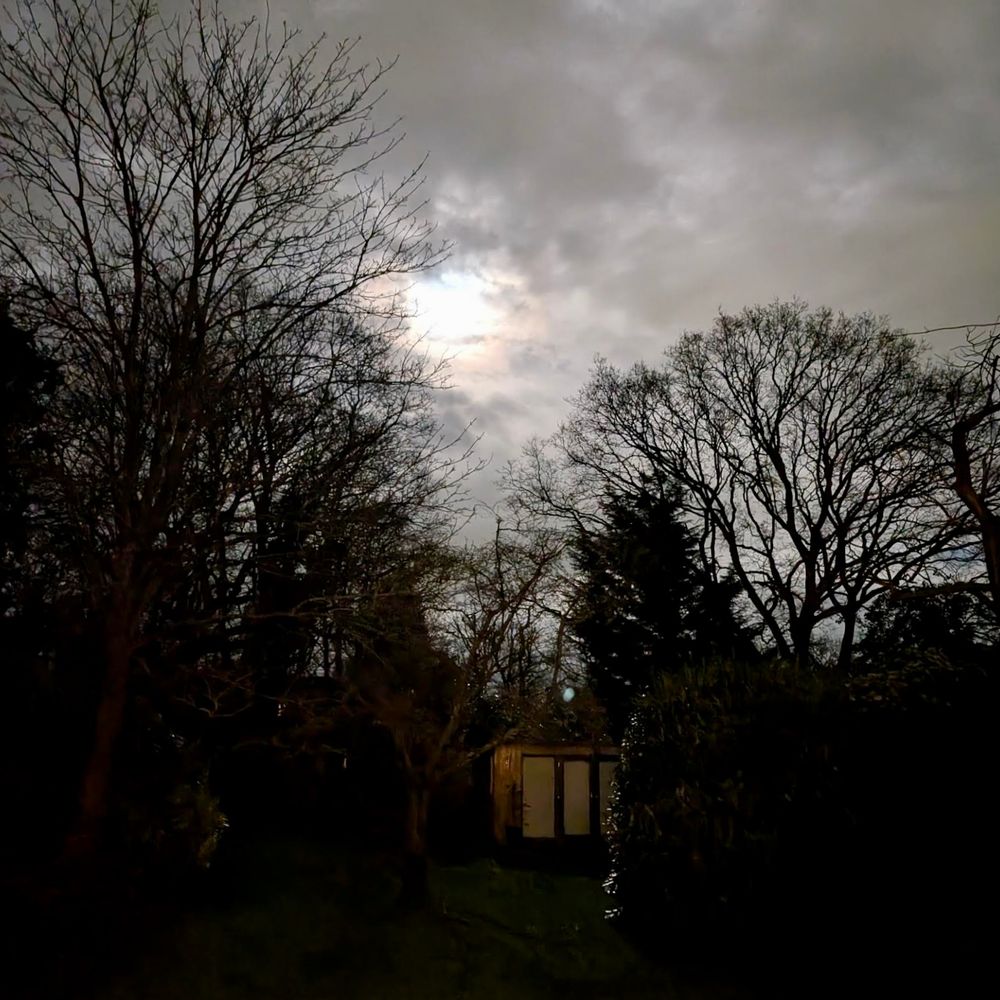
The fallacy of descriptive writing, in which the reader imagines that the writer photographs a scene or object in words, then passes the words to the reader who decodes them into the same scene or object somewhere in their head.
November 26, 2024 at 9:51 PM
Well this is nice. I've also gone and made a website with a blog (!) where I update on the book project and other things art, science, and imagining artimescience.org

ARTIMESCIENCE
artimescience.org
November 21, 2024 at 10:49 AM
Well this is nice. I've also gone and made a website with a blog (!) where I update on the book project and other things art, science, and imagining artimescience.org