




Metin Karayilan
@mk-lab.bsky.social
Polymer chemist @CWRU | https://metinkarayilan.wixsite.com/karayilan-research
As fall turns into winter, here’s a look back at a project from the past year and a half that began in May 2024. The last photo was taken on October 29, 2025.
🍃🍂 The ivy on Millis Hall tells its own story — changing colors and textures with the seasons.
🍃🍂 The ivy on Millis Hall tells its own story — changing colors and textures with the seasons.

October 31, 2025 at 2:32 PM
As fall turns into winter, here’s a look back at a project from the past year and a half that began in May 2024. The last photo was taken on October 29, 2025.
🍃🍂 The ivy on Millis Hall tells its own story — changing colors and textures with the seasons.
🍃🍂 The ivy on Millis Hall tells its own story — changing colors and textures with the seasons.
Our recent work is now published in ACS Macromolecules!
Dual-Degradable and Reprocessable Hyperbranched Polymers from Chain Transfer Agent-Lipoic Acid Conjugate | Macromolecules pubs.acs.org/doi/10.1021/...
Dual-Degradable and Reprocessable Hyperbranched Polymers from Chain Transfer Agent-Lipoic Acid Conjugate | Macromolecules pubs.acs.org/doi/10.1021/...

Dual-Degradable and Reprocessable Hyperbranched Polymers from Chain Transfer Agent-Lipoic Acid Conjugate
Hyperbranched polymers (HBPs) offer exceptional functionality, high solubility, and processability due to their dense branching and terminal group density, yet achieving degradable and recyclable HBPs...
pubs.acs.org
September 1, 2025 at 5:06 PM
Our recent work is now published in ACS Macromolecules!
Dual-Degradable and Reprocessable Hyperbranched Polymers from Chain Transfer Agent-Lipoic Acid Conjugate | Macromolecules pubs.acs.org/doi/10.1021/...
Dual-Degradable and Reprocessable Hyperbranched Polymers from Chain Transfer Agent-Lipoic Acid Conjugate | Macromolecules pubs.acs.org/doi/10.1021/...
Reposted by Metin Karayilan

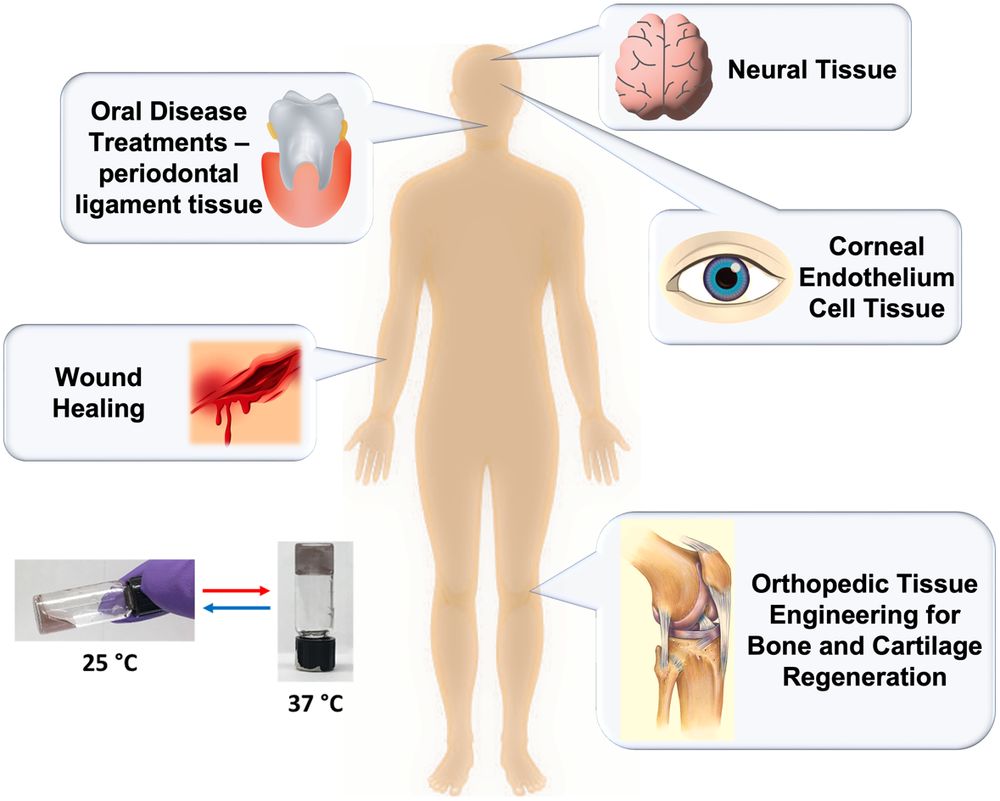
Experience the full journey of thermoresponsive polymers, from benchtop to potential applications in public health ⚕️, in this RSC Applied Polymers review article by Metin Karayilan and co-authors! pubs.rsc.org/en/cont...
May 14, 2025 at 12:56 PM
Experience the full journey of thermoresponsive polymers, from benchtop to potential applications in public health ⚕️, in this RSC Applied Polymers review article by Metin Karayilan and co-authors! pubs.rsc.org/en/cont...
Our research article is now published in Biomacromolecules! Huge congratulations to the entire team! @divitamathur.bsky.social @mjahore.bsky.social @pubs.acs.org
Injectable Fluorescent Bottlebrush Polymers for Interventional Procedures & Biomedical Imaging
doi.org/10.1021/acs....
Injectable Fluorescent Bottlebrush Polymers for Interventional Procedures & Biomedical Imaging
doi.org/10.1021/acs....
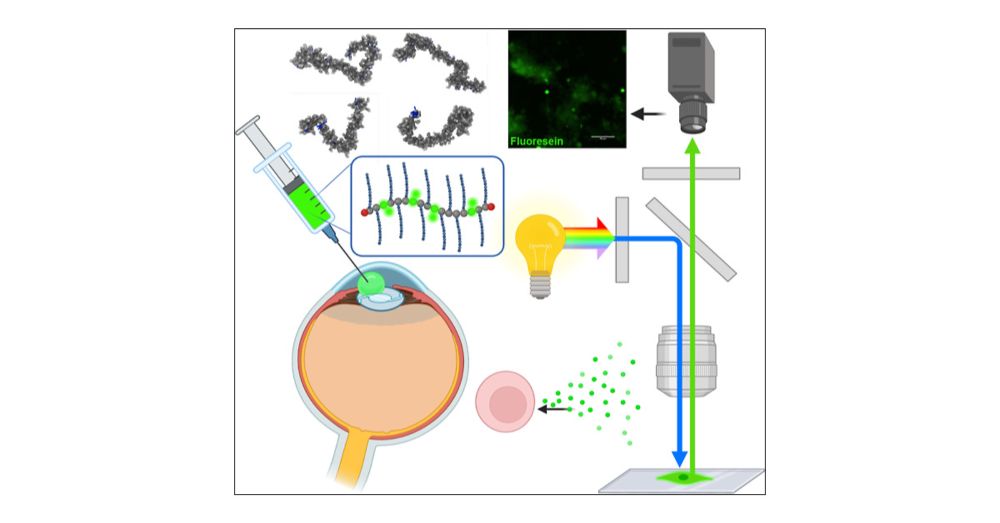
Injectable Fluorescent Bottlebrush Polymers for Interventional Procedures and Biomedical Imaging
Injectable biomaterials play a vital role in modern medicine, offering tailored functionalities for diverse therapeutic and diagnostic applications. In ophthalmology, for instance, viscoelastic materials are crucial for procedures such as cataract surgery but often leave residues, increasing postoperative risks. This study introduces injectable fluorescent viscoelastics (FluoVs) synthesized via one-step controlled radical copolymerization of oligo(ethylene glycol) acrylate and fluorescein acrylate. These bottlebrush-shaped polymers exhibit enhanced fluorescence intensity for improved traceability and facile removal postsurgery. To prevent aggregation, charged terpolymers were synthesized, ensuring intra- and intermolecular electrostatic repulsion. Dynamic light scattering and energy-conserved dissipative particle dynamics simulations revealed how the fluorescein content and monomer sequence affect the hydrodynamic size of these copolymers. Biocompatibility assessments showed that FluoVs maintained cell viability comparable to commercial hydroxypropyl methylcellulose and nonfluorescent poly(oligo(ethylene glycol) acrylate) controls. The FluoVs combine high fluorescence intensity, low viscosity, and excellent biocompatibility, offering intraoperative traceability and significant advancements for ocular and bioimaging applications.
doi.org
January 25, 2025 at 4:06 PM
Our research article is now published in Biomacromolecules! Huge congratulations to the entire team! @divitamathur.bsky.social @mjahore.bsky.social @pubs.acs.org
Injectable Fluorescent Bottlebrush Polymers for Interventional Procedures & Biomedical Imaging
doi.org/10.1021/acs....
Injectable Fluorescent Bottlebrush Polymers for Interventional Procedures & Biomedical Imaging
doi.org/10.1021/acs....