


Michal Santocki
@michalsantocki.bsky.social
Postdoctoral Researcher at Frič lab, ICRC, St. Anne's University Hospital Brno | Investigating long-term effects of sepsis | Organoids enthusiast | Myeloid cells geek |
#immunology #sepsis #innateimmunity #intravitalmicroscopy #organoids 👨🏻🔬🔬🩸
#immunology #sepsis #innateimmunity #intravitalmicroscopy #organoids 👨🏻🔬🔬🩸
Thank you very much for featuring an image from our article on the cover of the current issue - I'm really honored and grateful!
May 1, 2025 at 8:08 PM
Thank you very much for featuring an image from our article on the cover of the current issue - I'm really honored and grateful!
I would like to thank the editor and reviewers, as well as everyone who supported me during the work on this publication! @bloodportfolio.bsky.social @jagiellonskiuni.bsky.social
#Immunology #sepsis #NETs #neutrophilextracellulartraps #neutrophils #invivomicroscopy
#Immunology #sepsis #NETs #neutrophilextracellulartraps #neutrophils #invivomicroscopy
May 1, 2025 at 8:05 PM
I would like to thank the editor and reviewers, as well as everyone who supported me during the work on this publication! @bloodportfolio.bsky.social @jagiellonskiuni.bsky.social
#Immunology #sepsis #NETs #neutrophilextracellulartraps #neutrophils #invivomicroscopy
#Immunology #sepsis #NETs #neutrophilextracellulartraps #neutrophils #invivomicroscopy
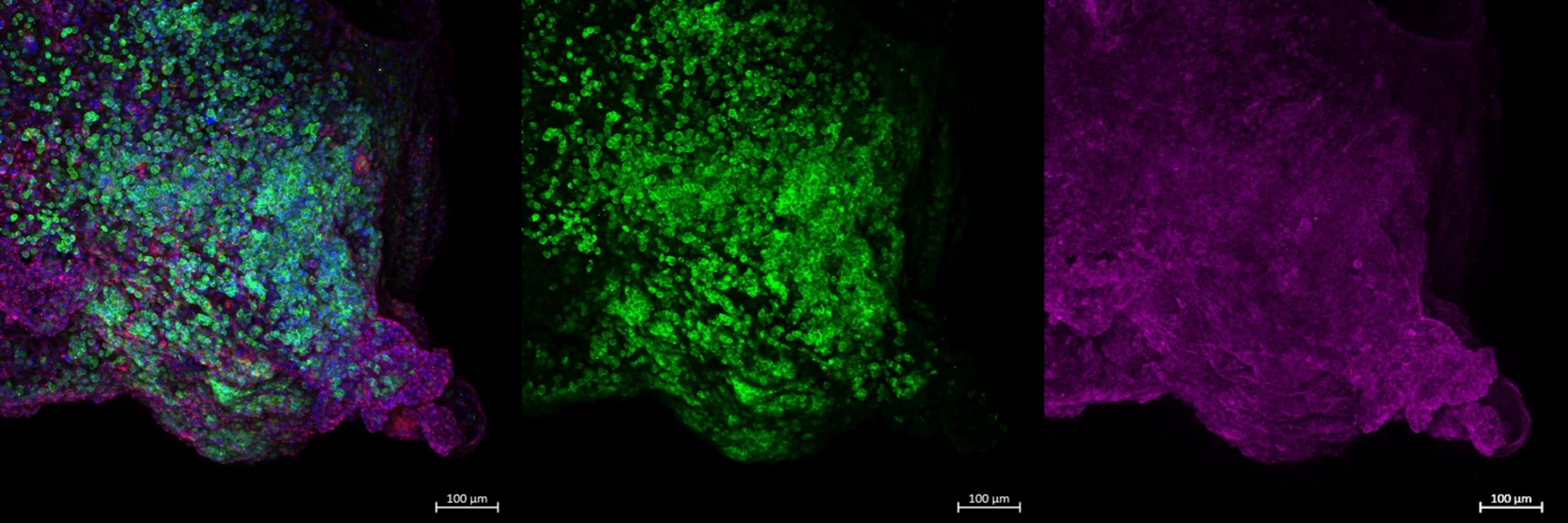
I'm particularly proud that the cover of the current issue features an image I captured using intravital microscopy, depicting the second wave of NETs released in liver sinusoids 14 days after the induction of sepsis! 🔬
Thank you very much for this distinction!
#invivomicroscopy
Thank you very much for this distinction!
#invivomicroscopy
May 1, 2025 at 8:05 PM
I'm particularly proud that the cover of the current issue features an image I captured using intravital microscopy, depicting the second wave of NETs released in liver sinusoids 14 days after the induction of sepsis! 🔬
Thank you very much for this distinction!
#invivomicroscopy
Thank you very much for this distinction!
#invivomicroscopy
The article is accompanied by an excellent commentary by Dr. Paul Kubes from Queen’s University in Canada, for which I am very grateful
t.co/SJCN2AzWHz
t.co/SJCN2AzWHz
https://tinyurl.com/2tdnf69a
t.co
May 1, 2025 at 8:05 PM
The article is accompanied by an excellent commentary by Dr. Paul Kubes from Queen’s University in Canada, for which I am very grateful
t.co/SJCN2AzWHz
t.co/SJCN2AzWHz
Takeaway: NETs are much more than temporary immune structures—they persist, self-renew, and drive inflammation over long periods, impacting infections and chronic diseases. Targeting NETs could transform treatment of sepsis, chronic inflammation, and autoimmune disorders 🕸️
#NETs #sepsis
#NETs #sepsis
May 1, 2025 at 8:05 PM
One of the most fascinating findings from our study is how NETs contribute to a form of trained immunity. After the second wave, infections with live bacteria triggered different immune responses—initially dampened, but later amplified (even 5 months later)
#trainedimmunity #NETs
#trainedimmunity #NETs
May 1, 2025 at 8:05 PM
One of the most fascinating findings from our study is how NETs contribute to a form of trained immunity. After the second wave, infections with live bacteria triggered different immune responses—initially dampened, but later amplified (even 5 months later)
#trainedimmunity #NETs
#trainedimmunity #NETs
Two weeks after the first wave of NETs, we observed a cascade of events triggered by exposed histones: endothelial activation, IL-1β release, and platelet aggregation. These changes set off a second wave of NETs, perpetuating inflammation and causing damage to the liver!
#sepsis #NETs #viciouscircle
#sepsis #NETs #viciouscircle
May 1, 2025 at 8:05 PM
Two weeks after the first wave of NETs, we observed a cascade of events triggered by exposed histones: endothelial activation, IL-1β release, and platelet aggregation. These changes set off a second wave of NETs, perpetuating inflammation and causing damage to the liver!
#sepsis #NETs #viciouscircle
#sepsis #NETs #viciouscircle
Surprisingly NETs don’t just break down—they can self-renew. 14 days after the first wave of NETs, a second wave emerges. This process involves histone exposure, immune signaling, and endothelial changes. This vicious circle of NETs might explain what happens in chronic diseases...
May 1, 2025 at 8:05 PM
Surprisingly NETs don’t just break down—they can self-renew. 14 days after the first wave of NETs, a second wave emerges. This process involves histone exposure, immune signaling, and endothelial changes. This vicious circle of NETs might explain what happens in chronic diseases...
We found that SR-A, TLR2, and TLR4 receptors mediate NET component uptake by macrophages & neutrophils. Interestingly, TLR2 was more engaged in histone & elastase removal
#innateimmunity #tolllikereceptors
#innateimmunity #tolllikereceptors
May 1, 2025 at 8:05 PM
We found that SR-A, TLR2, and TLR4 receptors mediate NET component uptake by macrophages & neutrophils. Interestingly, TLR2 was more engaged in histone & elastase removal
#innateimmunity #tolllikereceptors
#innateimmunity #tolllikereceptors
Blocking Fc receptors dramatically reduced macrophage & neutrophil uptake of NET remnants. IgM and IgG levels spiked in response to endotoxemia, highlighting an antibody-driven process
#phagocytosis #NETs #sepsis
#phagocytosis #NETs #sepsis
May 1, 2025 at 8:05 PM
Blocking Fc receptors dramatically reduced macrophage & neutrophil uptake of NET remnants. IgM and IgG levels spiked in response to endotoxemia, highlighting an antibody-driven process
#phagocytosis #NETs #sepsis
#phagocytosis #NETs #sepsis
We investigated the role of phagocytes in NETs removal. Kupffer cells were the main players, efficiently engulfing histones & elastase from NETs, while monocytes played a minor role. Neutrophils also took up NET remnants, but to a lesser extent
#sepsis #liver #Kupffercells #NETs
#sepsis #liver #Kupffercells #NETs
May 1, 2025 at 8:05 PM
We investigated the role of phagocytes in NETs removal. Kupffer cells were the main players, efficiently engulfing histones & elastase from NETs, while monocytes played a minor role. Neutrophils also took up NET remnants, but to a lesser extent
#sepsis #liver #Kupffercells #NETs
#sepsis #liver #Kupffercells #NETs
Our research reveals that neutrophil extracellular traps (NETs) can persist on liver blood vessel walls for months after formation. Using intravital imaging we showed that NET proteins, especially histones, linger much longer than expected and can trigger secondary wave of NETs!
#invivomicroscopy
#invivomicroscopy
May 1, 2025 at 8:05 PM
Our research reveals that neutrophil extracellular traps (NETs) can persist on liver blood vessel walls for months after formation. Using intravital imaging we showed that NET proteins, especially histones, linger much longer than expected and can trigger secondary wave of NETs!
#invivomicroscopy
#invivomicroscopy