



Micah Freedman
@micahfreedman.bsky.social
Studying evolutionary ecology, natural history, chemical ecology, biodiversity, and insect migration at the University of Toronto
https://www.freedman-lab.ca
https://www.freedman-lab.ca
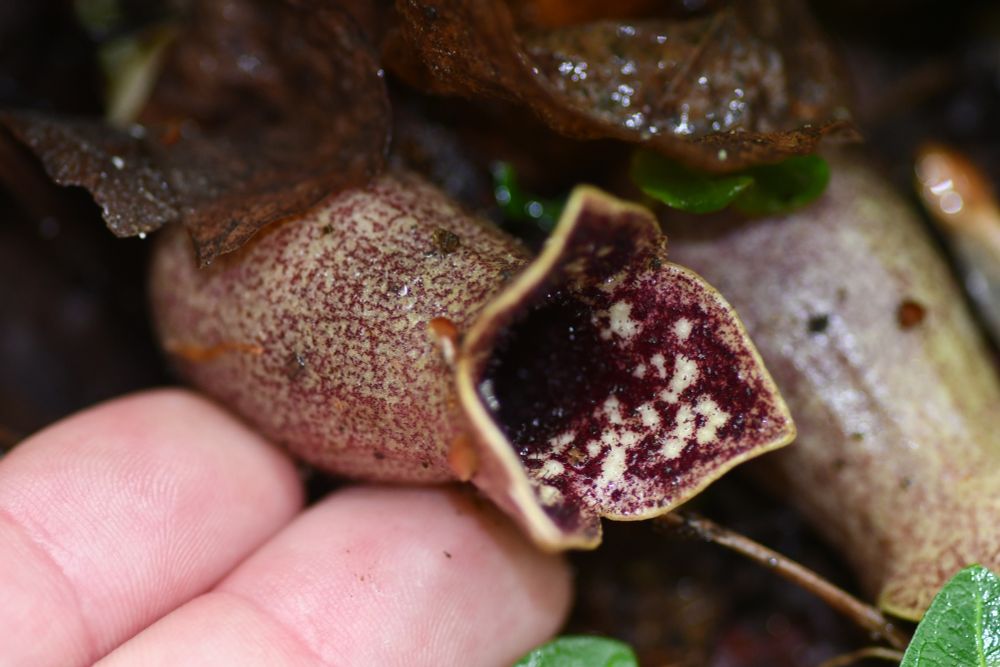
(10) Asarum sp. (possibly A. shuttleworthii, the largeflower heartleaf), in bloom. The heartleafs (family Aristolochiaceae) are sometimes considered to be their own segregate genus, Hexastylis. Flowers are purple/brown and smell like carrion, presumably an adaptation for fly pollination 🥰


May 4, 2025 at 4:13 PM
(10) Asarum sp. (possibly A. shuttleworthii, the largeflower heartleaf), in bloom. The heartleafs (family Aristolochiaceae) are sometimes considered to be their own segregate genus, Hexastylis. Flowers are purple/brown and smell like carrion, presumably an adaptation for fly pollination 🥰
(9) Krigia virginica (Virginia dwarf dandelion) capitulum with developing achenes (I think that's what these are?). Superficially this reminds me of the flower heads of Navarretia or Gilia.

April 29, 2025 at 4:19 AM
(9) Krigia virginica (Virginia dwarf dandelion) capitulum with developing achenes (I think that's what these are?). Superficially this reminds me of the flower heads of Navarretia or Gilia.
(8) Nerodia sipedon (common watersnake) in a group on some river debris. This area got a lot of wind damage and flooding during Hurricane Helene back in September but not as bad as further east. Not sure what is happening in this photo -- maybe they form mating balls like some other snakes?

April 29, 2025 at 4:19 AM
(8) Nerodia sipedon (common watersnake) in a group on some river debris. This area got a lot of wind damage and flooding during Hurricane Helene back in September but not as bad as further east. Not sure what is happening in this photo -- maybe they form mating balls like some other snakes?
(7) Pyrularia pubera (buffalo nut), a hemiparasitic understory shrub in the Santalaceae (same family as the more familiar mistletoes). It apparently is a generalist in its host associations. In reading about it, I also learned that there are a few other shrubby genera in the family (e.g., Buckleya)

April 29, 2025 at 4:19 AM
(7) Pyrularia pubera (buffalo nut), a hemiparasitic understory shrub in the Santalaceae (same family as the more familiar mistletoes). It apparently is a generalist in its host associations. In reading about it, I also learned that there are a few other shrubby genera in the family (e.g., Buckleya)
(6) Trillium vaseyi, endemic to western NC, SC, and northern GA (with a single disjunct population in AL). This species has among the largest flowers of any Trillium -- love the deep red / maroon color. The most common Trillium species in the area seems to be T. catesbaei.


April 29, 2025 at 4:19 AM
(6) Trillium vaseyi, endemic to western NC, SC, and northern GA (with a single disjunct population in AL). This species has among the largest flowers of any Trillium -- love the deep red / maroon color. The most common Trillium species in the area seems to be T. catesbaei.
(5) A nomad bee (Nomada sp.). Many species are kleoptoparasites of solitary ground-nesting bees like Andrena and are highly specialized, associating with only a single host. Nomada lack pollen-collecting hairs (scopae) on their hind-legs, as is true for other kleptoparasitic bees (e.g. Coelioxys).

April 29, 2025 at 4:19 AM
(5) A nomad bee (Nomada sp.). Many species are kleoptoparasites of solitary ground-nesting bees like Andrena and are highly specialized, associating with only a single host. Nomada lack pollen-collecting hairs (scopae) on their hind-legs, as is true for other kleptoparasitic bees (e.g. Coelioxys).
(4) Leptinotarsa juncta (false potato beetle), seen here on Solanum carolinense (horsenettle). Like many chrysomelids, its larvae have fecal shields that probably serve as predator deterrents. Unlike its congener the Colorado potato beetle, this species is not considered an agricultural pest.

April 29, 2025 at 4:19 AM
(4) Leptinotarsa juncta (false potato beetle), seen here on Solanum carolinense (horsenettle). Like many chrysomelids, its larvae have fecal shields that probably serve as predator deterrents. Unlike its congener the Colorado potato beetle, this species is not considered an agricultural pest.
(3) Pseudothyris sepulchralis (mournful thyris moth), a really striking moth that is part of a family (Thyrididae) of primarily day-flying moths. The larval hosts are reported to be greenbriers (Smilax sp.); Pickens County, where I grew up, has about a dozen species of Smilax!

April 29, 2025 at 4:19 AM
(3) Pseudothyris sepulchralis (mournful thyris moth), a really striking moth that is part of a family (Thyrididae) of primarily day-flying moths. The larval hosts are reported to be greenbriers (Smilax sp.); Pickens County, where I grew up, has about a dozen species of Smilax!
(2) First up: Magnolia fraseri (Fraser's magnolia), native to the southern Appalachians and a sliver of SC. Grows in moist soil and has some of the largest leaves of any temperate North American tree (regularly >18 inches in length).

April 29, 2025 at 4:19 AM
(2) First up: Magnolia fraseri (Fraser's magnolia), native to the southern Appalachians and a sliver of SC. Grows in moist soil and has some of the largest leaves of any temperate North American tree (regularly >18 inches in length).
First warm day of the year in Toronto today (11C). Saw my first bee even though there’s still snow on the ground in places and not even the crocuses aren’t up yet. Anyone know if this is Osmia?

March 12, 2025 at 2:05 AM
First warm day of the year in Toronto today (11C). Saw my first bee even though there’s still snow on the ground in places and not even the crocuses aren’t up yet. Anyone know if this is Osmia?
Here's a photo from December 2024 in White Sands National Park 🙂

March 9, 2025 at 4:32 PM
Here's a photo from December 2024 in White Sands National Park 🙂