



MBARI
@mbarinews.bsky.social
An oceanographic research institute focused on advancing marine science and engineering to understand our changing ocean
The best way to spread deep-sea cheer is by sending tubeworm videos to those you hold dear. 🎁
Tubeworms like these Oasisia alvinae are abundant at hydrothermal vents at depths of 3,700 meters (12,140 feet) in the Pescadero Basin, located off the east coast of Mexico’s Baja California.
Tubeworms like these Oasisia alvinae are abundant at hydrothermal vents at depths of 3,700 meters (12,140 feet) in the Pescadero Basin, located off the east coast of Mexico’s Baja California.
December 2, 2025 at 6:51 PM
The best way to spread deep-sea cheer is by sending tubeworm videos to those you hold dear. 🎁
Tubeworms like these Oasisia alvinae are abundant at hydrothermal vents at depths of 3,700 meters (12,140 feet) in the Pescadero Basin, located off the east coast of Mexico’s Baja California.
Tubeworms like these Oasisia alvinae are abundant at hydrothermal vents at depths of 3,700 meters (12,140 feet) in the Pescadero Basin, located off the east coast of Mexico’s Baja California.
Serving up some zooplankton squee 🥰
Copepods like the one in this video can be found in massive numbers across the world ocean. They play an important role in ocean food webs as predators—they eat even smaller diatoms and phytoplankton—and prey for animals like jellies, fish, and filter feeders.
Copepods like the one in this video can be found in massive numbers across the world ocean. They play an important role in ocean food webs as predators—they eat even smaller diatoms and phytoplankton—and prey for animals like jellies, fish, and filter feeders.
November 20, 2025 at 8:20 PM
Serving up some zooplankton squee 🥰
Copepods like the one in this video can be found in massive numbers across the world ocean. They play an important role in ocean food webs as predators—they eat even smaller diatoms and phytoplankton—and prey for animals like jellies, fish, and filter feeders.
Copepods like the one in this video can be found in massive numbers across the world ocean. They play an important role in ocean food webs as predators—they eat even smaller diatoms and phytoplankton—and prey for animals like jellies, fish, and filter feeders.
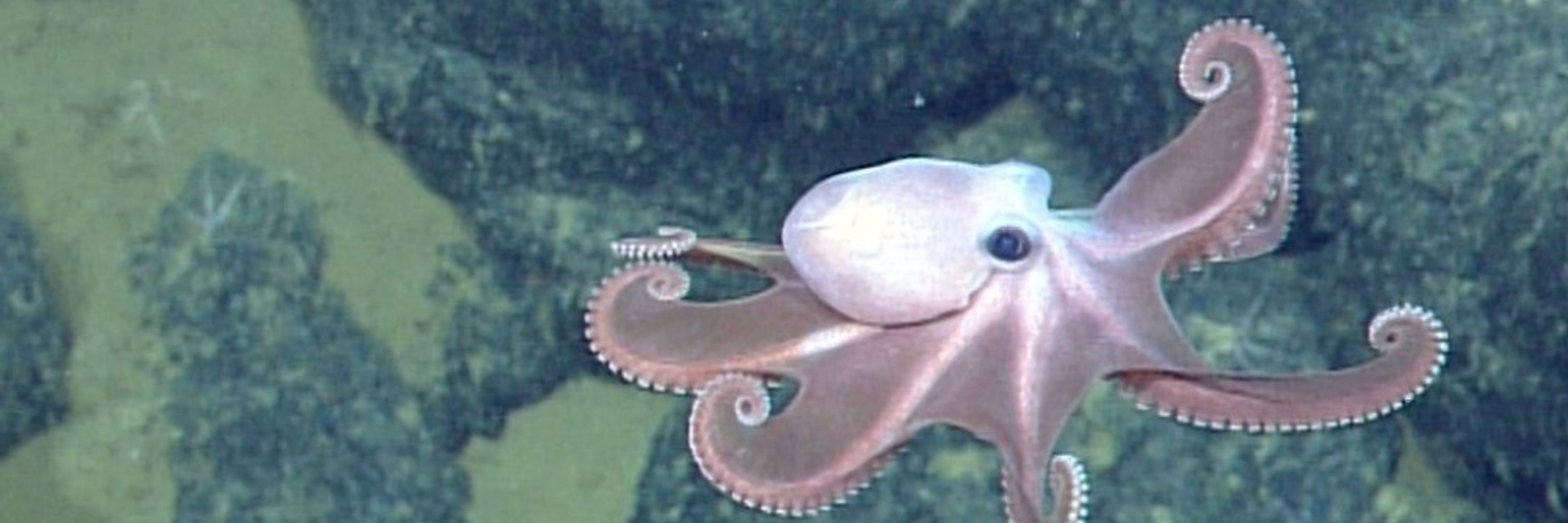
Peek-a-boo with an octopus and her eggs 🙈
MBARI researchers used ROVs to study pearl octopus (Muusoctopus robustus) mothers nesting near warm seafloor springs. Unlike other deep-sea octopuses, their eggs hatched in under two years. The extra warmth boosted metabolism of the moms and their broods.
MBARI researchers used ROVs to study pearl octopus (Muusoctopus robustus) mothers nesting near warm seafloor springs. Unlike other deep-sea octopuses, their eggs hatched in under two years. The extra warmth boosted metabolism of the moms and their broods.
November 19, 2025 at 8:50 PM
Peek-a-boo with an octopus and her eggs 🙈
MBARI researchers used ROVs to study pearl octopus (Muusoctopus robustus) mothers nesting near warm seafloor springs. Unlike other deep-sea octopuses, their eggs hatched in under two years. The extra warmth boosted metabolism of the moms and their broods.
MBARI researchers used ROVs to study pearl octopus (Muusoctopus robustus) mothers nesting near warm seafloor springs. Unlike other deep-sea octopuses, their eggs hatched in under two years. The extra warmth boosted metabolism of the moms and their broods.
Technology innovation is transforming ocean science. This #BlueTechMonth, global experts showcase bold ideas driving the next era of the blue economy. MBARI’s Chris Scholin joins a panel on collaboration and tech. Learn more: tmabluetech.org/bluetech-month-2025

November 17, 2025 at 10:32 PM
Technology innovation is transforming ocean science. This #BlueTechMonth, global experts showcase bold ideas driving the next era of the blue economy. MBARI’s Chris Scholin joins a panel on collaboration and tech. Learn more: tmabluetech.org/bluetech-month-2025
#MondayMood 🛫
A striking white coloration makes this spiny skate (Bathyraja spinosissima) easy to spot. These active swimmers hover and glide well above the seafloor, while their relatives tend to stay close to the bottom. This species is especially common in rocky lava fields.
A striking white coloration makes this spiny skate (Bathyraja spinosissima) easy to spot. These active swimmers hover and glide well above the seafloor, while their relatives tend to stay close to the bottom. This species is especially common in rocky lava fields.
November 10, 2025 at 10:41 PM
#MondayMood 🛫
A striking white coloration makes this spiny skate (Bathyraja spinosissima) easy to spot. These active swimmers hover and glide well above the seafloor, while their relatives tend to stay close to the bottom. This species is especially common in rocky lava fields.
A striking white coloration makes this spiny skate (Bathyraja spinosissima) easy to spot. These active swimmers hover and glide well above the seafloor, while their relatives tend to stay close to the bottom. This species is especially common in rocky lava fields.
Spooky season royalty 👑🎃✨️
Atolla gigantea is the largest Atolla species found off the West Coast. This deep-sea crown jelly can reach a diameter of up to 15 centimeters (six inches) and is one of the most widely distributed jellyfish. The genus occurs worldwide, from the Arctic to the Antarctic.
Atolla gigantea is the largest Atolla species found off the West Coast. This deep-sea crown jelly can reach a diameter of up to 15 centimeters (six inches) and is one of the most widely distributed jellyfish. The genus occurs worldwide, from the Arctic to the Antarctic.
October 22, 2025 at 4:55 PM
Spooky season royalty 👑🎃✨️
Atolla gigantea is the largest Atolla species found off the West Coast. This deep-sea crown jelly can reach a diameter of up to 15 centimeters (six inches) and is one of the most widely distributed jellyfish. The genus occurs worldwide, from the Arctic to the Antarctic.
Atolla gigantea is the largest Atolla species found off the West Coast. This deep-sea crown jelly can reach a diameter of up to 15 centimeters (six inches) and is one of the most widely distributed jellyfish. The genus occurs worldwide, from the Arctic to the Antarctic.
The redhead larvacean is a deep-sea climate hero 🌊💙
These tiny animals build mucous houses to filter marine snow sinking from the waters above. When their filters clog, they abandon their homes, which sink to the seafloor packed with nutrients and large amounts of carbon: youtu.be/7swiAc8rZbk?...
These tiny animals build mucous houses to filter marine snow sinking from the waters above. When their filters clog, they abandon their homes, which sink to the seafloor packed with nutrients and large amounts of carbon: youtu.be/7swiAc8rZbk?...
October 16, 2025 at 8:33 PM
The redhead larvacean is a deep-sea climate hero 🌊💙
These tiny animals build mucous houses to filter marine snow sinking from the waters above. When their filters clog, they abandon their homes, which sink to the seafloor packed with nutrients and large amounts of carbon: youtu.be/7swiAc8rZbk?...
These tiny animals build mucous houses to filter marine snow sinking from the waters above. When their filters clog, they abandon their homes, which sink to the seafloor packed with nutrients and large amounts of carbon: youtu.be/7swiAc8rZbk?...
In our newest edition of deep-sea animals that can dance better than you, we present the siphonophore samba by Apolemia rubriversa.💃
Siphonophores (pronounced “sigh-fawn-oh-fours”) are colonial creatures made up of specialized segments that work together as one.
Siphonophores (pronounced “sigh-fawn-oh-fours”) are colonial creatures made up of specialized segments that work together as one.
October 9, 2025 at 10:27 PM
In our newest edition of deep-sea animals that can dance better than you, we present the siphonophore samba by Apolemia rubriversa.💃
Siphonophores (pronounced “sigh-fawn-oh-fours”) are colonial creatures made up of specialized segments that work together as one.
Siphonophores (pronounced “sigh-fawn-oh-fours”) are colonial creatures made up of specialized segments that work together as one.
The rattail glide 💥
Rattails, or macrourids, are common throughout the world’s ocean. Big blue eyes give the rattail an edge at finding food in deep, dark waters. Their keen eyesight reveals prey, like fishes and squid, darting just above the seafloor.
Rattails, or macrourids, are common throughout the world’s ocean. Big blue eyes give the rattail an edge at finding food in deep, dark waters. Their keen eyesight reveals prey, like fishes and squid, darting just above the seafloor.
October 2, 2025 at 4:53 PM
The rattail glide 💥
Rattails, or macrourids, are common throughout the world’s ocean. Big blue eyes give the rattail an edge at finding food in deep, dark waters. Their keen eyesight reveals prey, like fishes and squid, darting just above the seafloor.
Rattails, or macrourids, are common throughout the world’s ocean. Big blue eyes give the rattail an edge at finding food in deep, dark waters. Their keen eyesight reveals prey, like fishes and squid, darting just above the seafloor.
At the 26th annual Roger Revelle Commemorative Lecture, MBARI’s Chris Scholin explored how robotics and AI are revolutionizing marine science and emphasized why developing technology and maintaining a persistent presence are critical to understanding our changing ocean: bit.ly/oceanography...

October 1, 2025 at 8:19 PM
At the 26th annual Roger Revelle Commemorative Lecture, MBARI’s Chris Scholin explored how robotics and AI are revolutionizing marine science and emphasized why developing technology and maintaining a persistent presence are critical to understanding our changing ocean: bit.ly/oceanography...
This week, MBARI President and CEO Antje Boetius joined #ClimateWeekNYC to share how international scientific collaborations can help guide policy to address climate change, especially in polar environments. She attended meetings around future ocean missions that will help achieve the #BBNJ goals.

September 26, 2025 at 10:07 PM
This week, MBARI President and CEO Antje Boetius joined #ClimateWeekNYC to share how international scientific collaborations can help guide policy to address climate change, especially in polar environments. She attended meetings around future ocean missions that will help achieve the #BBNJ goals.
Dancing with the worms—a compilation of our favorite Alciopid worm dance moves. 🕺🏽
Alciopid polychaetes have large, complex eyes with corneas, irises, lenses, and other structures that give them excellent vision. 👀
Alciopid polychaetes have large, complex eyes with corneas, irises, lenses, and other structures that give them excellent vision. 👀
September 24, 2025 at 9:37 PM
Dancing with the worms—a compilation of our favorite Alciopid worm dance moves. 🕺🏽
Alciopid polychaetes have large, complex eyes with corneas, irises, lenses, and other structures that give them excellent vision. 👀
Alciopid polychaetes have large, complex eyes with corneas, irises, lenses, and other structures that give them excellent vision. 👀
Collaboration is at the heart of everything we do, both across disciplines and with partners worldwide. 🤝🌎
This week, a team from @ifremer.bsky.social visited MBARI to discuss how our organizations can help each other develop technology to study the ocean and make our work more widely accessible.
This week, a team from @ifremer.bsky.social visited MBARI to discuss how our organizations can help each other develop technology to study the ocean and make our work more widely accessible.

September 19, 2025 at 11:34 PM
Collaboration is at the heart of everything we do, both across disciplines and with partners worldwide. 🤝🌎
This week, a team from @ifremer.bsky.social visited MBARI to discuss how our organizations can help each other develop technology to study the ocean and make our work more widely accessible.
This week, a team from @ifremer.bsky.social visited MBARI to discuss how our organizations can help each other develop technology to study the ocean and make our work more widely accessible.
MBARI’s Video Lab has developed the first benchmark dataset for multi-object tracking in deep-sea video. 🤖🌊DeepSeaMOT tests machine learning models in real ocean environments. This publicly available tool will help advance AI for ocean exploration. Learn more: arxiv.org/pdf/2509.03499

September 18, 2025 at 6:40 PM
MBARI’s Video Lab has developed the first benchmark dataset for multi-object tracking in deep-sea video. 🤖🌊DeepSeaMOT tests machine learning models in real ocean environments. This publicly available tool will help advance AI for ocean exploration. Learn more: arxiv.org/pdf/2509.03499
Can you identify this animal? 🔍️👀
Did you get a kick out of shouting “acorn worm” at your phone? If so, you might enjoy playing @fathomverse.bsky.social. This month, you can find acorn worms by playing FathomVerse and earn a special badge!
Learn more about acorn worms: www.mbari.org/animal/acorn...
Did you get a kick out of shouting “acorn worm” at your phone? If so, you might enjoy playing @fathomverse.bsky.social. This month, you can find acorn worms by playing FathomVerse and earn a special badge!
Learn more about acorn worms: www.mbari.org/animal/acorn...
September 17, 2025 at 9:36 PM
Can you identify this animal? 🔍️👀
Did you get a kick out of shouting “acorn worm” at your phone? If so, you might enjoy playing @fathomverse.bsky.social. This month, you can find acorn worms by playing FathomVerse and earn a special badge!
Learn more about acorn worms: www.mbari.org/animal/acorn...
Did you get a kick out of shouting “acorn worm” at your phone? If so, you might enjoy playing @fathomverse.bsky.social. This month, you can find acorn worms by playing FathomVerse and earn a special badge!
Learn more about acorn worms: www.mbari.org/animal/acorn...
Microbes are getting a voice in global conservation. 🌍🦠 The new IUCN Microbial Conservation Specialist Group will develop tools to protect threatened microbial communities—bringing in diverse perspectives to shape a more inclusive biodiversity future. Read more: scripps.ucsd.edu/news/new-spe...

September 17, 2025 at 7:43 PM
Microbes are getting a voice in global conservation. 🌍🦠 The new IUCN Microbial Conservation Specialist Group will develop tools to protect threatened microbial communities—bringing in diverse perspectives to shape a more inclusive biodiversity future. Read more: scripps.ucsd.edu/news/new-spe...
MBARI’s Arctic Expedition continues with cutting-edge technology and research amidst the wonders of the polar environment. From mapping the seafloor to deploying the MiniROV with SLAM navigation, we're unlocking the secrets of Earth’s least-explored frontiers. Dive in: www.mbari.org/expedition/a...


September 11, 2025 at 9:01 PM
MBARI’s Arctic Expedition continues with cutting-edge technology and research amidst the wonders of the polar environment. From mapping the seafloor to deploying the MiniROV with SLAM navigation, we're unlocking the secrets of Earth’s least-explored frontiers. Dive in: www.mbari.org/expedition/a...
MBARI’s technology is helping researchers document deep-sea biodiversity, and our collaborations with expert taxonomists around the world are helping to advance the discovery of life in the largest living space on Earth.
September 8, 2025 at 4:35 PM
MBARI’s technology is helping researchers document deep-sea biodiversity, and our collaborations with expert taxonomists around the world are helping to advance the discovery of life in the largest living space on Earth.
Snailfishes live in a variety of ocean habitats—from shallow tide pools to deep-sea trenches. The newly described bumpy snailfish (Careproctus colliculi), observed in the depths of Monterey Canyon nearly 3,300 meters (10,800 feet) underwater, has a distinctive pink color and a bumpy texture.
September 8, 2025 at 4:33 PM
Snailfishes live in a variety of ocean habitats—from shallow tide pools to deep-sea trenches. The newly described bumpy snailfish (Careproctus colliculi), observed in the depths of Monterey Canyon nearly 3,300 meters (10,800 feet) underwater, has a distinctive pink color and a bumpy texture.
That moment when you spot a deep-sea cutie 😍
Deep-sea hatchetfishes cleverly camouflage themselves in the dark depths of the ocean with light-producing organs along their bellies. This allows them to match the daylight filtering from surface waters above and hide from predators lurking below.
Deep-sea hatchetfishes cleverly camouflage themselves in the dark depths of the ocean with light-producing organs along their bellies. This allows them to match the daylight filtering from surface waters above and hide from predators lurking below.
September 4, 2025 at 5:13 PM
That moment when you spot a deep-sea cutie 😍
Deep-sea hatchetfishes cleverly camouflage themselves in the dark depths of the ocean with light-producing organs along their bellies. This allows them to match the daylight filtering from surface waters above and hide from predators lurking below.
Deep-sea hatchetfishes cleverly camouflage themselves in the dark depths of the ocean with light-producing organs along their bellies. This allows them to match the daylight filtering from surface waters above and hide from predators lurking below.
A neighbourly sort of coral 🪸💕
A resident of rocky environments, the mushroom soft coral (Heteropolypus ritteri) offers a haven for small animals seeking protection. A snailfish may hide near the umbrellas of stinging tentacles, or a shrimp might hang on to weather the storm of strong currents.
A resident of rocky environments, the mushroom soft coral (Heteropolypus ritteri) offers a haven for small animals seeking protection. A snailfish may hide near the umbrellas of stinging tentacles, or a shrimp might hang on to weather the storm of strong currents.
September 3, 2025 at 5:49 PM
A neighbourly sort of coral 🪸💕
A resident of rocky environments, the mushroom soft coral (Heteropolypus ritteri) offers a haven for small animals seeking protection. A snailfish may hide near the umbrellas of stinging tentacles, or a shrimp might hang on to weather the storm of strong currents.
A resident of rocky environments, the mushroom soft coral (Heteropolypus ritteri) offers a haven for small animals seeking protection. A snailfish may hide near the umbrellas of stinging tentacles, or a shrimp might hang on to weather the storm of strong currents.
The MBARI team aboard the Korea Polar Research Institute’s (KOPRI) ice-breaking research vessel (IVRV) Araon has been hard at work testing instruments and settling into life at sea.


September 2, 2025 at 8:49 PM
The MBARI team aboard the Korea Polar Research Institute’s (KOPRI) ice-breaking research vessel (IVRV) Araon has been hard at work testing instruments and settling into life at sea.
A team of MBARI scientists and engineers has embarked on a month-long journey aboard the Korea Polar Research Institute’s (KOPRI) ice-breaking research vessel (IVRV) Araon.
This expedition aims to better understand the dynamics of seafloor permafrost formation and decomposition in the Arctic.
This expedition aims to better understand the dynamics of seafloor permafrost formation and decomposition in the Arctic.


August 29, 2025 at 5:44 PM
A team of MBARI scientists and engineers has embarked on a month-long journey aboard the Korea Polar Research Institute’s (KOPRI) ice-breaking research vessel (IVRV) Araon.
This expedition aims to better understand the dynamics of seafloor permafrost formation and decomposition in the Arctic.
This expedition aims to better understand the dynamics of seafloor permafrost formation and decomposition in the Arctic.
This little piggy went to the deep sea 🐽😍
Sea pigs (Scotoplanes sp.) are one of the most commonly sighted animals on the seafloor off Monterey Bay—but plentiful hardly means boring. Unlike most sea cucumbers, sea pigs use their long, stilt-like tube feet to suspend their bodies above the soft mud.
Sea pigs (Scotoplanes sp.) are one of the most commonly sighted animals on the seafloor off Monterey Bay—but plentiful hardly means boring. Unlike most sea cucumbers, sea pigs use their long, stilt-like tube feet to suspend their bodies above the soft mud.
August 25, 2025 at 8:46 PM
This little piggy went to the deep sea 🐽😍
Sea pigs (Scotoplanes sp.) are one of the most commonly sighted animals on the seafloor off Monterey Bay—but plentiful hardly means boring. Unlike most sea cucumbers, sea pigs use their long, stilt-like tube feet to suspend their bodies above the soft mud.
Sea pigs (Scotoplanes sp.) are one of the most commonly sighted animals on the seafloor off Monterey Bay—but plentiful hardly means boring. Unlike most sea cucumbers, sea pigs use their long, stilt-like tube feet to suspend their bodies above the soft mud.
Meet your new favorite anglerfish—the flowery goosefish (Lophiodes miacanthus). 🎣🩵
This anglerfish belongs to the family Lophiidae, also known as the goosefishes. This group of alluring anglers uses their speckled coloration to blend into the sandy seafloor on the continental shelf.
This anglerfish belongs to the family Lophiidae, also known as the goosefishes. This group of alluring anglers uses their speckled coloration to blend into the sandy seafloor on the continental shelf.
August 21, 2025 at 6:38 PM
Meet your new favorite anglerfish—the flowery goosefish (Lophiodes miacanthus). 🎣🩵
This anglerfish belongs to the family Lophiidae, also known as the goosefishes. This group of alluring anglers uses their speckled coloration to blend into the sandy seafloor on the continental shelf.
This anglerfish belongs to the family Lophiidae, also known as the goosefishes. This group of alluring anglers uses their speckled coloration to blend into the sandy seafloor on the continental shelf.