



Marek Černý
@marekcerny.com
PhD Student in Graph Learning, ex-StatsPerform Research Engineer
Electing a clown turns the government into a circus.
March 4, 2025 at 5:57 AM
Electing a clown turns the government into a circus.
Reposted by Marek Černý
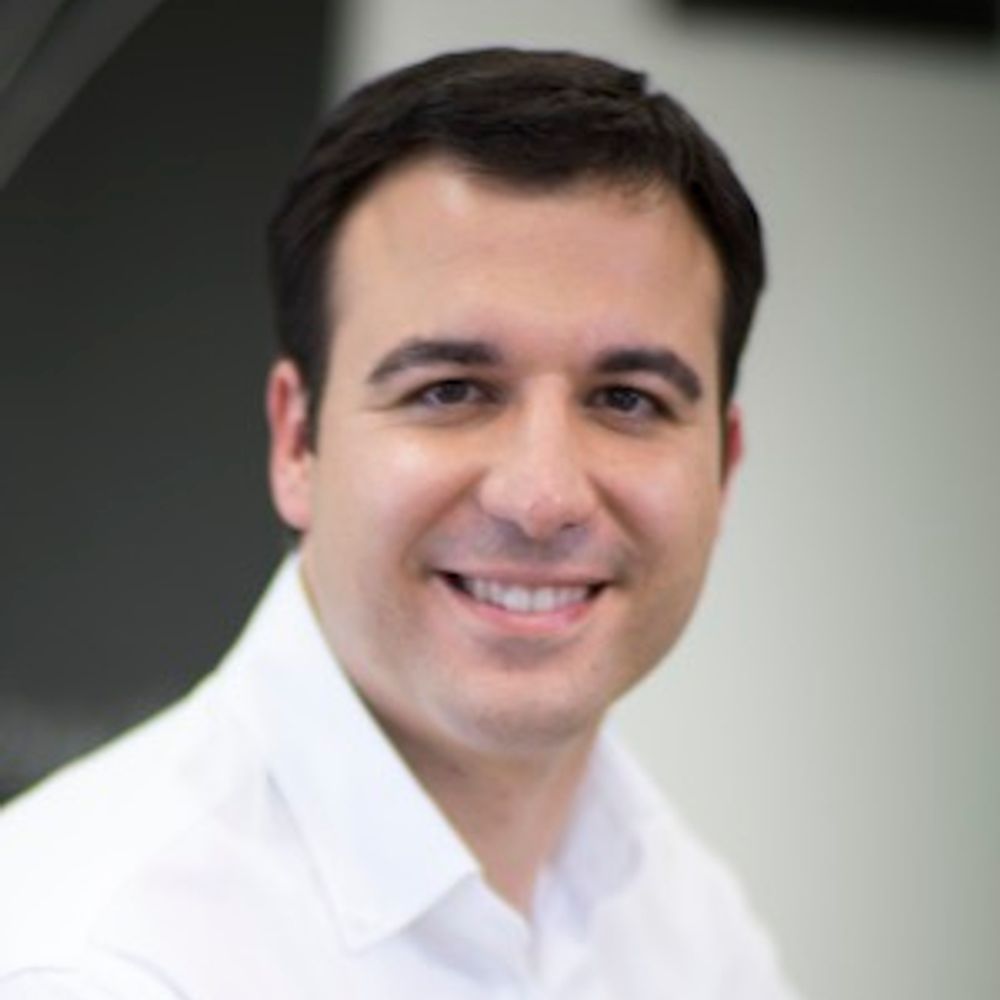
Fang et al. use persistent homology within graph neural networks to capture local defect structures in perovskites, cutting errors by 55%. Their approach resolves supercell scaling issues, boosting defect predictions and accelerating materials discovery. pubs.acs.org/doi/full/10....

Leveraging Persistent Homology Features for Accurate Defect Formation Energy Predictions via Graph Neural Networks
In machine-learning-assisted high-throughput defect studies, a defect-aware latent representation of the supercell structure is crucial for the accurate prediction of defect properties. The performance of current graph neural network (GNN) models is limited due to the fact that defect properties depend strongly on the local atomic configurations near the defect sites and due to the oversmoothing problem of GNN. Herein, we demonstrate that persistent homology features, which encode the topological information on the local chemical environment around each atomic site, can characterize the structural information on defects. Using the dataset containing a wide spectrum of O-based perovskites with all available vacancies as an example, we show that incorporating the persistent homology features, along with proper choices of graph pooling operations, significantly increases the prediction accuracy, with the MAE reduced by 55%. Those features can be easily integrated into the state-of-the-art GNN models, including the graph Transformer network and the equivariant neural network, and universally improve their performance. Besides, our model also overcomes the convergence issue with respect to the supercell size that was present in previous GNN models. Furthermore, using the datasets of defective BaTiO3 with multiple substitutions and multiple vacancies as examples, our GNN model can also predict the defect–defect interactions accurately. These results suggest that persistent homology features can effectively improve the performance of machine learning models and assist the accelerated discovery of functional defects for technological applications.
pubs.acs.org
February 10, 2025 at 2:57 PM
Fang et al. use persistent homology within graph neural networks to capture local defect structures in perovskites, cutting errors by 55%. Their approach resolves supercell scaling issues, boosting defect predictions and accelerating materials discovery. pubs.acs.org/doi/full/10....
Reposted by Marek Černý

Good resistance news: An 'Achilles heel' discovered in antibiotic resistant bacteria. Scientists in Canada found the critical vulnerability: bacteria need zinc. Deprive them of the nutrient & their stability is disrupted making them susceptible to antibiotics again www.genengnews.com/topics/infec...
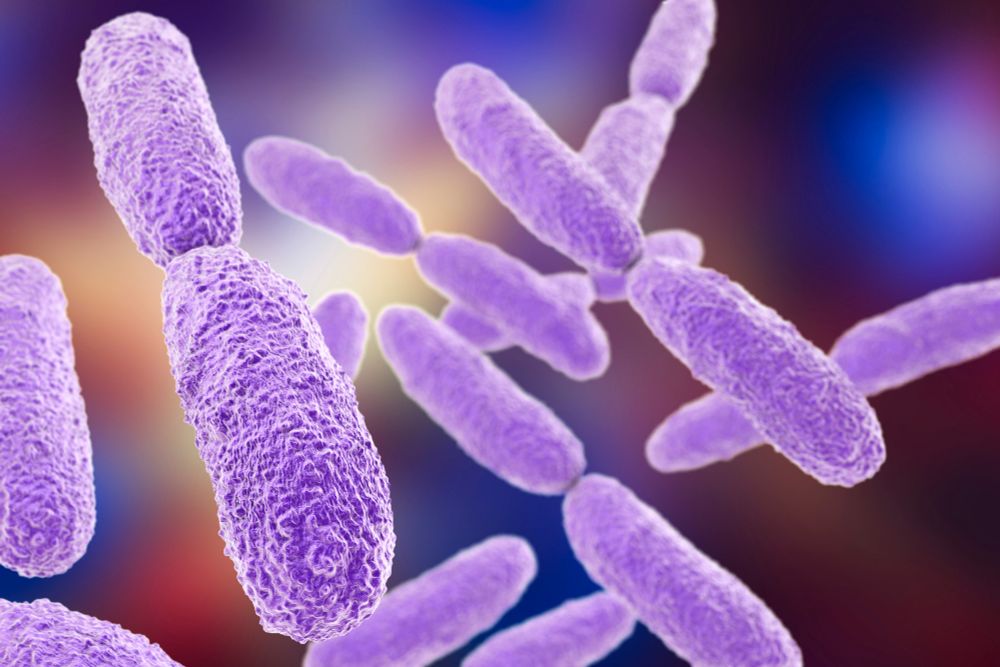
New Achilles Heel Exposed in Antibiotic Resistance
Carbapenems are last-resort antibiotics for treating bacterial infections. A study shows how zinc plays a role in drug-resistant bacteria.
www.genengnews.com
January 9, 2025 at 12:17 PM
Good resistance news: An 'Achilles heel' discovered in antibiotic resistant bacteria. Scientists in Canada found the critical vulnerability: bacteria need zinc. Deprive them of the nutrient & their stability is disrupted making them susceptible to antibiotics again www.genengnews.com/topics/infec...
Reposted by Marek Černý

Hello Bluesky! 🦋
This will be the official account of the Eastern European Machine Learning (EEML) community.
Follow us for news regarding our summer schools, workshops, education/community initiatives, and more!
This will be the official account of the Eastern European Machine Learning (EEML) community.
Follow us for news regarding our summer schools, workshops, education/community initiatives, and more!
December 15, 2024 at 6:21 PM
Hello Bluesky! 🦋
This will be the official account of the Eastern European Machine Learning (EEML) community.
Follow us for news regarding our summer schools, workshops, education/community initiatives, and more!
This will be the official account of the Eastern European Machine Learning (EEML) community.
Follow us for news regarding our summer schools, workshops, education/community initiatives, and more!
Reposted by Marek Černý

🚨 Introducing graph-pes: a unified framework for building, training and using graph-based machine-learned models of potential energy surfaces! 🚨
#compchem #ML #ChemSky #CompChemSky
#compchem #ML #ChemSky #CompChemSky

December 9, 2024 at 8:53 AM
🚨 Introducing graph-pes: a unified framework for building, training and using graph-based machine-learned models of potential energy surfaces! 🚨
#compchem #ML #ChemSky #CompChemSky
#compchem #ML #ChemSky #CompChemSky
Reposted by Marek Černý
Been a while since I read a paper like this:
• "What [DiffDock] appears to be doing cannot be considered" docking
• "Results are ... contaminated with near neighbors to test cases"
• "Results for DiffDock were artifactual"
• "Results for other methods were incorrectly done"
arxiv.org/abs/2412.02889
• "What [DiffDock] appears to be doing cannot be considered" docking
• "Results are ... contaminated with near neighbors to test cases"
• "Results for DiffDock were artifactual"
• "Results for other methods were incorrectly done"
arxiv.org/abs/2412.02889

Deep-Learning Based Docking Methods: Fair Comparisons to Conventional Docking Workflows
The diffusion learning method, DiffDock, for docking small-molecule ligands into protein binding sites was recently introduced. Results included comparisons to more conventional docking approaches, wi...
arxiv.org
December 5, 2024 at 3:36 PM
Been a while since I read a paper like this:
• "What [DiffDock] appears to be doing cannot be considered" docking
• "Results are ... contaminated with near neighbors to test cases"
• "Results for DiffDock were artifactual"
• "Results for other methods were incorrectly done"
arxiv.org/abs/2412.02889
• "What [DiffDock] appears to be doing cannot be considered" docking
• "Results are ... contaminated with near neighbors to test cases"
• "Results for DiffDock were artifactual"
• "Results for other methods were incorrectly done"
arxiv.org/abs/2412.02889