




Luke Parsons
@lukeaparsons.bsky.social
Climate scientist and photographer from the Southwestern US
We contributed to a new FAO report on forests & ag Forests cool landscapes, sustain crops, & protect workers.
🌡️ Deforestation raises temps by 3–5 °C → unsafe work hours & potential ~28k heat-related deaths/yr.
🌳 Forest conservation = climate adaptation.
openknowledge.fao.org/items/f72aff...
🌡️ Deforestation raises temps by 3–5 °C → unsafe work hours & potential ~28k heat-related deaths/yr.
🌳 Forest conservation = climate adaptation.
openknowledge.fao.org/items/f72aff...

November 19, 2025 at 4:09 PM
We contributed to a new FAO report on forests & ag Forests cool landscapes, sustain crops, & protect workers.
🌡️ Deforestation raises temps by 3–5 °C → unsafe work hours & potential ~28k heat-related deaths/yr.
🌳 Forest conservation = climate adaptation.
openknowledge.fao.org/items/f72aff...
🌡️ Deforestation raises temps by 3–5 °C → unsafe work hours & potential ~28k heat-related deaths/yr.
🌳 Forest conservation = climate adaptation.
openknowledge.fao.org/items/f72aff...
🚨 New paper alert!
Migrant workers in India face rising indoor & outdoor heat stress, with labor capacity already down ~10% in key cities.
Climate warming + El Niño = even worse risks.
Proud to co-author this work in Earth’s Future.
🔗 doi.org/10.1029/10.1...
Migrant workers in India face rising indoor & outdoor heat stress, with labor capacity already down ~10% in key cities.
Climate warming + El Niño = even worse risks.
Proud to co-author this work in Earth’s Future.
🔗 doi.org/10.1029/10.1...

October 30, 2025 at 3:28 PM
🚨 New paper alert!
Migrant workers in India face rising indoor & outdoor heat stress, with labor capacity already down ~10% in key cities.
Climate warming + El Niño = even worse risks.
Proud to co-author this work in Earth’s Future.
🔗 doi.org/10.1029/10.1...
Migrant workers in India face rising indoor & outdoor heat stress, with labor capacity already down ~10% in key cities.
Climate warming + El Niño = even worse risks.
Proud to co-author this work in Earth’s Future.
🔗 doi.org/10.1029/10.1...
🚨 AGU talk alert!
Presenting at #AGU25 in New Orleans — showing how extreme heat is already limiting safe physical activity for billions, especially older adults.
📅 Dec 15, 4:16PM CST
📍 Room 298-299
#ClimateHealth #ExtremeHeat #Livability
Presenting at #AGU25 in New Orleans — showing how extreme heat is already limiting safe physical activity for billions, especially older adults.
📅 Dec 15, 4:16PM CST
📍 Room 298-299
#ClimateHealth #ExtremeHeat #Livability

October 2, 2025 at 8:45 PM
🚨 AGU talk alert!
Presenting at #AGU25 in New Orleans — showing how extreme heat is already limiting safe physical activity for billions, especially older adults.
📅 Dec 15, 4:16PM CST
📍 Room 298-299
#ClimateHealth #ExtremeHeat #Livability
Presenting at #AGU25 in New Orleans — showing how extreme heat is already limiting safe physical activity for billions, especially older adults.
📅 Dec 15, 4:16PM CST
📍 Room 298-299
#ClimateHealth #ExtremeHeat #Livability
Want to learn more about estimating how heat limits human livability on a warming planet and which locations are experiencing the worst impacts? Come to my talk at AMS in New Orleans on Tuesday, 14 Jan 2025 at 9:00 AM (CT) in the Session "Novel Assessment of Heat Exposure and Risk"!

January 7, 2025 at 7:00 PM
Want to learn more about estimating how heat limits human livability on a warming planet and which locations are experiencing the worst impacts? Come to my talk at AMS in New Orleans on Tuesday, 14 Jan 2025 at 9:00 AM (CT) in the Session "Novel Assessment of Heat Exposure and Risk"!
6/ 💡 To protect workers, we need layered solutions:
🌳 Primary: Reduce heat exposure (emissions cuts, reforestation, and urban greening)
⏳ Secondary: Mitigate risks during heat events (e.g., rest breaks, cooling stations).
🏥 Tertiary: Provide recovery support (medical care and financial aid). (6/10)
🌳 Primary: Reduce heat exposure (emissions cuts, reforestation, and urban greening)
⏳ Secondary: Mitigate risks during heat events (e.g., rest breaks, cooling stations).
🏥 Tertiary: Provide recovery support (medical care and financial aid). (6/10)

December 3, 2024 at 8:12 PM
6/ 💡 To protect workers, we need layered solutions:
🌳 Primary: Reduce heat exposure (emissions cuts, reforestation, and urban greening)
⏳ Secondary: Mitigate risks during heat events (e.g., rest breaks, cooling stations).
🏥 Tertiary: Provide recovery support (medical care and financial aid). (6/10)
🌳 Primary: Reduce heat exposure (emissions cuts, reforestation, and urban greening)
⏳ Secondary: Mitigate risks during heat events (e.g., rest breaks, cooling stations).
🏥 Tertiary: Provide recovery support (medical care and financial aid). (6/10)
5/ 🚶♀️ Individual workers are adapting—changing work hours, hydrating, or seeking shade—but these solutions have limits. Chronic heat exposure leads to long-term health issues like kidney disease and heat stroke, reducing resilience over time. (5/10)

December 3, 2024 at 8:11 PM
5/ 🚶♀️ Individual workers are adapting—changing work hours, hydrating, or seeking shade—but these solutions have limits. Chronic heat exposure leads to long-term health issues like kidney disease and heat stroke, reducing resilience over time. (5/10)
2/ 💼 Today, about 20% of annual work hours in the tropics already exceed safe thresholds (ISO) for continuous heavy labor (acclimatized workers, ~415W intensity). At ~2°C global warming, this rises to 28%. By mid-century, nearly 800M workers may lose half their safe working hours annually. (2/10)

December 3, 2024 at 8:08 PM
2/ 💼 Today, about 20% of annual work hours in the tropics already exceed safe thresholds (ISO) for continuous heavy labor (acclimatized workers, ~415W intensity). At ~2°C global warming, this rises to 28%. By mid-century, nearly 800M workers may lose half their safe working hours annually. (2/10)
Thread summarizing our new(ish) paper:
1/ 🌡️ As the globe heats up, tropical outdoor workers are increasingly at risk. Our review in One Earth explores how > billion people face health + productivity challenges from rising humid heat, and how we can adapt. (1/10)
doi.org/10.1016/j.on...
1/ 🌡️ As the globe heats up, tropical outdoor workers are increasingly at risk. Our review in One Earth explores how > billion people face health + productivity challenges from rising humid heat, and how we can adapt. (1/10)
doi.org/10.1016/j.on...

December 3, 2024 at 8:05 PM
Thread summarizing our new(ish) paper:
1/ 🌡️ As the globe heats up, tropical outdoor workers are increasingly at risk. Our review in One Earth explores how > billion people face health + productivity challenges from rising humid heat, and how we can adapt. (1/10)
doi.org/10.1016/j.on...
1/ 🌡️ As the globe heats up, tropical outdoor workers are increasingly at risk. Our review in One Earth explores how > billion people face health + productivity challenges from rising humid heat, and how we can adapt. (1/10)
doi.org/10.1016/j.on...
How stable are North America's connections to remote ocean regions?
🚨 In a new study led by Xinyue Luo, we investigate the last 1000 years using paleoclimate data assimilation (DA) to understand how climate patterns like ENSO, PDO, and AMO influence U.S. rainfall and drought. 🌧️ #ClimateScience
1/
🚨 In a new study led by Xinyue Luo, we investigate the last 1000 years using paleoclimate data assimilation (DA) to understand how climate patterns like ENSO, PDO, and AMO influence U.S. rainfall and drought. 🌧️ #ClimateScience
1/

November 25, 2024 at 5:43 PM
How stable are North America's connections to remote ocean regions?
🚨 In a new study led by Xinyue Luo, we investigate the last 1000 years using paleoclimate data assimilation (DA) to understand how climate patterns like ENSO, PDO, and AMO influence U.S. rainfall and drought. 🌧️ #ClimateScience
1/
🚨 In a new study led by Xinyue Luo, we investigate the last 1000 years using paleoclimate data assimilation (DA) to understand how climate patterns like ENSO, PDO, and AMO influence U.S. rainfall and drought. 🌧️ #ClimateScience
1/
🔑 Key Findings:
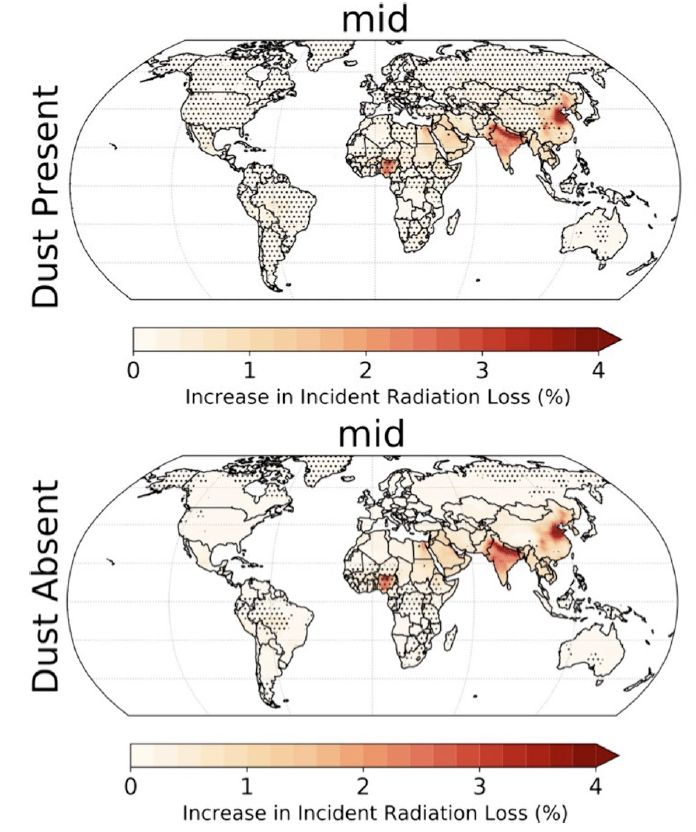
Cleaner air under low emissions (SSP1-2.6) leads to 2-8% higher solar efficiency.
Major benefits in regions with high human-made pollution: 🌏 India, 🇳🇬 Nigeria, 🇨🇳 China.
Small % gains = BIG energy increases by 2100!
(3/)
Cleaner air under low emissions (SSP1-2.6) leads to 2-8% higher solar efficiency.
Major benefits in regions with high human-made pollution: 🌏 India, 🇳🇬 Nigeria, 🇨🇳 China.
Small % gains = BIG energy increases by 2100!
(3/)
November 20, 2024 at 12:12 AM
🔑 Key Findings:
Cleaner air under low emissions (SSP1-2.6) leads to 2-8% higher solar efficiency.
Major benefits in regions with high human-made pollution: 🌏 India, 🇳🇬 Nigeria, 🇨🇳 China.
Small % gains = BIG energy increases by 2100!
(3/)
Cleaner air under low emissions (SSP1-2.6) leads to 2-8% higher solar efficiency.
Major benefits in regions with high human-made pollution: 🌏 India, 🇳🇬 Nigeria, 🇨🇳 China.
Small % gains = BIG energy increases by 2100!
(3/)
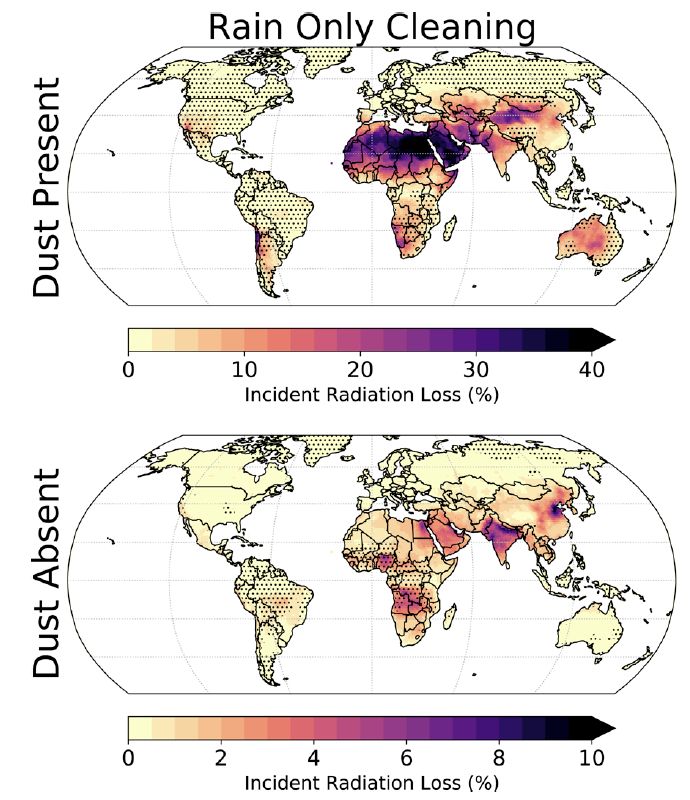
Solar panels lose up to 40% efficiency when coated with dust and pollutants. 🫧
As we decarbonize, reduced pollution could naturally "clean" solar panels, increasing their efficiency! We used #CMIP6 climate models to explore these impacts.
(2/)
As we decarbonize, reduced pollution could naturally "clean" solar panels, increasing their efficiency! We used #CMIP6 climate models to explore these impacts.
(2/)
November 20, 2024 at 12:09 AM
Solar panels lose up to 40% efficiency when coated with dust and pollutants. 🫧
As we decarbonize, reduced pollution could naturally "clean" solar panels, increasing their efficiency! We used #CMIP6 climate models to explore these impacts.
(2/)
As we decarbonize, reduced pollution could naturally "clean" solar panels, increasing their efficiency! We used #CMIP6 climate models to explore these impacts.
(2/)