




Links by @yatil@yatil.social
@links.yatil.social.ap.brid.gy
This is an automated poster for interesting links for Accessibility.
[bridged from https://yatil.social/@links on the fediverse by https://fed.brid.gy/ ]
[bridged from https://yatil.social/@links on the fediverse by https://fed.brid.gy/ ]
⭐️ Designing accessibility for real use, not dashboards
In this article, @annaecook explains the phenomenon of putting work, especially accessibility work, in quantifiable metrics. This often creates bad incentives […]
In this article, @annaecook explains the phenomenon of putting work, especially accessibility work, in quantifiable metrics. This often creates bad incentives […]
Original post on yatil.social
yatil.social
January 7, 2026 at 11:00 AM
⭐️ Designing accessibility for real use, not dashboards
In this article, @annaecook explains the phenomenon of putting work, especially accessibility work, in quantifiable metrics. This often creates bad incentives […]
In this article, @annaecook explains the phenomenon of putting work, especially accessibility work, in quantifiable metrics. This often creates bad incentives […]
🔗 5 accessibility checks to run on every component - zeroheight
As important as testing whole sites and processes is, a lot of issues can be caught with simple tests when testing individual components, as @hdv shows in this article […]
As important as testing whole sites and processes is, a lot of issues can be caught with simple tests when testing individual components, as @hdv shows in this article […]
Original post on yatil.social
yatil.social
January 6, 2026 at 11:58 AM
🔗 5 accessibility checks to run on every component - zeroheight
As important as testing whole sites and processes is, a lot of issues can be caught with simple tests when testing individual components, as @hdv shows in this article […]
As important as testing whole sites and processes is, a lot of issues can be caught with simple tests when testing individual components, as @hdv shows in this article […]

⭐️ How Button Traits can make a chaotic iOS app accessible | Axess Lab
Great article by my colleague Diogo Melo.
https://axesslab.com/how-button-traits-can-make-a-chaotic-ios-app-accessible/
Great article by my colleague Diogo Melo.
https://axesslab.com/how-button-traits-can-make-a-chaotic-ios-app-accessible/

axesslab.com
December 9, 2025 at 3:29 PM
⭐️ How Button Traits can make a chaotic iOS app accessible | Axess Lab
Great article by my colleague Diogo Melo.
https://axesslab.com/how-button-traits-can-make-a-chaotic-ios-app-accessible/
Great article by my colleague Diogo Melo.
https://axesslab.com/how-button-traits-can-make-a-chaotic-ios-app-accessible/
⭐️ Meeting WCAG is an achievement
Let’s not talk ourselves down. By @yatil
https://yatil.net/blog/meeting-wcag-is-an-achievement
Let’s not talk ourselves down. By @yatil
https://yatil.net/blog/meeting-wcag-is-an-achievement

Meeting WCAG is an achievement · Eric Eggert
A notion that I always hear and have heard for a long time is that meeting the Web Content Accessibility Guidelines (WCAG) feels like not …
yatil.net
December 9, 2025 at 2:59 PM
⭐️ Meeting WCAG is an achievement
Let’s not talk ourselves down. By @yatil
https://yatil.net/blog/meeting-wcag-is-an-achievement
Let’s not talk ourselves down. By @yatil
https://yatil.net/blog/meeting-wcag-is-an-achievement
⭐️ You Can’t Make Something Accessible to Everyone
By @aardrian.
https://adrianroselli.com/2025/12/you-cant-make-something-accessible-to-everyone.html
By @aardrian.
https://adrianroselli.com/2025/12/you-cant-make-something-accessible-to-everyone.html

You Can’t Make Something Accessible to Everyone
This post’s title is unpleasant, but it’s important to acknowledge the reality of the human condition and limitations in technologies. Even purpose-built assistive tech. Broadly, when someone says something is “accessible” that’s a hopeful statement that is based on some best efforts. Of course, there are bad actors who assert…
adrianroselli.com
December 2, 2025 at 9:28 PM
⭐️ You Can’t Make Something Accessible to Everyone
By @aardrian.
https://adrianroselli.com/2025/12/you-cant-make-something-accessible-to-everyone.html
By @aardrian.
https://adrianroselli.com/2025/12/you-cant-make-something-accessible-to-everyone.html
⭐️ Can AI write accessibility specs?
Great article by @gerireid. The answer to the question in the title is “no”, but the process to getting there is interesting.
https://gerireid.com/blog/can-ai-write-accessibility-specs/
Great article by @gerireid. The answer to the question in the title is “no”, but the process to getting there is interesting.
https://gerireid.com/blog/can-ai-write-accessibility-specs/
November 25, 2025 at 9:29 AM
⭐️ Can AI write accessibility specs?
Great article by @gerireid. The answer to the question in the title is “no”, but the process to getting there is interesting.
https://gerireid.com/blog/can-ai-write-accessibility-specs/
Great article by @gerireid. The answer to the question in the title is “no”, but the process to getting there is interesting.
https://gerireid.com/blog/can-ai-write-accessibility-specs/
⭐️ Simple One-Time Passcode Inputs
So simple and yet so powerful. HTML is great!
By @tylersticka
https://cloudfour.com/thinks/simple-one-time-passcode-inputs/
So simple and yet so powerful. HTML is great!
By @tylersticka
https://cloudfour.com/thinks/simple-one-time-passcode-inputs/
November 17, 2025 at 3:28 PM
⭐️ Simple One-Time Passcode Inputs
So simple and yet so powerful. HTML is great!
By @tylersticka
https://cloudfour.com/thinks/simple-one-time-passcode-inputs/
So simple and yet so powerful. HTML is great!
By @tylersticka
https://cloudfour.com/thinks/simple-one-time-passcode-inputs/
⭐️ Toasts | Primer
> GitHub no longer uses toasts because of their accessibility and usability issues.
A powerful rebuttal of the “Toast” paradigm.
https://primer.style/accessibility/toasts/
> GitHub no longer uses toasts because of their accessibility and usability issues.
A powerful rebuttal of the “Toast” paradigm.
https://primer.style/accessibility/toasts/

Toasts
GitHub no longer uses toasts because of their accessibility and usability issues.
primer.style
November 17, 2025 at 8:28 AM
⭐️ Toasts | Primer
> GitHub no longer uses toasts because of their accessibility and usability issues.
A powerful rebuttal of the “Toast” paradigm.
https://primer.style/accessibility/toasts/
> GitHub no longer uses toasts because of their accessibility and usability issues.
A powerful rebuttal of the “Toast” paradigm.
https://primer.style/accessibility/toasts/
⭐️ Common misconceptions about screen readers
By TetraLogical’s Ela Gorla.
https://tetralogical.com/blog/2025/10/14/common-misconceptions-about-screen-readers/
By TetraLogical’s Ela Gorla.
https://tetralogical.com/blog/2025/10/14/common-misconceptions-about-screen-readers/

Common misconceptions about screen readers - TetraLogical
Screen readers are familiar to many in digital, but how they work in practice can be less clear. In this post, we shed some light on the topic.
tetralogical.com
October 15, 2025 at 8:17 AM
⭐️ Common misconceptions about screen readers
By TetraLogical’s Ela Gorla.
https://tetralogical.com/blog/2025/10/14/common-misconceptions-about-screen-readers/
By TetraLogical’s Ela Gorla.
https://tetralogical.com/blog/2025/10/14/common-misconceptions-about-screen-readers/
⭐️ Stop inviting overlay employees & bad actors into Accessibility spaces
By Chris Yoong.
100% agree!
https://chrisyoong.com/blog/inviting-harmful-actors-into-genuine-accessibility-spaces-is-dangerous
By Chris Yoong.
100% agree!
https://chrisyoong.com/blog/inviting-harmful-actors-into-genuine-accessibility-spaces-is-dangerous
Stop inviting overlay employees & bad actors into Accessibility spaces
It hands them blueprints for exploitation, legitimacy and control
chrisyoong.com
October 13, 2025 at 2:16 PM
⭐️ Stop inviting overlay employees & bad actors into Accessibility spaces
By Chris Yoong.
100% agree!
https://chrisyoong.com/blog/inviting-harmful-actors-into-genuine-accessibility-spaces-is-dangerous
By Chris Yoong.
100% agree!
https://chrisyoong.com/blog/inviting-harmful-actors-into-genuine-accessibility-spaces-is-dangerous
⭐️ A threat model for accessibility on the web
@sundress with an excellent article about accessibility and why and how it is so neglected.
https://alice.boxhall.au/articles/a-threat-model-for-accessibility-on-the-web/
@sundress with an excellent article about accessibility and why and how it is so neglected.
https://alice.boxhall.au/articles/a-threat-model-for-accessibility-on-the-web/

A threat model for accessibility on the web - Alice
A explanation of the primary threat to accessibility on the web, and a call to action for the web standards community
alice.boxhall.au
October 2, 2025 at 2:16 PM
⭐️ A threat model for accessibility on the web
@sundress with an excellent article about accessibility and why and how it is so neglected.
https://alice.boxhall.au/articles/a-threat-model-for-accessibility-on-the-web/
@sundress with an excellent article about accessibility and why and how it is so neglected.
https://alice.boxhall.au/articles/a-threat-model-for-accessibility-on-the-web/
⭐️ WCAG’s Longevity · Eric Eggert
I, @yatil, wrote about WCAG’s longevity and audio descriptions.
https://yatil.net/blog/wcags-longevity
I, @yatil, wrote about WCAG’s longevity and audio descriptions.
https://yatil.net/blog/wcags-longevity

WCAG’s Longevity · Eric Eggert
It’s no secret: I like the Web Content Accessibility Guidelines. Not only do they give us the four base principles of accessibility …
yatil.net
October 1, 2025 at 12:16 PM
⭐️ WCAG’s Longevity · Eric Eggert
I, @yatil, wrote about WCAG’s longevity and audio descriptions.
https://yatil.net/blog/wcags-longevity
I, @yatil, wrote about WCAG’s longevity and audio descriptions.
https://yatil.net/blog/wcags-longevity
⭐️ How I, a non-developer, read the tutorial you, a developer, wrote for me, a beginner
By @annie – This must be like non-accessibility people read accessibility advice when things are not properly explained! […]
By @annie – This must be like non-accessibility people read accessibility advice when things are not properly explained! […]
Original post on yatil.social
yatil.social
September 26, 2025 at 6:46 AM
⭐️ How I, a non-developer, read the tutorial you, a developer, wrote for me, a beginner
By @annie – This must be like non-accessibility people read accessibility advice when things are not properly explained! […]
By @annie – This must be like non-accessibility people read accessibility advice when things are not properly explained! […]
⭐️ Custom Carets and Users: When The Caret Is No Longer a Stick (Yes, That’s a Poor Attempt at a Pun)
@aardrian shining light on a new CSS property with accessibility implications […]
@aardrian shining light on a new CSS property with accessibility implications […]
Original post on yatil.social
yatil.social
September 21, 2025 at 8:16 PM
⭐️ Custom Carets and Users: When The Caret Is No Longer a Stick (Yes, That’s a Poor Attempt at a Pun)
@aardrian shining light on a new CSS property with accessibility implications […]
@aardrian shining light on a new CSS property with accessibility implications […]
⭐️ Taking a shot at the double focus ring problem using modern CSS
@eric with the goods regarding the double focus ring!
https://piccalil.li/blog/taking-a-shot-at-the-double-focus-ring-problem-using-modern-css/
@eric with the goods regarding the double focus ring!
https://piccalil.li/blog/taking-a-shot-at-the-double-focus-ring-problem-using-modern-css/
September 19, 2025 at 9:16 AM
⭐️ Taking a shot at the double focus ring problem using modern CSS
@eric with the goods regarding the double focus ring!
https://piccalil.li/blog/taking-a-shot-at-the-double-focus-ring-problem-using-modern-css/
@eric with the goods regarding the double focus ring!
https://piccalil.li/blog/taking-a-shot-at-the-double-focus-ring-problem-using-modern-css/
⭐️ forced-color-adjust: none is an unavoidable foot gun | Sarah Higley
https://sarahmhigley.com/writing/forced-color-adjust-none/
https://sarahmhigley.com/writing/forced-color-adjust-none/

forced-color-adjust: none is an unavoidable foot gun | Sarah Higley
A very long treatise on why text backplates were a bad idea. Most of the time.
sarahmhigley.com
September 18, 2025 at 10:17 AM
⭐️ forced-color-adjust: none is an unavoidable foot gun | Sarah Higley
https://sarahmhigley.com/writing/forced-color-adjust-none/
https://sarahmhigley.com/writing/forced-color-adjust-none/
⭐️ Screen readers do not need saved by AI
Great article by @craigabbott
https://www.craigabbott.co.uk/blog/screen-readers-do-not-need-saved-by-ai/
Great article by @craigabbott
https://www.craigabbott.co.uk/blog/screen-readers-do-not-need-saved-by-ai/
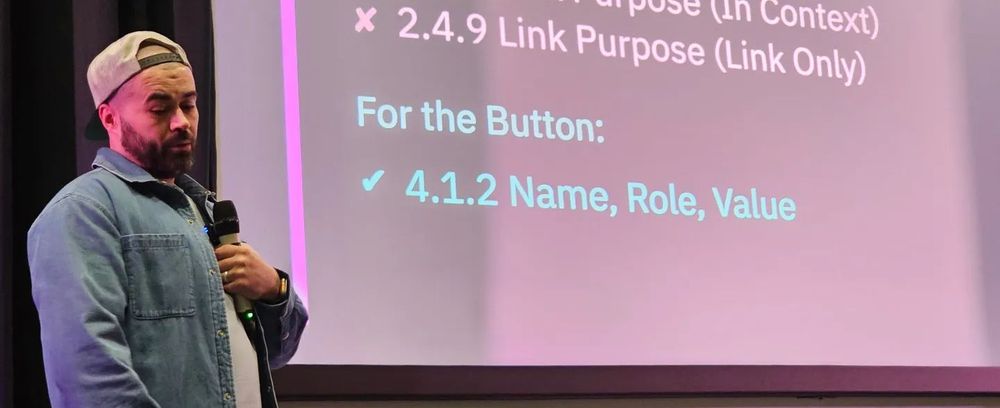
Screen readers do not need saved by AI
Why LLMs should not be integrated with screen readers
www.craigabbott.co.uk
September 15, 2025 at 7:16 AM
⭐️ Screen readers do not need saved by AI
Great article by @craigabbott
https://www.craigabbott.co.uk/blog/screen-readers-do-not-need-saved-by-ai/
Great article by @craigabbott
https://www.craigabbott.co.uk/blog/screen-readers-do-not-need-saved-by-ai/
⭐️ "Best practice" is just your opinion
@craigabbott about the term “best practice”
https://www.craigabbott.co.uk/blog/best-practice-is-just-your-opinion/
@craigabbott about the term “best practice”
https://www.craigabbott.co.uk/blog/best-practice-is-just-your-opinion/

"Best practice" is just your opinion
Why we need a different term for best practice
www.craigabbott.co.uk
August 20, 2025 at 2:44 PM
⭐️ "Best practice" is just your opinion
@craigabbott about the term “best practice”
https://www.craigabbott.co.uk/blog/best-practice-is-just-your-opinion/
@craigabbott about the term “best practice”
https://www.craigabbott.co.uk/blog/best-practice-is-just-your-opinion/
⭐️ Yellow, Purple and the Myth of “Accessibility Limits Color Palettes”
Terrific article by the wonderful @stephaniewalter who shows how accessibility is about how you combine colors rather than just what colors you use […]
Terrific article by the wonderful @stephaniewalter who shows how accessibility is about how you combine colors rather than just what colors you use […]
Original post on yatil.social
yatil.social
August 18, 2025 at 7:45 PM
⭐️ Yellow, Purple and the Myth of “Accessibility Limits Color Palettes”
Terrific article by the wonderful @stephaniewalter who shows how accessibility is about how you combine colors rather than just what colors you use […]
Terrific article by the wonderful @stephaniewalter who shows how accessibility is about how you combine colors rather than just what colors you use […]
🔗 Intopia Accessibility Maturity Snapshot
Test a company’s accessibility maturity.
https://accessibility-snapshot.intopia.digital/
Test a company’s accessibility maturity.
https://accessibility-snapshot.intopia.digital/

Intopia Accessibility Snapshot
accessibility-snapshot.intopia.digital
August 4, 2025 at 6:14 AM
🔗 Intopia Accessibility Maturity Snapshot
Test a company’s accessibility maturity.
https://accessibility-snapshot.intopia.digital/
Test a company’s accessibility maturity.
https://accessibility-snapshot.intopia.digital/

🔗 The 'Accessibility' link is a Lie: My Adventures in Weaponizing Corporate Virtue Signaling
https://sightlessscribbles.com/posts/20250724/
https://sightlessscribbles.com/posts/20250724/
The 'Accessibility' link is a Lie: My Adventures in Weaponizing Corporate Virtue Signaling
In the corporate world, there's a special kind of lie. It's not a loud, brazen falsehood; it's a quiet, self-congratulatory link. It lives in the footer of websites, usually next to the copyright notice, a tidy little link that says “Accessibility Statement.” This statement is a company's way of patting itself on the back, assuring the world that it cares deeply about inclusion. It is, in my experience, often the most cynical lie on the entire internet.
Last week, I decided to buy a new noise canceling headset. This was the most important task I’d do all week. Not because I actually had enough money to buy something, a catastrophically rare occurrence, but this was a chance for me to deepen my profound relationship with all the audiobook narrators that don't know I exist but change my life on a daily basis.
Regarding the company, let's call the company "Audiocorp." Their website was a minimalist dream, I'm sure. It also had a glowing Accessibility Statement, full of passionate prose about their commitment to WCAG 2.1 AA compliance. I was impressed.
The admiration lasted until I tried to check out. The "Add to Cart" button? Unlabeled to my screen reader. It was just "Button." The form fields for my address? A chaotic mess of unlabeled edit boxes. The final "Confirm Purchase" button? It was an image, with no alternative text. It wasn't even a link or button, either. To my screen reader, the most crucial part of their entire e-commerce platform was the digital equivalent of a silent shrug. I, a person with miraculously rare money in hand, was physically incapable of giving it to them because their beautiful, accessible-in-name-only website was a broken maze.
My first instinct was the usual hot surge of anger and resignation. But then I looked at their Accessibility Statement again. And I had an idea. I wasn't going to complain to customer service—that's a black hole. I was going to help them live up to their own glorious promises.
I spent the next ten minutes documenting every single failure. Then, I drafted an email. Not to support@audiocorp.com, but to legal@audiocorp.com.
It went something like this:
> Subject: A Question Regarding Your Inspiring Accessibility Statement
>
> Dear Audiocorp Legal Team,
>
> I am writing to express my profound admiration for your company's detailed and forward-thinking Accessibility Statement. Your commitment to ensuring all users, regardless of ability, can access your services is a model for the industry.
>
> As a blind individual who uses a screen reader, I was particularly excited to engage with your platform. In the spirit of helping you fully realize your stated goals, I wanted to provide some feedback on a few minor areas where the current user experience doesn't yet align with your excellent policy. For example, the checkout button currently presents as an unlabeled graphic, which may inadvertently create a barrier for customers using assistive technology—a potential point of concern under Title III of the Americans with Disabilities Act.
>
> I have attached a short document detailing these small opportunities for improvement. I am, of course, eager to become a paying customer and support a company that so clearly values inclusion.
>
> Sincerely, Robert Kingett
I was polite. I was complimentary. And I was aiming a very precisely worded legal bazooka right at their heads. I weaponized their virtue signaling.
I didn't get a form reply from customer service. Twenty-four hours later, I got an email directly from a Vice President of Digital Strategy. He was deeply apologetic. He cc'd their head of web development. He asked if I would be willing to test the fixes they were implementing immediately. He gave me a discount code for my trouble.
Three days later, their checkout was fully accessible. And I bought my noise canceling headset.
The lesson is this: never fight a corporation's customer service department. Fight its legal department or its PR department. They don't care about your inconvenience, but they are terrified of a broken promise. And their Accessibility Statement is the biggest, most legally binding promise of all.
sightlessscribbles.com
July 24, 2025 at 12:14 PM
🔗 The 'Accessibility' link is a Lie: My Adventures in Weaponizing Corporate Virtue Signaling
https://sightlessscribbles.com/posts/20250724/
https://sightlessscribbles.com/posts/20250724/
