



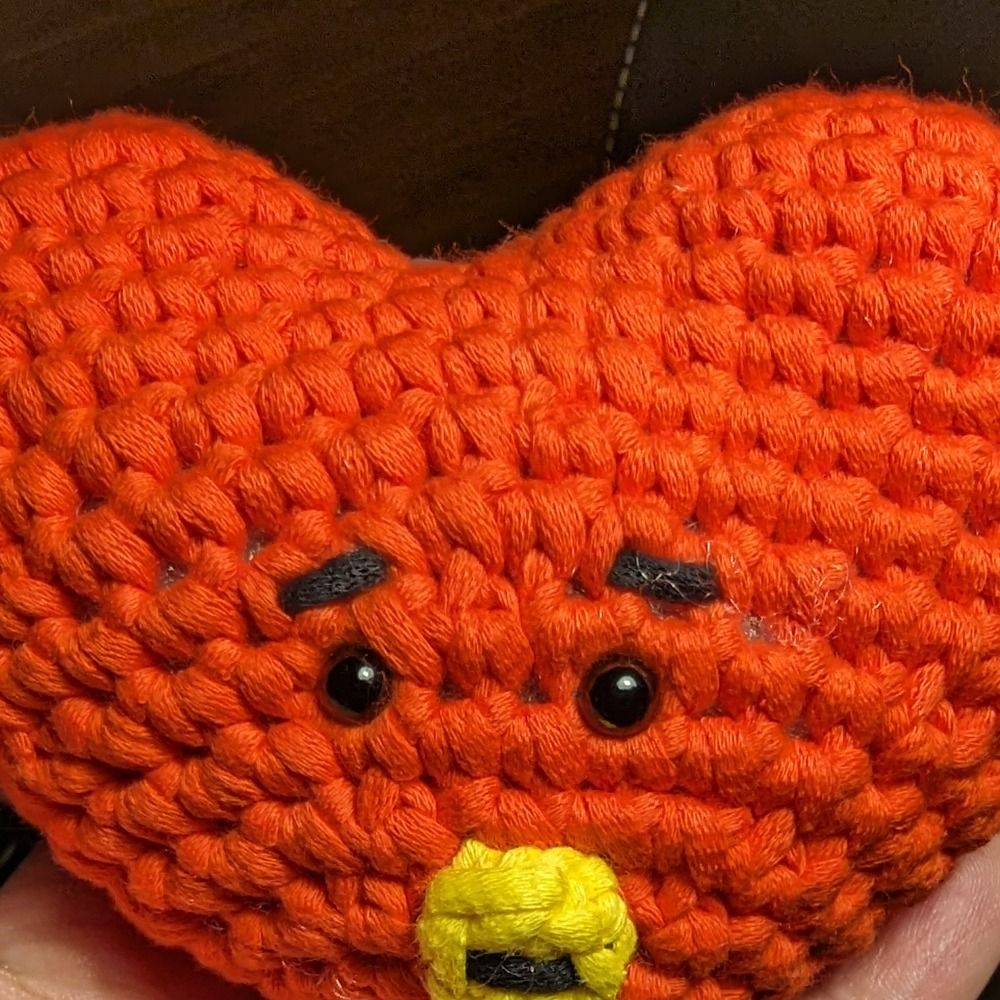
Karena T
@kupowark.bsky.social
A two-toed sloth disguised as a human 🦥
These are awesome, thank you so much for sharing! I love the company mascots. :) the goodest bois!
February 24, 2025 at 9:58 PM
These are awesome, thank you so much for sharing! I love the company mascots. :) the goodest bois!
PLEASE keep your little ones safe by teaching them to be aware of their surroundings and to enter/exit on the curbside, keeping an eye out for oncoming bikes!
February 17, 2025 at 9:10 PM
PLEASE keep your little ones safe by teaching them to be aware of their surroundings and to enter/exit on the curbside, keeping an eye out for oncoming bikes!
Again, in the middle of a busy residential street, with limited visibility due to cars parked along the street and a trend of cars going way too fast.
SO DANGEROUS. 😫
SO DANGEROUS. 😫
February 17, 2025 at 9:10 PM
Again, in the middle of a busy residential street, with limited visibility due to cars parked along the street and a trend of cars going way too fast.
SO DANGEROUS. 😫
SO DANGEROUS. 😫
She then crossed the street and greeted her little sister, who ALSO cross to the car and opened the street-side door to climb in.
February 17, 2025 at 9:10 PM
She then crossed the street and greeted her little sister, who ALSO cross to the car and opened the street-side door to climb in.
Just watched a small child exit a car paused on a busy residential road right into the street, freezing with the door open as an oncoming car abruptly stopped due to her sudden appearance.
February 17, 2025 at 9:10 PM
Just watched a small child exit a car paused on a busy residential road right into the street, freezing with the door open as an oncoming car abruptly stopped due to her sudden appearance.
But I feel like that enthusiasm needs to be balanced with a sense of responsibility and ethics.
February 14, 2025 at 6:57 PM
But I feel like that enthusiasm needs to be balanced with a sense of responsibility and ethics.
Oh interesting, 頂好 (ding3 hao3) is a phrase I'd heard in other contexts in the adverb usage (had better; it would be best), but I was unaware of its colloquial adjective usage (very good). TIL! :)
February 14, 2025 at 5:36 PM
Oh interesting, 頂好 (ding3 hao3) is a phrase I'd heard in other contexts in the adverb usage (had better; it would be best), but I was unaware of its colloquial adjective usage (very good). TIL! :)
Now I'm curious what phrase it is? :D
February 14, 2025 at 4:58 PM
Now I'm curious what phrase it is? :D
And then, you have the number alternatives: 4 (し or よん) 、 7 (しち or な な)、 10 (れい or じゅう).
よん for 4 makes sense. Like in Chinese, し also means death.
But when do you use しち instead of な な for 7, or れい for 10? 🤔
よん for 4 makes sense. Like in Chinese, し also means death.
But when do you use しち instead of な な for 7, or れい for 10? 🤔
February 14, 2025 at 4:50 PM
And then, you have the number alternatives: 4 (し or よん) 、 7 (しち or な な)、 10 (れい or じゅう).
よん for 4 makes sense. Like in Chinese, し also means death.
But when do you use しち instead of な な for 7, or れい for 10? 🤔
よん for 4 makes sense. Like in Chinese, し also means death.
But when do you use しち instead of な な for 7, or れい for 10? 🤔
But then you have さんぴゃく、 ろっぴゃく、 はっぴゃく and other oddities, and the brain spins. 😵💫
(Btw our teacher is teaching in Romaji and we haven't started hiragana, so please correct me if my kana is wrong!)
(Btw our teacher is teaching in Romaji and we haven't started hiragana, so please correct me if my kana is wrong!)
February 14, 2025 at 4:50 PM
But then you have さんぴゃく、 ろっぴゃく、 はっぴゃく and other oddities, and the brain spins. 😵💫
(Btw our teacher is teaching in Romaji and we haven't started hiragana, so please correct me if my kana is wrong!)
(Btw our teacher is teaching in Romaji and we haven't started hiragana, so please correct me if my kana is wrong!)
"person-san no kagi" totally makes sense! I was mostly interested in how far you could take nested "_ no _" clauses. 😂
Our class is teaching us by-the-book formal grammar, so we're encouraged to use "watashi" even if, colloquially, it would normally be dropped. it's good to know it's not the norm!
Our class is teaching us by-the-book formal grammar, so we're encouraged to use "watashi" even if, colloquially, it would normally be dropped. it's good to know it's not the norm!
February 13, 2025 at 1:40 AM
"person-san no kagi" totally makes sense! I was mostly interested in how far you could take nested "_ no _" clauses. 😂
Our class is teaching us by-the-book formal grammar, so we're encouraged to use "watashi" even if, colloquially, it would normally be dropped. it's good to know it's not the norm!
Our class is teaching us by-the-book formal grammar, so we're encouraged to use "watashi" even if, colloquially, it would normally be dropped. it's good to know it's not the norm!
(I was very clear that I was just sharing what I had learned from reading as another participant, not as a member of the program's staff.)
Anyways. Maybe I need to tone it down a bit. 😅
Anyways. Maybe I need to tone it down a bit. 😅
February 12, 2025 at 8:50 PM
(I was very clear that I was just sharing what I had learned from reading as another participant, not as a member of the program's staff.)
Anyways. Maybe I need to tone it down a bit. 😅
Anyways. Maybe I need to tone it down a bit. 😅
Perhaps I was over-enthusiastic about responding and engaging, b/c another participant (who was, on an unrelated note, aggressively promoting plant-based diets in chat) demanded I introduce myself.
February 12, 2025 at 8:50 PM
Perhaps I was over-enthusiastic about responding and engaging, b/c another participant (who was, on an unrelated note, aggressively promoting plant-based diets in chat) demanded I introduce myself.
Another example: In a nutrition webinar today, I was responding in chat to some other participants' questions sharing things I'd learned about steel-cut oats vs. rolled oats, protein powders with simple ingredients (OWYN), etc.
February 12, 2025 at 8:50 PM
Another example: In a nutrition webinar today, I was responding in chat to some other participants' questions sharing things I'd learned about steel-cut oats vs. rolled oats, protein powders with simple ingredients (OWYN), etc.
So we learned about how the construction of Japanese sentences usually involves putting the "less important" parts towards the beginning of the sentence.
Answer to my Q would be a nested series of increasingly important "[Subject] no [Object]" clauses: "Anata no watashi no ie no kagi". (Awkward.)
Answer to my Q would be a nested series of increasingly important "[Subject] no [Object]" clauses: "Anata no watashi no ie no kagi". (Awkward.)
February 12, 2025 at 8:50 PM
So we learned about how the construction of Japanese sentences usually involves putting the "less important" parts towards the beginning of the sentence.
Answer to my Q would be a nested series of increasingly important "[Subject] no [Object]" clauses: "Anata no watashi no ie no kagi". (Awkward.)
Answer to my Q would be a nested series of increasingly important "[Subject] no [Object]" clauses: "Anata no watashi no ie no kagi". (Awkward.)
If you want to say "house keys", you'd say "ie no kagi" (lit "keys of the house").
If you want to say "my house keys", you'd say "watashi no ie no kagi" (keys of the house of mine).
I asked: what if you're moving in with your SO, and want to give them "their keys to your house?"
If you want to say "my house keys", you'd say "watashi no ie no kagi" (keys of the house of mine).
I asked: what if you're moving in with your SO, and want to give them "their keys to your house?"
February 12, 2025 at 8:50 PM
If you want to say "house keys", you'd say "ie no kagi" (lit "keys of the house").
If you want to say "my house keys", you'd say "watashi no ie no kagi" (keys of the house of mine).
I asked: what if you're moving in with your SO, and want to give them "their keys to your house?"
If you want to say "my house keys", you'd say "watashi no ie no kagi" (keys of the house of mine).
I asked: what if you're moving in with your SO, and want to give them "their keys to your house?"