



The Kelp Rescue Initiative
@kelprescue.bsky.social
The Kelp Rescue Initiative is a non-profit operating out of the Bamfield Marine Sciences Center (Bamfield, British Columbia). Our mission is to advance kelp research and restoration and restore resilient kelp forests at an ecologically meaningful scale.
Ever wonder how bull kelp survives heavy surf and currents? The outer wall of the stipe is made up of strong, elastic cells and the hollow middle is filled with a gelatinous fluid allowing it to flex with the water instead of break! How incredible is #kelp?
#PhycologyFriday #VancouverIsland #BC
#PhycologyFriday #VancouverIsland #BC

December 6, 2025 at 1:57 AM
Ever wonder how bull kelp survives heavy surf and currents? The outer wall of the stipe is made up of strong, elastic cells and the hollow middle is filled with a gelatinous fluid allowing it to flex with the water instead of break! How incredible is #kelp?
#PhycologyFriday #VancouverIsland #BC
#PhycologyFriday #VancouverIsland #BC
Where #rainforest meets #kelpforest, something remarkable happens.
These two powerhouse ecosystems shape each other at the tide line: rainforests filter water and hold shorelines, while kelp buffers storms and brings nutrients back to land.
Healthy coasts depend on both.
These two powerhouse ecosystems shape each other at the tide line: rainforests filter water and hold shorelines, while kelp buffers storms and brings nutrients back to land.
Healthy coasts depend on both.

November 28, 2025 at 9:53 PM
Where #rainforest meets #kelpforest, something remarkable happens.
These two powerhouse ecosystems shape each other at the tide line: rainforests filter water and hold shorelines, while kelp buffers storms and brings nutrients back to land.
Healthy coasts depend on both.
These two powerhouse ecosystems shape each other at the tide line: rainforests filter water and hold shorelines, while kelp buffers storms and brings nutrients back to land.
Healthy coasts depend on both.
Bts in our nursery, we’re working with #kelp at one of its smallest stages: microscopic gametophytes. Early results show we may be able to lower seeding densities by about 2.5x while still getting the coverage we need. More experiments coming this winter! #Phycology #KelpRestoration


November 21, 2025 at 8:37 PM
Bts in our nursery, we’re working with #kelp at one of its smallest stages: microscopic gametophytes. Early results show we may be able to lower seeding densities by about 2.5x while still getting the coverage we need. More experiments coming this winter! #Phycology #KelpRestoration
Each #kelp population carries its own genetic mix shaped by local conditions. When forests shrink or become isolated they can lose diversity, slowing recovery. Our research shows mixing individuals from different regions may support resilience. Dive deeper: kelprescue.org/publications

November 15, 2025 at 12:39 AM
Each #kelp population carries its own genetic mix shaped by local conditions. When forests shrink or become isolated they can lose diversity, slowing recovery. Our research shows mixing individuals from different regions may support resilience. Dive deeper: kelprescue.org/publications
How do you plant a forest under the sea?
It starts in the nursery. Tiny #kelp gametophytes are grown on rocks, tiles and other materials, then carefully moved to the ocean floor.
We’re refining these methods to make restoration scalable across BC.
#HelpKelp #OceanRestoration #BC
It starts in the nursery. Tiny #kelp gametophytes are grown on rocks, tiles and other materials, then carefully moved to the ocean floor.
We’re refining these methods to make restoration scalable across BC.
#HelpKelp #OceanRestoration #BC

November 8, 2025 at 12:56 AM
How do you plant a forest under the sea?
It starts in the nursery. Tiny #kelp gametophytes are grown on rocks, tiles and other materials, then carefully moved to the ocean floor.
We’re refining these methods to make restoration scalable across BC.
#HelpKelp #OceanRestoration #BC
It starts in the nursery. Tiny #kelp gametophytes are grown on rocks, tiles and other materials, then carefully moved to the ocean floor.
We’re refining these methods to make restoration scalable across BC.
#HelpKelp #OceanRestoration #BC
#HappyHalloween 🎃 Meet the ocean’s “zombies,” purple urchins. They strip #KelpForests bare and survive for years without food by slowing their metabolism and consuming their own tissues. Alive but barely, waiting for the kelp to return. 👻

October 31, 2025 at 10:58 PM
#HappyHalloween 🎃 Meet the ocean’s “zombies,” purple urchins. They strip #KelpForests bare and survive for years without food by slowing their metabolism and consuming their own tissues. Alive but barely, waiting for the kelp to return. 👻
More fall happenings in the kelp forest, a hooded #nudibranch (Melibe leonina) feeding aggregation. Have you ever had a chance to witness this in your local #KelpForest?
October 23, 2025 at 8:28 PM
More fall happenings in the kelp forest, a hooded #nudibranch (Melibe leonina) feeding aggregation. Have you ever had a chance to witness this in your local #KelpForest?
With in-water monitoring done, we’re reviewing #underwater camera footage from the summer. This #GiantKelp (Macrocystis) bed we restored thrived until late July, homing copper rockfish and perch before urchins grazed it down. Though unfortunate, seeing the successful restoration was a win!


October 22, 2025 at 10:10 PM
With in-water monitoring done, we’re reviewing #underwater camera footage from the summer. This #GiantKelp (Macrocystis) bed we restored thrived until late July, homing copper rockfish and perch before urchins grazed it down. Though unfortunate, seeing the successful restoration was a win!
Last week, Dr. Katie Dobkowski generously gave our team a presentation on the role of #kelp
crabs as bull kelp consumers. A few things we learned: they prefer reproductive tissue (sori) over non-reproductive, they have a wide temp tolerance and can turn bright orange if they eat sargassum!
crabs as bull kelp consumers. A few things we learned: they prefer reproductive tissue (sori) over non-reproductive, they have a wide temp tolerance and can turn bright orange if they eat sargassum!


October 17, 2025 at 10:25 PM
Last week, Dr. Katie Dobkowski generously gave our team a presentation on the role of #kelp
crabs as bull kelp consumers. A few things we learned: they prefer reproductive tissue (sori) over non-reproductive, they have a wide temp tolerance and can turn bright orange if they eat sargassum!
crabs as bull kelp consumers. A few things we learned: they prefer reproductive tissue (sori) over non-reproductive, they have a wide temp tolerance and can turn bright orange if they eat sargassum!
Noticing piles of #kelp on the beach? As leaves fall, kelp loosens from the seafloor. Carried ashore, microbes and small creatures break it down, releasing nutrients into the sand and soil. Even after leaving the ocean, kelp supports life on the coast.
#Nature #VancouverIsland
#Nature #VancouverIsland

October 10, 2025 at 8:38 PM
Noticing piles of #kelp on the beach? As leaves fall, kelp loosens from the seafloor. Carried ashore, microbes and small creatures break it down, releasing nutrients into the sand and soil. Even after leaving the ocean, kelp supports life on the coast.
#Nature #VancouverIsland
#Nature #VancouverIsland
Spotted in the kelp forest this week, signs of seasonal shift! By early fall, bull kelp slows and softens. Epiphytes and larger opportunistic seaweeds can “hitchhike,” becoming micro-habitats for invertebrates and microbes. Even at the end of its life, bull #kelp supports #biodiversity.

October 1, 2025 at 8:55 PM
Spotted in the kelp forest this week, signs of seasonal shift! By early fall, bull kelp slows and softens. Epiphytes and larger opportunistic seaweeds can “hitchhike,” becoming micro-habitats for invertebrates and microbes. Even at the end of its life, bull #kelp supports #biodiversity.
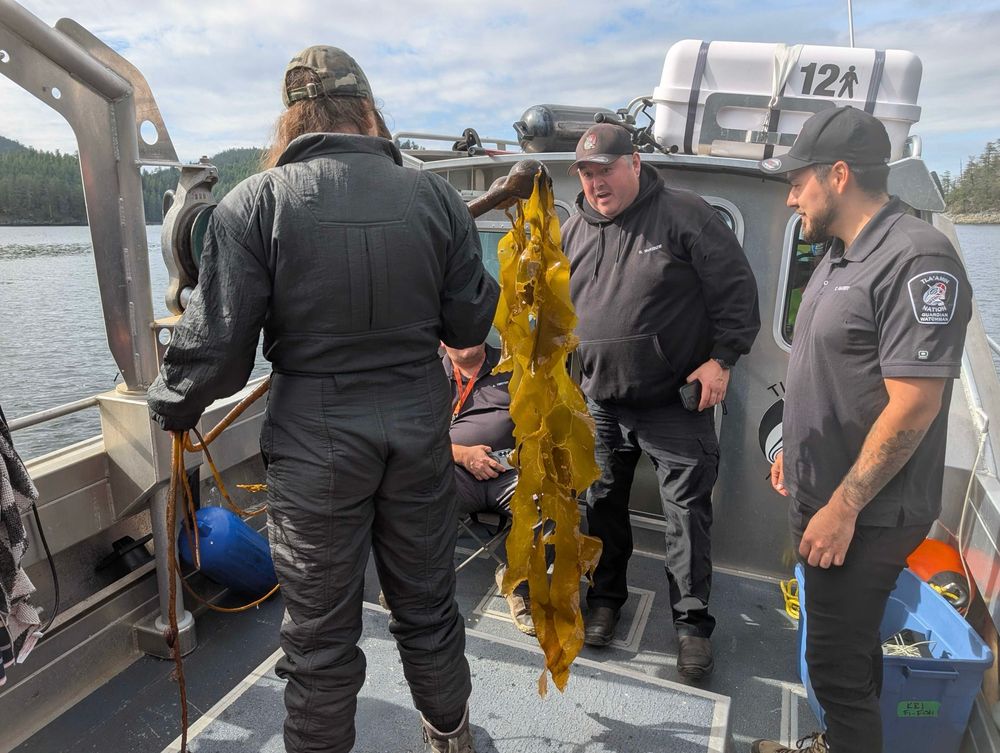
Wildlife, kelp forests and ROVs, what more could you ask for in a day on the water? We joined the Tla’amin Nation Guardian Watchmen to lead ROV training and chat about survey methods and kelp forest ecology.
Thanks for having us!
Thanks for having us!


September 26, 2025 at 10:50 PM
Wildlife, kelp forests and ROVs, what more could you ask for in a day on the water? We joined the Tla’amin Nation Guardian Watchmen to lead ROV training and chat about survey methods and kelp forest ecology.
Thanks for having us!
Thanks for having us!
Always nice to end our field season on a positive note. After building an urchin fence and outplanting kelp, this site, which had completely disappearing in 2014, is recovering well.

September 25, 2025 at 7:55 PM
Always nice to end our field season on a positive note. After building an urchin fence and outplanting kelp, this site, which had completely disappearing in 2014, is recovering well.
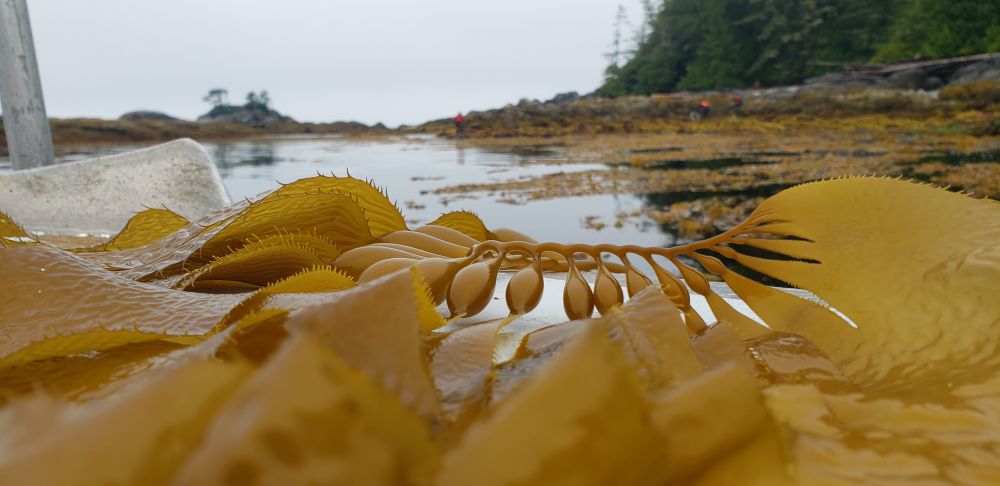
While there remains some uncertainties and survivorship still remains low due to factors like grazing and swell displacing the outplants, these findings highlight modest enhancements to restoration success in regions of warming ocean.
July 16, 2025 at 5:58 PM
While there remains some uncertainties and survivorship still remains low due to factors like grazing and swell displacing the outplants, these findings highlight modest enhancements to restoration success in regions of warming ocean.
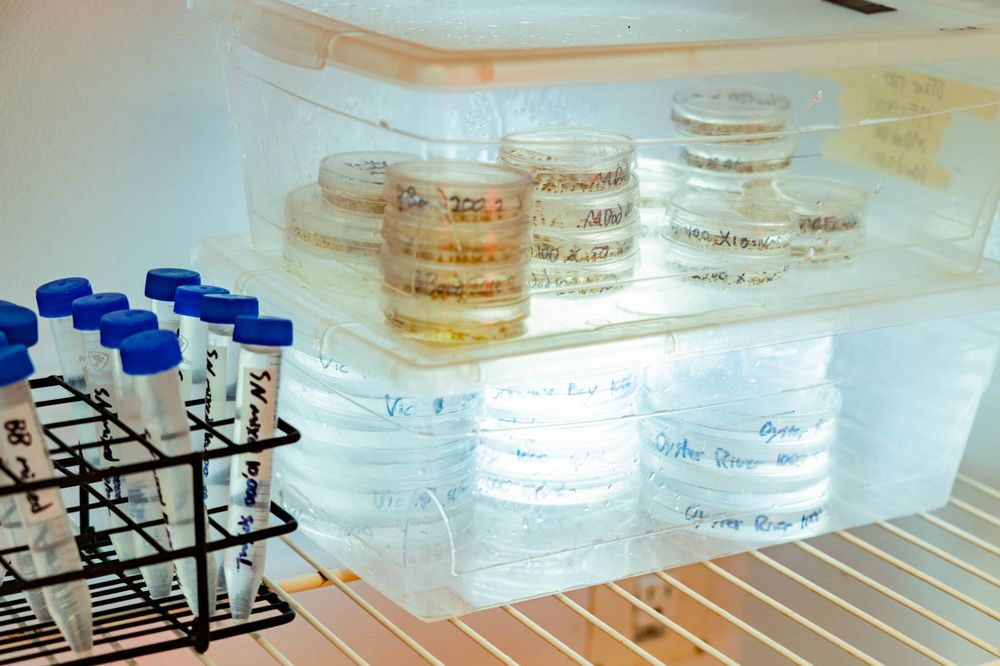
We also found that creating cultures from a larger number of parents decreases self-fertilization rates but doesn’t necessarily result in better restoration outcomes. However, the long-term consequences of low genetic diversity in culture stocks used in restoration are unclear.
July 16, 2025 at 5:58 PM
We also found that creating cultures from a larger number of parents decreases self-fertilization rates but doesn’t necessarily result in better restoration outcomes. However, the long-term consequences of low genetic diversity in culture stocks used in restoration are unclear.
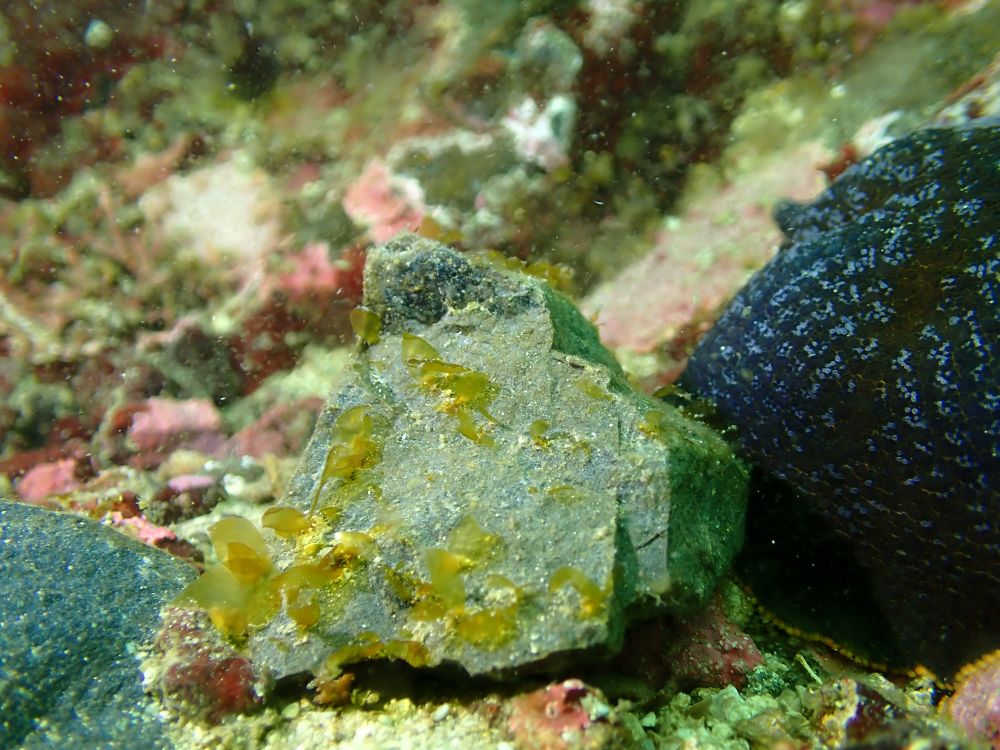
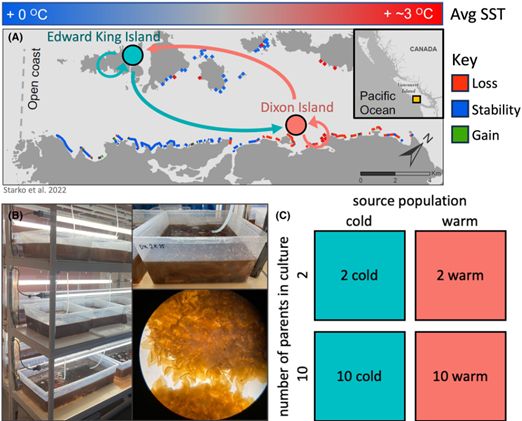
Overall, we found limited evidence for local adaptation to thermal microclimates, and that kelp sourced from warm sites sometimes performed worse than kelp from cold sites and may be maladapted to their environment. Sourcing kelp from colder sites may improve restoration outcomes in warming regions.
July 16, 2025 at 5:58 PM
Overall, we found limited evidence for local adaptation to thermal microclimates, and that kelp sourced from warm sites sometimes performed worse than kelp from cold sites and may be maladapted to their environment. Sourcing kelp from colder sites may improve restoration outcomes in warming regions.
We also grew kelp from gametophyte “seed stocks” sourced from either 2 or 10 parents to explore how genetic diversity affected the success of kelp in these warm sites.
July 16, 2025 at 5:58 PM
We also grew kelp from gametophyte “seed stocks” sourced from either 2 or 10 parents to explore how genetic diversity affected the success of kelp in these warm sites.
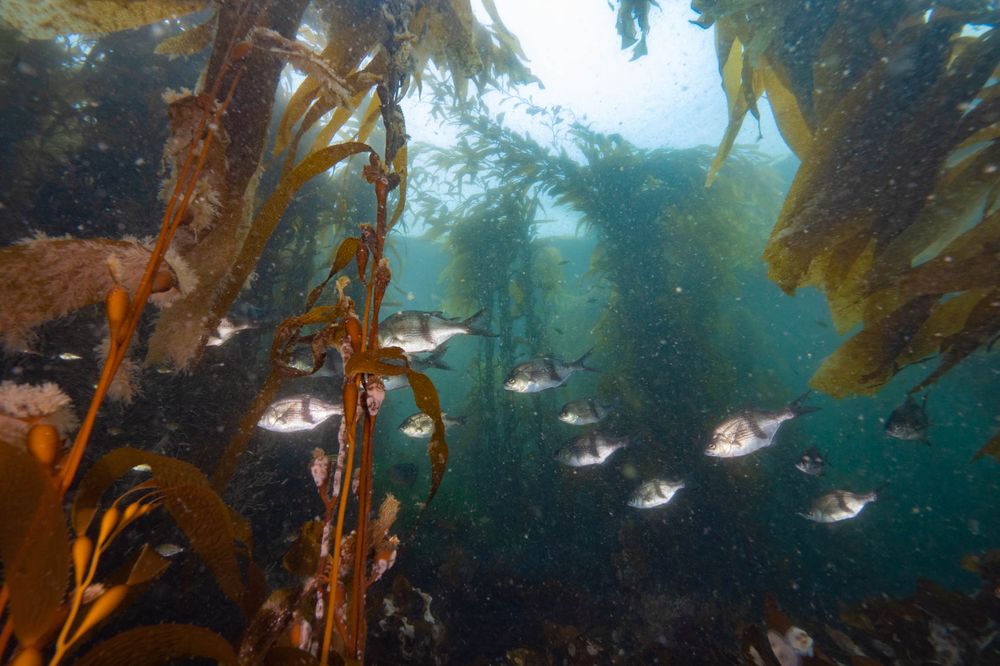
Increasingly warming oceans threaten kelp forests worldwide. Where kelp forests have been lost, scientists, First Nations, and community members seek to restore lost kelp habitat. But how do you restore kelp forests when temperatures keep getting hotter?
July 16, 2025 at 5:58 PM
Increasingly warming oceans threaten kelp forests worldwide. Where kelp forests have been lost, scientists, First Nations, and community members seek to restore lost kelp habitat. But how do you restore kelp forests when temperatures keep getting hotter?
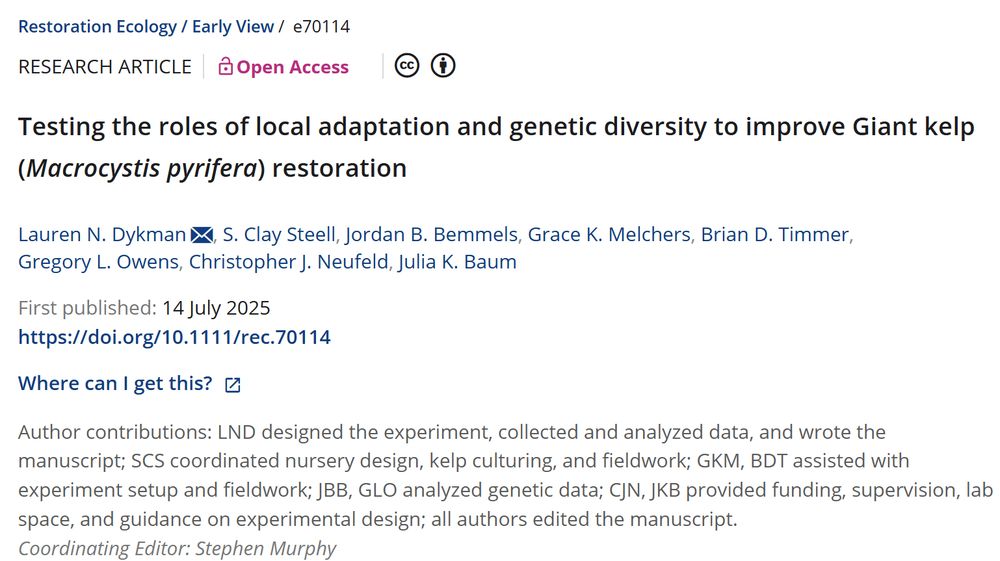
Kelp Rescue is excited to announce the publication of our 1st ever kelp restoration peer-reviewed paper! 🎉Since our start in 2021, we've been testing scientific approaches to kelp restoration, and this paper is the culmination of a huge team effort.
onlinelibrary.wiley.com/doi/10.1111/...
onlinelibrary.wiley.com/doi/10.1111/...
July 16, 2025 at 5:58 PM
Kelp Rescue is excited to announce the publication of our 1st ever kelp restoration peer-reviewed paper! 🎉Since our start in 2021, we've been testing scientific approaches to kelp restoration, and this paper is the culmination of a huge team effort.
onlinelibrary.wiley.com/doi/10.1111/...
onlinelibrary.wiley.com/doi/10.1111/...
Happy #PhycologyFriday🌿🌊 Watch how fast our outplanted kelp grows in only one month, providing habitat for fish at Denman Island!
June 6, 2025 at 10:49 PM
Happy #PhycologyFriday🌿🌊 Watch how fast our outplanted kelp grows in only one month, providing habitat for fish at Denman Island!