




Katharina Dobs
@kathadobs.bsky.social
Professor at JLU | cognitive computational neuroscientist | mom of 3 | she/her
Good morning, Bsky'ers! Some people have asked for a life update, here it is: I finished my last chemotherapy yesterday! 🥳 It’s been a long ride, but I’m feeling happy, relieved, and incredibly grateful. I sort of always knew, but now more than ever: #cancersucks #sciencematters #sciencesaveslives

May 7, 2025 at 6:43 AM
Good morning, Bsky'ers! Some people have asked for a life update, here it is: I finished my last chemotherapy yesterday! 🥳 It’s been a long ride, but I’m feeling happy, relieved, and incredibly grateful. I sort of always knew, but now more than ever: #cancersucks #sciencematters #sciencesaveslives
We employed interpretability methods to identify the critical features DNNs focus on. Most relied on the face and mouth regions; however, only the Dual-task DNN, trained on face and object recognition, focused on the eyes.

February 5, 2025 at 5:53 PM
We employed interpretability methods to identify the critical features DNNs focus on. Most relied on the face and mouth regions; however, only the Dual-task DNN, trained on face and object recognition, focused on the eyes.
🧐 Does face optimization affect pareidolia? To find out, we ran the same model-based RSA on DNNs across layers. Task optimization had a strong impact. DNNs w/ face identification showed weaker pareidolia effects than those w/out. Overall, dual-task training best mirrored the neural data.

February 5, 2025 at 5:53 PM
🧐 Does face optimization affect pareidolia? To find out, we ran the same model-based RSA on DNNs across layers. Task optimization had a strong impact. DNNs w/ face identification showed weaker pareidolia effects than those w/out. Overall, dual-task training best mirrored the neural data.
Which task optimization best mirrors neural data? Using RSA, we compared MEG responses to activations of 5 DNNs (penultimate layer), each trained on unique combinations of face and object recognition tasks. DNNs w/ object categorization aligned more closely with neural data compared to those w/out.

February 5, 2025 at 5:53 PM
Which task optimization best mirrors neural data? Using RSA, we compared MEG responses to activations of 5 DNNs (penultimate layer), each trained on unique combinations of face and object recognition tasks. DNNs w/ object categorization aligned more closely with neural data compared to those w/out.
🤯 The pareidolia effect (blue line) peaked earlier but, surprisingly, was generally weaker than the similarity between pareidolia and objects (orange line). This suggests that although pareidolia start between faces and matched objects, they trend closer to matched objects overall.

February 5, 2025 at 5:53 PM
🤯 The pareidolia effect (blue line) peaked earlier but, surprisingly, was generally weaker than the similarity between pareidolia and objects (orange line). This suggests that although pareidolia start between faces and matched objects, they trend closer to matched objects overall.
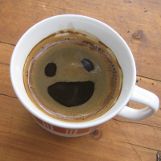
🧵 A bit late, but excited to share insights from our new publication in PLOS Comp Biol by Pranjul Gupta (journals.plos.org/ploscompbiol...). Here, we explored the phenomenon of face pareidolia—like seeing faces in our morning coffee! What might explain this effect?
February 5, 2025 at 5:53 PM
🧵 A bit late, but excited to share insights from our new publication in PLOS Comp Biol by Pranjul Gupta (journals.plos.org/ploscompbiol...). Here, we explored the phenomenon of face pareidolia—like seeing faces in our morning coffee! What might explain this effect?