



@journalamchemsoc.bsky.social
Reposted

Hello Bluesky! Excited to join and share my postdoc work with Alanna Schepartz, Matt Francis and @cgemcci.bsky.social now out in JACS: Peptide Backbone Editing via Post-Translational O to C Acyl Shift. Proud of our team of undergrad & early grad students—Check it out!
pubs.acs.org/doi/10.1021/...
pubs.acs.org/doi/10.1021/...

Peptide Backbone Editing via Post-Translational O to C Acyl Shift
Despite tremendous efforts to engineer translational machinery, replacing the encoded peptide backbone with new-to-nature structures remains a significant challenge. C, H, O, and N are the elements of...
pubs.acs.org
February 12, 2025 at 4:05 PM
Hello Bluesky! Excited to join and share my postdoc work with Alanna Schepartz, Matt Francis and @cgemcci.bsky.social now out in JACS: Peptide Backbone Editing via Post-Translational O to C Acyl Shift. Proud of our team of undergrad & early grad students—Check it out!
pubs.acs.org/doi/10.1021/...
pubs.acs.org/doi/10.1021/...
Reposted

Congratulations @matildeconcilio.bsky.social, Greg, Fer, and Steven! 🥳
Check out our latest paper on “Precise Carboxylic Acid-Functionalized Polyesters in Reprocessable Vitrimers” now out in JACS! ♻️👇
Check out our latest paper on “Precise Carboxylic Acid-Functionalized Polyesters in Reprocessable Vitrimers” now out in JACS! ♻️👇

Thrilled to share this work on precise COOH-functionalized polyesters in reprocessable vitrimers, now online in JACS! This research highlights the role of catalysts in vitrimer chemistry and how tailored catalyst mixtures can control vitrimer properties and bond exchange pubs.acs.org/doi/10.1021/...
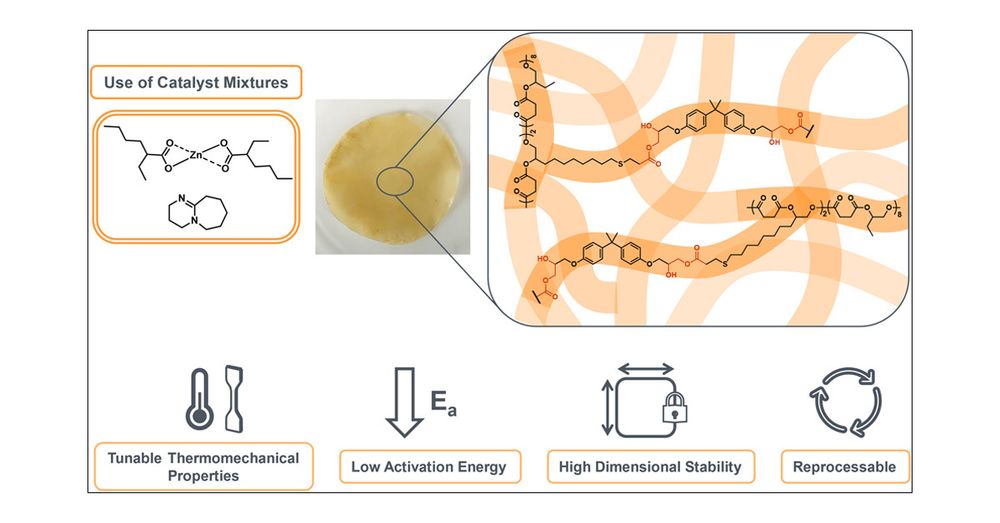
Precise Carboxylic Acid-Functionalized Polyesters in Reprocessable Vitrimers
Thermosets are valued for their exceptional dimensional stability, mechanical properties, and resistance to creep and chemicals. Their permanent molecular structures limit reshaping, reprocessing, and recycling. Incorporating exchangeable chemical bonds into cross-linked polymer networks provides materials with thermoset-like properties that are also reprocessable. Here, ring-opening copolymerization (ROCOP) of unpurified, commercially available epoxides and succinic anhydride is employed to synthesize well-defined, low molecular weight polyesters with controlled functionalization. Polymer networks are then formed through the catalyzed reaction of these copolymers with the epoxy-containing cross-linker diglycidyl ether of bisphenol A. Catalyst mixtures of zinc bis(2-ethylhexanoate) and 1,8-diazabicyclo(5.4.0)undec-7-ene are used to assess the role of the catalysts in the curing and dynamic bond exchange reactions. Varying the catalyst ratios results in polymer networks with tunable mechanical properties (90% < εb < 450%, 0.30 MPa < UTS < 24 MPa), high creep recovery (%recovery > 90% after five creep cycles), and good reprocessability.
pubs.acs.org
February 14, 2025 at 2:09 PM
Congratulations @matildeconcilio.bsky.social, Greg, Fer, and Steven! 🥳
Check out our latest paper on “Precise Carboxylic Acid-Functionalized Polyesters in Reprocessable Vitrimers” now out in JACS! ♻️👇
Check out our latest paper on “Precise Carboxylic Acid-Functionalized Polyesters in Reprocessable Vitrimers” now out in JACS! ♻️👇
Reposted

It is my first Bluesky post: I am thrilled that our work on MemGraft probes for “permanent” fluorescent labelling of plasma membranes is finally out in JACS Au! We established a concept of lipid-directed covalent labeling of plasma membranes. Open access article:
pubs.acs.org/doi/10.1021/...
pubs.acs.org/doi/10.1021/...
February 14, 2025 at 6:47 AM
It is my first Bluesky post: I am thrilled that our work on MemGraft probes for “permanent” fluorescent labelling of plasma membranes is finally out in JACS Au! We established a concept of lipid-directed covalent labeling of plasma membranes. Open access article:
pubs.acs.org/doi/10.1021/...
pubs.acs.org/doi/10.1021/...
Reposted

🧪🏺 What did mummies smell like?
A new study analysed the odours of ancient Egyptian mummies, detecting woody, spicy, and sweet scents.
Using chemistry & sensory panels, researchers linked smells to embalming materials & even pesticides.
🔗 doi.org/10.1021/jacs...
#SciComm #Archaeology
A new study analysed the odours of ancient Egyptian mummies, detecting woody, spicy, and sweet scents.
Using chemistry & sensory panels, researchers linked smells to embalming materials & even pesticides.
🔗 doi.org/10.1021/jacs...
#SciComm #Archaeology

Ancient Egyptian Mummified Bodies: Cross-Disciplinary Analysis of Their Smell
Ancient Egyptian mummification was a mortuary practice aimed at preserving the body and soul for the afterlife, achieved through a detailed ritual of embalming using oils, waxes, and balms. While most...
doi.org
February 15, 2025 at 6:02 AM
🧪🏺 What did mummies smell like?
A new study analysed the odours of ancient Egyptian mummies, detecting woody, spicy, and sweet scents.
Using chemistry & sensory panels, researchers linked smells to embalming materials & even pesticides.
🔗 doi.org/10.1021/jacs...
#SciComm #Archaeology
A new study analysed the odours of ancient Egyptian mummies, detecting woody, spicy, and sweet scents.
Using chemistry & sensory panels, researchers linked smells to embalming materials & even pesticides.
🔗 doi.org/10.1021/jacs...
#SciComm #Archaeology
Reposted

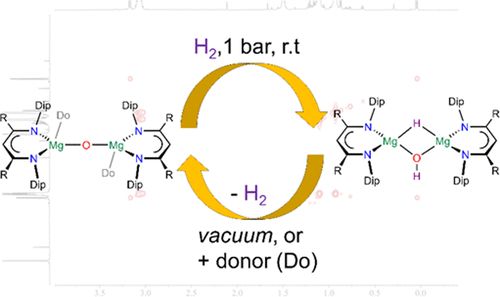
The Stasch group @standrewschem.bsky.social report in
JACS on how to teach a low-coordinate MgO fragment to reversibly activate dihydrogen under very mild conditions: pubs.acs.org/doi/10.1021/...
JACS on how to teach a low-coordinate MgO fragment to reversibly activate dihydrogen under very mild conditions: pubs.acs.org/doi/10.1021/...
February 18, 2025 at 4:30 PM
The Stasch group @standrewschem.bsky.social report in
JACS on how to teach a low-coordinate MgO fragment to reversibly activate dihydrogen under very mild conditions: pubs.acs.org/doi/10.1021/...
JACS on how to teach a low-coordinate MgO fragment to reversibly activate dihydrogen under very mild conditions: pubs.acs.org/doi/10.1021/...
Reposted

Thrilled to share our #JACS paper! Our new Ru(II)-COUBPY photosensitizer (PI >30,000) for hypoxic tumor treatment using red light with in vivo validation!. @gassergroup.bsky.social pubs.acs.org/doi/10.1021/...

Ruthenium(II) Polypyridyl Complexes Containing COUBPY Ligands as Potent Photosensitizers for the Efficient Phototherapy of Hypoxic Tumors
Hypoxia, a hallmark of many solid tumors, is linked to increased cancer aggressiveness, metastasis, and resistance to conventional therapies, leading to poor patient outcomes. This challenges the effi...
pubs.acs.org
February 15, 2025 at 6:42 PM
Thrilled to share our #JACS paper! Our new Ru(II)-COUBPY photosensitizer (PI >30,000) for hypoxic tumor treatment using red light with in vivo validation!. @gassergroup.bsky.social pubs.acs.org/doi/10.1021/...
Reposted

Our work on macrocyclic HDAC11 inhibitors is now out in JACS Au! pubs.acs.org/doi/10.1021/...
#openaccess #chemsky
#openaccess #chemsky
February 16, 2025 at 8:26 PM
Our work on macrocyclic HDAC11 inhibitors is now out in JACS Au! pubs.acs.org/doi/10.1021/...
#openaccess #chemsky
#openaccess #chemsky


Reposted
Congrats to Jakob (first author JACS as an undergrad!!), Zack (the proud mentor and force behind the project), and all the great collaborations with the Brown and Michaelis Groups!
pubs.acs.org/doi/10.1021/...
pubs.acs.org/doi/10.1021/...

Verdazyl-Based Radicals for High-Field Dynamic Nuclear Polarization NMR
High-field dynamic nuclear polarization nuclear magnetic resonance (DNP NMR) spectroscopy transfers polarization from unpaired electrons in polarizing agents to nuclei of interest to boost NMR sensitivity. Verdazyl biradicals are a promising choice as polarizing agents because they have been found to generate narrower electron paramagnetic resonance (EPR) signals compared to nitroxide biradicals; an advantageous characteristic for high-field DNP when operating above 400 MHz/263 GHz. The use of verdazyl radicals as DNP polarizing agents has been very limited to date, yet, recent numerical simulations have predicted that verdazyl-nitroxide hybrid biradicals could be more effective polarizing agents than nitroxide-nitroxide biradicals. Herein, the syntheses of a series of verdazyl mono- and biradicals, as well as verdazyl-nitroxide biradicals are described. These radicals were examined in high-field DNP NMR experiments (600 MHz/395 GHz), by measuring 1H signal enhancements directly and through 13C{1H} cross-polarization experiments. X-band EPR, 1H DNP field profiles, and experiments to determine the nuclear build-up times were performed for verdazyl-nitroxide biradicals VerTEMPol and VerTEKol. These hybrid biradicals provide enhancements of up to 100-fold increased signal intensities (i.e., representing >104-fold time savings), approximately four times higher than that of the nitroxide biradical TEKPol, a commonly used polarizing agent in the field.
pubs.acs.org
February 21, 2025 at 10:53 PM
Congrats to Jakob (first author JACS as an undergrad!!), Zack (the proud mentor and force behind the project), and all the great collaborations with the Brown and Michaelis Groups!
pubs.acs.org/doi/10.1021/...
pubs.acs.org/doi/10.1021/...
Reposted

Check out some gorgeous paramagnetic 31P NMR spectra of lanthanide phosphide complexes 🤩 now published in JACS Au! Led by Jack Baldwin and in collaboration with the groups of Dr Daniel Lee and @nfchilton.bsky.social. pubs.acs.org/doi/10.1021/...
@gemmagransbury.bsky.social
@gemmagransbury.bsky.social

31P NMR Chemical Shift Anisotropy in Paramagnetic Lanthanide Phosphide Complexes
Lanthanide (Ln) magnetic resonance imaging and chiral shift reagents generally exploit 1H NMR shifts, as paramagnetic broadening tends to preclude the use of heavier, less sensitive nuclei. Here, we report the solution and solid-state 31P NMR shifts of an isostructural series of distorted trigonal bipyramidal Ln(III) tris-silylphosphide complexes, [Ln{P(SiMe3)2}3(THF)2] (1-Ln; Ln = La, Ce, Pr, Nd, Sm); 1-Ln was also characterized by elemental analysis; single-crystal and powder X-ray diffraction; multinuclear NMR, EPR, ATR-IR, and UV–vis-NIR spectroscopy; and SQUID magnetometry. Breaking assumptions, we observed paramagnetically broadened 31P NMR spectra for the Ln-bound P atoms for the 1-Ln family; in solution, 1-Nd showed the most downfield chemical shift (δ{31P} = 2570.14 ppm) and 1-Sm the most upfield value (δ{31P} = −259.21 ppm). We determined the span of the chemical shift anisotropies (CSAs) for solid 1-Ln using magic angle spinning NMR spectroscopy; the CSA was largest for 1-Pr (Ω{31P} ≈ 2000 ppm), consistent with a combination of paramagnetism and the relatively large differences in pyramidalization of the three P atoms in the solid-state. Density functional theory calculations for 1-La were in excellent agreement with the experimentally determined 31P NMR parameters. We find good agreement of experimental 1H NMR chemical shifts with ab initio-calculated values for paramagnetic 1-Ln, while the shifts of heavier 13C, 29Si, and 31P nuclei are not well-reproduced due to the current limitations of paramagnetic NMR calculations for nuclei with large contact shifts.
pubs.acs.org
February 21, 2025 at 10:45 PM
Check out some gorgeous paramagnetic 31P NMR spectra of lanthanide phosphide complexes 🤩 now published in JACS Au! Led by Jack Baldwin and in collaboration with the groups of Dr Daniel Lee and @nfchilton.bsky.social. pubs.acs.org/doi/10.1021/...
@gemmagransbury.bsky.social
@gemmagransbury.bsky.social
Reposted

Amazing work by @sijiewang.bsky.social and our collaborators is out in JACS today. Interested in covalent inhibitors of protein-protein interactions? Check it out. pubs.acs.org/doi/10.1021/...

Identification of Covalent Cyclic Peptide Inhibitors Targeting Protein–Protein Interactions Using Phage Display
Peptide macrocycles are promising therapeutics for a variety of disease indications due to their overall metabolic stability and potential to make highly selective binding interactions with targets. R...
pubs.acs.org
February 25, 2025 at 2:51 AM
Amazing work by @sijiewang.bsky.social and our collaborators is out in JACS today. Interested in covalent inhibitors of protein-protein interactions? Check it out. pubs.acs.org/doi/10.1021/...
Reposted
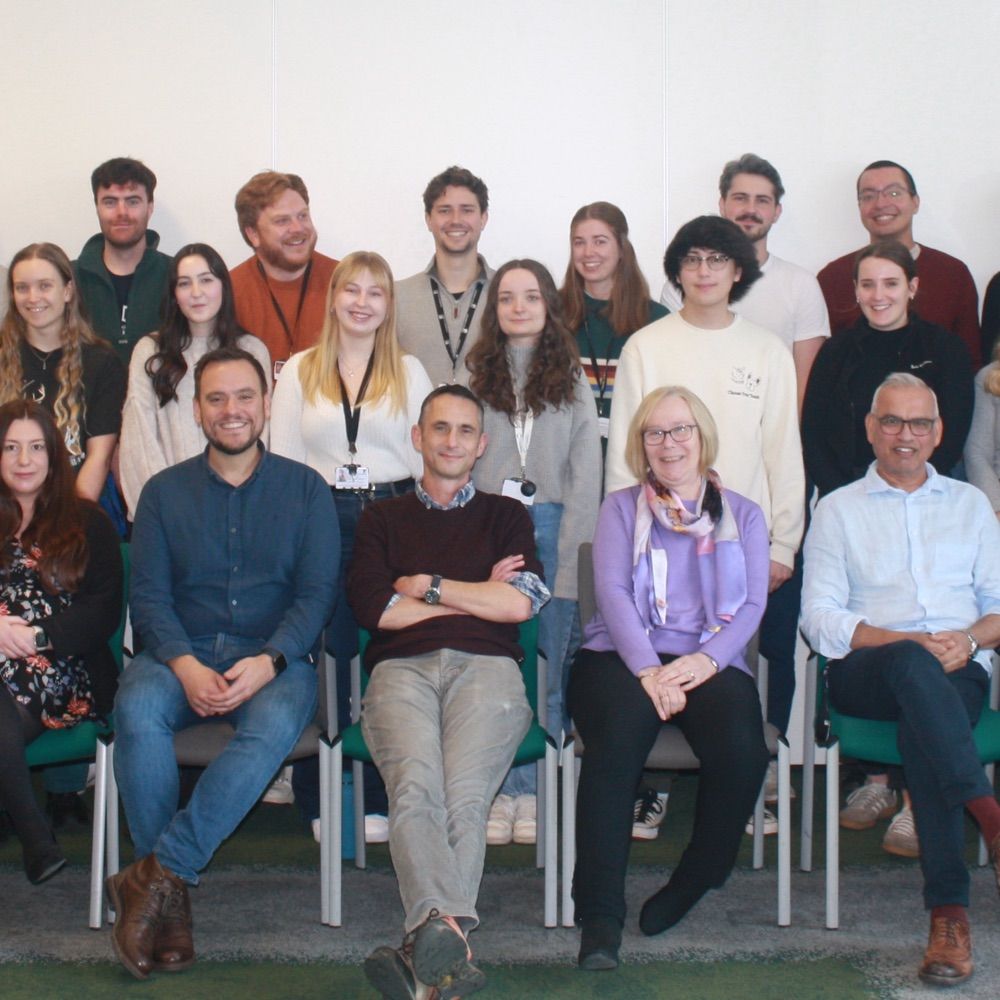
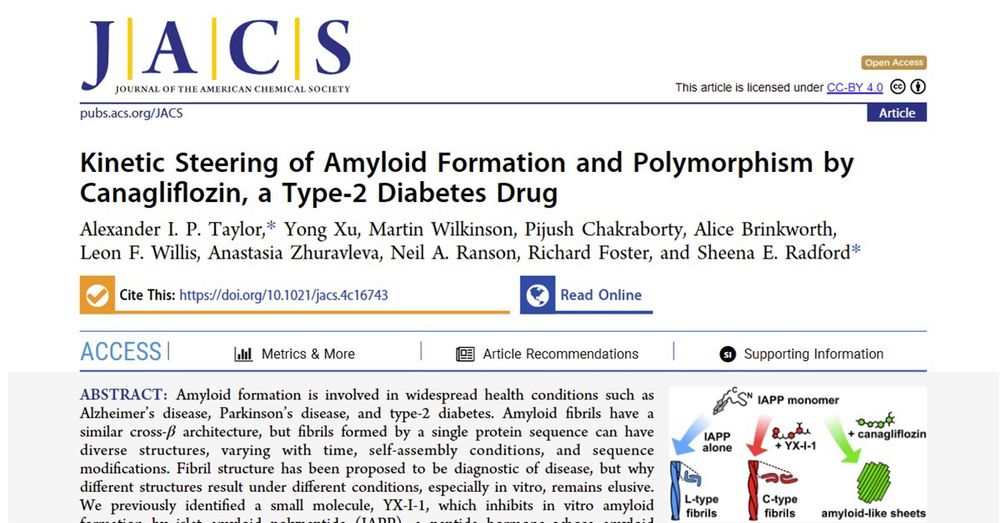
Delighted our latest paper on amyloid polymorphs is published in JACS- doi 10.1021/jacs.4c16743. Well done all- very proud!
February 23, 2025 at 2:04 PM
Delighted our latest paper on amyloid polymorphs is published in JACS- doi 10.1021/jacs.4c16743. Well done all- very proud!