




Journal of Clinical Monitoring and Computing
@jcmcsome.bsky.social
The JCMC is a clinical journal publishing articles related to technology in anaesthesia, IC, EM, periop medicine. https://youtube.com/@JcmcSoMe
🧠🤖 AI for pre-op anesthesia triage: Transformer NLP models tested on ~1,700 pts. Best performance when combining ICD codes + clinical notes (AUC ~0.7+). RoBERTa outperformed clinical-specific models. Promising, but needs external validation
link.springer.com/article/10.1...
link.springer.com/article/10.1...

A pre-trained language model approach for triaging surgical patients for preoperative anesthesia clinics - Journal of Clinical Monitoring and Computing
Purpose Preoperative anesthesia evaluation is a crucial step in ensuring patient safety and optimizing perioperative care. A heterogenous patient population requiring varying levels of assessment ofte...
link.springer.com
December 29, 2025 at 5:09 PM
🧠🤖 AI for pre-op anesthesia triage: Transformer NLP models tested on ~1,700 pts. Best performance when combining ICD codes + clinical notes (AUC ~0.7+). RoBERTa outperformed clinical-specific models. Promising, but needs external validation
link.springer.com/article/10.1...
link.springer.com/article/10.1...
🧠📊 Personalized vs standard intraop BP targets (IMPROVE-pilot substudy): no significant differences in cerebral oxygenation, burst suppression, or early neurocognitive outcomes. Neuroprotection via individualized MAP still unproven—larger trials needed.
link.springer.com/article/10.1...
link.springer.com/article/10.1...

The effect of personalized perioperative blood pressure management on intraoperative cerebral oxygen saturation, burst suppression ratio and postoperative neurological outcomes in patients having majo...
Journal of Clinical Monitoring and Computing - It is not clear whether adopting personalized intraoperative blood pressure management could lead to better intraoperative regional cerebral...
link.springer.com
December 24, 2025 at 1:06 PM
🧠📊 Personalized vs standard intraop BP targets (IMPROVE-pilot substudy): no significant differences in cerebral oxygenation, burst suppression, or early neurocognitive outcomes. Neuroprotection via individualized MAP still unproven—larger trials needed.
link.springer.com/article/10.1...
link.springer.com/article/10.1...
🧠 JCMC study evaluating NIRS for cerebrovascular autoregulation: haemoglobin-derived NIRS signals show strong coherence and Granger causality with ICP and CBFV slow waves, whereas rSO₂ lacks sensitivity to autoregulatory dynamics
link.springer.com/article/10.1...
link.springer.com/article/10.1...

On the utility of near-infrared spectroscopy-derived measures for assessing cerebrovascular autoregulation: results from an observational cohort study - Journal of Clinical Monitoring and Computing
Cerebrovascular autoregulation maintains stable cerebral blood flow by counteracting slow changes in cerebral perfusion pressure (termed “slow waves”). Conventional assessment involves invasive techni...
link.springer.com
December 21, 2025 at 4:10 PM
🧠 JCMC study evaluating NIRS for cerebrovascular autoregulation: haemoglobin-derived NIRS signals show strong coherence and Granger causality with ICP and CBFV slow waves, whereas rSO₂ lacks sensitivity to autoregulatory dynamics
link.springer.com/article/10.1...
link.springer.com/article/10.1...
Quality improvement in extracorporeal blood purification (CRRT/adsorption) using structured protocols, registry-based monitoring, and multidisciplinary training across ICUs. Real-world data to standardize practice
link.springer.com/article/10.1...
link.springer.com/article/10.1...

Program of quality improvement for extracorporeal blood purification therapies in the intensive care unit - Journal of Clinical Monitoring and Computing
Critically ill patients often require complex extracorporeal treatments, such as extracorporeal blood purification (EBP). At the bedside, there can be reluctance or uncertainty about when to initiate ...
link.springer.com
December 14, 2025 at 9:54 AM
Quality improvement in extracorporeal blood purification (CRRT/adsorption) using structured protocols, registry-based monitoring, and multidisciplinary training across ICUs. Real-world data to standardize practice
link.springer.com/article/10.1...
link.springer.com/article/10.1...
🌡️🤒Continuous axillary temperature monitoring outperforms infrared spot-checks for early detection of postoperative fever. Earlier alerts → 🔥faster clinical decisions and better infection surveillance
Full study 🔗 link.springer.com/article/10.1...
Full study 🔗 link.springer.com/article/10.1...

Early detection of postoperative infections using continuous temperature monitoring: A prospective clinical trial - Journal of Clinical Monitoring and Computing
This study aimed to evaluate whether continuous axillary temperature monitoring using a wearable patch enables earlier detection of postoperative infections compared to conventional intermittent infra...
link.springer.com
December 11, 2025 at 9:15 AM
🌡️🤒Continuous axillary temperature monitoring outperforms infrared spot-checks for early detection of postoperative fever. Earlier alerts → 🔥faster clinical decisions and better infection surveillance
Full study 🔗 link.springer.com/article/10.1...
Full study 🔗 link.springer.com/article/10.1...
🩺 New cohort study (n=2,226): the ANI monitor’s HRV-derived “Energy” drops markedly after induction of general anesthesia, is only mildly 🔽 by sedation, and remains 🟰 during spinal anesthesia
A promising tool for real-time insight into autonomic tone
link.springer.com/article/10.1...
A promising tool for real-time insight into autonomic tone
link.springer.com/article/10.1...

The ANI monitor’s “Energy” variable detects autonomic state modification during general anesthesia, sedation and spinal anesthesia: a retrospective cohort study - Journal of Clinical Monitoring and Co...
The Analgesia Nociception Index (ANI) is based on respiratory sinus arrhythmia and is a validated surrogate marker of the nociception-antinociception balance. Along with the ANI, the monitor provides ...
link.springer.com
December 2, 2025 at 11:16 AM
🩺 New cohort study (n=2,226): the ANI monitor’s HRV-derived “Energy” drops markedly after induction of general anesthesia, is only mildly 🔽 by sedation, and remains 🟰 during spinal anesthesia
A promising tool for real-time insight into autonomic tone
link.springer.com/article/10.1...
A promising tool for real-time insight into autonomic tone
link.springer.com/article/10.1...
Elegant pilot study in 129 neurosurgeries: continuous autonomic monitoring (HRV, BRS, BP variability) is feasible and reveals 📉 reduced baroreflex sensitivity + ⚡ sympathetic surges
A promising tool to enhance neuro-anesthesia monitoring and pt safety
link.springer.com/article/10.1...
A promising tool to enhance neuro-anesthesia monitoring and pt safety
link.springer.com/article/10.1...

Continuous autonomic system monitoring during neurosurgical procedures –proof of concept - Journal of Clinical Monitoring and Computing
Vegetative reactions are common during neurosurgical procedures. Known effects are mainly cardiovascular, including tachy- and bradyarrhythmia, hyper- and hypotonia as well as cardiac arrest. Computer...
link.springer.com
December 1, 2025 at 2:21 PM
Elegant pilot study in 129 neurosurgeries: continuous autonomic monitoring (HRV, BRS, BP variability) is feasible and reveals 📉 reduced baroreflex sensitivity + ⚡ sympathetic surges
A promising tool to enhance neuro-anesthesia monitoring and pt safety
link.springer.com/article/10.1...
A promising tool to enhance neuro-anesthesia monitoring and pt safety
link.springer.com/article/10.1...
New study comparing SVV from Starling SV vs FloTrac/LiDCOrapid in cardiac surgery: small mean biases but very wide limits of agreement and poor trending
link.springer.com/article/10.1...
👉 Devices aren’t interchangeable for SVV-guided management
link.springer.com/article/10.1...
👉 Devices aren’t interchangeable for SVV-guided management

Reliability of bioreactance and arterial waveform analyses in monitoring stroke volume variation during cardiac surgery - Journal of Clinical Monitoring and Computing
Purpose Stroke volume variation (SVV) is a dynamic parameter used to assess fluid responsiveness in mechanically ventilated patients. This study aimed to evaluate the agreement and trending ability of...
link.springer.com
November 27, 2025 at 8:55 AM
New study comparing SVV from Starling SV vs FloTrac/LiDCOrapid in cardiac surgery: small mean biases but very wide limits of agreement and poor trending
link.springer.com/article/10.1...
👉 Devices aren’t interchangeable for SVV-guided management
link.springer.com/article/10.1...
👉 Devices aren’t interchangeable for SVV-guided management
A prospective study showing that automated RR monitoring (RespiraSense) does not reliably agree with manual measurements on respiratory wards, with wide limits of agreement + low trend concordance.
link.springer.com/article/10.1...
link.springer.com/article/10.1...

Comparison of manual and automated respiratory rate measurements on hospital wards: a prospective observational study - Journal of Clinical Monitoring and Computing
Respiratory rate is an important early sign of clinical deterioration but the current practice of counting breaths manually is time-consuming and prone to error. We aimed to determine the concordance ...
link.springer.com
November 21, 2025 at 4:53 PM
A prospective study showing that automated RR monitoring (RespiraSense) does not reliably agree with manual measurements on respiratory wards, with wide limits of agreement + low trend concordance.
link.springer.com/article/10.1...
link.springer.com/article/10.1...
A perspective by C Minto,T Schnider & P Sinclair calls for greater transparency and independent verification of PK model implementations in TCI systems—like aviation safety standards—to enable post-marketing peer review and maintain trust
link.springer.com/article/10.1...
link.springer.com/article/10.1...

Implementation transparency in target-controlled infusion systems: balancing innovation with verification - Journal of Clinical Monitoring and Computing
Journal of Clinical Monitoring and Computing -
link.springer.com
November 12, 2025 at 10:02 AM
A perspective by C Minto,T Schnider & P Sinclair calls for greater transparency and independent verification of PK model implementations in TCI systems—like aviation safety standards—to enable post-marketing peer review and maintain trust
link.springer.com/article/10.1...
link.springer.com/article/10.1...
💧Accurately predicting fluid responsiveness remains challenging. In 91 surgical patients, both ΔFTc (ultrasound) and ΔSVV (invasive) reliably assessed volume response (AUC 0.85 vs 0.84)
⚡️ΔFTc showed excellent accuracy & bedside applicability
link.springer.com/article/10.1...
⚡️ΔFTc showed excellent accuracy & bedside applicability
link.springer.com/article/10.1...

Comparison of the change in carotid corrected flow time and stroke volume variation for assessing volume responsiveness in general anesthesia patients: a prospective, observational study - Journal of ...
Background Accurately identifying surgical patients who will have an increase in stroke volume following fluid administration remains challenging when utilizing noninvasive bedside methods. This study...
link.springer.com
November 1, 2025 at 1:08 PM
💧Accurately predicting fluid responsiveness remains challenging. In 91 surgical patients, both ΔFTc (ultrasound) and ΔSVV (invasive) reliably assessed volume response (AUC 0.85 vs 0.84)
⚡️ΔFTc showed excellent accuracy & bedside applicability
link.springer.com/article/10.1...
⚡️ΔFTc showed excellent accuracy & bedside applicability
link.springer.com/article/10.1...
🌍 Reducing volatile agent use is key for sustainable anesthesia.
In >3,000 cases, ET control with FGF 0.5 L/min minimized sevoflurane use (0.16 mL/min) and CO₂ emissions vs higher flows.
Low FGF = lower footprint, same target.
🔗 link.springer.com/article/10.1...
#Anesthesia #Sustainability
In >3,000 cases, ET control with FGF 0.5 L/min minimized sevoflurane use (0.16 mL/min) and CO₂ emissions vs higher flows.
Low FGF = lower footprint, same target.
🔗 link.springer.com/article/10.1...
#Anesthesia #Sustainability

Exploring sevoflurane consumption and CO2 emissions of individual patients undergoing noncardiac surgery using a target-controlled sevoflurane administration system - Journal of Clinical Monitoring an...
Reduce sevoflurane consumption during anaesthesia remains an economic and environmental challenge. This case study analyzed retrospectively a large cohort of procedures using end-tidal (ET) Control to...
link.springer.com
October 26, 2025 at 9:23 PM
🌍 Reducing volatile agent use is key for sustainable anesthesia.
In >3,000 cases, ET control with FGF 0.5 L/min minimized sevoflurane use (0.16 mL/min) and CO₂ emissions vs higher flows.
Low FGF = lower footprint, same target.
🔗 link.springer.com/article/10.1...
#Anesthesia #Sustainability
In >3,000 cases, ET control with FGF 0.5 L/min minimized sevoflurane use (0.16 mL/min) and CO₂ emissions vs higher flows.
Low FGF = lower footprint, same target.
🔗 link.springer.com/article/10.1...
#Anesthesia #Sustainability
💧 New in JCMC: Fluid management in severe burns is shifting from “how much to give” ➡️ to “who benefits & who can tolerate.”
Modern monitoring (POCUS, VExUS, PiCCO) enables tailored resuscitation—balancing perfusion & edema risk
👉 link.springer.com/article/10.1007/s10877-025-01365-0
Modern monitoring (POCUS, VExUS, PiCCO) enables tailored resuscitation—balancing perfusion & edema risk
👉 link.springer.com/article/10.1007/s10877-025-01365-0

Fluid management methods for severely burned patients: a narrative review - Journal of Clinical Monitoring and Computing
Burn shock is a major early complication in the treatment of severely burned patients, and precise and timely fluid management is essential for survival. Traditional clinical indicators such as urine ...
link.springer.com
October 20, 2025 at 7:26 AM
💧 New in JCMC: Fluid management in severe burns is shifting from “how much to give” ➡️ to “who benefits & who can tolerate.”
Modern monitoring (POCUS, VExUS, PiCCO) enables tailored resuscitation—balancing perfusion & edema risk
👉 link.springer.com/article/10.1007/s10877-025-01365-0
Modern monitoring (POCUS, VExUS, PiCCO) enables tailored resuscitation—balancing perfusion & edema risk
👉 link.springer.com/article/10.1007/s10877-025-01365-0
🫁 New RCT from ECMO Centre Ostrava: real-time monitoring of mechanical power (MP) during ventilation was feasible but didn’t reduce MP vs control. Notably, MP was higher at night—highlighting nocturnal risk for lung stress
👉 link.springer.com/article/10.1...
#ICU #MV #JCMC
👉 link.springer.com/article/10.1...
#ICU #MV #JCMC

Protective mechanical ventilation controlled by the real-time mechanical power measurement - Journal of Clinical Monitoring and Computing
Background Despite the substantial advancements in mechanical ventilation (MV), mortality remains high. Mechanical power (MP), MV forces are associated with outcomes. Real-time monitoring of MP and the adjustment of MV according to MP may result in ventilation with lower MP. Methods Randomized controled trial conducted at the ECMO Centre Ostrava, Czech Republic, from March 2023 to March 2024 enrolled adult patients on MV (with or without extracorporeal membrane oxygenation, ECMO) with acute respiratory failure. A system for real-time MP monitoring (geometric method and simplified Becher´s formula) has been developed. In the intervention arm, the physician was able to observe the MP in real time and adjust the MV parameters accordingly. In the control group, the MP was concealed. Results A total of 494 subjects were screened and 33 patients were randomized (further 7 ECMO patients). There was no significant difference between the control and intervention groups. Median MPGeom was 3.22 J/min (maximum 15.2 J/min) and MPBecher of 5.94 J/min (maximum 18.4 J/min). Only a weak (but significant, p = 0.0001) correlation between MPGeom and MPBecher was observed. A highly significant difference was observed in MP between day and night (6 a.m. − 6 p.m.) with higher MP at night. Conclusion Although real-time MP measurement is feasible, there was no significant difference in MP between the control and intervention groups with low MP in both groups. Experience physicians was capable of safe MV, even if they do not know the exact MP value. The night shift was a high-risk period for developing lung damage due to elevated MP. Trial registration ClinicalTrials NCT06035146.
link.springer.com
October 12, 2025 at 4:31 PM
🫁 New RCT from ECMO Centre Ostrava: real-time monitoring of mechanical power (MP) during ventilation was feasible but didn’t reduce MP vs control. Notably, MP was higher at night—highlighting nocturnal risk for lung stress
👉 link.springer.com/article/10.1...
#ICU #MV #JCMC
👉 link.springer.com/article/10.1...
#ICU #MV #JCMC
🧠📈 New in JCMC: Can AI estimate ICP without a probe?
A transformer model using ABP + CBFV achieved ~2–4 mmHg error across adult & pediatric cohorts. Early but promising step toward non-invasive ICP monitoring
🔗 link.springer.com/article/10.1...
A transformer model using ABP + CBFV achieved ~2–4 mmHg error across adult & pediatric cohorts. Early but promising step toward non-invasive ICP monitoring
🔗 link.springer.com/article/10.1...

Application of a time series foundation model to noninvasively estimate intracranial pressure - Journal of Clinical Monitoring and Computing
Journal of Clinical Monitoring and Computing - Elevated intracranial pressure (ICP) contributes to poor neurological outcomes in brain injured patients but relies on invasive approaches with...
link.springer.com
October 10, 2025 at 8:32 AM
🧠📈 New in JCMC: Can AI estimate ICP without a probe?
A transformer model using ABP + CBFV achieved ~2–4 mmHg error across adult & pediatric cohorts. Early but promising step toward non-invasive ICP monitoring
🔗 link.springer.com/article/10.1...
A transformer model using ABP + CBFV achieved ~2–4 mmHg error across adult & pediatric cohorts. Early but promising step toward non-invasive ICP monitoring
🔗 link.springer.com/article/10.1...
SPI-guided vs. routine sufentanil dosing in trauma/orthopaedic surgery (GA+RA).
🔹 No reduction in intraop sufentanil
🔹 Less postop opioid use in SPI group
🔹 No differences in pain, nausea, PACU stay
link.springer.com/article/10.1...
🔹 No reduction in intraop sufentanil
🔹 Less postop opioid use in SPI group
🔹 No differences in pain, nausea, PACU stay
link.springer.com/article/10.1...

Opioid administration guided by Surgical Pleth Index in patients with a combination of general and regional anaesthesia during trauma and orthopaedic surgery: a double-blind, randomised controlled trial - Journal of Clinical Monitoring and Computing
Purpose This randomised controlled trial investigated the effect of Surgical Pleth Index (SPI) guided sufentanil administration on intraoperative sufentanil consumption compared to routine care in patients with a combination of general anaesthesia and regional anaesthesia having trauma and orthopaedic surgery. Methods Eighty patients with a combination of general anaesthesia and regional anaesthesia undergoing trauma or orthopaedic surgery were randomised into two groups to receive either sufentanil guided by SPI monitoring or by routine care (Control). The primary endpoint was intraoperative sufentanil consumption. Secondary endpoints were postoperative pain level, opioid consumption, incidence of nausea, duration of time in the post-anaesthesia care unit (PACU) and quality of recovery. Results The median intraoperative sufentanil administration adjusted to bodyweight and surgery duration did not differ between the groups: SPI guided group 2.29 (interquartile range, IQR 0.29 to 6.91), Control 1.65 (IQR 0.83 to 2.63) µg·kg−1·min−1*1000 (P = 0.906). The relative risk for receiving intraoperative sufentanil was RR 0.909 (95% CI 0.723 to 1.143, P = 0.414). Median morphine equivalents administered in the 24 h after discharge from the PACU were 3.8 (IQR 0.0 to 22.5) in the SPI guided group and 19.1 (IQR 3.8 to 30.0) mg (P = 0.021) in the control group without adjustment for multiple testing. Other secondary endpoints showed no differences. Conclusion SPI guided sufentanil administration did not reduce intraoperative sufentanil consumption compared to routine care in patients having trauma and orthopaedic surgery with a combination of general anaesthesia and regional anaesthesia. Trial registration Clinicaltrials.gov identifier NCT06040307 (registered September 8, 2023).
link.springer.com
October 7, 2025 at 7:56 AM
SPI-guided vs. routine sufentanil dosing in trauma/orthopaedic surgery (GA+RA).
🔹 No reduction in intraop sufentanil
🔹 Less postop opioid use in SPI group
🔹 No differences in pain, nausea, PACU stay
link.springer.com/article/10.1...
🔹 No reduction in intraop sufentanil
🔹 Less postop opioid use in SPI group
🔹 No differences in pain, nausea, PACU stay
link.springer.com/article/10.1...
🚀 IRRIS® transcutaneous infrared illumination as an adjunct to video laryngoscopy
link.springer.com/article/10.1...
🔹 First-attempt success
🔹 Slightly longer intubation time with IRRIS
🔹 Better airway visualization, no harm reported
link.springer.com/article/10.1...
🔹 First-attempt success
🔹 Slightly longer intubation time with IRRIS
🔹 Better airway visualization, no harm reported

First-pass success in video laryngoscopy with transcutaneous infrared illumination in patients with normal airways–a clinical pilot study - Journal of Clinical Monitoring and Computing
Purpose Endotracheal intubation is a critical skill in anesthesia, particularly for patients with compromised airways. This randomized pilot study evaluated the feasibility and impact of the Infrared Red Intubation System (IRRIS®) on video laryngoscopy performance, first-attempt success rate, and intubation time. Methods Thirty patients were randomized into two groups: one with the IRRIS device and one without (control). The primary outcome was the impact of IRRIS on first-pass success. Secondary outcomes included glottic visibility, intubation time, and adverse effects. Results Results showed that both groups demonstrated nearly identical percentages of glottic opening (POGO) and glottic entrance visibility, achieving successful intubation on the first attempt. Although the IRRIS group had a slightly longer intubation time and more instances of required external manipulation, the vocal cords were not visible without IRRIS in the most obese patient in our cohort. Conclusion The IRRIS device effectively illuminated the laryngeal inlet, enhancing differentiation from surrounding structures, such as the esophagus. This study suggests that IRRIS may be a valuable adjunct for video laryngoscopy in patients with difficult airways, though further research is needed to assess its broader applicability. Background Endotracheal intubation in patients with compromised airways is a notoriously complex and daunting task for anesthesiologists. Throughout the years, numerous supportive techniques and innovative equipment have been developed to address this challenge. This randomized clinical study sheds light on the potential benefits of utilizing an external pre-cricoid emitting infrared light source, the ‘Infrared Red Retrograde Intubation System’ (IRRIS®), which produces a flashing light that can be detected within the airway. By leveraging this technology, anesthesiologists may be able to identify the airway quicker and more accurately, both in terms of time and anatomical level, compared to relying solely on a video laryngoscope/ flexible bronchoscope.
link.springer.com
October 2, 2025 at 9:59 PM
🚀 IRRIS® transcutaneous infrared illumination as an adjunct to video laryngoscopy
link.springer.com/article/10.1...
🔹 First-attempt success
🔹 Slightly longer intubation time with IRRIS
🔹 Better airway visualization, no harm reported
link.springer.com/article/10.1...
🔹 First-attempt success
🔹 Slightly longer intubation time with IRRIS
🔹 Better airway visualization, no harm reported
🆕 in JCMC: Clinical validation of the viQtor® upper-arm wearable for continuous RR, HR & SpO₂ monitoring in postop patients
✅ High accuracy
✅ >90% data availability
✅ Excellent patient comfort
🔗 doi.org/10.1007/s108...
✅ High accuracy
✅ >90% data availability
✅ Excellent patient comfort
🔗 doi.org/10.1007/s108...

Accuracy of vital sign monitoring using a photoplethysmography upper arm wearable device in postoperative non-cardiac surgery patients: a prospective observational clinical validation study - Journal of Clinical Monitoring and Computing
Journal of Clinical Monitoring and Computing - Vital sign monitoring in patients is essential for the early detection of deterioration of vital signs and timely medical intervention especially on...
doi.org
September 25, 2025 at 7:24 AM
🆕 in JCMC: Clinical validation of the viQtor® upper-arm wearable for continuous RR, HR & SpO₂ monitoring in postop patients
✅ High accuracy
✅ >90% data availability
✅ Excellent patient comfort
🔗 doi.org/10.1007/s108...
✅ High accuracy
✅ >90% data availability
✅ Excellent patient comfort
🔗 doi.org/10.1007/s108...
🆕 Letter in JCMC:
@EuroSIVA urges action on TCI pump PK/PD model errors ⚠️
🔑 Key points:
• Implementation mistakes can cause dosing discrepancies
• Need for formal testing & regulatory oversight
• One model–one drug for safer TIVA
link.springer.com/article/10.1...
@EuroSIVA urges action on TCI pump PK/PD model errors ⚠️
🔑 Key points:
• Implementation mistakes can cause dosing discrepancies
• Need for formal testing & regulatory oversight
• One model–one drug for safer TIVA
link.springer.com/article/10.1...

No right to be wrong: TCI pumps and implementation of pharmacokinetic-pharmacodynamic models—a statement by the European society for intravenous anesthesia - Journal of Clinical Monitoring and Computi...
Journal of Clinical Monitoring and Computing - This letter is a statement from the European Society for Intravenous Anaesthesia discussing the recent discovery of an incorrect implementation of a...
link.springer.com
September 23, 2025 at 7:22 AM
🆕 Letter in JCMC:
@EuroSIVA urges action on TCI pump PK/PD model errors ⚠️
🔑 Key points:
• Implementation mistakes can cause dosing discrepancies
• Need for formal testing & regulatory oversight
• One model–one drug for safer TIVA
link.springer.com/article/10.1...
@EuroSIVA urges action on TCI pump PK/PD model errors ⚠️
🔑 Key points:
• Implementation mistakes can cause dosing discrepancies
• Need for formal testing & regulatory oversight
• One model–one drug for safer TIVA
link.springer.com/article/10.1...
📣 Big news! JCMC will be fully Open Access from Jan 1, 2026 🗓️
📌 All submissions after Sep 2, 2025 will have an APC (waivers available)
🔗 FAQs : link.springer.com/journal/1087...
✅ Tech in anesthesia, ICU, ER & peri-op medicine
✅ Rigorous peer review
✅ Expert editorial guidance
📌 All submissions after Sep 2, 2025 will have an APC (waivers available)
🔗 FAQs : link.springer.com/journal/1087...
✅ Tech in anesthesia, ICU, ER & peri-op medicine
✅ Rigorous peer review
✅ Expert editorial guidance

Journal of Clinical Monitoring and Computing
We are pleased to announce that Journal of Clinical Monitoring and Computing will become a fully open access (OA) on 1 January 2026. As a result, all ...
link.springer.com
September 15, 2025 at 5:51 AM
📣 Big news! JCMC will be fully Open Access from Jan 1, 2026 🗓️
📌 All submissions after Sep 2, 2025 will have an APC (waivers available)
🔗 FAQs : link.springer.com/journal/1087...
✅ Tech in anesthesia, ICU, ER & peri-op medicine
✅ Rigorous peer review
✅ Expert editorial guidance
📌 All submissions after Sep 2, 2025 will have an APC (waivers available)
🔗 FAQs : link.springer.com/journal/1087...
✅ Tech in anesthesia, ICU, ER & peri-op medicine
✅ Rigorous peer review
✅ Expert editorial guidance
🫀👶renal and cerebral tissue oxygen saturation & AKI
🔎 49 kids, CPB surgery
📉 SrO₂ & ScO₂ drops ❌ not linked to AKI
⚠️ AKI (18.4%) linked to ↑ creatinine, ↑ BMI, intraop hypotension & ↑ lactate
📊 NIRS may not predict AKI in this setting
link.springer.com/article/10.1...
🔎 49 kids, CPB surgery
📉 SrO₂ & ScO₂ drops ❌ not linked to AKI
⚠️ AKI (18.4%) linked to ↑ creatinine, ↑ BMI, intraop hypotension & ↑ lactate
📊 NIRS may not predict AKI in this setting
link.springer.com/article/10.1...

Intraoperative renal and cerebral tissue oxygen saturation measurements to predict postoperative acute kidney injury in pediatric cardiac surgery: a prospective observational study - Journal of Clinic...
Purpose Pediatric patients undergoing cardiac surgery are at risk of developing postoperative acute kidney injury (AKI). We hypothesized that a reduction in intraoperative renal (SrO2) or cerebral (Sc...
link.springer.com
September 12, 2025 at 8:30 PM
🫀👶renal and cerebral tissue oxygen saturation & AKI
🔎 49 kids, CPB surgery
📉 SrO₂ & ScO₂ drops ❌ not linked to AKI
⚠️ AKI (18.4%) linked to ↑ creatinine, ↑ BMI, intraop hypotension & ↑ lactate
📊 NIRS may not predict AKI in this setting
link.springer.com/article/10.1...
🔎 49 kids, CPB surgery
📉 SrO₂ & ScO₂ drops ❌ not linked to AKI
⚠️ AKI (18.4%) linked to ↑ creatinine, ↑ BMI, intraop hypotension & ↑ lactate
📊 NIRS may not predict AKI in this setting
link.springer.com/article/10.1...
“Everything is there to work safely, we don’t need anything. There’s no excuse for going in the OR and make the job OK."
🎙️ The interview with Thomas Fuchs-Buder is finally out on YouTube, Spotify and all podcasting platforms!
www.youtube.com/watch?v=ocAb...
open.spotify.com/episode/3hV7...
🎙️ The interview with Thomas Fuchs-Buder is finally out on YouTube, Spotify and all podcasting platforms!
www.youtube.com/watch?v=ocAb...
open.spotify.com/episode/3hV7...

S2E3 - Interview with T. Fuchs-Buder
YouTube video by Journal of Clinical Monitoring and Computing
www.youtube.com
September 6, 2025 at 4:06 PM
“Everything is there to work safely, we don’t need anything. There’s no excuse for going in the OR and make the job OK."
🎙️ The interview with Thomas Fuchs-Buder is finally out on YouTube, Spotify and all podcasting platforms!
www.youtube.com/watch?v=ocAb...
open.spotify.com/episode/3hV7...
🎙️ The interview with Thomas Fuchs-Buder is finally out on YouTube, Spotify and all podcasting platforms!
www.youtube.com/watch?v=ocAb...
open.spotify.com/episode/3hV7...
💧 Thoracic fluid content (TFC) & bioimpedance in ICU
👥 42 patients (fluid bolus) + 23 ARDS patients
📈 TFC rose after fluids but ❌ not correlated with GEDVI or CVP
❌ No link between TFC changes & EVLWI
➡️ TFC not reliable for preload/EVLW tracking
link.springer.com/article/10.1...
👥 42 patients (fluid bolus) + 23 ARDS patients
📈 TFC rose after fluids but ❌ not correlated with GEDVI or CVP
❌ No link between TFC changes & EVLWI
➡️ TFC not reliable for preload/EVLW tracking
link.springer.com/article/10.1...

Does the thoracic fluid content reflect lung water and cardiac preload? - Journal of Clinical Monitoring and Computing
Journal of Clinical Monitoring and Computing - Whether the thoracic fluid content (TFC) estimated by bioimpedance actually reflects the thoracic water content and tracks its changes has not been...
link.springer.com
September 1, 2025 at 8:29 PM
💧 Thoracic fluid content (TFC) & bioimpedance in ICU
👥 42 patients (fluid bolus) + 23 ARDS patients
📈 TFC rose after fluids but ❌ not correlated with GEDVI or CVP
❌ No link between TFC changes & EVLWI
➡️ TFC not reliable for preload/EVLW tracking
link.springer.com/article/10.1...
👥 42 patients (fluid bolus) + 23 ARDS patients
📈 TFC rose after fluids but ❌ not correlated with GEDVI or CVP
❌ No link between TFC changes & EVLWI
➡️ TFC not reliable for preload/EVLW tracking
link.springer.com/article/10.1...
👁️pupillary unrest as OIRD marker
link.springer.com/article/10.1...
🧪 10 adults (40–60y) + 20 younger controls, remifentanil infusion (0.2–0.3 µg/kg/min)
📉 PUAL declined during infusion, rose in recovery
📊 AUROC 0.98 → strong discrimination of high-risk opioid exposure, consistent across ages
link.springer.com/article/10.1...
🧪 10 adults (40–60y) + 20 younger controls, remifentanil infusion (0.2–0.3 µg/kg/min)
📉 PUAL declined during infusion, rose in recovery
📊 AUROC 0.98 → strong discrimination of high-risk opioid exposure, consistent across ages
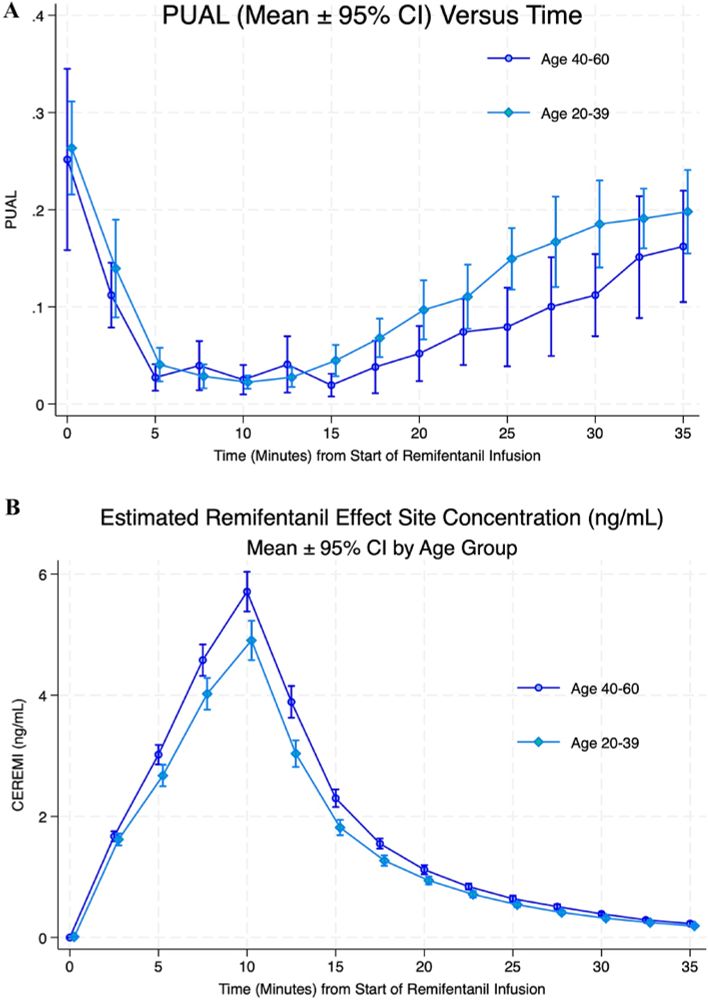
Impact of age on PUAL as an indicator of opioid effect in adult subjects - Journal of Clinical Monitoring and Computing
Opioid-induced respiratory depression (OIRD) remains a critical safety concern, particularly in older adults, yet timely, reliable detection methods are limited. Decline of pupillary unrest in ambient...
link.springer.com
August 22, 2025 at 9:24 AM
👁️pupillary unrest as OIRD marker
link.springer.com/article/10.1...
🧪 10 adults (40–60y) + 20 younger controls, remifentanil infusion (0.2–0.3 µg/kg/min)
📉 PUAL declined during infusion, rose in recovery
📊 AUROC 0.98 → strong discrimination of high-risk opioid exposure, consistent across ages
link.springer.com/article/10.1...
🧪 10 adults (40–60y) + 20 younger controls, remifentanil infusion (0.2–0.3 µg/kg/min)
📉 PUAL declined during infusion, rose in recovery
📊 AUROC 0.98 → strong discrimination of high-risk opioid exposure, consistent across ages
🚨 64 TAVI pts (mean age 82): AKI in 33%.
🚫 No link between renal rSO₂ changes (time-weighted, Δ, nadir) and AKI.
✅ Renal NIRS not predictive of post-TAVI AKI → better tools needed for early detection/prevention
link.springer.com/article/10.1...
🚫 No link between renal rSO₂ changes (time-weighted, Δ, nadir) and AKI.
✅ Renal NIRS not predictive of post-TAVI AKI → better tools needed for early detection/prevention
link.springer.com/article/10.1...

Association of renal regional tissue oxygen saturation and post-procedural acute kidney injury following transcatheter aortic valve implantation - Journal of Clinical Monitoring and Computing
Purpose Acute kidney injury (AKI) is a common complication and a strong risk factor for adverse outcomes after transcatheter aortic valve implantation (TAVI). Renal regional tissue oxygen saturation (...
link.springer.com
August 18, 2025 at 5:51 AM
🚨 64 TAVI pts (mean age 82): AKI in 33%.
🚫 No link between renal rSO₂ changes (time-weighted, Δ, nadir) and AKI.
✅ Renal NIRS not predictive of post-TAVI AKI → better tools needed for early detection/prevention
link.springer.com/article/10.1...
🚫 No link between renal rSO₂ changes (time-weighted, Δ, nadir) and AKI.
✅ Renal NIRS not predictive of post-TAVI AKI → better tools needed for early detection/prevention
link.springer.com/article/10.1...