



Italo F Pereira
@italofpereira.bsky.social
Primatologist | Behavioural Ecology | Climate Change | PhD student in Geography, Urban and Environmental Studies at Concordia University
May 20, 2025 at 8:13 PM
Conservation planning needs to address habitat loss and climate change as simultaneous threats. That is why we need to restore forest corridors, create larger protected areas, and connect more critical habitats than ever, for primates and all biodiversity. (10/10)
May 20, 2025 at 8:13 PM
Conservation planning needs to address habitat loss and climate change as simultaneous threats. That is why we need to restore forest corridors, create larger protected areas, and connect more critical habitats than ever, for primates and all biodiversity. (10/10)
Even though primates are highly flexible behaviorally, they become spatially and physiologically squeezed due to the combined effects of climate change, human development, and fragmentation. (9/10)
May 20, 2025 at 8:13 PM
Even though primates are highly flexible behaviorally, they become spatially and physiologically squeezed due to the combined effects of climate change, human development, and fragmentation. (9/10)
There are fewer high-nutrition food sources in those areas, and the animals must rely on fallback foods, such as sugarcane or other agricultural products surrounding the forest fragments. (8/10)
May 20, 2025 at 8:13 PM
There are fewer high-nutrition food sources in those areas, and the animals must rely on fallback foods, such as sugarcane or other agricultural products surrounding the forest fragments. (8/10)
Fragmentation not only makes forests smaller but also transforms their structure in multiple negative ways. There is an increase in edge effects, a decrease in species richness, and a rise in human pressures. (7/10)
May 20, 2025 at 8:13 PM
Fragmentation not only makes forests smaller but also transforms their structure in multiple negative ways. There is an increase in edge effects, a decrease in species richness, and a rise in human pressures. (7/10)
The big question is that these primates only exist in forest fragments, and the IUCN estimates fewer than 2,000 individuals remain. Even though primary forests, with large areas, are threatened, small forest fragments are even more susceptible to disappearing in the coming years. (6/10)
May 20, 2025 at 8:13 PM
The big question is that these primates only exist in forest fragments, and the IUCN estimates fewer than 2,000 individuals remain. Even though primary forests, with large areas, are threatened, small forest fragments are even more susceptible to disappearing in the coming years. (6/10)
The second is the Brazilian Atlantic Forest, a biodiversity hotspot fragmented by roads, farms, and human settlements. (5/10)
May 20, 2025 at 8:13 PM
The second is the Brazilian Atlantic Forest, a biodiversity hotspot fragmented by roads, farms, and human settlements. (5/10)
The first one, the Caatinga, is affected by fires, droughts, and agricultural development. Due to climate change, it is a semi-arid area predicted to become a desert by 2100. (4/10)
May 20, 2025 at 8:13 PM
The first one, the Caatinga, is affected by fires, droughts, and agricultural development. Due to climate change, it is a semi-arid area predicted to become a desert by 2100. (4/10)
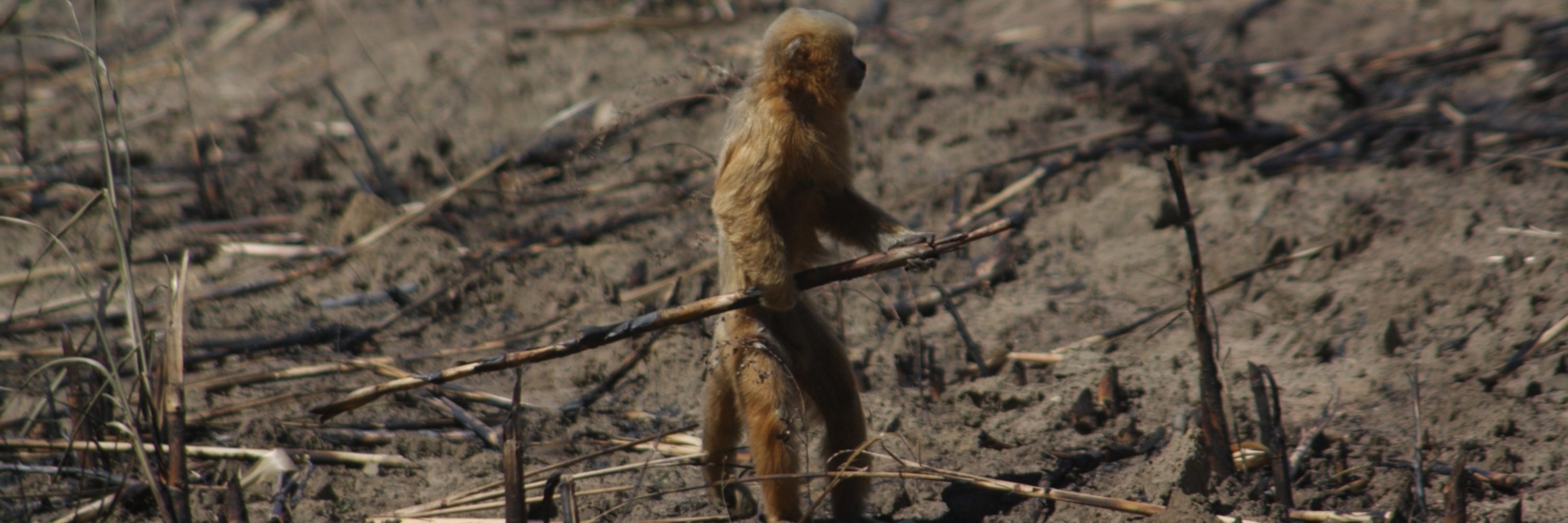
Take, for example, the blond capuchin monkey, Sapajus flavius, an endangered species that lives in two significantly damaged biomes of Brazil. (3/10)

May 20, 2025 at 8:13 PM
Take, for example, the blond capuchin monkey, Sapajus flavius, an endangered species that lives in two significantly damaged biomes of Brazil. (3/10)
They are among the most affected groups, having to change their space use and behaviours, and as if that weren't enough of a challenge, they also face extinction risks and increasingly constrained populations. (2/10)
May 20, 2025 at 8:13 PM
They are among the most affected groups, having to change their space use and behaviours, and as if that weren't enough of a challenge, they also face extinction risks and increasingly constrained populations. (2/10)
Reposted by Italo F Pereira

Correlation does not always mean causation...

December 6, 2024 at 5:25 PM
Correlation does not always mean causation...