




Diego Rios-Zertuche
@healthquality.bsky.social
Health Systems Quality | Public Health | Monitoring & Evaluation | Malaria Elimination | Health Systems | Salud Mesoamérica | Views my own
FYI: You are posting your address and instructions… if someone screenshots and shares your message, you could be getting many more postcards!
July 28, 2025 at 9:06 PM
FYI: You are posting your address and instructions… if someone screenshots and shares your message, you could be getting many more postcards!
A clear takeaway: we must bridge the gap between evaluators and implementers—especially in how we communicate evidence to policymakers.
The @saludmesoamerica.org continues to offer deep lessons in health systems transformation.
#PublicHealth #HealthSystems
The @saludmesoamerica.org continues to offer deep lessons in health systems transformation.
#PublicHealth #HealthSystems
May 29, 2025 at 5:04 PM
A clear takeaway: we must bridge the gap between evaluators and implementers—especially in how we communicate evidence to policymakers.
The @saludmesoamerica.org continues to offer deep lessons in health systems transformation.
#PublicHealth #HealthSystems
The @saludmesoamerica.org continues to offer deep lessons in health systems transformation.
#PublicHealth #HealthSystems
Key insights:
🔹Internal vs. external evaluation—call to involve evaluators earlier
🔹Improved perfomrance of primary care teams—community outreach as a key mechanism
🔹Measuring systems performance—interdisciplinary, relational, holistic approaches
#Evaluation #ImplementationScience
🔹Internal vs. external evaluation—call to involve evaluators earlier
🔹Improved perfomrance of primary care teams—community outreach as a key mechanism
🔹Measuring systems performance—interdisciplinary, relational, holistic approaches
#Evaluation #ImplementationScience
May 29, 2025 at 5:04 PM
Key insights:
🔹Internal vs. external evaluation—call to involve evaluators earlier
🔹Improved perfomrance of primary care teams—community outreach as a key mechanism
🔹Measuring systems performance—interdisciplinary, relational, holistic approaches
#Evaluation #ImplementationScience
🔹Internal vs. external evaluation—call to involve evaluators earlier
🔹Improved perfomrance of primary care teams—community outreach as a key mechanism
🔹Measuring systems performance—interdisciplinary, relational, holistic approaches
#Evaluation #ImplementationScience
I left inspired by the exceptional work of the Instituto Nacional de Cancerología, and by professionals like Nubia, who work behind the scenes to provide high quality care.
4/4
4/4

May 21, 2025 at 7:03 PM
I left inspired by the exceptional work of the Instituto Nacional de Cancerología, and by professionals like Nubia, who work behind the scenes to provide high quality care.
4/4
4/4
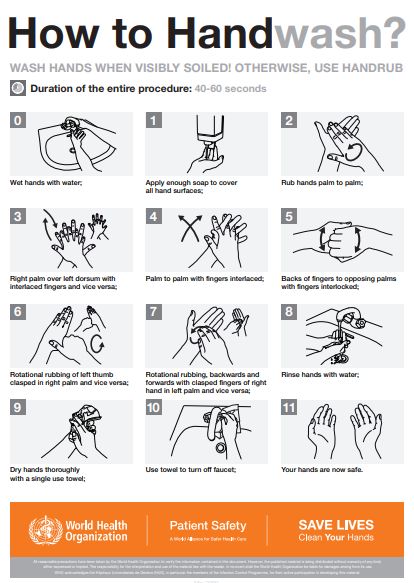
That’s where I met Nubia Prada, who built and now runs the unit. Her first words: “Wash your hands well. Don’t touch the glass.” With precision, warmth, and leadership, she keeps the system running flawlessly — and patients safe.
3/4
3/4
May 21, 2025 at 7:03 PM
That’s where I met Nubia Prada, who built and now runs the unit. Her first words: “Wash your hands well. Don’t touch the glass.” With precision, warmth, and leadership, she keeps the system running flawlessly — and patients safe.
3/4
3/4
Sterilization is a hospital’s hidden frontline. In Latin America, 1 in 10 patients gets an infection during their stay (www.ijic.info/article/view...). At the Institute, every instrument is cleaned, tracked, and customized with rigorous care. It’s invisible work — but vital.
2/4
2/4
Prevalence of nosocomial infection in Latin American intensive care units
| International Journal of Infection Control
www.ijic.info
May 21, 2025 at 7:03 PM
Sterilization is a hospital’s hidden frontline. In Latin America, 1 in 10 patients gets an infection during their stay (www.ijic.info/article/view...). At the Institute, every instrument is cleaned, tracked, and customized with rigorous care. It’s invisible work — but vital.
2/4
2/4
Our findings point to an urgent need for better healthcare quality across Mexico—and more detailed research at the state level to understand where and how to improve.
6/6
www.sciencedirect.com/science/arti...
6/6
www.sciencedirect.com/science/arti...

Changes and heterogeneity in quality-amenable excess mortality in Mexico: a systematic analysis for the years 2012, 2018, and 2021
Low quality of care has emerged as key policy concern in low and middle-income countries. This study explores the changes and heterogeneity in prevent…
www.sciencedirect.com
March 30, 2025 at 7:10 PM
Our findings point to an urgent need for better healthcare quality across Mexico—and more detailed research at the state level to understand where and how to improve.
6/6
www.sciencedirect.com/science/arti...
6/6
www.sciencedirect.com/science/arti...
We also found big differences depending on where people live. For example, Mexico City had much lower death rates from poor care compared to the Center region, which had the highest.
5/6
5/6
March 30, 2025 at 7:10 PM
We also found big differences depending on where people live. For example, Mexico City had much lower death rates from poor care compared to the Center region, which had the highest.
5/6
5/6
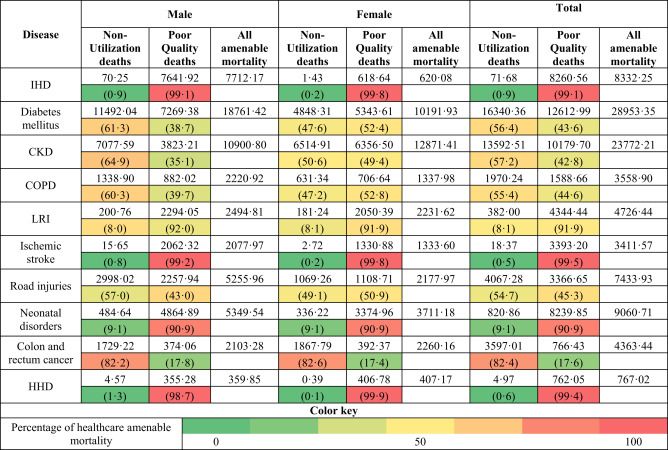
Both men and women are affected, but the impact differs by condition. Women are more likely to die from poor care when it comes to diabetes, kidney disease, and lung disease. Meanwhile, men tend to die more often because they don’t use healthcare services at all.
4/6
4/6
March 30, 2025 at 7:10 PM
Both men and women are affected, but the impact differs by condition. Women are more likely to die from poor care when it comes to diabetes, kidney disease, and lung disease. Meanwhile, men tend to die more often because they don’t use healthcare services at all.
4/6
4/6
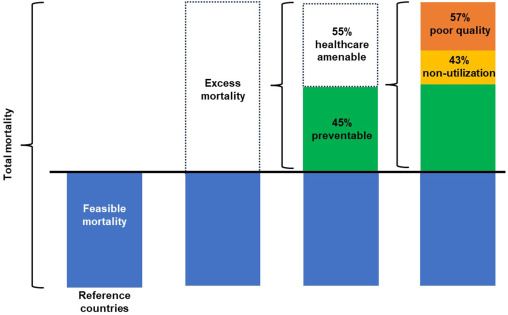
The results are concerning. In 2012, just over half (52.5%) of these preventable deaths were linked to poor quality of care. By 2021, that number had increased to 57.2%.
3/6
3/6
March 30, 2025 at 7:10 PM
The results are concerning. In 2012, just over half (52.5%) of these preventable deaths were linked to poor quality of care. By 2021, that number had increased to 57.2%.
3/6
3/6
We looked at deaths in Mexico in 2012, 2018, and 2021 among people who had access to healthcare but died from conditions that could have been prevented with better-quality care.
2/6
2/6
March 30, 2025 at 7:10 PM
We looked at deaths in Mexico in 2012, 2018, and 2021 among people who had access to healthcare but died from conditions that could have been prevented with better-quality care.
2/6
2/6
9. The concept of "co-producing health" with patients emphasizes the role of communities in improving outcomes.
10. Improvement is a natural process—like a child learning not to touch a flame, health systems should make quality improvement simple and accessible for everyone.
Enjoy the video!
5/5
10. Improvement is a natural process—like a child learning not to touch a flame, health systems should make quality improvement simple and accessible for everyone.
Enjoy the video!
5/5
March 16, 2025 at 11:50 AM
9. The concept of "co-producing health" with patients emphasizes the role of communities in improving outcomes.
10. Improvement is a natural process—like a child learning not to touch a flame, health systems should make quality improvement simple and accessible for everyone.
Enjoy the video!
5/5
10. Improvement is a natural process—like a child learning not to touch a flame, health systems should make quality improvement simple and accessible for everyone.
Enjoy the video!
5/5
6. Quality improvement should be embedded into the daily work of health professionals and supported by strong leadership at all levels
7. Improvement is everyone’s job, from frontline workers to policymakers
8. Training, motivation, and a non-punitive culture of learning from mistakes are key
4/5
7. Improvement is everyone’s job, from frontline workers to policymakers
8. Training, motivation, and a non-punitive culture of learning from mistakes are key
4/5
March 16, 2025 at 11:50 AM
6. Quality improvement should be embedded into the daily work of health professionals and supported by strong leadership at all levels
7. Improvement is everyone’s job, from frontline workers to policymakers
8. Training, motivation, and a non-punitive culture of learning from mistakes are key
4/5
7. Improvement is everyone’s job, from frontline workers to policymakers
8. Training, motivation, and a non-punitive culture of learning from mistakes are key
4/5
3. Context matters—different countries and healthcare settings require tailored solutions; no universal formula
4. Collecting data alone does not improve healthcare; acting on insights is crucial
5. Collaboration between all levels of the system is essential for meaningful improvements
3/5
4. Collecting data alone does not improve healthcare; acting on insights is crucial
5. Collaboration between all levels of the system is essential for meaningful improvements
3/5
March 16, 2025 at 11:50 AM
3. Context matters—different countries and healthcare settings require tailored solutions; no universal formula
4. Collecting data alone does not improve healthcare; acting on insights is crucial
5. Collaboration between all levels of the system is essential for meaningful improvements
3/5
4. Collecting data alone does not improve healthcare; acting on insights is crucial
5. Collaboration between all levels of the system is essential for meaningful improvements
3/5
1. Quality care is not a single intervention but a system-wide effort ensuring the right care at the right time
2. Quality care must be patient-centered, effective, responsive, and respectful, combining evidence-based medicine, efficient healthcare systems, and a continuous improvement culture
2/5
2. Quality care must be patient-centered, effective, responsive, and respectful, combining evidence-based medicine, efficient healthcare systems, and a continuous improvement culture
2/5
March 16, 2025 at 11:50 AM
1. Quality care is not a single intervention but a system-wide effort ensuring the right care at the right time
2. Quality care must be patient-centered, effective, responsive, and respectful, combining evidence-based medicine, efficient healthcare systems, and a continuous improvement culture
2/5
2. Quality care must be patient-centered, effective, responsive, and respectful, combining evidence-based medicine, efficient healthcare systems, and a continuous improvement culture
2/5
Nice example of editorial incentives aligned with academic incentives… and poor metrics to measure success.
December 24, 2024 at 4:49 PM
Nice example of editorial incentives aligned with academic incentives… and poor metrics to measure success.
Great read! Reminded me of a great paper from C. Olaya: in milk production models, cows aren't always considered—higher milk prices don't make milk producing cows to appear! There's a delay in the system. Similar dynamics apply to immigration...
proceedings.systemdynamics.org/2012/proceed...
proceedings.systemdynamics.org/2012/proceed...
proceedings.systemdynamics.org
December 10, 2024 at 4:45 PM
Great read! Reminded me of a great paper from C. Olaya: in milk production models, cows aren't always considered—higher milk prices don't make milk producing cows to appear! There's a delay in the system. Similar dynamics apply to immigration...
proceedings.systemdynamics.org/2012/proceed...
proceedings.systemdynamics.org/2012/proceed...