




Hannah Edwards
@hannah-b-edwards.bsky.social
Epidemiologist at the University of Bristol
Reposted by Hannah Edwards

New project on our website: An international review of the use of magnesium sulfate to protect against cerebral palsy. Building on the life changing work of the PReCePT programme
@karenluyt.bsky.social @hannah-b-edwards.bsky.social @healthinnowest.bsky.social
arc-w.nihr.ac.uk/an-internati...
@karenluyt.bsky.social @hannah-b-edwards.bsky.social @healthinnowest.bsky.social
arc-w.nihr.ac.uk/an-internati...

An international review of the use of MgSO4 to protect against cerebral palsy - ARC West
Babies born prematurely have a higher risk of brain injury, which can lead to cerebral palsy. We know that giving the drug magnesium sulfate (MgSO4) to the mum when she is in preterm labour can protec...
arc-w.nihr.ac.uk
August 27, 2025 at 8:18 AM
New project on our website: An international review of the use of magnesium sulfate to protect against cerebral palsy. Building on the life changing work of the PReCePT programme
@karenluyt.bsky.social @hannah-b-edwards.bsky.social @healthinnowest.bsky.social
arc-w.nihr.ac.uk/an-internati...
@karenluyt.bsky.social @hannah-b-edwards.bsky.social @healthinnowest.bsky.social
arc-w.nihr.ac.uk/an-internati...
Grand day out today at the #ChildHealthImpact2025 conference 😊

More fascinating sessions from Hannah Edwards, Ben Hughes, Peter Day & Zoe Marshman.
Presentations cover PReCePT, the Bradford ACE Service and BRUSH.
👉 Find out more here: bit.ly/4jZJa0n
#ChildHealthImpact2025
@nihrarcs.bsky.social
Presentations cover PReCePT, the Bradford ACE Service and BRUSH.
👉 Find out more here: bit.ly/4jZJa0n
#ChildHealthImpact2025
@nihrarcs.bsky.social


June 18, 2025 at 3:24 PM
Grand day out today at the #ChildHealthImpact2025 conference 😊
Reposted by Hannah Edwards
Our new research published in @bmj.com Quality and Safety reinforces the impact of PReCePT, the cerebral palsy prevention programme to promote the use of magnesium sulfate.
We compared use of magnesium sulfate before and 4 years after PReCePT, and in Wales and Scotland
bit.ly/42MbzjM
We compared use of magnesium sulfate before and 4 years after PReCePT, and in Wales and Scotland
bit.ly/42MbzjM

New research reinforces impact of cerebral palsy prevention programme - ARC West
Evidence for the impact of a programme to increase the use of magnesium sulfate, a £5 injection that helps prevent cerebral palsy in premature babies, has been strengthened by a new study published in...
bit.ly
April 28, 2025 at 9:21 AM
Our new research published in @bmj.com Quality and Safety reinforces the impact of PReCePT, the cerebral palsy prevention programme to promote the use of magnesium sulfate.
We compared use of magnesium sulfate before and 4 years after PReCePT, and in Wales and Scotland
bit.ly/42MbzjM
We compared use of magnesium sulfate before and 4 years after PReCePT, and in Wales and Scotland
bit.ly/42MbzjM
Happy news from our PReCePT programme: concerted national efforts can effectively and cost-effectively improve quality of perinatal care, helping protect preterm babies ❤️
qualitysafety.bmj.com/content/earl... @karenluyt.bsky.social @arc-west.bsky.social @frankdv.bsky.social @csrejon.bsky.social
qualitysafety.bmj.com/content/earl... @karenluyt.bsky.social @arc-west.bsky.social @frankdv.bsky.social @csrejon.bsky.social
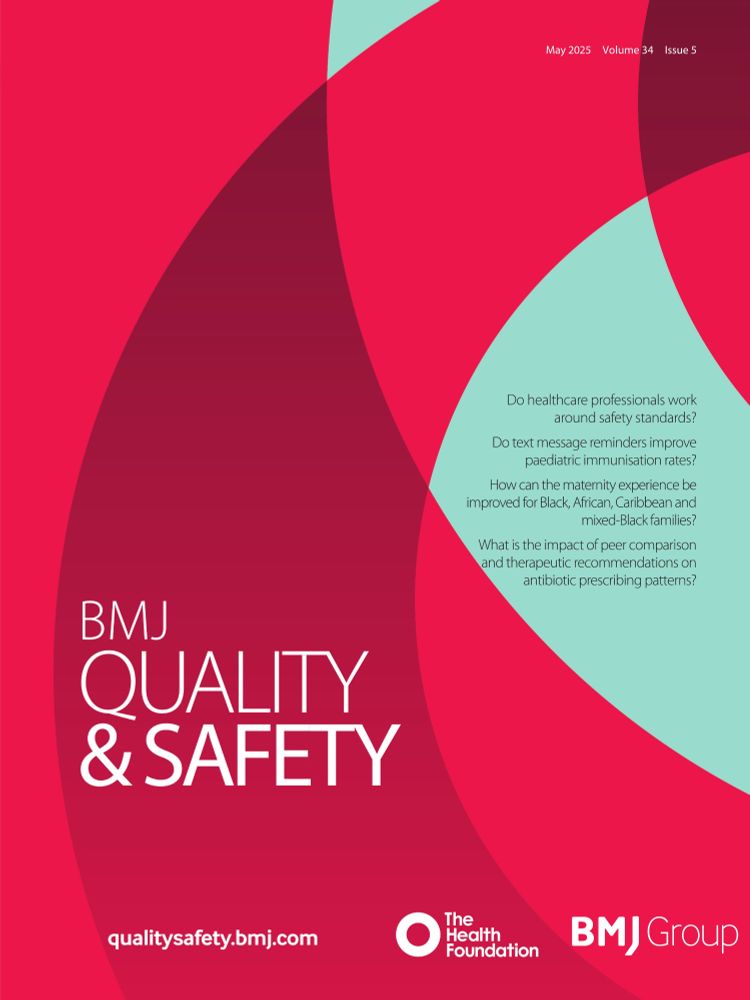
Implementation of national guidelines on antenatal magnesium sulfate for neonatal neuroprotection: extended evaluation of the effectiveness and cost-effectiveness of the National PReCePT Programme in ...
Background Since 2015, the National Institute for Health and Care Excellence (NICE) guidelines have recommended antenatal magnesium sulfate (MgSO4) for mothers in preterm labour (<30 weeks’ gestation)...
qualitysafety.bmj.com
April 28, 2025 at 8:03 AM
Happy news from our PReCePT programme: concerted national efforts can effectively and cost-effectively improve quality of perinatal care, helping protect preterm babies ❤️
qualitysafety.bmj.com/content/earl... @karenluyt.bsky.social @arc-west.bsky.social @frankdv.bsky.social @csrejon.bsky.social
qualitysafety.bmj.com/content/earl... @karenluyt.bsky.social @arc-west.bsky.social @frankdv.bsky.social @csrejon.bsky.social
Spoiler... the surprising effect is that they might improve road safety

Bristol Uni researchers reveal a surprising effect of letting e-scooters onto the roads

What next for the e-scooters of Bristol
Bristol Uni researchers reveal a surprising effect of letting e-scooters onto the roads
www.bristolpost.co.uk
April 14, 2025 at 9:10 AM
Spoiler... the surprising effect is that they might improve road safety
Reposted by Hannah Edwards

This 👇🏼 is a very nice, balanced, and comprehensive discussion of the evidence and its interpretation.
...of course, from a #publichealth perspective, this is entirely unhelpful: "The impact “depends on the individual themselves and their history and their physiology, the content and the context”."
...of course, from a #publichealth perspective, this is entirely unhelpful: "The impact “depends on the individual themselves and their history and their physiology, the content and the context”."

Are smartphones and social media really harming adolescents’ mental health?
I reported on this for @nature.com and found a big debate over the evidence, but useful advice for parents and young people.
www.nature.com/articles/d41...
I reported on this for @nature.com and found a big debate over the evidence, but useful advice for parents and young people.
www.nature.com/articles/d41...

Do smartphones and social media really harm teens’ mental health?
Researchers are debating the strength of evidence connecting technology to surging rates of adolescent mental illness. But they have some clear advice for parents.
www.nature.com
April 3, 2025 at 6:20 AM
This 👇🏼 is a very nice, balanced, and comprehensive discussion of the evidence and its interpretation.
...of course, from a #publichealth perspective, this is entirely unhelpful: "The impact “depends on the individual themselves and their history and their physiology, the content and the context”."
...of course, from a #publichealth perspective, this is entirely unhelpful: "The impact “depends on the individual themselves and their history and their physiology, the content and the context”."
Reposted by Hannah Edwards
🚨 Serious road injuries are underreported – new @etsc.eu report. Police data significantly underestimates serious road injuries in the EU. Many pedestrian & cyclist incidents go unrecorded.
📢 Read more: etsc.eu/reducing-ser...
#RoadSafety #PACTS #TransportSafety #VisionZero #SafeMobility
📢 Read more: etsc.eu/reducing-ser...
#RoadSafety #PACTS #TransportSafety #VisionZero #SafeMobility

Reducing Serious Injuries on European Roads (PIN Flash 48)
Every day, all over Europe, people fall off bikes or trip on pavements and injure themselves. While these incidents do not usually end in tragedy, the short-term effects can be extremely burdensome.
etsc.eu
March 31, 2025 at 7:52 AM
🚨 Serious road injuries are underreported – new @etsc.eu report. Police data significantly underestimates serious road injuries in the EU. Many pedestrian & cyclist incidents go unrecorded.
📢 Read more: etsc.eu/reducing-ser...
#RoadSafety #PACTS #TransportSafety #VisionZero #SafeMobility
📢 Read more: etsc.eu/reducing-ser...
#RoadSafety #PACTS #TransportSafety #VisionZero #SafeMobility
Reposted by Hannah Edwards
Great to see this framework on natural experiments published, including involvement from our very own #NaturalExperiment guru @frankdv.bsky.social!

A new framework for the conduct and use of natural experimental evaluations has been published to support health researchers and decision makers.
www.gla.ac.uk/schools/heal...
www.gla.ac.uk/schools/heal...
March 28, 2025 at 11:05 AM
Great to see this framework on natural experiments published, including involvement from our very own #NaturalExperiment guru @frankdv.bsky.social!
Great idea to encourage more active travel. As our research suggests, the more people using active travel = the safer it is for everyone:
injuryprevention.bmj.com/content/earl...
@frankdv.bsky.social @arc-west.bsky.social @eddcarlton.bsky.social
injuryprevention.bmj.com/content/earl...
@frankdv.bsky.social @arc-west.bsky.social @eddcarlton.bsky.social

Should Cycle to Work be scrapped and rebranded ‘Cycle for Health’?
The group has also urged the government to clamp down on pavement parking and remove discriminatory access barriers on bike paths, highlighting “systemic underinvestment” in active travel
road.cc/313241 #cycling
The group has also urged the government to clamp down on pavement parking and remove discriminatory access barriers on bike paths, highlighting “systemic underinvestment” in active travel
road.cc/313241 #cycling

MPs call for “urgent reform” of Cycle to Work scheme to tackle active travel inequality
The All-Party Parliamentary Group for Cycling and Walking has also urged the government to clamp down on pavement parking and remove discriminatory access barriers on bike paths, highlighting “systemi...
road.cc
March 27, 2025 at 2:36 PM
Great idea to encourage more active travel. As our research suggests, the more people using active travel = the safer it is for everyone:
injuryprevention.bmj.com/content/earl...
@frankdv.bsky.social @arc-west.bsky.social @eddcarlton.bsky.social
injuryprevention.bmj.com/content/earl...
@frankdv.bsky.social @arc-west.bsky.social @eddcarlton.bsky.social
Great to hear from Local Transport Minister @simonlightwood.org.uk
“We’re looking to blend healthy, greener transport choices that give people greater choice over how they travel. That’s why it’s great to see this research showing areas with our e-scooter trials are now a safer place for cyclists.”
“We’re looking to blend healthy, greener transport choices that give people greater choice over how they travel. That’s why it’s great to see this research showing areas with our e-scooter trials are now a safer place for cyclists.”

March 25, 2025 at 10:47 AM
Great to hear from Local Transport Minister @simonlightwood.org.uk
“We’re looking to blend healthy, greener transport choices that give people greater choice over how they travel. That’s why it’s great to see this research showing areas with our e-scooter trials are now a safer place for cyclists.”
“We’re looking to blend healthy, greener transport choices that give people greater choice over how they travel. That’s why it’s great to see this research showing areas with our e-scooter trials are now a safer place for cyclists.”
Reposted by Hannah Edwards

"These findings support the ‘safety in numbers’ hypothesis. This argues that the more people use ‘micromobility’ forms of transport such as bicycles and e-scooters the safer they become, possibly because car drivers take more care."
arc-w.nihr.ac.uk/news/electri...
arc-w.nihr.ac.uk/news/electri...
March 21, 2025 at 9:19 AM
"These findings support the ‘safety in numbers’ hypothesis. This argues that the more people use ‘micromobility’ forms of transport such as bicycles and e-scooters the safer they become, possibly because car drivers take more care."
arc-w.nihr.ac.uk/news/electri...
arc-w.nihr.ac.uk/news/electri...
@arc-west.bsky.social @bristoluni.bsky.social @sustrans.bsky.social @chrisboardman.bsky.social @roadcc.bsky.social @cyclingweekly.com @eddcarlton.bsky.social @frankdv.bsky.social @drmirandaarmstrong.bsky.social
New research from the University of Bristol 👇

"Safety in numbers": Electric scooter schemes reduce cyclist collisions by 20%, new study suggests
University of Bristol research explored "micromobility safety in numbers" hypothesis, that the more people ditch their cars for bikes or e-scooter hires the safer they become, possibly by making drive...
road.cc
March 24, 2025 at 11:09 AM
How e-scooters might benefit cyclists
www.bbc.co.uk/news/article...
@arc-west.bsky.social @bristoluni.bsky.social @sustrans.bsky.social @chrisboardman.bsky.social @roadcc.bsky.social @cyclingweekly.com @eddcarlton.bsky.social @frankdv.bsky.social @drmirandaarmstrong.bsky.social
www.bbc.co.uk/news/article...
@arc-west.bsky.social @bristoluni.bsky.social @sustrans.bsky.social @chrisboardman.bsky.social @roadcc.bsky.social @cyclingweekly.com @eddcarlton.bsky.social @frankdv.bsky.social @drmirandaarmstrong.bsky.social

E-scooters reduce bike collision risk, says Bristol University study
The University of Bristol study looked at police data on road collisions between 2015 and 2023.
www.bbc.co.uk
March 24, 2025 at 10:55 AM
Reposted by Hannah Edwards
E-scooters may not be so bad for your health (if you ride a bike)…
injuryprevention.bmj.com/content/inju...
injuryprevention.bmj.com/content/inju...
injuryprevention.bmj.com
March 21, 2025 at 9:12 PM
E-scooters may not be so bad for your health (if you ride a bike)…
injuryprevention.bmj.com/content/inju...
injuryprevention.bmj.com/content/inju...
Reposted by Hannah Edwards
For more about this project, see our plain language summary:
bit.ly/4iJatM5
bit.ly/4iJatM5

“Safety in numbers”: Have e-scooter schemes made roads safer for cyclists? - ARC West
Since 2020, some areas in England have introduced electric scooter (e-scooter) rental schemes. They aim to encourage greener transport choices to help reduce carbon emissions and improve air quality. ...
bit.ly
March 21, 2025 at 7:41 AM
For more about this project, see our plain language summary:
bit.ly/4iJatM5
bit.ly/4iJatM5
Reposted by Hannah Edwards
This project was led by Hannah Edwards, Frank de Vocht, @drmirandaarmstrong.bsky.social, Russ Jago and Yoav Ben-Shlomo
See the full methodology and results in the paper published in Injury Prevention
injuryprevention.bmj.com/content/earl...
See the full methodology and results in the paper published in Injury Prevention
injuryprevention.bmj.com/content/earl...

Risk of bicycle collisions and ‘safety in numbers’: a natural experiment using the local introduction of e-scooters in England
Background Ecological studies hypothesise a ‘safety in numbers’ (SiN) effect whereby road safety for bicycles and other micromobility users improves as their numbers increase, due to behavioural changes of motorists. Causal interpretation of these studies is difficult due to confounding and reverse causation. The introduction of electric scooter (e-scooter) rental schemes in selected districts in England meant an increase in micromobility users in these areas, which presented an opportunity to test the SiN hypothesis using a natural experiment. Methods Time-series analysis of police data on road collisions in local authorities (LAs) in Great Britain, 2015–2023. Random-effects Poisson regression time-series models compared collision rates in LA districts with an e-scooter trial (n=41) versus matched control districts (n=41). Primary outcomes were all road collisions and bicycle collisions. Models adjusted for time; seasonality; baseline collision rate; COVID-19 period; and preintervention/postintervention period (proxied by intervention group/COVID-19 period interaction). Results The rate of bicycle collisions reduced following the introduction of the schemes, compared with control districts (incidence rate ratio (IRR) 0.78, 95% CI 0.68 to 0.89 during peak COVID-19; IRR 0.87, 95% CI 0.77 to 0.99 in the post-COVID-19 period). This effect was specific to bicycle collisions and strongest in the subgroup of serious/fatal collisions. Conclusions Findings suggest that the increase of a new and sustainable mode of transport, e-scooters, may have reduced bicycle collisions. This could have far-reaching benefits including reduced injuries, safer environments, and public health and environmental benefits if more people choose bicycles and micromobility over car transport. Findings should be verified in further work. Data are available upon reasonable request. All data used in this study is publicly accessible.
injuryprevention.bmj.com
March 21, 2025 at 7:41 AM
This project was led by Hannah Edwards, Frank de Vocht, @drmirandaarmstrong.bsky.social, Russ Jago and Yoav Ben-Shlomo
See the full methodology and results in the paper published in Injury Prevention
injuryprevention.bmj.com/content/earl...
See the full methodology and results in the paper published in Injury Prevention
injuryprevention.bmj.com/content/earl...
Reposted by Hannah Edwards

Interesting - and possibly surprising - findings from this natural experiment. Best evidence so far supporting the 'safety in numbers' hypothesis!
We tested the 'safety in numbers' hypothesis to see whether e-scooter schemes have affected bicycle collisions, using police data.
Our natural experiment found e-scooter schemes appear to reduce the risk of bicycle collisions by around 20%.
#RoadSafety
bit.ly/4itEeks
Our natural experiment found e-scooter schemes appear to reduce the risk of bicycle collisions by around 20%.
#RoadSafety
bit.ly/4itEeks
Electric scooter schemes reduce bicycle collisions by 20%, study suggests - ARC West
Electric scooter schemes appear to reduce the risk of bicycle collisions by around 20%, according to a University of Bristol-led study. The research, funded by the National Institute for Health and Ca...
bit.ly
March 21, 2025 at 8:04 AM
Interesting - and possibly surprising - findings from this natural experiment. Best evidence so far supporting the 'safety in numbers' hypothesis!
Reposted by Hannah Edwards
We tested the 'safety in numbers' hypothesis to see whether e-scooter schemes have affected bicycle collisions, using police data.
Our natural experiment found e-scooter schemes appear to reduce the risk of bicycle collisions by around 20%.
#RoadSafety
bit.ly/4itEeks
Our natural experiment found e-scooter schemes appear to reduce the risk of bicycle collisions by around 20%.
#RoadSafety
bit.ly/4itEeks
Electric scooter schemes reduce bicycle collisions by 20%, study suggests - ARC West
Electric scooter schemes appear to reduce the risk of bicycle collisions by around 20%, according to a University of Bristol-led study. The research, funded by the National Institute for Health and Ca...
bit.ly
March 21, 2025 at 7:41 AM
We tested the 'safety in numbers' hypothesis to see whether e-scooter schemes have affected bicycle collisions, using police data.
Our natural experiment found e-scooter schemes appear to reduce the risk of bicycle collisions by around 20%.
#RoadSafety
bit.ly/4itEeks
Our natural experiment found e-scooter schemes appear to reduce the risk of bicycle collisions by around 20%.
#RoadSafety
bit.ly/4itEeks