



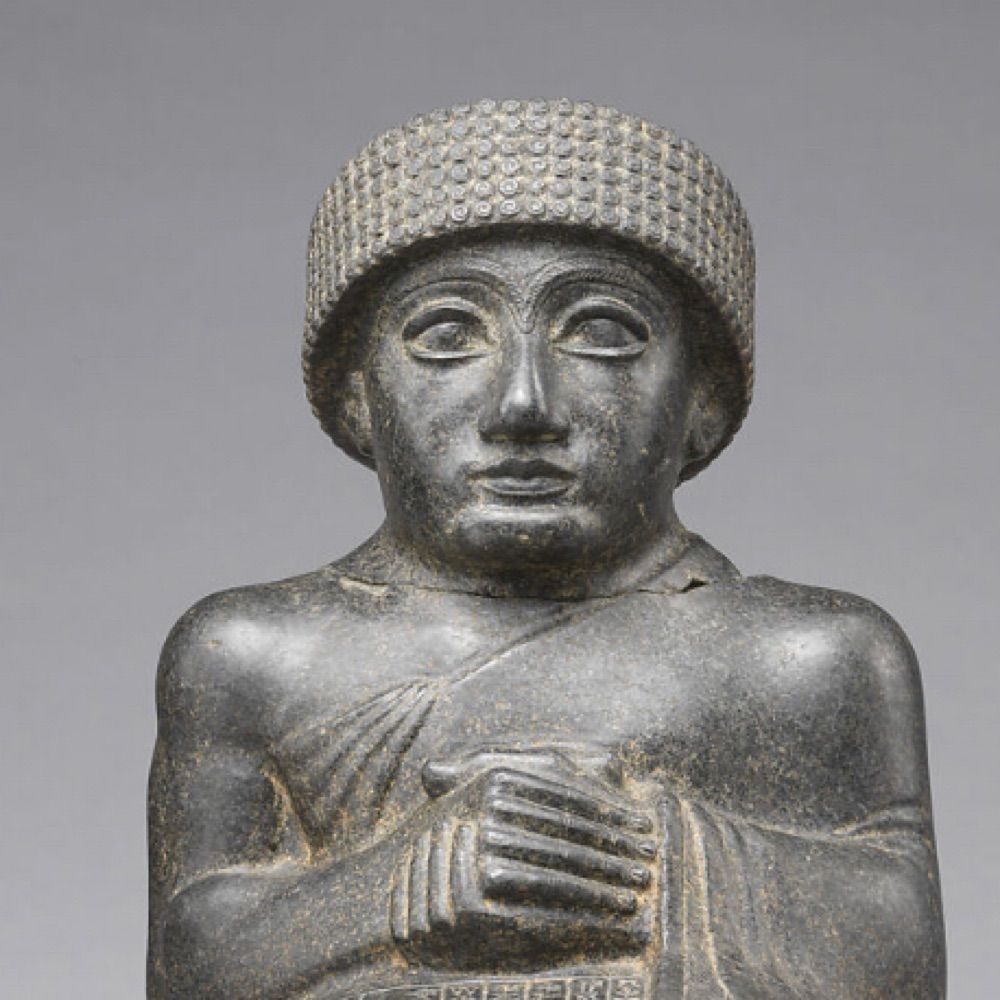
Gudea Ensi of Lagash
@gudea.bsky.social
This votive statuette in a prayerful gesture was dedicated by a man from Larsa to the god Martu on behalf of the King Hammurabi of Babylon. While cast in bronze the statuette was gilded with gold, a common practice of this period.

January 1, 2025 at 4:54 AM
This votive statuette in a prayerful gesture was dedicated by a man from Larsa to the god Martu on behalf of the King Hammurabi of Babylon. While cast in bronze the statuette was gilded with gold, a common practice of this period.
Copper scepter with Grooved Shaft Decorated in a Human Head, Nahal Mishmar, 4500-3600 BC
One of eleven objects from the so called “Cave of Treasures” to be classified as a scepter, the scepter possesses a hollow shaft in order to be placed on a wooden staff possibly to be used in religious…
One of eleven objects from the so called “Cave of Treasures” to be classified as a scepter, the scepter possesses a hollow shaft in order to be placed on a wooden staff possibly to be used in religious…

December 22, 2024 at 4:34 AM
Copper scepter with Grooved Shaft Decorated in a Human Head, Nahal Mishmar, 4500-3600 BC
One of eleven objects from the so called “Cave of Treasures” to be classified as a scepter, the scepter possesses a hollow shaft in order to be placed on a wooden staff possibly to be used in religious…
One of eleven objects from the so called “Cave of Treasures” to be classified as a scepter, the scepter possesses a hollow shaft in order to be placed on a wooden staff possibly to be used in religious…
This false door from the site of Saqqara from the Egyptian Late period (c. 6th century) bears an inscription in the Carian language which supports Herodotus’ claim that Carian and Ionian mercenaries were employed in the army of Pharaoh Psamtik I (called Psammetichus).

December 21, 2024 at 6:06 AM
This false door from the site of Saqqara from the Egyptian Late period (c. 6th century) bears an inscription in the Carian language which supports Herodotus’ claim that Carian and Ionian mercenaries were employed in the army of Pharaoh Psamtik I (called Psammetichus).
Reposted by Gudea Ensi of Lagash

One of my favourites! A carnelian showing Odysseus tied to his ship's mast, as he endeavours to pass the Sirens: ca. 1st Century AD.
'The Sirens bewitch with their clear-toned song' (Odyssey 12.44) #AncientBluesky 🏺
Image: Berlin Antikensammlung (FG 6880). Link - recherche.smb.museum/detail/690597
'The Sirens bewitch with their clear-toned song' (Odyssey 12.44) #AncientBluesky 🏺
Image: Berlin Antikensammlung (FG 6880). Link - recherche.smb.museum/detail/690597

December 19, 2024 at 1:42 PM
One of my favourites! A carnelian showing Odysseus tied to his ship's mast, as he endeavours to pass the Sirens: ca. 1st Century AD.
'The Sirens bewitch with their clear-toned song' (Odyssey 12.44) #AncientBluesky 🏺
Image: Berlin Antikensammlung (FG 6880). Link - recherche.smb.museum/detail/690597
'The Sirens bewitch with their clear-toned song' (Odyssey 12.44) #AncientBluesky 🏺
Image: Berlin Antikensammlung (FG 6880). Link - recherche.smb.museum/detail/690597
Ostracon with a child’s drawing of people from Athribis, Lower Egypt, 100 BC-AD 200

December 9, 2024 at 7:03 AM
Ostracon with a child’s drawing of people from Athribis, Lower Egypt, 100 BC-AD 200
Funerary scene on a limestone ostracon with mourners and a burial chamber, Egyptian, New Kingdom,
The burial shaft resembles those from Deir el-Medina in plan. One of the party wears a jackal mask possibly as a stand in of Anubis or Anubis himself.
The burial shaft resembles those from Deir el-Medina in plan. One of the party wears a jackal mask possibly as a stand in of Anubis or Anubis himself.

December 8, 2024 at 9:50 PM
Funerary scene on a limestone ostracon with mourners and a burial chamber, Egyptian, New Kingdom,
The burial shaft resembles those from Deir el-Medina in plan. One of the party wears a jackal mask possibly as a stand in of Anubis or Anubis himself.
The burial shaft resembles those from Deir el-Medina in plan. One of the party wears a jackal mask possibly as a stand in of Anubis or Anubis himself.
Minoan clay house model from Archanes, Middle IIIA c. 1700 BC
This model resembles fresco depictions found at Akrotiri of two story residential structures.
This model resembles fresco depictions found at Akrotiri of two story residential structures.

December 8, 2024 at 6:12 PM
Minoan clay house model from Archanes, Middle IIIA c. 1700 BC
This model resembles fresco depictions found at Akrotiri of two story residential structures.
This model resembles fresco depictions found at Akrotiri of two story residential structures.
Middle Assyrian sickle sword bearing the inscription: "Palace of Adad-nirari, king of the universe, son of Arik-den-ili, king of Assyria, son of Enlil-nirari, king of Assyria” This sort of bent sword was used as a mark of authority in Mesopotamian art from the Early Dynastic Period onwards.

December 4, 2024 at 7:58 PM
Middle Assyrian sickle sword bearing the inscription: "Palace of Adad-nirari, king of the universe, son of Arik-den-ili, king of Assyria, son of Enlil-nirari, king of Assyria” This sort of bent sword was used as a mark of authority in Mesopotamian art from the Early Dynastic Period onwards.
Reposted by Gudea Ensi of Lagash
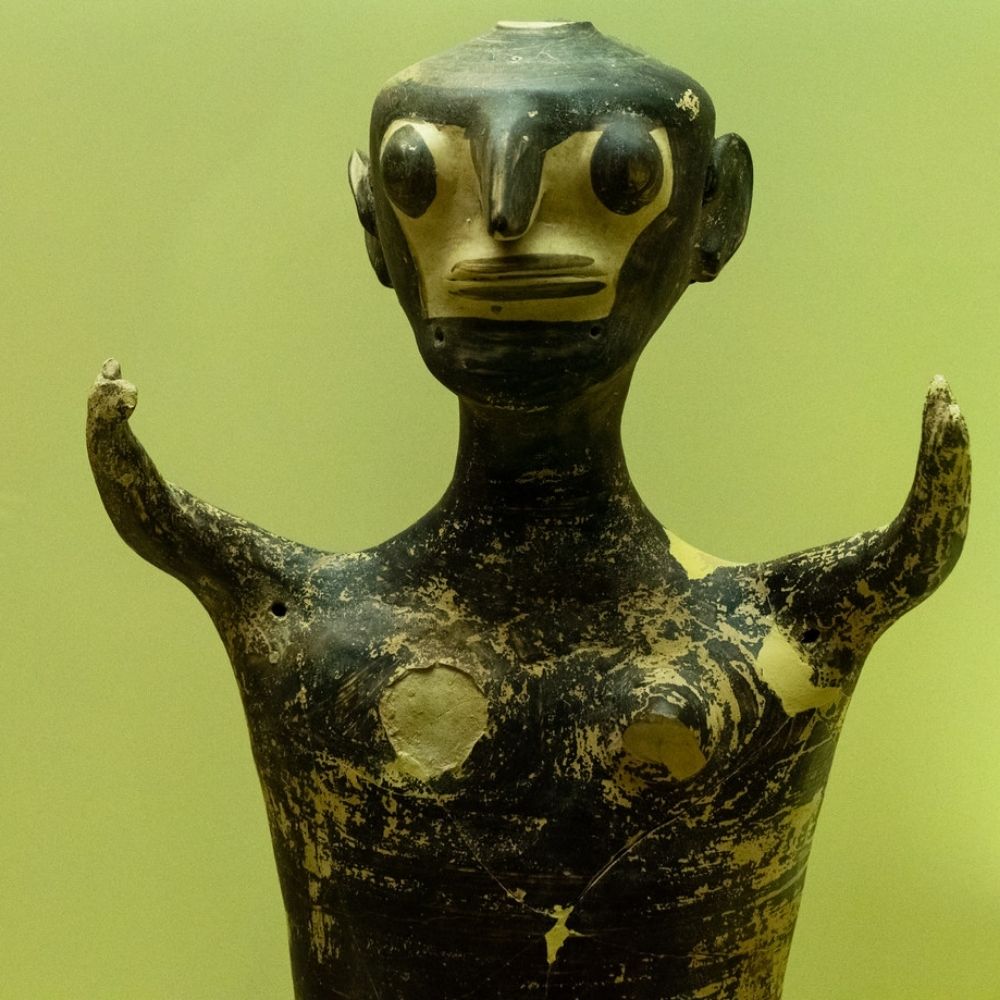
1/ In 1903, the Italian archaeologist Roberto Paribeni discovered inside an elite chamber tomb (Tomb 4) in the area of the royal Villa of Hagia Triada, Crete, one of the most important artifacts of Aegean art: the Hagia Triada sarcophagus. It is dated to around 1400 BC.
#Minoans #Myceneans
#Minoans #Myceneans

December 1, 2024 at 6:10 AM
1/ In 1903, the Italian archaeologist Roberto Paribeni discovered inside an elite chamber tomb (Tomb 4) in the area of the royal Villa of Hagia Triada, Crete, one of the most important artifacts of Aegean art: the Hagia Triada sarcophagus. It is dated to around 1400 BC.
#Minoans #Myceneans
#Minoans #Myceneans
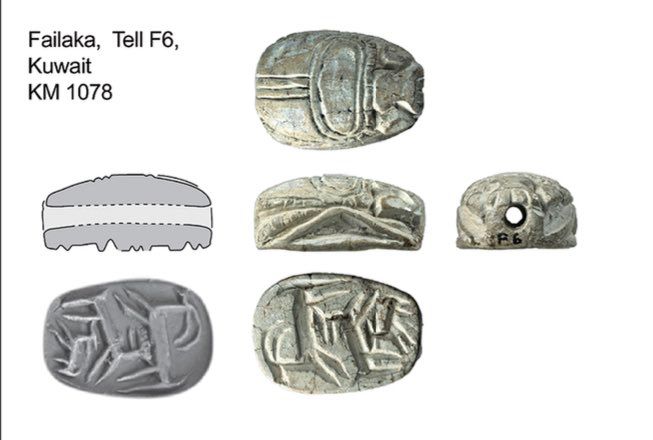
Imitation scarab bead with native gulf stylistic elements in the Dilmun seal tradition, Failaka island, Kuwait
November 27, 2024 at 1:31 AM
Imitation scarab bead with native gulf stylistic elements in the Dilmun seal tradition, Failaka island, Kuwait
Syrian style cylinder seal impression from Avaris (modern Tell ed-Dab’a), Middle Bronze Age

November 26, 2024 at 6:05 AM
Syrian style cylinder seal impression from Avaris (modern Tell ed-Dab’a), Middle Bronze Age
One armed anchor found on the shores of the Dead Sea dated to the 7th century BC
The anchor is made of an acacia wood crock lashed with palm fiber rope to a limestone stock. The anchor lacks parallels in any other location and thus is likely indicative of a local tradition.
The anchor is made of an acacia wood crock lashed with palm fiber rope to a limestone stock. The anchor lacks parallels in any other location and thus is likely indicative of a local tradition.

November 25, 2024 at 5:24 AM
One armed anchor found on the shores of the Dead Sea dated to the 7th century BC
The anchor is made of an acacia wood crock lashed with palm fiber rope to a limestone stock. The anchor lacks parallels in any other location and thus is likely indicative of a local tradition.
The anchor is made of an acacia wood crock lashed with palm fiber rope to a limestone stock. The anchor lacks parallels in any other location and thus is likely indicative of a local tradition.
Fragment of a boat model from Tell Ishchali dated to the Old Babylonian period
The fragment depicts the stern of a wooden vessel with framing and keelson or central timber.
The fragment depicts the stern of a wooden vessel with framing and keelson or central timber.

November 24, 2024 at 5:53 AM
Fragment of a boat model from Tell Ishchali dated to the Old Babylonian period
The fragment depicts the stern of a wooden vessel with framing and keelson or central timber.
The fragment depicts the stern of a wooden vessel with framing and keelson or central timber.
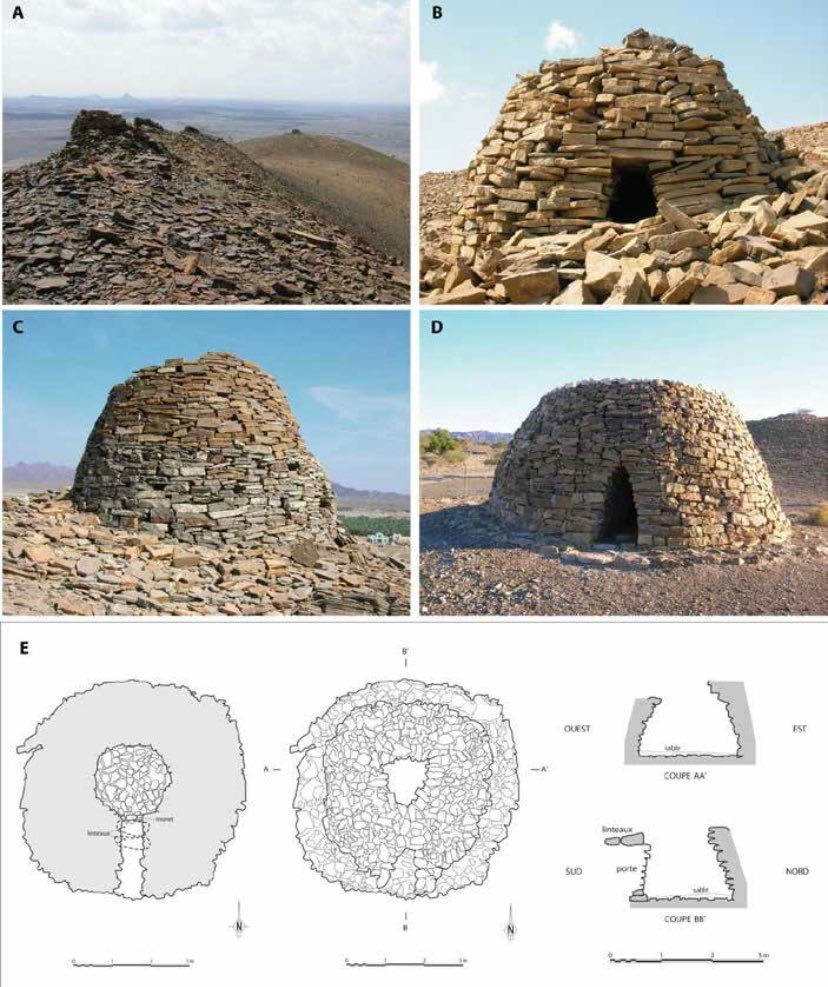
Hafit-type beehive tombs in modern Oman and UAE (3100-2700 BC)
November 23, 2024 at 9:22 PM
Hafit-type beehive tombs in modern Oman and UAE (3100-2700 BC)
Statue of Iddi-ilum (21st century BC) with the inscription:
“Iddi-ilum, shakkanakku of Mari, for the goddess Ishtar dedicated a statue of himself. As for the one who removes this inscription, may the goddess Ishtar destroy his progeny.”
“Iddi-ilum, shakkanakku of Mari, for the goddess Ishtar dedicated a statue of himself. As for the one who removes this inscription, may the goddess Ishtar destroy his progeny.”

November 23, 2024 at 6:14 PM
Statue of Iddi-ilum (21st century BC) with the inscription:
“Iddi-ilum, shakkanakku of Mari, for the goddess Ishtar dedicated a statue of himself. As for the one who removes this inscription, may the goddess Ishtar destroy his progeny.”
“Iddi-ilum, shakkanakku of Mari, for the goddess Ishtar dedicated a statue of himself. As for the one who removes this inscription, may the goddess Ishtar destroy his progeny.”
Diorite head of a ruler from Alalakh (Tell Achana), level VII, c. 19-17th century BC
The head probably depicts Yarim-Lim of Alalakh which Leonard Woolley mistook for the ruler of Yamhad of the same name. (Picture from Beyond Babylon by Joan Aruz; Kim Benzel; Jean M. Evans)
The head probably depicts Yarim-Lim of Alalakh which Leonard Woolley mistook for the ruler of Yamhad of the same name. (Picture from Beyond Babylon by Joan Aruz; Kim Benzel; Jean M. Evans)


November 22, 2024 at 3:29 AM
Diorite head of a ruler from Alalakh (Tell Achana), level VII, c. 19-17th century BC
The head probably depicts Yarim-Lim of Alalakh which Leonard Woolley mistook for the ruler of Yamhad of the same name. (Picture from Beyond Babylon by Joan Aruz; Kim Benzel; Jean M. Evans)
The head probably depicts Yarim-Lim of Alalakh which Leonard Woolley mistook for the ruler of Yamhad of the same name. (Picture from Beyond Babylon by Joan Aruz; Kim Benzel; Jean M. Evans)
Ubaid period “censer” found at the site of Eridu in Temple VI
The true function of these is to hold a smaller vessel that sat on top containing the incense. Many of these were found in the temples of later periods. All examples have fenestrations suggesting it may represent a building.
The true function of these is to hold a smaller vessel that sat on top containing the incense. Many of these were found in the temples of later periods. All examples have fenestrations suggesting it may represent a building.


November 20, 2024 at 1:27 AM
Ubaid period “censer” found at the site of Eridu in Temple VI
The true function of these is to hold a smaller vessel that sat on top containing the incense. Many of these were found in the temples of later periods. All examples have fenestrations suggesting it may represent a building.
The true function of these is to hold a smaller vessel that sat on top containing the incense. Many of these were found in the temples of later periods. All examples have fenestrations suggesting it may represent a building.
Bronze counterweight for a steelyard from the 7th century AD Yassiada shipwreck (Turkey) in the shape of a helmeted Athena with a gorgon depicted on her breastplate
This is one of the latest depictions of a god from the Greek Pantheon well into the Christian period.
This is one of the latest depictions of a god from the Greek Pantheon well into the Christian period.

November 19, 2024 at 11:20 PM
Bronze counterweight for a steelyard from the 7th century AD Yassiada shipwreck (Turkey) in the shape of a helmeted Athena with a gorgon depicted on her breastplate
This is one of the latest depictions of a god from the Greek Pantheon well into the Christian period.
This is one of the latest depictions of a god from the Greek Pantheon well into the Christian period.
Steatite cylinder seal depicting a warrior holding a head stuck on a pike, Minet el-Beida, kingdom of Ugarit (Syria), 14th-13th century BC

November 18, 2024 at 3:28 PM
Steatite cylinder seal depicting a warrior holding a head stuck on a pike, Minet el-Beida, kingdom of Ugarit (Syria), 14th-13th century BC
This inscription (c. 700-650 BC) discovered at Ekron was the first text identified with the Philistines and was written in Phoenician. The text dedicates the construction of a temple by Achish to pt[ ]yh which may be the name of Baal’s daughter, Pidray.

November 17, 2024 at 3:28 PM
This inscription (c. 700-650 BC) discovered at Ekron was the first text identified with the Philistines and was written in Phoenician. The text dedicates the construction of a temple by Achish to pt[ ]yh which may be the name of Baal’s daughter, Pidray.
The site of Mushiston in modern Tajikistan is home to ancient mines whose earliest phase is from 2400-1900 BC and contains ceramics associated with the Andronovo Culture. Tin associated with sites like this fueled the bronze making of the Near East.

November 16, 2024 at 10:20 PM
The site of Mushiston in modern Tajikistan is home to ancient mines whose earliest phase is from 2400-1900 BC and contains ceramics associated with the Andronovo Culture. Tin associated with sites like this fueled the bronze making of the Near East.
Reposted by Gudea Ensi of Lagash

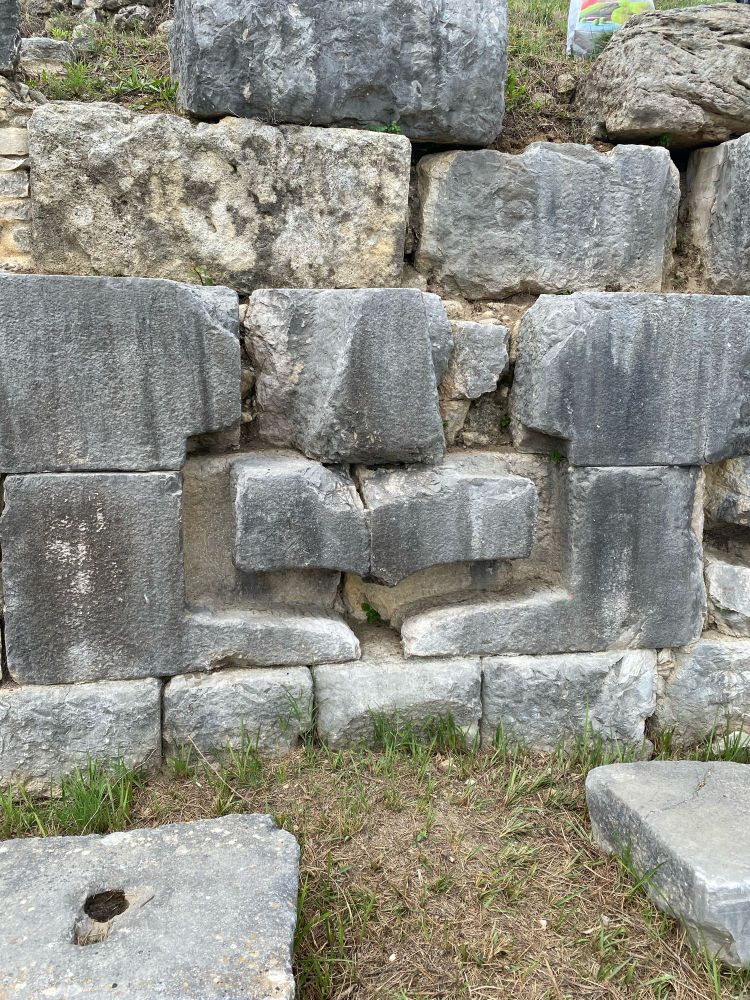
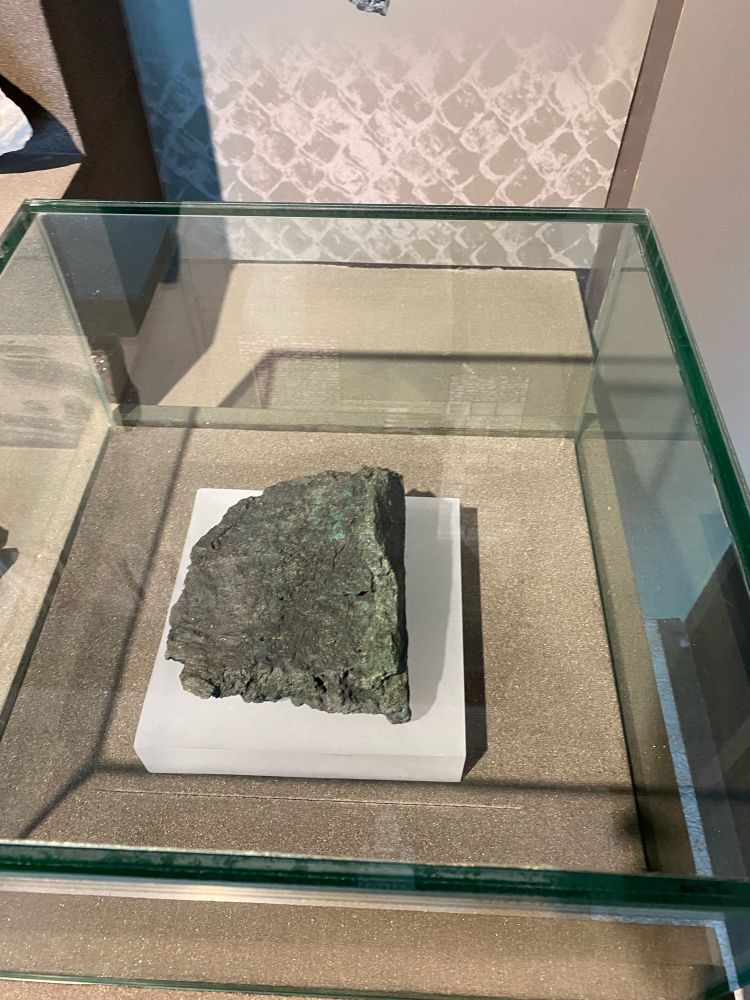
There are a few naval ram fragments found at the Actium Victory Monument in Nikopolis. Below is the largest fragment found near one of the sockets. This fragment would have been part of a large ram in the fleet of Antony and Cleopatra!


November 16, 2024 at 2:40 AM
There are a few naval ram fragments found at the Actium Victory Monument in Nikopolis. Below is the largest fragment found near one of the sockets. This fragment would have been part of a large ram in the fleet of Antony and Cleopatra!
Reposted by Gudea Ensi of Lagash
In his Deipnosophists, Athenaeus notes that rhyta shaped like triremes were used by various people, including the Athenian comic poet Epinicus, and these trireme rhyta were intended to be humorous. There are a few that still exist today!

November 15, 2024 at 11:19 PM
In his Deipnosophists, Athenaeus notes that rhyta shaped like triremes were used by various people, including the Athenian comic poet Epinicus, and these trireme rhyta were intended to be humorous. There are a few that still exist today!
Old Babylonian limestone basin (c.1800 BC) decorated around the exterior in carved bas relief with scenes of warriors fighting a lion, Nineveh

November 15, 2024 at 12:38 AM
Old Babylonian limestone basin (c.1800 BC) decorated around the exterior in carved bas relief with scenes of warriors fighting a lion, Nineveh
Reposted by Gudea Ensi of Lagash
What was the largest naval cast in antiquity?
Some would think the rams on the largest polyremes, including the “twenty”, “thirty”, and “forty”, would have the largest rams. However, they would have had smaller rams than their increasing class size would indicate.
Some would think the rams on the largest polyremes, including the “twenty”, “thirty”, and “forty”, would have the largest rams. However, they would have had smaller rams than their increasing class size would indicate.

November 14, 2024 at 8:23 AM
What was the largest naval cast in antiquity?
Some would think the rams on the largest polyremes, including the “twenty”, “thirty”, and “forty”, would have the largest rams. However, they would have had smaller rams than their increasing class size would indicate.
Some would think the rams on the largest polyremes, including the “twenty”, “thirty”, and “forty”, would have the largest rams. However, they would have had smaller rams than their increasing class size would indicate.