




Gabriel Delattre
@gabrieldelattre.bsky.social
Looking at earth and lines in processes
Reposted by Gabriel Delattre
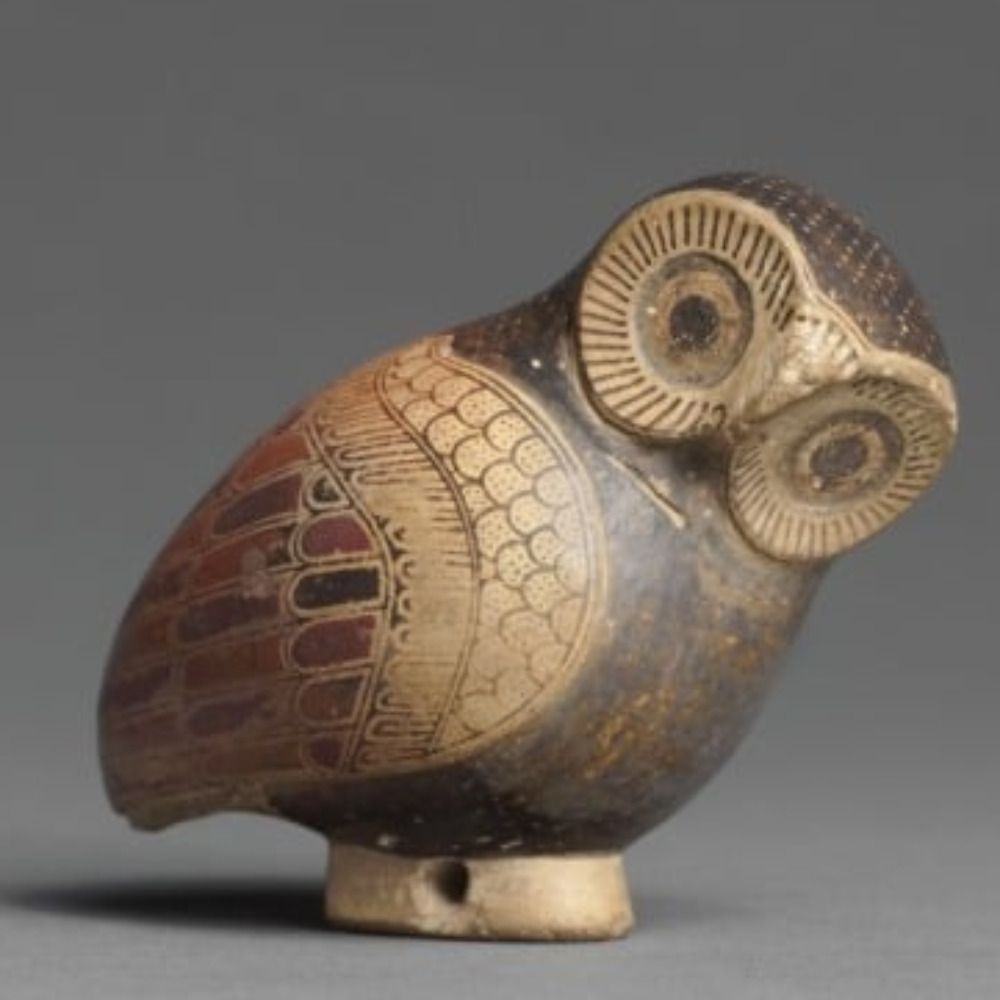
« Face aux préoccupations environnementales, l’archéologie peut contribuer à un avenir durable ». www.lemonde.fr/sciences/art...

« Face aux préoccupations environnementales, l’archéologie peut contribuer à un avenir durable »
TRIBUNE. Dominique Garcia, le président de l’Inrap, appelle, dans une tribune au « Monde », à élargir les fouilles préventives aux effets du dérèglement climatique. Celles-ci pourraient, selon lui, éc...
www.lemonde.fr
February 14, 2024 at 12:26 PM
« Face aux préoccupations environnementales, l’archéologie peut contribuer à un avenir durable ». www.lemonde.fr/sciences/art...
Reposted by Gabriel Delattre
Fonte des glaciers : il est urgent de chercher les artefacts qu'ils conservent. www.geo.fr/histoire/fon...

Fonte des glaciers : il est urgent de chercher les artefacts qu'ils conservent
Les restes d’une selle médiévale, des armes et des vêtements vikings et même… la dépouille et la panoplie d’un chasseur du...
www.geo.fr
February 16, 2024 at 5:54 PM
Fonte des glaciers : il est urgent de chercher les artefacts qu'ils conservent. www.geo.fr/histoire/fon...
Reposted by Gabriel Delattre

Zeitvertreib im Mittelalter: Holzkugeln wie diese, gefunden in einer Freiburger Latrine, verwendete man für Kugelspiele wie Boule.

February 5, 2024 at 11:28 AM
Zeitvertreib im Mittelalter: Holzkugeln wie diese, gefunden in einer Freiburger Latrine, verwendete man für Kugelspiele wie Boule.
Reposted by Gabriel Delattre

The temple of Mnajdra on Malta. Late 4th/ early 3rd millennium BCE #Archaeology 🏺

February 3, 2024 at 7:33 AM
The temple of Mnajdra on Malta. Late 4th/ early 3rd millennium BCE #Archaeology 🏺
Reposted by Gabriel Delattre
Ces territoires sacrifiés au pétrole.
lejournal.cnrs.fr/articles/ces...
lejournal.cnrs.fr/articles/ces...

Ces territoires sacrifiés au pétrole
La société du pétrole sur laquelle s'est bâtie notre prospérité ne s’est pas faite sans sacrifices. Gwenola Le Naour et Renaud Bécot, co-directeurs d'un ouvrage sur ce sujet, lèvent le voile...
lejournal.cnrs.fr
January 29, 2024 at 6:20 PM
Ces territoires sacrifiés au pétrole.
lejournal.cnrs.fr/articles/ces...
lejournal.cnrs.fr/articles/ces...
Reposted by Gabriel Delattre
These crescent-shaped clay objects have been interpreted as fire dogs due to traces of burning, „moon idols“, and depictions of the sun boat due to their shape. But what if all options would be true? Objects can have multilayered symbolism and meaning. GNM Nürnberg. 1200-800 BCE. #archaeology 🏺

January 20, 2024 at 8:57 PM
These crescent-shaped clay objects have been interpreted as fire dogs due to traces of burning, „moon idols“, and depictions of the sun boat due to their shape. But what if all options would be true? Objects can have multilayered symbolism and meaning. GNM Nürnberg. 1200-800 BCE. #archaeology 🏺
Reposted by Gabriel Delattre
Biodiversité. Découverte du plus grand récif corallien en eau profonde connu, au large de la côte atlantique des États-Unis.
www.courrierinternational.com/article/biod...
www.courrierinternational.com/article/biod...

Biodiversité. Découverte du plus grand récif corallien en eau profonde connu, au large de la côt...
Des scientifiques ont cartographié le plus grand récif corallien d’eau profonde connu, qui s’étend de la Floride à la Caroline du Sud.
www.courrierinternational.com
January 20, 2024 at 8:35 AM
Biodiversité. Découverte du plus grand récif corallien en eau profonde connu, au large de la côte atlantique des États-Unis.
www.courrierinternational.com/article/biod...
www.courrierinternational.com/article/biod...
Reposted by Gabriel Delattre
Sur les traces des potiers du Néolithique.
▶️ www.nonfiction.fr/article-1192...
▶️ www.nonfiction.fr/article-1192...

January 17, 2024 at 5:53 PM
Sur les traces des potiers du Néolithique.
▶️ www.nonfiction.fr/article-1192...
▶️ www.nonfiction.fr/article-1192...
Reposted by Gabriel Delattre
Reconstructing the Ancient Trade Routes.
googlemapsmania.blogspot.com/2024/01/reco...
googlemapsmania.blogspot.com/2024/01/reco...

Reconstructing the Ancient Trade Routes
Maps Mania is a blog dedicated to tracking the very best digital interactive maps on the internet and the tools used to create them.
googlemapsmania.blogspot.com
January 14, 2024 at 9:39 AM
Reconstructing the Ancient Trade Routes.
googlemapsmania.blogspot.com/2024/01/reco...
googlemapsmania.blogspot.com/2024/01/reco...
Reposted by Gabriel Delattre
A dense mass of snakes, birds, gazelle and leopards moving while a vulture catches a large snake. Pillar 56 in Göbekli Tepe‘s Building H during excavations in 2013. 9th millennium BCE. #archaeology 🏺

January 5, 2024 at 4:51 PM
A dense mass of snakes, birds, gazelle and leopards moving while a vulture catches a large snake. Pillar 56 in Göbekli Tepe‘s Building H during excavations in 2013. 9th millennium BCE. #archaeology 🏺
Reposted by Gabriel Delattre

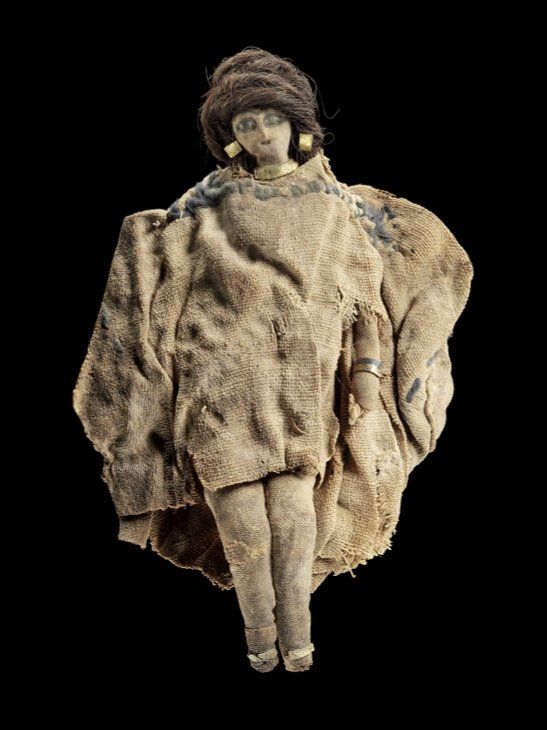
A #Roman #Egyptian rag-doll made from linen and stuffed with flexible material (rag?), wearing linen garments. Her hair is made of human hair. The eyes, eyebrows, and mouth are painted on..
The doll is one of the most elaborate of its kind and presumably belonged to a...1/2
🏺 AncientBluesky
The doll is one of the most elaborate of its kind and presumably belonged to a...1/2
🏺 AncientBluesky
January 7, 2024 at 7:20 AM
Reposted by Gabriel Delattre
Direct archaeological evidence for the presence of cereals in Early Neolithic settlements sometimes comes in interesting forms. Imprints of an einkorn and an emmer wheat grain in sherds of the Linear Pottery Culture (5500-4800 BCE). Historisches Museum Regensburg. #Archaeology 🏺

January 5, 2024 at 5:44 AM
Direct archaeological evidence for the presence of cereals in Early Neolithic settlements sometimes comes in interesting forms. Imprints of an einkorn and an emmer wheat grain in sherds of the Linear Pottery Culture (5500-4800 BCE). Historisches Museum Regensburg. #Archaeology 🏺
Reposted by Gabriel Delattre
Explore 870,000 Items in the New York Public Library Online Archives.
mymodernmet.com/ny-public-li...?
mymodernmet.com/ny-public-li...?

Explore 870,000 Items in the New York Public Library Online Archives
The vast archive includes collections of Black children's literature, medieval illuminated manuscripts, and countless photos of old New York.
mymodernmet.com
January 1, 2024 at 4:11 PM
Explore 870,000 Items in the New York Public Library Online Archives.
mymodernmet.com/ny-public-li...?
mymodernmet.com/ny-public-li...?
Reposted by Gabriel Delattre
The landscapes of central and northern Germany were once full of megalithic graves. Many have been destroyed to produce material for road construction in the 19th century. Lübbensteine, near Helmstedt in Lower Saxony, Germany, ca. 3500 BCE. #Archaeology🏺

January 2, 2024 at 6:12 AM
The landscapes of central and northern Germany were once full of megalithic graves. Many have been destroyed to produce material for road construction in the 19th century. Lübbensteine, near Helmstedt in Lower Saxony, Germany, ca. 3500 BCE. #Archaeology🏺
Reposted by Gabriel Delattre
Some reliefs at Göbekli Tepe have a narrative character. Here, a lurking leopard is shown apparently ready to jump towards its prey, a boar. Pillar 27, Building C, 2009. #Archaeology 🏺

December 29, 2023 at 12:44 PM
Some reliefs at Göbekli Tepe have a narrative character. Here, a lurking leopard is shown apparently ready to jump towards its prey, a boar. Pillar 27, Building C, 2009. #Archaeology 🏺
Reposted by Gabriel Delattre
Présent au Danemark depuis 1689, un manteau du peuple tupinamba va rentrer au Brésil.
www.lemonde.fr/internationa...
www.lemonde.fr/internationa...

Présent au Danemark depuis 1689, un manteau du peuple tupinamba va rentrer au Brésil
La précieuse parure indigène, tissée avec des fibres naturelles et recouverte de plusieurs milliers de plumes d’ibis rouge, va quitter le Musée national du royaume scandinave en 2024 pour rega...
www.lemonde.fr
December 29, 2023 at 6:21 PM
Présent au Danemark depuis 1689, un manteau du peuple tupinamba va rentrer au Brésil.
www.lemonde.fr/internationa...
www.lemonde.fr/internationa...
Reposted by Gabriel Delattre
Le Rijksmuseum d’Amsterdam met à votre disposition plus de 700.000 œuvres, à télécharger gratuitement.
▶️ www.rtbf.be/article/le-r...
▶️ www.rtbf.be/article/le-r...

December 25, 2023 at 8:33 AM
Le Rijksmuseum d’Amsterdam met à votre disposition plus de 700.000 œuvres, à télécharger gratuitement.
▶️ www.rtbf.be/article/le-r...
▶️ www.rtbf.be/article/le-r...
Reposted by Gabriel Delattre
Both central pillars of Building B at Göbekli Tepe (10th/9th millennium BCE) have reliefs of jumping foxes. Fox is well represented in the bone assemblage of the site. Other pillars show loincloths made from fox pelt - a hint at their importance to Neolithic people. #Archaeology 🏺

December 21, 2023 at 5:51 PM
Both central pillars of Building B at Göbekli Tepe (10th/9th millennium BCE) have reliefs of jumping foxes. Fox is well represented in the bone assemblage of the site. Other pillars show loincloths made from fox pelt - a hint at their importance to Neolithic people. #Archaeology 🏺
Reposted by Gabriel Delattre
A fragment of an approximately 6,000-year-old charred fishing net
🏺
🏺
Fisch war bei den Pfahlbauern eine Hauptnahrungsquelle. Zahlreiche Angelhaken aus der Zeit sind bekannt, selten haben sich Netze erhalten. Dieses Fragment eines verkohlten Fischernetzes wurde in der Pfahlbausiedlung von Hornstaad-Hörnle (3918-3952 v. Chr.) gefunden.
🏺
🏺

December 20, 2023 at 2:04 PM
A fragment of an approximately 6,000-year-old charred fishing net
🏺
🏺