



Exoplanets
@exoplanets.activitypub.awakari.com.ap.brid.gy
Interest: Exoplanets (details)
Awakari _interest_ is an automated account publishing a relevant only content.
Create your own interest in […]
[bridged from https://awakari.com/sub-details.html?id=Exoplanets on the fediverse by https://fed.brid.gy/ ]
Awakari _interest_ is an automated account publishing a relevant only content.
Create your own interest in […]
[bridged from https://awakari.com/sub-details.html?id=Exoplanets on the fediverse by https://fed.brid.gy/ ]
Collisions in the Fomalhaut System: Hubble Witnesses Catastrophe Collisions in the Fomalhaut system revealed by Hubble; two massive planetesimal impacts detected 20 years apart demonstrate active d...
#Astrophysics #Astronomy #Astrophysics #DebrisDisks […]
[Original post on nasaspacenews.com]
#Astrophysics #Astronomy #Astrophysics #DebrisDisks […]
[Original post on nasaspacenews.com]
Original post on nasaspacenews.com
nasaspacenews.com
December 21, 2025 at 3:44 PM
Collisions in the Fomalhaut System: Hubble Witnesses Catastrophe Collisions in the Fomalhaut system revealed by Hubble; two massive planetesimal impacts detected 20 years apart demonstrate active d...
#Astrophysics #Astronomy #Astrophysics #DebrisDisks […]
[Original post on nasaspacenews.com]
#Astrophysics #Astronomy #Astrophysics #DebrisDisks […]
[Original post on nasaspacenews.com]


December 21, 2025 at 3:42 PM
El extraño exoplaneta con forma de limón que intriga a la astronomía Un exoplaneta con forma de limón y atmósfera de helio y carbono intriga a los astrónomos. Así lo ha revelado el telescopi...
#Astronomía
Origin | Interest | Match
#Astronomía
Origin | Interest | Match

December 21, 2025 at 11:06 AM
El extraño exoplaneta con forma de limón que intriga a la astronomía Un exoplaneta con forma de limón y atmósfera de helio y carbono intriga a los astrónomos. Así lo ha revelado el telescopi...
#Astronomía
Origin | Interest | Match
#Astronomía
Origin | Interest | Match
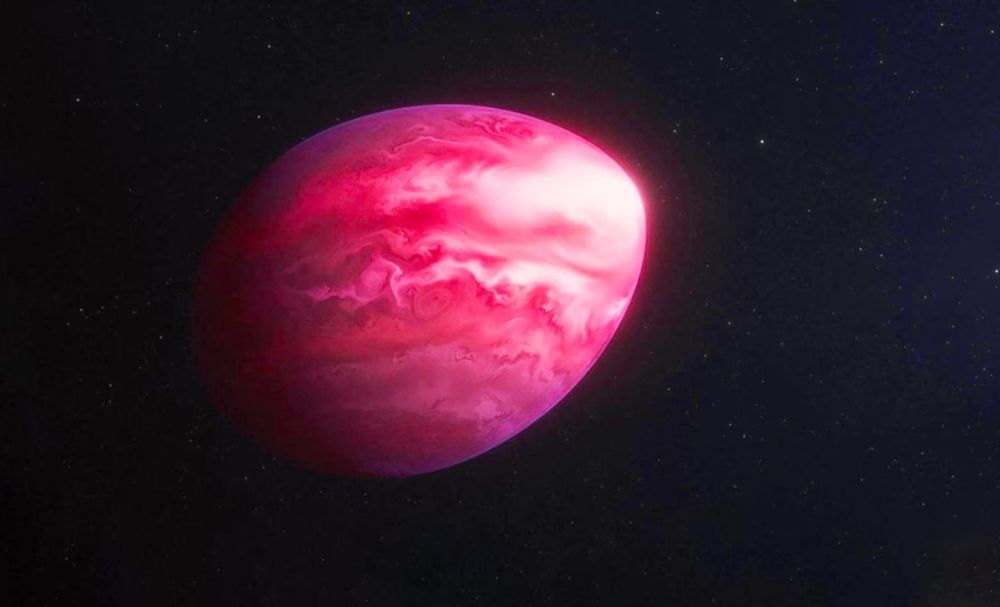
PSR J2322−2650 b Characteristics: Copy edit ← Previous revision Revision as of 05:23, 21 December 2025 Line 33: Line 33: The temperatures on the tidally locked PSR J2322−2650 b range from abo...
Origin | Interest | Match
Origin | Interest | Match

PSR J2322−2650 b: Difference between revisions - Wikipedia
en.wikipedia.org
December 21, 2025 at 5:25 AM


Chicago Cubs news and notes — Ballesteros, Imai, King Michael King is off the board, having signed a multiple-out deal to return to the Padres. Munetaka Murikami has to sign by Monday or go back ...
#Cub #Tracks
Origin | Interest | Match
#Cub #Tracks
Origin | Interest | Match

Chicago Cubs news and notes — Ballesteros, Imai, King
Cub Tracks - Your #1 source for #Cubs, #MLB, and #MiLB news.
www.bleedcubbieblue.com
December 20, 2025 at 2:46 PM

Awakari App
awakari.com
December 20, 2025 at 2:59 AM
Hubble Captures Collision of Two Planetesimals around Fomalhaut Fomalhaut -- the 18th brightest star visible in night sky -- is orbited by a compact source, Fomalhaut b, which has previously been i...
#Astronomy #Debris #Debris #belt #Dust #ESA #Fomalhaut […]
[Original post on sci.news]
#Astronomy #Debris #Debris #belt #Dust #ESA #Fomalhaut […]
[Original post on sci.news]
Original post on sci.news
www.sci.news
December 19, 2025 at 11:32 PM
Hubble Captures Collision of Two Planetesimals around Fomalhaut Fomalhaut -- the 18th brightest star visible in night sky -- is orbited by a compact source, Fomalhaut b, which has previously been i...
#Astronomy #Debris #Debris #belt #Dust #ESA #Fomalhaut […]
[Original post on sci.news]
#Astronomy #Debris #Debris #belt #Dust #ESA #Fomalhaut […]
[Original post on sci.news]


Troubleshooting Getting Started Step 1: Watch the EXOTIC Beginner Tutorial EXOTIC: Welcome Step 2: Make sure you have a Google account set up. You will use this account & Google Docs to work wi...
#Exoplanets #Citizen #Science #Opportunities #For #U.S. […]
[Original post on science.nasa.gov]
#Exoplanets #Citizen #Science #Opportunities #For #U.S. […]
[Original post on science.nasa.gov]
Original post on science.nasa.gov
science.nasa.gov
December 19, 2025 at 8:48 PM
Troubleshooting Getting Started Step 1: Watch the EXOTIC Beginner Tutorial EXOTIC: Welcome Step 2: Make sure you have a Google account set up. You will use this account & Google Docs to work wi...
#Exoplanets #Citizen #Science #Opportunities #For #U.S. […]
[Original post on science.nasa.gov]
#Exoplanets #Citizen #Science #Opportunities #For #U.S. […]
[Original post on science.nasa.gov]
#Science #/science #Innovation #/innovation #Science #/science #science #Science #standard
Origin | Interest | Match

December 20, 2025 at 1:31 PM
#Science #/science #Innovation #/innovation #Science #/science #science #Science #standard
Origin | Interest | Match
Results This Results page is still under revision. Please check back for updates. Thank you! Exoplanet Watch Results Results are automatically compiled from data submitted by Exoplanet Watch partic...
#Citizen #Science #Exoplanets #Studying #Exoplanets
Origin | Interest | Match
#Citizen #Science #Exoplanets #Studying #Exoplanets
Origin | Interest | Match

Exoplanet Watch
* What is Exoplanet Watch?
* Overview
* Stay in Touch
* Community
* Background Information
* Team
* How to Get Started
* How to Get Started
* How to Observe
* Request an Exoplanet Observation
* How to Analyze Your Data
* How to Submit Your Data
* Getting Started, Troubleshooting, and Problem Solving
* What to Observe
* Resources
* Resources
* FAQ
* Glossary
* Publications
* More
* Results
* EXOTIC
* Newsletters
* Meetings
## Exoplanet Watch
# Results
No matter how, or how much, you participate, we are grateful to have you in our community. Exoplanets are for everyone, and it's our goal to help you on your astronomical journey!
Exoplanet Watch Results
Citation and Acknowledgement
What's In a Name?
Where's My Data?
Learn More and Get Involved
Exoplanet News
Discover More From NASA
### This Results page is still under revision. Please check back for updates. Thank you!
## Exoplanet Watch Results
Results are automatically compiled from data submitted by Exoplanet Watch participants. This process is done using Citizen Initiated Transit Information Survey Enabling NASA Science (CITISENS), a fully-automated pipeline built upon the DAWGIE pipeline framework. It regularly scrapes the AAVSO Exoplanet Database, ingests any new or updated data, fits each transit timeseries with a model light curve generated from priors listed on the NASA Exoplanet Archive, and then calculates new ephemerides and orbital periods for every target submitted to the Exoplanet Watch project. CITISENS runs weekly in early AM hours PST, and data is published the same day. Priors listed in the below table are collected from the NASA Exoplanet Archive.
## Citation and Acknowledgement
If you use any Exoplanet Watch data in your publication, you are required to include the observers of those data as co-authors on your paper. To get in touch with your anonymous observer, contact the AAVSO with their observer code.
If you make use of Exoplanet Watch in your work, please cite the papers Zellem et al. 2020 and Pearson et al. 2022 and include the following standard acknowledgment in any published material that makes use of Exoplanet Watch data: “This publication makes use of data products from Exoplanet Watch, a citizen science project managed by NASA's Jet Propulsion Laboratory on behalf of NASA's Universe of Learning. This work is supported by NASA under award number NNX16AC65A to the Space Telescope Science Institute, in partnership with Caltech/IPAC, Center for Astrophysics | Harvard & Smithsonian, and NASA's Jet Propulsion Laboratory.”
## What’s In a Name?
* ### Where do the names of the exoplanets come from? What does the “b” mean?
If you're new to studying exoplanets, you may wonder why the Planet Name column on the left side of the spreadsheet below has such unusual names for the exoplanets we study. Exoplanets are named after the telescope or survey that found them. For example, exoplanet TrES-2 b orbits its host star, TrES-2, discovered by the Trans-Atlantic Exoplanet Survey (TrES).
Here's a link that explains more: ‘How do exoplanets get their names?’
Palomar Observatory in Southern California is one place where astronomers use ground-based instruments to explore exoplanets. It's one of the observatories participating in the Trans-Atlantic Exoplanet Survey, or TrES.
Jay Thompson/NASA/JPL-Caltech
## Where’s My Data?
* ### Find your light curve!
If you have processed a light curve and uploaded it to the American Association of Variable Star Observers (AAVSO), click on the name of the exoplanet you studied in the table below and search for your AAVSO observer code to see the light curve that you contributed to the global body of scientific research about your exoplanet. You can see all of the other light curves contributed by other citizen scientists, too! Each exoplanet listed on the table below has an interactive artist’s concept you can explore once you click on the name of the exoplanet.
## Learn More and Get Involved
## Exoplanet Watch Newsletter
Subscribe to the Exoplanet Watch newsletter, and read previous editions.
## Meet the Team
Join our Slack to meet other Exoplanet Watch participants, ask questions, troubleshoot problems, get updates on our biweekly full team meetings, and more.
## Exoplanet Stories
Explore All Exoplanet Stories
Blog
5 Min Read
NASA’S PUNCH Releases Refined Images of Eruptions from the Sun
Article
5 Min Read
NASA’s Hubble Sees Asteroids Colliding at Nearby Star for First Time
6 Min Read
NASA’s Webb Observes Exoplanet Whose Composition Defies Explanation
Article
7 Min Read
NASA Announces Plan to Map Milky Way With Roman Space Telescope
Article
6 Min Read
NASA’s Webb Detects Thick Atmosphere Around Broiling Lava World
Article
Keep Exploring
## Discover More Topics From NASA
Exoplanets
Citizen Science
Planet Hunters TESS
Skywatching
science.nasa.gov
December 19, 2025 at 7:37 PM
Results This Results page is still under revision. Please check back for updates. Thank you! Exoplanet Watch Results Results are automatically compiled from data submitted by Exoplanet Watch partic...
#Citizen #Science #Exoplanets #Studying #Exoplanets
Origin | Interest | Match
#Citizen #Science #Exoplanets #Studying #Exoplanets
Origin | Interest | Match
Team Overview | Stay in Touch | Community | Glossary | Background Information | Team Dr. Jennifer Burt — Radial Velocity Lead Education: BA in Astronomy from Cornell University, PhD in Astrono...
#Exoplanets #Citizen #Science #Studying #Exoplanets
Origin | Interest | Match
#Exoplanets #Citizen #Science #Studying #Exoplanets
Origin | Interest | Match

Exoplanet Watch
1. …
2. Exoplanet Watch
3. Team
* What is Exoplanet Watch?
* Overview
* Stay in Touch
* Community
* Background Information
* Team
* How to Get Started
* How to Get Started
* How to Observe
* Request an Exoplanet Observation
* How to Analyze Your Data
* How to Submit Your Data
* Getting Started, Troubleshooting, and Problem Solving
* What to Observe
* Resources
* Resources
* FAQ
* Glossary
* Publications
* More
* Results
* EXOTIC
* Newsletters
* Meetings
## What Is Exoplanet Watch?
# Meet the Exoplanet Watch Team
Learn More and Get Involved
Discover More Citizen Science Projects
### Overview | Stay in Touch | Community | Glossary | Background Information | Team
**Dr. Jennifer Burt** — Radial Velocity Lead
_Education:_ BA in Astronomy from Cornell University, PhD in Astronomy & Astrophysics from UC Santa Cruz
_Occupation:_ Extreme Precision Radial Velocity Investigation Scientist at JPL
_What do you do on Exoplanet Watch?_ : “I’m helping to expand the capabilities of Exoplanet Watch’s pipeline to simultaneously fit both transit and radial velocity (RV) data. This allows us to measure both the radius (from transit data) and mass (from the RV data) of the planet, providing a more complete picture of what kind of world we’re detecting.”
_Why do you work on Exoplanet Watch?:_ “I enjoy introducing new people to both the wonders and complications that come from working with RV data, and view Exoplanet Watch as a great way to increase community engagement with exoplanet science!”
**Suber Corley** - Student Intern
_Education_ : BS in Physics; BS in Astronomical and Planetary Sciences
_Occupation_ : Retired
_What do you do on Exoplanet Watch?_ "I am collaborating on a team with participants from Arizona State University and NASA/JPL to refine exoplanet ephemeris using citizen science transit data from Exoplanet Watch and professional terrestrial and space observatories, along with radial velocity data from public archives. The techniques developed within this team can allow all Exoplanet Watch users to use radial velocity data to refine the ephemeris they create from their transit observations. I am also interested in using future astrometry data (specifically from the Vera C Rubin/LSST observatory after operations begin in 2025) to complement Exoplanet Watch transit observations as we have done with radial velocity data."
_Why do you work on Exoplanet Watch?_ "Citizen science and AI are likely the tools of the future, providing the horsepower to discover and refine the ephemeris for exoplanet research as more targets are added to the inventory. The Rubin Observatory is an example of a source that will contribute massive amounts of data to astronomy archives. The future will bring more of these sources. Professional astronomers and astrophysicists will benefit greatly from partnering with citizen scientists to explore the observations and data that are produced in ever-increasing amounts."
**John Engelke** - CITISENS Development Lead
_Education:_ B.Sc. Physics and Communications with minors in Math and Computer Science from Cal Poly Pomona
_Occupation:_ Software Development and Engineering Specialist at Raytheon (JPL Contractor)
_What do you do on Exoplanet Watch?_ “I work on architecture, programming and problem solving. My role is to take science intent and translate it to the nuts and bolts of a reliable software system. This involves everything from designing how different pieces integrate together to writing code to building out server functionality. I write Python code for things like distributing research results to Cloud-based systems, organizing data into computer-readable formats and parallelizing complex algorithms to make them run faster.”
_Why do you work on Exoplanet Watch?_ “It's a personal goal to help better the world by helping science, and Exoplanet Watch is a great opportunity to participate in the leading edge of new astronomy research. Besides that, I'm enamored with Star Trek The Next Generation, and this is a great way to help get us there one day!”
**Tamim Fatahi** - Undergraduate Intern
_Education:_ Bachelor's California Polytechnic University, San Luis Obispo, majoring in Computer Science
_Occupation:_ Former Exoplanet Watch Intern at NASA JPL
_What do you do on Exoplanet Watch?_ “I work on Exoplanet Watch's data reduction pipeline, EXOplanet Transit Interpretation Code (EXOTIC). Adding features to the reduction process and designing the user interface are some of my objectives regarding the pipeline. I also aid in searching for an affordable way to allow citizen scientists to gather data from transiting exoplanets.”
_Why do you work on Exoplanet Watch?_ “It's incredible to partake in the expanding research field for exoplanets, driving me to learn something new every day. I also admire Exoplanet Watch's ability to bridge the gap between the professional environment and those of many different educational backgrounds.”
**Dr. Tara Fetherolf** - NASA Postdoctoral Program Fellow
_Education:_ BS in Astronomy (San Diego State University), PhD in Physics with an Astrophysics Emphasis (University of California, Riverside)
_Occupation:_ NASA Postdoctoral Program Fellow
_What do you do on Exoplanet Watch?_ "I help identify and account for the effects of stellar variability in the observed light curves of known and candidate exoplanets. Stellar variability that is unaccounted for can lead to false positive exoplanet detections and incorrect planet radius measurements. Stellar variations related to the star’s rotation can also reveal information about the age of the exoplanetary system."
_Why do you work on Exoplanet Watch?_ "There are so many small pieces that contribute to the larger puzzle of characterizing an exoplanet. Understanding the host star’s variability is just one of those pieces, but it’s amazing to see how many pieces are fulfilled through the work of many members throughout the Exoplanet Watch collaboration. I also really enjoy working with and mentoring students and community members who are enthusiastic about astronomy, science, and Exoplanet Watch!"
**Heather Hewitt**
_Education:_ BS in Astrophysics (University of Georgia)
_Occupation_ : Astrophysics PhD candidate at Arizona State University
_What do you do on Exoplanet Watch?_ "I helped create and teach an online research course at ASU. Students in the course partner with Exoplanet Watch and use EXOTIC to update the ephemeris of a hot Jupiter each semester."
_Why do you work on Exoplanet Watch? "_ I have a passion for improving the accessibility of astronomy and research. Citizen science projects like Exoplanet Watch are an incredible way to do this. The Exoplanet Watch community is also incredibly helpful and supportive."
**Isabella "Izzy" Huckabee** - Undergraduate Intern
_Education:_ recent Astrophysics graduate from Arizona State University
_Occupation:_ Exoplanet Watch Intern at NASA JPL
_What do you do on Exoplanet Watch? "_ I’ll be working on TESS data to bring it to CITISENS. The Transiting Exoplanet Survey Satellite is detecting thousands of exoplanet candidates, and Exoplanet Watch can help confirm which of these candidates are really exoplanets by having citizen scientists do follow up observations to confirm their existence."
_Why do you work on Exoplanet Watch? "_ Ironically enough, I hated astronomy as a kid - the vastness of space is terrifying to me! However, in the end, my fear was trumped by my curiosity about worlds beyond our solar system. The big question that motivates my work on Exoplanet Watch is ‘How can we create a welcoming astrophysics community and open up the doors of astrophysics to everyone?’"
**Bradley Hutson** - Undergraduate Intern
_Education_ : Associates of Applied Science in Meteorology; BS in Astronomical and Planetary Sciences (Arizona State University)
_Occupation_ : USAF Meteorology
_What do you do on Exoplanet Watch?_ "Focusing on integrating archival RV data and feature the in-depth study of a single target as a proof of concept to centralize and standardize RV data for easy access for all in the future in one location. Using this information to update the ephemerides and eclipse timing for future ARIEL and JWST observations."
_Why do you work on Exoplanet Watch?_ "It is literally the 'What I want to do when I grow up' (even though I'm already in my 30s). I've been interested in astronomy for the last 20 years and did astrophotography in my off time and even tried to get some light curves before Exoplanet Watch. When a research opportunity through ASU appeared, I jumped at it to finally be able to do some work that could be useful instead of just astrophotography in my off time, and it has continued from there. It is as close as we can get to exploring the universe until the USS Enterprise is built in 220 years."
**Jeff Nee** - Education Specialist
_Education:_ BA in Chemistry (UC Berkeley)
_Occupation:_ Educator at NASA JPL
_What do you do on Exoplanet Watch?_ “I help manage and grow this amazing community of citizen scientists. I connect people, I educate, and I communicate."
_Why do you work on Exoplanet Watch?_ “Because exoplanets are my personal passion! I started my career at NASA through working on Kepler mission education products almost twenty years ago, and after thousands of exoplanets have been discovered, it's wonderful that now anyone (yes, you!) can help to make discoveries about these distant worlds!”
**Federico Noguer** - Undergraduate Intern
_Education:_ Majoring in Astronomical and Planetary Science with minor in Physics
_Occupation:_ Undergraduate Researcher
_What do you do on Exoplanet Watch?_ "In collaboration with Arizona State University and NASA/JPL I analyze citizen science transit data along with archived data from large ground and space telescopes to refine the ephemeris of exoplanets. Additionally, we include eclipse and radial velocity data to constrain the parameters of exoplanets. One such study has lead to publication with citizen scientists Exoplanet Watch members as co-authors. I also utilize large telescopes like the 61-inch Kuiper telescope and the 200-inch Hale telescope at Palomar Observatory for follow-up transit observations. Current research involves validating and confirming exoplanet candidates through proposed radial velocity observations and follow-up transit observations. Long-period planets with Earth-like orbits in particular excite me. Some of these candidates have only two transits, making period determination challenging. By analyzing existing data, we can predict possible orbital periods for these planets and forecast future potential transit dates for observation. The network of Exoplanet Watch observers can utilize their own telescopes to help find these transits. After graduating from Arizona State University, I plan to pursue a Ph.D. program and dedicate my career to exoplanet research."
_Why do you work on Exoplanet Watch?_ "Working on Exoplanet Watch has been a personal and professional privilege. Interacting with the Exoplanet Watch community has been immensely fulfilling, allowing me to connect with people around the country and the world who share a passion for exoplanet research. As a non-traditional scientist who worked as a concrete mason for most of my life, I strongly believe that ANYONE is capable of participating in frontline research with drive, determination, and a little help. I have been fortunate to work with a team of exoplanet research professionals who have helped me grow both personally and as a scientist. I hope to carry the torch and do the same for others."
**Olga Privman** — Graduate Student
_Education:_ BS in Applied Computational Physics and Professional & Technical Writing (CUNY City Tech); MsC in Astrophysics (In Progress - CUNY Graduate Center)
_Occupation:_ Graduate student in Astrophysics at the CUNY Graduate Center
_What do you do on Exoplanet Watch?_ "I will assist in the development of the EXOTIC code that helps citizen scientists process light curves and the formation of literature for Exoplanet Watch."
_Why do you work on Exoplanet Watch?_ "I find global cooperation inspirational -- the idea of citizen scientists and professional astronomers all over the world coming together to help us understand our expansive cosmos is incredibly romantic to me. As a science fiction writer and astrophysics student, I've always been moved and fascinated by the worlds beyond our own and the physical laws by which they're governed. Joining Exoplanet Watch has been a truly remarkable experience in that it oversees star-enamored communities coming together to work toward a common goal of education, innovation, and cooperation."
**Heath Rhoades** — Table Mountain Astronomy Team Lead
_Occupation:_ Optical Telescope Systems
_What do you do on Exoplanet Watch?_ “I build and maintain control software/hardware observing systems for the 1.0m, 0.6m, 0.4m and “Gizmo” 6” telescope array at the Table Mountain Observatory. Using these systems I am observing exoplanet transits on most clear nights, analyzing and uploading into the AAVSO database.”
_Why do you work on Exoplanet Watch?_ “In the more than 20 years I have been working at Table Mountain supporting astronomical campaigns, the Exoplanet Watch program has been the most fun and rewarding.”
**Dr.** **Molly Simon**
_Education:_ BS in Geophysical Sciences from UChicago, Ph.D. in Planetary Science from University of Arizona - LPL
_Occupation:_ Assistant Professor in the School of Earth and Space Exploration at Arizona State University
_What do you do on Exoplanet Watch?_ I created and teach and online research course for undergraduates that utilizes tools from Exoplanet Watch to update the ephemeris of a new target each semester. I also co-mentor several undergraduates alongside folks at Exoplanet Watch on projects spanning from ephemeris maintenance and ground-based observing to planetary detection.
_Why do you work on Exoplanet Watch?_ I'm a big believer in the power of citizen science and how it can be used to make research accessible to a broad population of learners. It is a fun experience to realize all we can do with small, ground-based telescopes when it comes to making an impact on exoplanet research
**Joshua Tan** - Associate Professor of Physics and Astronomy
_Education_ : Ph.D. in Astronomy (Columbia University)
_Occupation_ : Astronomer
_What do you do on Exoplanet Watch?_ "Connect student researchers with Exoplanet Watch resources."
_Why do you work on Exoplanet Watch?_ "It is the best group available for resource-limited institutions to collaborate in exoplanet transit follow-up studies."
**Dr. Rob Zellem** - Project Scientist and Lead
_Education:_ BS in Astronomy & Astrophysics (Villanova University); MSc in Space Science (University College London); PhD in Planetary Science (University of Arizona - Lunar & Planetary Laboratory)
_Occupation:_ Deputy Project Scientist for Communications for the Roman Space Telescope at NASA’s Goddard Space Flight Center
_What do you do on Exoplanet Watch?_ “I am the Project Lead and Project Scientist for Exoplanet Watch as well as a contributor to our data reduction software, EXOTIC, and our analysis pipeline, CITISENS.”
_Why do you work on Exoplanet Watch?_ “I absolutely love sharing my work and research with the general public. I am excited to see the measurement precision capabilities of amateur astronomers and am delighted to help them support the science of transiting exoplanet missions and ground-based observatories.”
### Former Team Members / Other Contributors
**Leah Albrow** - Undergraduate Intern (University of Canterbury [New Zealand]) - Summer 2023
* EXOTIC software development
**Nora Bailey** - Public Engagement - 2022-23
* Helped launch Exoplanet Watch to a general public audience
**Ethan Blaser** - Undergraduate Intern (University of Virginia) - Summers 2018 and 2019
* EXOTIC software development
**Alexandra Iturralde** - Undergradute Intern (University of New Mexico) - Summer 2019
* Content creation and development
**Tiana James** - Undergraduate Intern (Howard University) - Fall 2020 - Summer 2021
* Website content creation
**Kiah May** - Undergraduate Intern (University of Colorado - Boulder) - Summer 2022 - Spring 2023
* EXOTIC software development
* Content creation and development
**Kyle Pearson** - Data Scientist, NASA JPL - 2019 - 2024
* Deputy Project Scientist
* EXOTIC Development Lead
**Jonah Rolfness** - Undergraduate Intern (Caltech) - Summer 2021 - Spring 2022
* Exoplanet Watch telescope instructions
* EXOTIC software development
**Marlee Smith** - Undergraduate Intern (Cornell) - Summer 2020 - Spring 2021
* EXOTIC software development
**Aaron Tran** - Undergraduate Intern (Caltech) - Summer 2020
* EXOTIC software development
**Rachel Zimmerman-Brachman** - Public Engagement Lead - 2019 - 2023
* Helped launch Exoplanet Watch to a general audience
* Contacted various astronomy groups, clubs, and programs
* Wrote monthly newsletters
* Wrote monthly status reports
**Anna Preis, Oisin Creaner, Cormac Ryan** - Star Guide, Dublin City University, Ireland.
Star Guide is funded by the National Open Research Forum (NORF) Open Research Fund 2023, Strand II: Open Research Stimulus Call 2023. This funding is provided through the Higher Education Authority (HEA) of Ireland.
* Star Guide Exoplanet Watch Survey (see the results in the Exoplanet Watch meeting recording.)
* Documentation and Website suggestions
Thanks to every member of our amazing, open-source, Watcher community on Slack, Github, and beyond! Check out our Community tab above for Watchers and Astrophoto of the Month, and find past features in our Newsletters.
## Learn More and Get Involved
## Exoplanet Watch Newsletter
Subscribe to the Exoplanet Watch newsletter, and read previous editions.
## Meet the Team
Join our Slack to meet other Exoplanet Watch participants, ask questions, troubleshoot problems, get updates on our biweekly full team meetings, and more.
Keep Exploring
## Discover More Citizen Science Projects
### Citizen Science
Collaborating with NASA counterparts, citizen-scientist volunteers have helped make thousands of important exoplanet science discoveries. Learn how you can participate.
Dark Energy Explorers
Burst Chaser
JunoCam
science.nasa.gov
December 19, 2025 at 5:39 PM
Team Overview | Stay in Touch | Community | Glossary | Background Information | Team Dr. Jennifer Burt — Radial Velocity Lead Education: BA in Astronomy from Cornell University, PhD in Astrono...
#Exoplanets #Citizen #Science #Studying #Exoplanets
Origin | Interest | Match
#Exoplanets #Citizen #Science #Studying #Exoplanets
Origin | Interest | Match
Scientist think they have detected a collision in the debris disk surrounding the star Fomalhaut Click for original. Using the Hubble Space Telescope, astronomers have detected a bright object in t...
#Points #of #Information #asteroids #astronomy […]
[Original post on behindtheblack.com]
#Points #of #Information #asteroids #astronomy […]
[Original post on behindtheblack.com]
Original post on behindtheblack.com
behindtheblack.com
December 19, 2025 at 4:31 PM
Scientist think they have detected a collision in the debris disk surrounding the star Fomalhaut Click for original. Using the Hubble Space Telescope, astronomers have detected a bright object in t...
#Points #of #Information #asteroids #astronomy […]
[Original post on behindtheblack.com]
#Points #of #Information #asteroids #astronomy […]
[Original post on behindtheblack.com]
Astrophysik: Fremdartiger Planet In Form einer Zitrone besteht aus Kohlenstoff und stellt Forscher vor Rätsel Er ist geformt wie eine Zitrone und besteht hauptsächlich aus Kohlenstoff: Astrophysi...
#Wissenschaft
Origin | Interest | Match
#Wissenschaft
Origin | Interest | Match

December 19, 2025 at 4:29 PM
Astrophysik: Fremdartiger Planet In Form einer Zitrone besteht aus Kohlenstoff und stellt Forscher vor Rätsel Er ist geformt wie eine Zitrone und besteht hauptsächlich aus Kohlenstoff: Astrophysi...
#Wissenschaft
Origin | Interest | Match
#Wissenschaft
Origin | Interest | Match
Discovery of GJ 251 c: A Nearby Super-Earth with Potential for Life Astronomers announced the finding of a new exoplanet called GJ 251 c in late October 2025. This world sits just 18 light-years fr...
#Current #News #Editor’s #Picks #Exoplanets, #Exomoons […]
[Original post on newspaceeconomy.ca]
#Current #News #Editor’s #Picks #Exoplanets, #Exomoons […]
[Original post on newspaceeconomy.ca]
Original post on newspaceeconomy.ca
newspaceeconomy.ca
December 19, 2025 at 4:02 PM
Discovery of GJ 251 c: A Nearby Super-Earth with Potential for Life Astronomers announced the finding of a new exoplanet called GJ 251 c in late October 2025. This world sits just 18 light-years fr...
#Current #News #Editor’s #Picks #Exoplanets, #Exomoons […]
[Original post on newspaceeconomy.ca]
#Current #News #Editor’s #Picks #Exoplanets, #Exomoons […]
[Original post on newspaceeconomy.ca]

53 Years Later, Apple's Best New Show Channels The Most Unique Sci-Fi Story Of All Time Here's how 'Pluribus' seems to reference one of the greatest sci-fi stories of all time, '...
#Spoilers #TV #Shows #Science #Fiction #Books #Entertainment #Apple #TV […]
[Original post on inverse.com]
#Spoilers #TV #Shows #Science #Fiction #Books #Entertainment #Apple #TV […]
[Original post on inverse.com]
Original post on inverse.com
www.inverse.com
December 19, 2025 at 12:21 PM
53 Years Later, Apple's Best New Show Channels The Most Unique Sci-Fi Story Of All Time Here's how 'Pluribus' seems to reference one of the greatest sci-fi stories of all time, '...
#Spoilers #TV #Shows #Science #Fiction #Books #Entertainment #Apple #TV […]
[Original post on inverse.com]
#Spoilers #TV #Shows #Science #Fiction #Books #Entertainment #Apple #TV […]
[Original post on inverse.com]
Las colas de helio del exoplaneta WASP-121 b bajo la lupa del James Webb WASP-121 b pierde su atmósfera y crea dos enormes colas de helio. Así lo ha visto el James Webb y así cambia lo que sabem...
#Astronomía #Telescopio #James #Webb
Origin | Interest | Match
#Astronomía #Telescopio #James #Webb
Origin | Interest | Match

Las colas de helio en el exoplaneta WASP-121 b
WASP-121 b pierde su atmósfera y crea dos enormes colas de helio. Así lo ha visto el James Webb y así cambia lo que sabemos de los exoplanetas.
www.meteorologiaenred.com
December 19, 2025 at 10:57 AM
Las colas de helio del exoplaneta WASP-121 b bajo la lupa del James Webb WASP-121 b pierde su atmósfera y crea dos enormes colas de helio. Así lo ha visto el James Webb y así cambia lo que sabem...
#Astronomía #Telescopio #James #Webb
Origin | Interest | Match
#Astronomía #Telescopio #James #Webb
Origin | Interest | Match