



Butterfly Conservation Europe
@europebutterfly.bsky.social
Non profit organisation working to save butterflies, moths and their habitats across Europe. We have Network Partners in most European countries and run a wide range of conservation and monitoring projects
Happy winter solstice to all our supporters and wishing you a wonderful and Lepidoptera filled New Year

December 23, 2025 at 3:38 PM
Happy winter solstice to all our supporters and wishing you a wonderful and Lepidoptera filled New Year
We finished our very successful partner meeting with a celebration of Butterfly Conservation Europe’s 21st Birthday. @martinswarren.bsky.social gave a great review of the many achievements over the years and we made a toast. All the presentations are on our website www.bc-europe.eu/webpage.php?...


December 6, 2025 at 3:36 PM
We finished our very successful partner meeting with a celebration of Butterfly Conservation Europe’s 21st Birthday. @martinswarren.bsky.social gave a great review of the many achievements over the years and we made a toast. All the presentations are on our website www.bc-europe.eu/webpage.php?...
The European Butterfly Monitoring Scheme data entry system developed by our friends at @ukceh.bsky.social is now being used in other countries around the world, with transects now starting in Japan and several parts of Africa and the Americas

December 5, 2025 at 12:45 PM
The European Butterfly Monitoring Scheme data entry system developed by our friends at @ukceh.bsky.social is now being used in other countries around the world, with transects now starting in Japan and several parts of Africa and the Americas
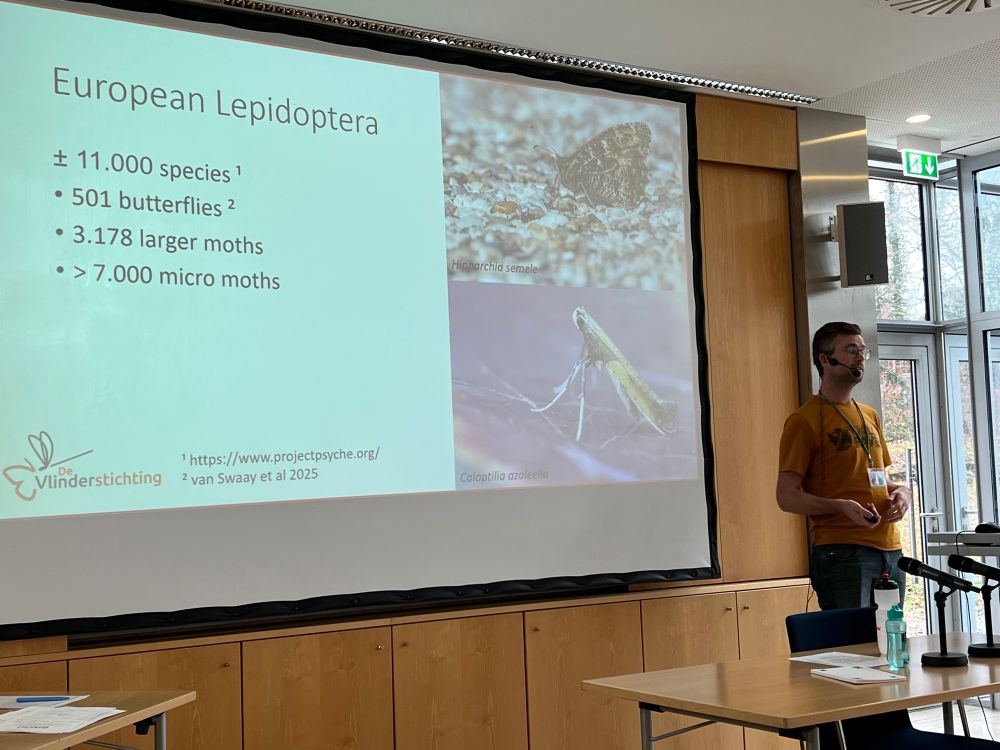
Good to have a dedicated moth session at our partner meeting, led by Jurriën van Deijk, who has just coordinated a new European Moth Red List. There are a huge number of moths in Europe: 11,000 species, many of them important pollinators and the basis of food chains. We hope to build a new network

December 4, 2025 at 11:02 AM
Good to have a dedicated moth session at our partner meeting, led by Jurriën van Deijk, who has just coordinated a new European Moth Red List. There are a huge number of moths in Europe: 11,000 species, many of them important pollinators and the basis of food chains. We hope to build a new network
Good to hear of the growth of a new scheme in Denmark which now has over 100 transects, filling a blank space in our coverage


December 4, 2025 at 8:48 AM
Good to hear of the growth of a new scheme in Denmark which now has over 100 transects, filling a blank space in our coverage
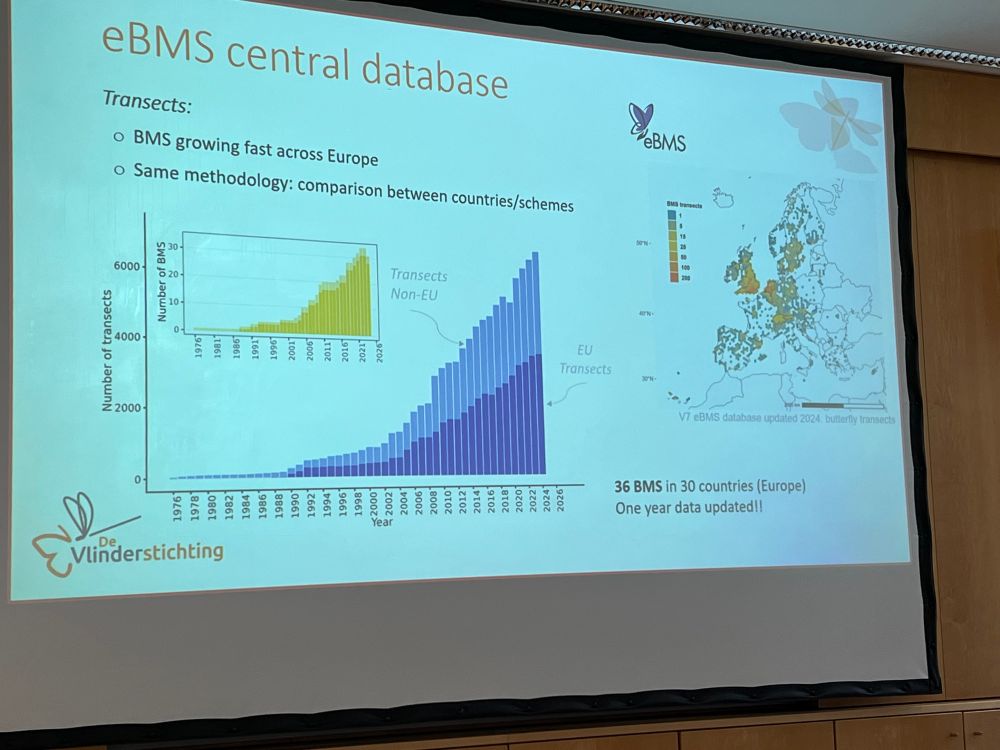
The European Butterfly Monitoring Scheme is growing fast thanks to some funding from the EU. We now have transects in nearly every European country. This is a powerful dataset to assess the health of our environment and improve biodiversity conservation

December 4, 2025 at 8:10 AM
The European Butterfly Monitoring Scheme is growing fast thanks to some funding from the EU. We now have transects in nearly every European country. This is a powerful dataset to assess the health of our environment and improve biodiversity conservation
This was a powerful message to end the talk by Andreas Gumbert from DG Environment of the European Commission

December 3, 2025 at 9:28 PM
This was a powerful message to end the talk by Andreas Gumbert from DG Environment of the European Commission
Our ninth partner meeting starts today in the German town of Laufen. We will be discussing how to use butterflies as indicators of environmental change and help improve EU policies to reverse the decline of pollinators. We aim to provide the science to inform the best possible policies


December 3, 2025 at 8:14 AM
Our ninth partner meeting starts today in the German town of Laufen. We will be discussing how to use butterflies as indicators of environmental change and help improve EU policies to reverse the decline of pollinators. We aim to provide the science to inform the best possible policies
In the new European butterfly Red List, 8 sp are threatened in Scandinavian tundra where the climate crisis is causing warmer + drier conditions that allows scrub to spread on sensitive bog and open habitats. eg Agriades aquilo; Boloria freija; Euphydryas iduna. www.bc-europe.eu/webpage.php?...


October 14, 2025 at 9:07 AM
In the new European butterfly Red List, 8 sp are threatened in Scandinavian tundra where the climate crisis is causing warmer + drier conditions that allows scrub to spread on sensitive bog and open habitats. eg Agriades aquilo; Boloria freija; Euphydryas iduna. www.bc-europe.eu/webpage.php?...
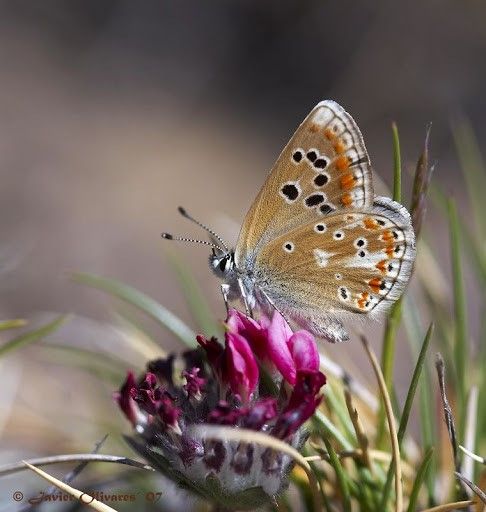
In the new Butterfly Red List, sp that live solely on mountain tops are especially threatened as they need to move uphill as their habitats get warmer, but are running out of space. In mountains of S Spain, 3 endemic sp are now Endangered : Agriades zullichi; Polyommatus golgus; P. violetae.



October 13, 2025 at 9:41 AM
In the new Butterfly Red List, sp that live solely on mountain tops are especially threatened as they need to move uphill as their habitats get warmer, but are running out of space. In mountains of S Spain, 3 endemic sp are now Endangered : Agriades zullichi; Polyommatus golgus; P. violetae.
The risk of wildfires is a growing problem in the Mediterranean region and on the Macaronesian Islands, threatened many endemics like Hipparchia tamadabae on Gran Canaria

October 12, 2025 at 10:25 AM
The risk of wildfires is a growing problem in the Mediterranean region and on the Macaronesian Islands, threatened many endemics like Hipparchia tamadabae on Gran Canaria
The new European Butterfly Red List found that the biggest threats to butterflies continue to be habitat loss and degradation but climate warming is having a devastating effect on sp. in the far north and far south of Europe. 52% (34) of all Red List sp. are now threatened by climate warming.


October 12, 2025 at 10:21 AM
The new European Butterfly Red List found that the biggest threats to butterflies continue to be habitat loss and degradation but climate warming is having a devastating effect on sp. in the far north and far south of Europe. 52% (34) of all Red List sp. are now threatened by climate warming.
We are also deeply saddened that the Madeiran Large White, Pieris wollastoni, is now officially extinct: it was last seen in 1986. The full report can be downloaded here www.bc-europe.eu/documents/68...

October 11, 2025 at 9:35 AM
We are also deeply saddened that the Madeiran Large White, Pieris wollastoni, is now officially extinct: it was last seen in 1986. The full report can be downloaded here www.bc-europe.eu/documents/68...
Check out our new website, packed with new features, including updated project and EU policy pages + butterfly species pages with all known hostplants courtesy of Harry Clarke and downloadable country lists. Big thanks to Peter Eeles @ukbutterflies.bsky.social for all his help www.bc-europe.eu

September 30, 2025 at 8:07 AM
Check out our new website, packed with new features, including updated project and EU policy pages + butterfly species pages with all known hostplants courtesy of Harry Clarke and downloadable country lists. Big thanks to Peter Eeles @ukbutterflies.bsky.social for all his help www.bc-europe.eu
And now, thanks to the European butterfly monitoring scheme, we can even look at how butterflies are doing in different countries and different areas. Even protected areas like Natura 2000 are losing butterflies

April 5, 2025 at 10:36 AM
And now, thanks to the European butterfly monitoring scheme, we can even look at how butterflies are doing in different countries and different areas. Even protected areas like Natura 2000 are losing butterflies
Chris van Swaay ‘Mr Monitoring’ closes #FutureofButterflies by showing what a long way we have come since the first butterfly book in 1669. Note that they showed parasitic flies that emerged from the pupae, even though they had no idea what was happening!

April 5, 2025 at 10:27 AM
Chris van Swaay ‘Mr Monitoring’ closes #FutureofButterflies by showing what a long way we have come since the first butterfly book in 1669. Note that they showed parasitic flies that emerged from the pupae, even though they had no idea what was happening!
The EBMS scheme is extremely cost effective as most is done by volunteers but a paid co-ordinated is essential to ensure long term viability


April 5, 2025 at 10:17 AM
The EBMS scheme is extremely cost effective as most is done by volunteers but a paid co-ordinated is essential to ensure long term viability
Cristina Sevilleja describes the amazing growth of the European Butterfly Monitoring Scheme, the biggest insect monitoring scheme in the world. 30 countries are now involved and updates of the Grassland Butterfly Indicator are planned in the next 2 years #FutureofButterflies

April 5, 2025 at 10:08 AM
Cristina Sevilleja describes the amazing growth of the European Butterfly Monitoring Scheme, the biggest insect monitoring scheme in the world. 30 countries are now involved and updates of the Grassland Butterfly Indicator are planned in the next 2 years #FutureofButterflies
Jorge Leon-Cortes describes some vital monitoring of threatened butterflies in Mexico, including the iconic Monarch. Public engagement is important to explain why insects are important to sustaining life on earth #FutureofButterflies


April 5, 2025 at 9:59 AM
Jorge Leon-Cortes describes some vital monitoring of threatened butterflies in Mexico, including the iconic Monarch. Public engagement is important to explain why insects are important to sustaining life on earth #FutureofButterflies
Evrim Karacetin from Turkey explains that tree planting is not always a good solution for biodiversity. In the steppes (natural dry grasslands) of Turkey, tree planting can have a serious adverse affect on butterflies and other wildlife, but sparse plantations can be good #FutureofButterflies


April 5, 2025 at 8:26 AM
Evrim Karacetin from Turkey explains that tree planting is not always a good solution for biodiversity. In the steppes (natural dry grasslands) of Turkey, tree planting can have a serious adverse affect on butterflies and other wildlife, but sparse plantations can be good #FutureofButterflies
Aidan Whitfield describes the importance of the new EU Nature Restoration Regulation which gives firm targets for nature, including reversing the decline of Pollinators. The Grassland Butterfly Indicator is one of the key ways of monitoring the restoration of agricultural ecosystems


April 5, 2025 at 7:46 AM
Aidan Whitfield describes the importance of the new EU Nature Restoration Regulation which gives firm targets for nature, including reversing the decline of Pollinators. The Grassland Butterfly Indicator is one of the key ways of monitoring the restoration of agricultural ecosystems
And has produced this valuable map showing priority areas for future butterfly survival in various climate change and agricultural change

April 5, 2025 at 7:23 AM
And has produced this valuable map showing priority areas for future butterfly survival in various climate change and agricultural change
Day 3 of #FutureofButterflies conference and Federico Riva explains a surprising finding that small habitat patches are crucial to butterfly survival in the landscape. So we should still try to conserve them and not just focus on large patches

April 5, 2025 at 7:12 AM
Day 3 of #FutureofButterflies conference and Federico Riva explains a surprising finding that small habitat patches are crucial to butterfly survival in the landscape. So we should still try to conserve them and not just focus on large patches
Good to hear from Albert Vliegenhart that railway stations in NL are trying to enhance habitats around them. Also companies are helping pollinators around power stations by changing mowing. Adds up to 1,400 ha of new habitat. Let’s do this everywhere #FutureofButterflies


April 4, 2025 at 8:26 AM
Good to hear from Albert Vliegenhart that railway stations in NL are trying to enhance habitats around them. Also companies are helping pollinators around power stations by changing mowing. Adds up to 1,400 ha of new habitat. Let’s do this everywhere #FutureofButterflies
More on light pollution and moths from Evert van de Schoot, who found that even dim skyglow reduces moth abundance by 25% in gardens, but streetlights reduce them by 50%. Very worrying in a rapidly urbanising world #FutureofButterflies

April 4, 2025 at 8:13 AM
More on light pollution and moths from Evert van de Schoot, who found that even dim skyglow reduces moth abundance by 25% in gardens, but streetlights reduce them by 50%. Very worrying in a rapidly urbanising world #FutureofButterflies