


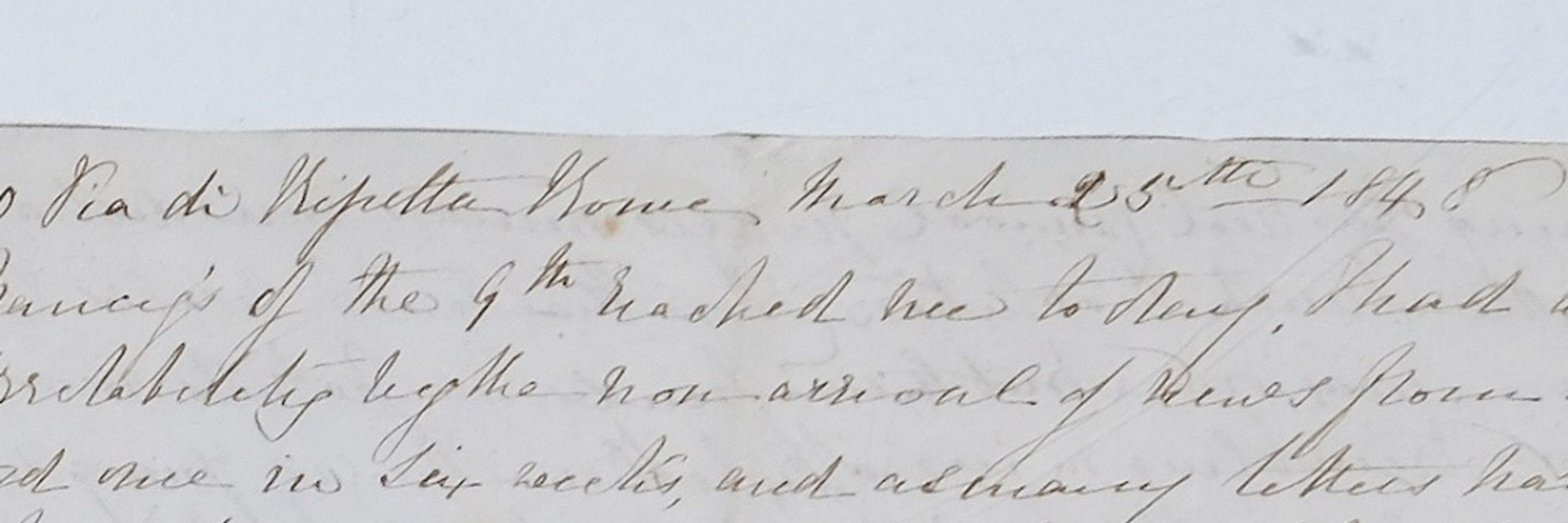
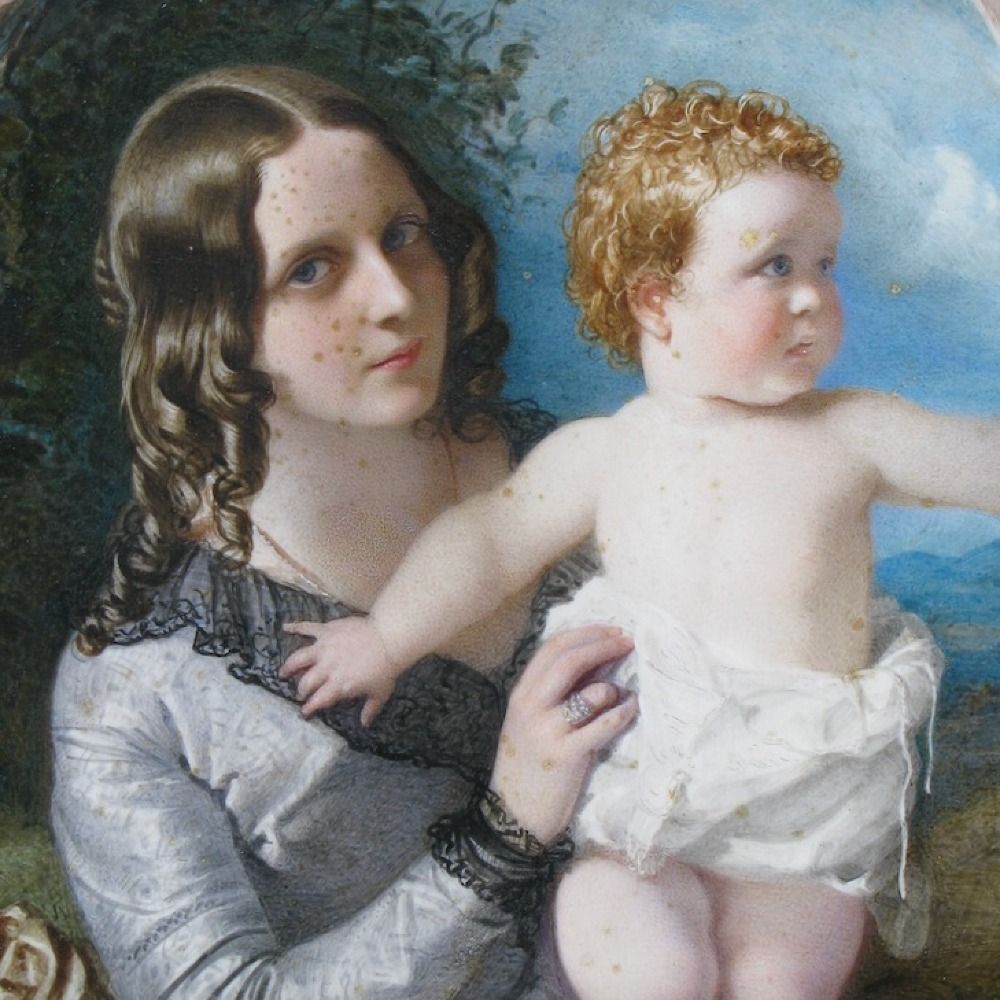
Eliza Ogilvy's commonplace book is missing
@eaho.bsky.social
A Scottish/Florentine literary life; an extraordinary network of artists, writers, engineers, scientists; a micro-history of the East India Company and its overlooked influence on British culture Eaho.substack.com
... in the Napoleonic wars (when there was reason to repine) & a sharp uplift after the bloody murder of Waterloo (when much repining required), then a rapid descent to become almost extinct by the end of the 19thC. Intriguingly, it appears there has been a just-detectible revival since the 1990s.
October 30, 2025 at 1:40 PM
... in the Napoleonic wars (when there was reason to repine) & a sharp uplift after the bloody murder of Waterloo (when much repining required), then a rapid descent to become almost extinct by the end of the 19thC. Intriguingly, it appears there has been a just-detectible revival since the 1990s.
Love The Great Cat Massacre
October 15, 2025 at 6:02 PM
Love The Great Cat Massacre
Eliza says: Set yourself the challenge of avoiding the curse of almost all history titles: the colon. As in, 'snappy title: long-winded explanation of what the damn book's actually about'. Something more like 'The Spy who came in from the cold'.
October 15, 2025 at 6:01 PM
Eliza says: Set yourself the challenge of avoiding the curse of almost all history titles: the colon. As in, 'snappy title: long-winded explanation of what the damn book's actually about'. Something more like 'The Spy who came in from the cold'.
As if inspiration was needed!
September 23, 2025 at 9:23 AM
As if inspiration was needed!
Third chapter: Wellington’s colonels (Dick was one, with Hardinge, Gough, Napier & Smith) planned the invasion of Punjab in 1845-46 & after their victory were praised by Robert Peel in the Commons in a speech that set the tone for a century of violent Christian militarism in Britain and its empire.

12. Victory and lies _
Robert Peel's speech to Parliament on 2 April 1846 after the battle of Sobraon, celebrated a cult of Christian militarism and established tropes of imperial propaganda that are familiar today.
eaho.substack.com
September 4, 2025 at 9:39 AM
Third chapter: Wellington’s colonels (Dick was one, with Hardinge, Gough, Napier & Smith) planned the invasion of Punjab in 1845-46 & after their victory were praised by Robert Peel in the Commons in a speech that set the tone for a century of violent Christian militarism in Britain and its empire.
The is the second chapter: Dick was involved in a succession of Batta mutinies in Madras, Hyderabad and on the NW frontier with Punjab, where he became embroiled in a bitter dispute with the Governor General, Lord Ellenborough, over the use of ‘coercive’ violence to suppress the mutiny.

11. Taking the bull by the horns
Part 2 of Mutiny at Ferozepur, 1844: a rebellion with disputed origins and chaos between government and army; a battle of wills between Dick and Ellenborough, and questions of who really ruled India.
eaho.substack.com
September 4, 2025 at 9:39 AM
The is the second chapter: Dick was involved in a succession of Batta mutinies in Madras, Hyderabad and on the NW frontier with Punjab, where he became embroiled in a bitter dispute with the Governor General, Lord Ellenborough, over the use of ‘coercive’ violence to suppress the mutiny.
All three tell the story of the British Army’s takeover of the East India Company's army in 1838-46, during and after the first Afghan war; it's told through the experience of Major General Sir Robert Dick, Eliza (Dick) Ogilvy’s rather fearsome guardian through her childhood. This is the first:

10. Mutiny at Ferozepur, 1844
A sepoy rebellion along the North West frontier with Punjab caused a spectacular dispute between Sir Robert Dick and Lord Ellenborough, exposing the machinations of both men and empires.
eaho.substack.com
September 4, 2025 at 9:39 AM
All three tell the story of the British Army’s takeover of the East India Company's army in 1838-46, during and after the first Afghan war; it's told through the experience of Major General Sir Robert Dick, Eliza (Dick) Ogilvy’s rather fearsome guardian through her childhood. This is the first:
Ogilvy was a Director of the Crystal Palace Company, and the manuscript was kept by his wife Eliza Ogilvy after his death and so it must have had some significance. Who might be the composer? I’d be very grateful for any suggestions.
July 7, 2025 at 1:43 PM
Ogilvy was a Director of the Crystal Palace Company, and the manuscript was kept by his wife Eliza Ogilvy after his death and so it must have had some significance. Who might be the composer? I’d be very grateful for any suggestions.
this later came to be known as the Picturesque, a style much appreciated by the Directors of the East India Company, some of whom would have been familiar with the villa gardens on the islands facing Canton, and who commissioned Repton in 1806 to design the gardens for the EIC college at Haileybury

14. Loot and arson - the destruction of the Yuanmingyuan
After the Great Uprising came the 2nd Opium War. Eliza's brother embarked for China with his regiment, part of the British & French force that destroyed the vast cultural complex of the Qing emperors.
eaho.substack.com
March 6, 2025 at 11:05 PM
this later came to be known as the Picturesque, a style much appreciated by the Directors of the East India Company, some of whom would have been familiar with the villa gardens on the islands facing Canton, and who commissioned Repton in 1806 to design the gardens for the EIC college at Haileybury
This would have been less of a surprise to English observers had they understood that Kent and Brown had borrowed from the Chinese appreciation of irregularity and naturalism in garden design which had first reached England in the late 17th Century, via Dutch traders and English diplomats in Holland
March 6, 2025 at 11:05 PM
This would have been less of a surprise to English observers had they understood that Kent and Brown had borrowed from the Chinese appreciation of irregularity and naturalism in garden design which had first reached England in the late 17th Century, via Dutch traders and English diplomats in Holland
Eliza is particularly partial to wild wadi. I hope you made it there.
January 13, 2025 at 7:34 PM
Eliza is particularly partial to wild wadi. I hope you made it there.
These were usually faithful copies indistinguishable in style or content from sketches by the Illustrated London News' war artist, Mr Wirgman. Beato's photographs had an immediacy & sense of 'being there' that was lost in the engravings. 3/3 full story here: eaho.substack.com/p/14-looting...

14. Loot and arson - the destruction of the Yuanmingyuan
After the Great Uprising came the Second Opium War. Eliza's brother embarked with his regiment for China, where the British & French armies destroyed the vast cultural complex of the Qing dynasty.
eaho.substack.com
January 10, 2025 at 5:14 PM
These were usually faithful copies indistinguishable in style or content from sketches by the Illustrated London News' war artist, Mr Wirgman. Beato's photographs had an immediacy & sense of 'being there' that was lost in the engravings. 3/3 full story here: eaho.substack.com/p/14-looting...
The effect on the British public would've been lessened by the inability of newspapers to print photographs. That changed in the 1890s with the invention of halftone lithography. Until then photographs were copied by engravers on woodblocks or etching plates for publication in illustrated weeklies.
January 10, 2025 at 5:14 PM
The effect on the British public would've been lessened by the inability of newspapers to print photographs. That changed in the 1890s with the invention of halftone lithography. Until then photographs were copied by engravers on woodblocks or etching plates for publication in illustrated weeklies.