



Drop /// Inches podcast
@drop-iii-inches.com
The best Apple /// podcast. Also, the worst Apple /// podcast.
Actually in the Apple III's case it wasn't reseating chips either, it was just breaking free of oxidization on the pins connecting to the RAM card. The reseating chips thing is a myth—though the drop-fix isn't. (No amount of dropping is going to push a light chip into a tight socket.)
August 25, 2025 at 3:02 PM
Actually in the Apple III's case it wasn't reseating chips either, it was just breaking free of oxidization on the pins connecting to the RAM card. The reseating chips thing is a myth—though the drop-fix isn't. (No amount of dropping is going to push a light chip into a tight socket.)
:( Sorry for your loss. I can see how it could appear to be obsolete junk that wouldn't ever be used again. I've lost some things to similar housecleanings along the way. The /// is interesting, though, partly because it didn't get fully explored before it got taken off the market. Stuff left to do!
January 16, 2025 at 12:40 AM
:( Sorry for your loss. I can see how it could appear to be obsolete junk that wouldn't ever be used again. I've lost some things to similar housecleanings along the way. The /// is interesting, though, partly because it didn't get fully explored before it got taken off the market. Stuff left to do!
I did a little "Intro to ///" for KansasFest/A24eVR 2023 (which was themed on the Apple III) that goes through some of it, moderately concisely. www.youtube.com/watch?v=N5xf... — It builds in things people would have bought extra for the II+ (80-col, serial, disk). More RAM, better graphics.

Intro to /// - Paul Hagstrom (KansasFest/A24eVR 2023)
YouTube video by KansasFest
www.youtube.com
January 16, 2025 at 12:24 AM
I did a little "Intro to ///" for KansasFest/A24eVR 2023 (which was themed on the Apple III) that goes through some of it, moderately concisely. www.youtube.com/watch?v=N5xf... — It builds in things people would have bought extra for the II+ (80-col, serial, disk). More RAM, better graphics.
Wendell Sander (the designer of the Apple III) talked about it recently at the 2023 edition of KansasFest. youtu.be/9FmlwPGMEA8...

Apple /// History - Wendell Sander (KansasFest/A24eVR 2023)
YouTube video by KansasFest
youtu.be
January 16, 2025 at 12:15 AM
Wendell Sander (the designer of the Apple III) talked about it recently at the 2023 edition of KansasFest. youtu.be/9FmlwPGMEA8...
Apple recalled the first batch (serial numbers under 14000) to fix this, using a better daughterboard connector. That pretty much took care of the crashing problem. So the failures were real, the drop-fix was real—but it didn't have to do with chips walking out and being reseated.
January 16, 2025 at 12:11 AM
Apple recalled the first batch (serial numbers under 14000) to fix this, using a better daughterboard connector. That pretty much took care of the crashing problem. So the failures were real, the drop-fix was real—but it didn't have to do with chips walking out and being reseated.
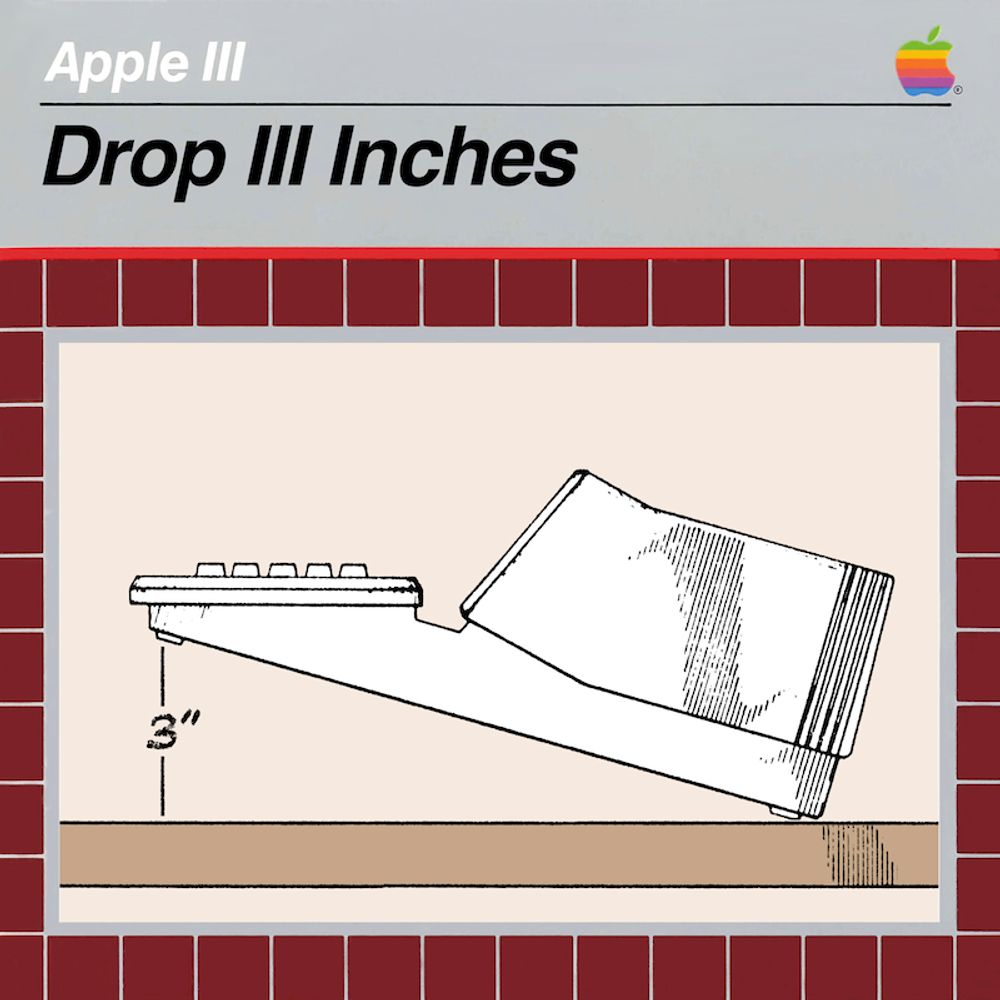
This is basically a myth. The drop-fix was real, definitely. But it wasn't about magically pushing chips back in—chips are light, socket friction is high. The Apple III has RAM on a daughterboard, and the pins connecting them would oxidize. Jolting the daughterboard re-establishes the connection.
January 16, 2025 at 12:08 AM
This is basically a myth. The drop-fix was real, definitely. But it wasn't about magically pushing chips back in—chips are light, socket friction is high. The Apple III has RAM on a daughterboard, and the pins connecting them would oxidize. Jolting the daughterboard re-establishes the connection.
And I suppose I ought to plug our discussion with him on the Drop /// Inches podcast. He talked with us a little bit about the Apple IV as well, but CHM's interview is kind of a superset of our discussion. drop-iii-inches.com/2016/03/07/e...

Episode 16: Taylor Pohlman
In this episode, we interview Taylor Pohlman, who joined Apple in 1979 and became the Apple /// Product Marketing Manager in 1981, managing the “Reintroduction” of the Apple ///. He is …
drop-iii-inches.com
December 24, 2024 at 2:42 PM
And I suppose I ought to plug our discussion with him on the Drop /// Inches podcast. He talked with us a little bit about the Apple IV as well, but CHM's interview is kind of a superset of our discussion. drop-iii-inches.com/2016/03/07/e...
Taylor Pohlman talks about the Apple IV project here and there. The CHM interview has as much discussion as anywhere. Early 1981, it was to be a 68000-based Unix machine. Project was dropped, focus stayed on Lisa/Mac. youtu.be/5i6mR3LHOB4... — Transcript: archive.computerhistory.org/resources/ac...

Oral History of Taylor Pohlman Part 1
YouTube video by Computer History Museum
youtu.be
December 24, 2024 at 2:40 PM
Taylor Pohlman talks about the Apple IV project here and there. The CHM interview has as much discussion as anywhere. Early 1981, it was to be a 68000-based Unix machine. Project was dropped, focus stayed on Lisa/Mac. youtu.be/5i6mR3LHOB4... — Transcript: archive.computerhistory.org/resources/ac...
I've written a couple of quasi-games for the Apple ///, leveraging the faster CPU, better graphics modes, interrupts, better sound, hardware scrolling support. Many decades too late, but it's actually fun to program on. But same problem as in the 1980s: small audience. youtu.be/9xUosRvmAQE...

Apple /// arcade: vertical scrollers - Paul Hagstrom (KansasFest/A24eVR 2023)
YouTube video by KansasFest
youtu.be
December 23, 2024 at 6:39 AM
I've written a couple of quasi-games for the Apple ///, leveraging the faster CPU, better graphics modes, interrupts, better sound, hardware scrolling support. Many decades too late, but it's actually fun to program on. But same problem as in the 1980s: small audience. youtu.be/9xUosRvmAQE...
Apple did actually fix most of this stuff pretty quickly, but they rushed the initial release leaving a bad first impression. People who stuck with the /// tended to really like it. Apple's failure to get developer info out soon enough likely hurt it the most—not much native software was available.
December 23, 2024 at 6:24 AM
Apple did actually fix most of this stuff pretty quickly, but they rushed the initial release leaving a bad first impression. People who stuck with the /// tended to really like it. Apple's failure to get developer info out soon enough likely hurt it the most—not much native software was available.