



Dana Aghabi
@danaaghabi.bsky.social
Wellcome Trust funded PhD student at the University of Glasgow 🧫👩🔬 Interested in iron transporters in toxoplasma and macrophages
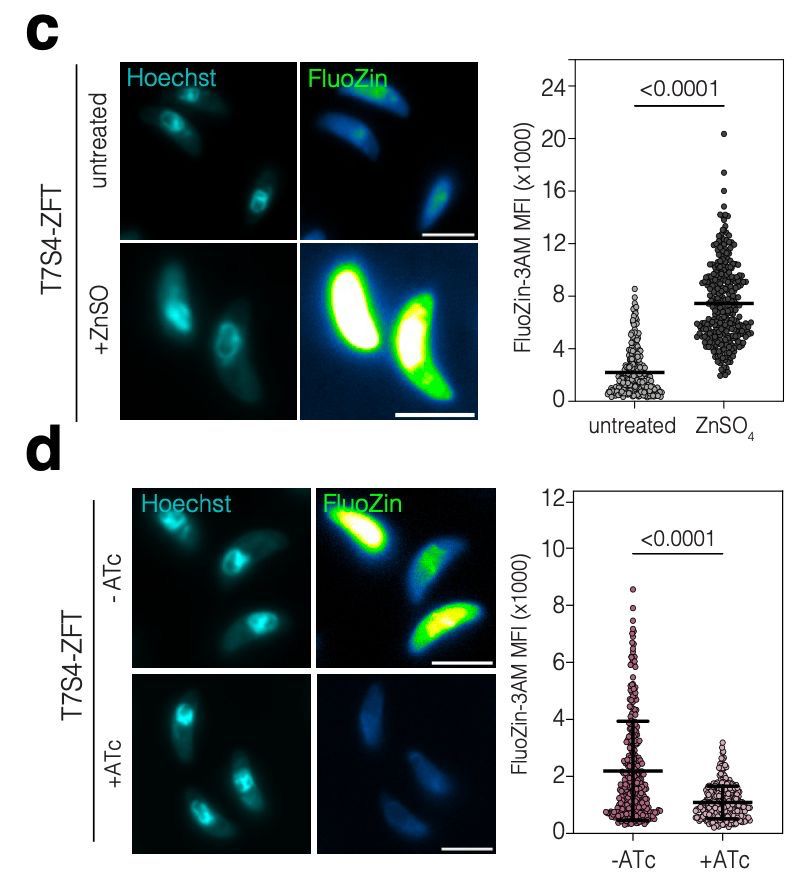
11/ Finally, using a combination of techniques including fluorescence iron and zinc indicators, ICP-MS and XFM, we show that depletion of ZFT led to a decrease in both parasite associated iron and zinc. Together these data validate the role of ZFT as the major iron and zinc transporter of T. gondii



April 22, 2025 at 10:09 AM
11/ Finally, using a combination of techniques including fluorescence iron and zinc indicators, ICP-MS and XFM, we show that depletion of ZFT led to a decrease in both parasite associated iron and zinc. Together these data validate the role of ZFT as the major iron and zinc transporter of T. gondii
10/ We find that ZFT knockdown cannot be rescued by excess zinc, or iron and zinc combined, and that the expression of ZFT is dependent on zinc availability. Moreover, we show ZFT expression complements the lack of zinc transport in S. cerevisiae, confirming ZFT as a functional zinc transporter


April 22, 2025 at 10:09 AM
10/ We find that ZFT knockdown cannot be rescued by excess zinc, or iron and zinc combined, and that the expression of ZFT is dependent on zinc availability. Moreover, we show ZFT expression complements the lack of zinc transport in S. cerevisiae, confirming ZFT as a functional zinc transporter
9/ Upon ZFT knockdown, we observed a heavily vesiculated PVM as well as enlarged electron-lucent vesicles. We find that the depletion of ZFT leads to a significantly higher percentage of vacuoles expressing both BAG1 and DBL, suggesting loss of ZFT is sufficient to induce bradyzoite stage conversion


April 22, 2025 at 10:09 AM
9/ Upon ZFT knockdown, we observed a heavily vesiculated PVM as well as enlarged electron-lucent vesicles. We find that the depletion of ZFT leads to a significantly higher percentage of vacuoles expressing both BAG1 and DBL, suggesting loss of ZFT is sufficient to induce bradyzoite stage conversion
8/ Depletion of iron often leads to defects in mitochondrial respiration. Here, we show that ZFT knockdown reduces mitochondrial respiration, although we saw no clear changes in cristae morphology. We also find that the key mitochondrial protein SDHB is significantly reduced upon ZFT knockdown


April 22, 2025 at 10:09 AM
8/ Depletion of iron often leads to defects in mitochondrial respiration. Here, we show that ZFT knockdown reduces mitochondrial respiration, although we saw no clear changes in cristae morphology. We also find that the key mitochondrial protein SDHB is significantly reduced upon ZFT knockdown
7/ We show ZFT knockdown parasites are unable to form plaques, confirming that ZFT is essential for parasite fitness. We find that replacing the ZFT promoter alone led to a significant reduction in plaque area in high iron conditions, however exogenous iron was unable to rescue the growth defect


April 22, 2025 at 10:09 AM
7/ We show ZFT knockdown parasites are unable to form plaques, confirming that ZFT is essential for parasite fitness. We find that replacing the ZFT promoter alone led to a significant reduction in plaque area in high iron conditions, however exogenous iron was unable to rescue the growth defect
6/ We show parasites overexpressing ZFT form fewer and smaller plaques, confirming that overexpression of ZFT inhibits parasite replication. We also find that parasites overexpressing ZFT are more sensitive to excess iron, and ZFT overexpression provides a protective effect against iron chelation


April 22, 2025 at 10:09 AM
6/ We show parasites overexpressing ZFT form fewer and smaller plaques, confirming that overexpression of ZFT inhibits parasite replication. We also find that parasites overexpressing ZFT are more sensitive to excess iron, and ZFT overexpression provides a protective effect against iron chelation
5/ We demonstrate ZFT abundance is also dependent on iron availability. At 24 h post treatment, we find ZFT expression is reduced to ~40% of the untreated. We confirmed loss of ZFT expression in high iron conditions by IFA, demonstrating that ZFT expression is significantly reduced under excess iron


April 22, 2025 at 10:09 AM
5/ We demonstrate ZFT abundance is also dependent on iron availability. At 24 h post treatment, we find ZFT expression is reduced to ~40% of the untreated. We confirmed loss of ZFT expression in high iron conditions by IFA, demonstrating that ZFT expression is significantly reduced under excess iron
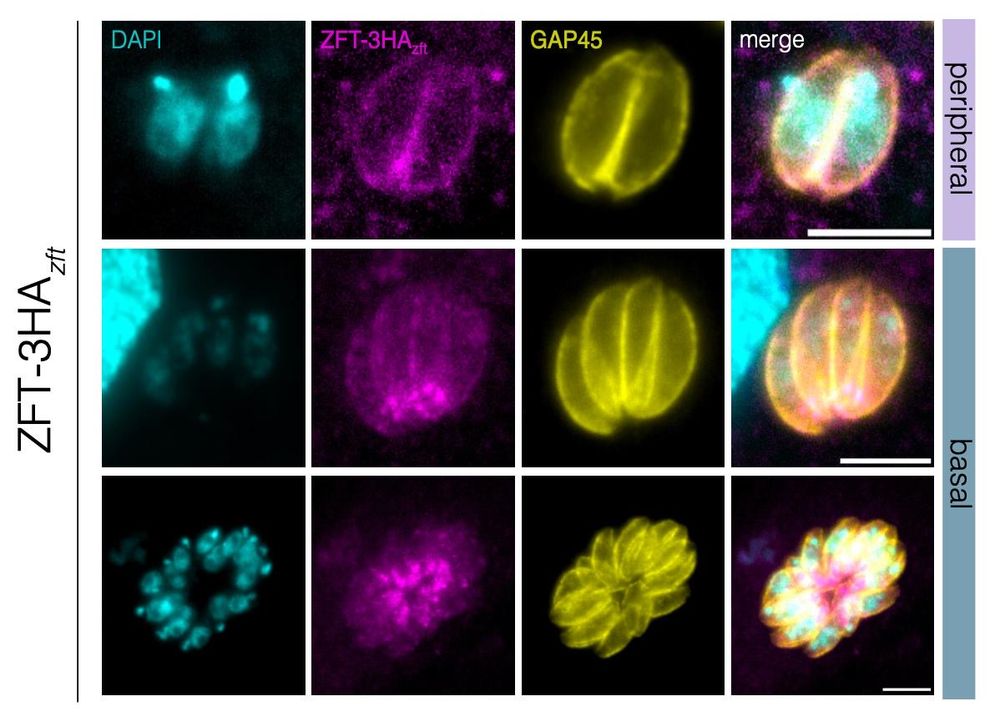
4/ We show ZFT localisation is dynamic, localising to the periphery of the parasite with a second foci at the basal pole. Interestingly, we find this localisation is highly dependent on the number of parasites per vacuole, and that the MFI of ZFT/parasite is higher in vacuoles with fewer parasites

April 22, 2025 at 10:09 AM
4/ We show ZFT localisation is dynamic, localising to the periphery of the parasite with a second foci at the basal pole. Interestingly, we find this localisation is highly dependent on the number of parasites per vacuole, and that the MFI of ZFT/parasite is higher in vacuoles with fewer parasites