


Communication for Education
@communicationfored.bsky.social
Comprehensive online training for text-based multimodal communication for nonspeaking / min-speaking learners.
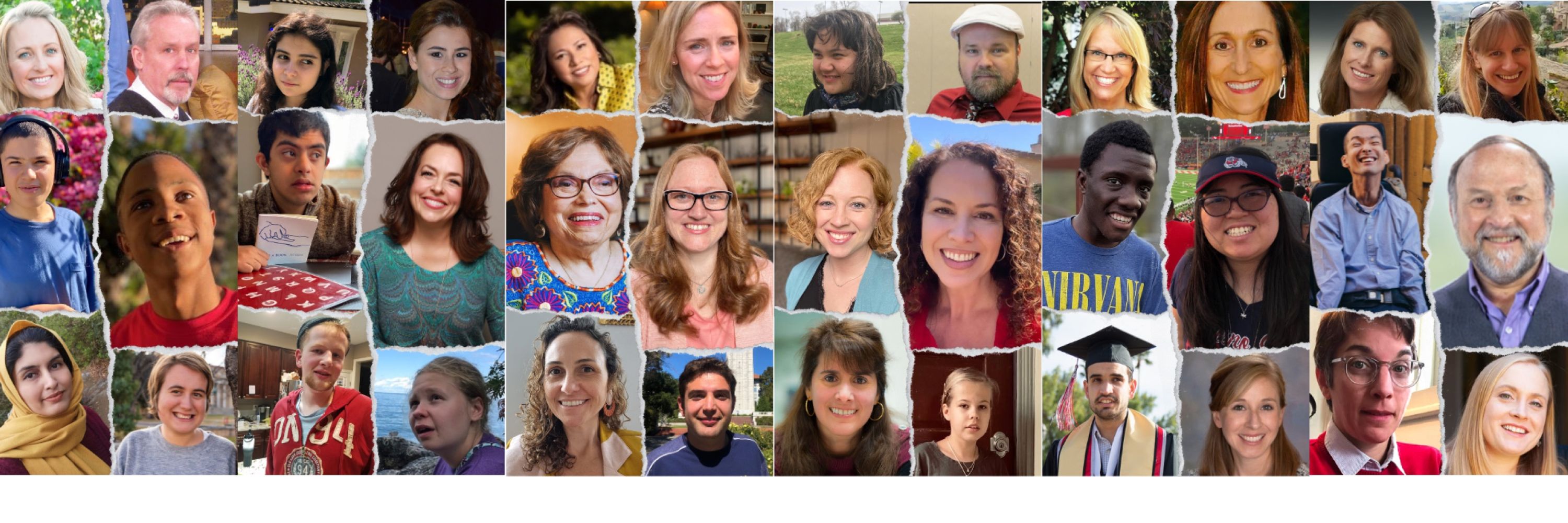
A collaboration among dozens of #ActuallyAutistic contributors, thought leaders from the #disability community, and other professional allies.
A collaboration among dozens of #ActuallyAutistic contributors, thought leaders from the #disability community, and other professional allies.
“The field was finally kind of level.”
New open access research co-authored by our co-founder, Lisa Mihalich Quinn, explores how nonspeaking autistic students experienced inclusion and communication access in virtual learning.
doi.org/10.1080/1360...
#Disability #InclusiveEducation #AAC
New open access research co-authored by our co-founder, Lisa Mihalich Quinn, explores how nonspeaking autistic students experienced inclusion and communication access in virtual learning.
doi.org/10.1080/1360...
#Disability #InclusiveEducation #AAC

‘The field was finally kind of level’: nonspeaking autistic students’ perspectives on foundational elements of inclusive virtual learning
The COVID-19 pandemic led to a swift global shift to virtual learning, raising concerns about ensuring inclusive education for students with disabilities. Augmentative and alternative communication...
doi.org
November 6, 2025 at 9:26 PM
“The field was finally kind of level.”
New open access research co-authored by our co-founder, Lisa Mihalich Quinn, explores how nonspeaking autistic students experienced inclusion and communication access in virtual learning.
doi.org/10.1080/1360...
#Disability #InclusiveEducation #AAC
New open access research co-authored by our co-founder, Lisa Mihalich Quinn, explores how nonspeaking autistic students experienced inclusion and communication access in virtual learning.
doi.org/10.1080/1360...
#Disability #InclusiveEducation #AAC
This guide is designed to accompany CFE's online course, but it can also act as a powerful stand alone resource, giving you tools to navigate many topics that impact the communication and education of nonspeaking, minimally speaking, and unreliably speaking learners.
February 8, 2025 at 1:14 PM
This guide is designed to accompany CFE's online course, but it can also act as a powerful stand alone resource, giving you tools to navigate many topics that impact the communication and education of nonspeaking, minimally speaking, and unreliably speaking learners.
Reposted by Communication for Education
Today in Hell Yes, Research! and also Journalists, Take Note:
Autistic people in North America consistently prefer the term "autistic" compared to "person with autism"—and also dislike/don't use functioning labels like "high-" or "low-functioning autism."
www.liebertpub.com/doi/10.1089/... #autism
Autistic people in North America consistently prefer the term "autistic" compared to "person with autism"—and also dislike/don't use functioning labels like "high-" or "low-functioning autism."
www.liebertpub.com/doi/10.1089/... #autism

Autism Terminology Preferences Among Autistic and Non-Autistic Adults in North America | Autism in Adulthood
Background: There is widespread debate about the language used to describe autistic people; many professionals prefer person-first language (e.g., “person with autism”), and many autistic people prefe...
www.liebertpub.com
February 7, 2025 at 1:42 AM
Today in Hell Yes, Research! and also Journalists, Take Note:
Autistic people in North America consistently prefer the term "autistic" compared to "person with autism"—and also dislike/don't use functioning labels like "high-" or "low-functioning autism."
www.liebertpub.com/doi/10.1089/... #autism
Autistic people in North America consistently prefer the term "autistic" compared to "person with autism"—and also dislike/don't use functioning labels like "high-" or "low-functioning autism."
www.liebertpub.com/doi/10.1089/... #autism
Reposted by Communication for Education

"When you look like a typical person and speak like one too the world looks at you with more respect.
I might look typical at first glance and my mouth speaks words, but almost never the words that are in my mind.
🧵1/3
I might look typical at first glance and my mouth speaks words, but almost never the words that are in my mind.
🧵1/3
![[a black and white photograph of a TJ pointing to letters on a laminated board held by a communication partner.]](https://cdn.bsky.app/img/feed_thumbnail/plain/did:plc:ixlb3lqad7m7rornktkomfd4/bafkreibxc357jr3kwzgy7cmsxok7b267bef66hl4rylo3wyadbfi77hygy@jpeg)
February 1, 2025 at 11:32 PM
"When you look like a typical person and speak like one too the world looks at you with more respect.
I might look typical at first glance and my mouth speaks words, but almost never the words that are in my mind.
🧵1/3
I might look typical at first glance and my mouth speaks words, but almost never the words that are in my mind.
🧵1/3