



Andy
@carbrochureaddict.bsky.social
Historian and auto enthusiast, posting images of car and van brochures from my personal collection.
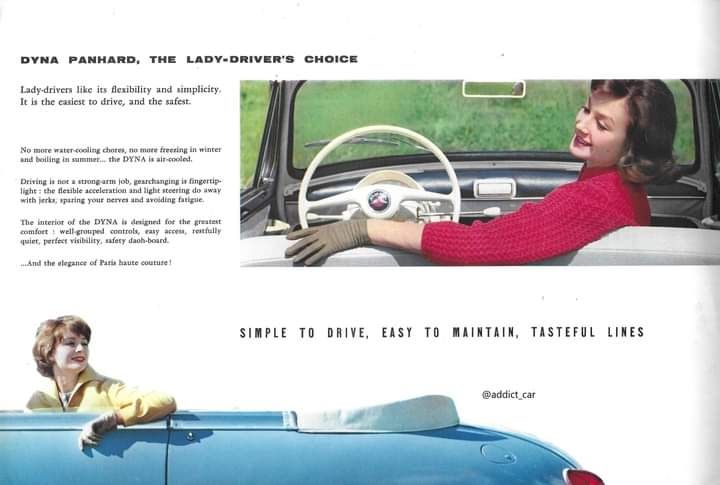
The brochure went out of its way to court female drivers, stressing the car's light controls and low maintenance, plus 'the elegance of haute couture'. The rare cabriolet version is also pictured here.



December 13, 2025 at 12:05 PM
The brochure went out of its way to court female drivers, stressing the car's light controls and low maintenance, plus 'the elegance of haute couture'. The rare cabriolet version is also pictured here.
Panhard for years gave Citroën a run for its money in terms of who could produce the most idiosyncratically French car. This stylishly-produced 1958 brochure in English features the Dyna Z saloon, which had an advanced aerodynamic body and 851cc air-cooled flat-twin engine. #weirdcarbs


December 13, 2025 at 12:05 PM
Panhard for years gave Citroën a run for its money in terms of who could produce the most idiosyncratically French car. This stylishly-produced 1958 brochure in English features the Dyna Z saloon, which had an advanced aerodynamic body and 851cc air-cooled flat-twin engine. #weirdcarbs
Launched in 1996 in Brazil, the Palio hatchback, the first fruit of Fiat's ambitious world-car project, was intended as a simple model to be built in many countries. Later, saloons and estates would follow under a variety of names in different markets.


December 13, 2025 at 8:57 AM
Launched in 1996 in Brazil, the Palio hatchback, the first fruit of Fiat's ambitious world-car project, was intended as a simple model to be built in many countries. Later, saloons and estates would follow under a variety of names in different markets.
The Strada had 1.2 petrol and 1.7 turbodiesel engines, and kept Fiat's flag flying for a while in the shrinking small pick-up market in Europe before being deleted, unreplaced. The Strada nameplate lives on to this day in Latin America on a new, larger pick-up.


December 13, 2025 at 8:57 AM
The Strada had 1.2 petrol and 1.7 turbodiesel engines, and kept Fiat's flag flying for a while in the shrinking small pick-up market in Europe before being deleted, unreplaced. The Strada nameplate lives on to this day in Latin America on a new, larger pick-up.
The original Fiat Strada was the UK and US name for the Ritmo hatch, but the model name reappeared in Brazil in 1996 on the pick-up version of Fiat's Palio 'world car'. The Strada was exported to many left-hand-drive European markets, as seen in the 1999 German brochure. #weirdcarbs


December 13, 2025 at 8:57 AM
The original Fiat Strada was the UK and US name for the Ritmo hatch, but the model name reappeared in Brazil in 1996 on the pick-up version of Fiat's Palio 'world car'. The Strada was exported to many left-hand-drive European markets, as seen in the 1999 German brochure. #weirdcarbs
Opel/Vauxhall, Isuzu, Holden, Chevrolet Brazil all had their own J-car versions.
Vauxhall had used the Cavalier name since 1975, switching to the new platform in 1981. The 5-door was the biggest selling bodystyle.
Vauxhall had used the Cavalier name since 1975, switching to the new platform in 1981. The 5-door was the biggest selling bodystyle.

December 12, 2025 at 5:30 PM
Opel/Vauxhall, Isuzu, Holden, Chevrolet Brazil all had their own J-car versions.
Vauxhall had used the Cavalier name since 1975, switching to the new platform in 1981. The 5-door was the biggest selling bodystyle.
Vauxhall had used the Cavalier name since 1975, switching to the new platform in 1981. The 5-door was the biggest selling bodystyle.
These 1982 US Cavaliers all had the same 1.8-litre engine and claimed to have unprecedented standard equipment levels for a relatively low-priced Chevrolet. The cars looked far more international from the driving seat than previous generations of GM's North American interiors.


December 12, 2025 at 4:29 PM
These 1982 US Cavaliers all had the same 1.8-litre engine and claimed to have unprecedented standard equipment levels for a relatively low-priced Chevrolet. The cars looked far more international from the driving seat than previous generations of GM's North American interiors.
The Cavalier 4-door sedan and wagon are shown here; their looks were similar to J-car designs made in other parts of the world (eg the UK's Vauxhall Cavalier) but in practice little was interchangeable. The design also came in Pontiac, Oldsmobile, Buick and even Cadillac versions in North America.


December 12, 2025 at 4:29 PM
The Cavalier 4-door sedan and wagon are shown here; their looks were similar to J-car designs made in other parts of the world (eg the UK's Vauxhall Cavalier) but in practice little was interchangeable. The design also came in Pontiac, Oldsmobile, Buick and even Cadillac versions in North America.
GM's ambitious J-car project delivered a range of new front-drive cars across the globe, though their bodies were somewhat different from region to region. This 1982 US Chevrolet Cavalier brochure showcases the 2-door coupe as well as the sporty-looking hatchback. #weirdcarbs


December 12, 2025 at 4:29 PM
GM's ambitious J-car project delivered a range of new front-drive cars across the globe, though their bodies were somewhat different from region to region. This 1982 US Chevrolet Cavalier brochure showcases the 2-door coupe as well as the sporty-looking hatchback. #weirdcarbs
Choosing the Audi marque to spearhead the model's four-stroke future proved a wise move, and the brand name was quickly established in key markets. This Dutch brochure from 1968 features the entry-level Audi 60, with 1500cc engine.


December 12, 2025 at 1:56 PM
Choosing the Audi marque to spearhead the model's four-stroke future proved a wise move, and the brand name was quickly established in key markets. This Dutch brochure from 1968 features the entry-level Audi 60, with 1500cc engine.
Rapidly-growing Volkswagen acquired Auto Union in 1965, and DKW was soon retired in favour of reviving the Audi marque, combining the F102 body with new Mercedes-designed four-stroke engines. Audi, one of the founding brands of the 1932 Auto Union, had last sold a car in the dark days of 1939.


December 12, 2025 at 1:56 PM
Rapidly-growing Volkswagen acquired Auto Union in 1965, and DKW was soon retired in favour of reviving the Audi marque, combining the F102 body with new Mercedes-designed four-stroke engines. Audi, one of the founding brands of the 1932 Auto Union, had last sold a car in the dark days of 1939.
The last car to be marketed as a DKW in Europe, the 1964 F102 had an attractively modern body. It also had the distinction of being the final West German two-stroke, using an 1175cc three-cylinder unit, albeit one fitted with a sophisticated 'fresh oil injection' system. #weirdcarbs


December 12, 2025 at 1:56 PM
The last car to be marketed as a DKW in Europe, the 1964 F102 had an attractively modern body. It also had the distinction of being the final West German two-stroke, using an 1175cc three-cylinder unit, albeit one fitted with a sophisticated 'fresh oil injection' system. #weirdcarbs
The Morris's bonnet and grille was shared with easily the most memorable of the short-lived trio of 18-22 models. This flagship version paired the staid Wolseley marque with the radical wedge-shaped body , an unlikely combination that worked well for its brief existence.


December 12, 2025 at 8:20 AM
The Morris's bonnet and grille was shared with easily the most memorable of the short-lived trio of 18-22 models. This flagship version paired the staid Wolseley marque with the radical wedge-shaped body , an unlikely combination that worked well for its brief existence.
The Morris 1800, 1800HL and 2200HL differed from their Austin counterparts only in frontal details. Marketed, ironically, as 'The car that's got it all together', the 18-22 suffered the humiliation of a relaunch by late 1975, this time as the marqueless Princess range.


December 12, 2025 at 8:20 AM
The Morris 1800, 1800HL and 2200HL differed from their Austin counterparts only in frontal details. Marketed, ironically, as 'The car that's got it all together', the 18-22 suffered the humiliation of a relaunch by late 1975, this time as the marqueless Princess range.
Made for a few short months in 1975, the rare Morris version of British Leyland's new 18-22 was symptomatic of muddled thinking. Having earlier tried to give a more distinctive identity to its Austin and Morris divisions, the company returned to its sin of pointless badge-engineering. #weirdcarbs


December 12, 2025 at 8:20 AM
Made for a few short months in 1975, the rare Morris version of British Leyland's new 18-22 was symptomatic of muddled thinking. Having earlier tried to give a more distinctive identity to its Austin and Morris divisions, the company returned to its sin of pointless badge-engineering. #weirdcarbs
To make the most of this opportunity to enter the SUV market, the C-Crosser had a Peugeot 4007 twin, also built in Japan, and shown in this UK brochure. Neither the Peugeot or Citroën versions lived up to sales expectations, however, and the two models were quietly allowed to fade away.


December 11, 2025 at 5:38 PM
To make the most of this opportunity to enter the SUV market, the C-Crosser had a Peugeot 4007 twin, also built in Japan, and shown in this UK brochure. Neither the Peugeot or Citroën versions lived up to sales expectations, however, and the two models were quietly allowed to fade away.
An obscure French-badged SUV built in Japan, the Citroën C-Crosser was one of the first fruits of PSA's collaboration with Mitsubishi, and was based on the existing second-generation Outlander. This 2009 UK brochure features the VTR+ and Exclusive models, both with PSA's 2.2HDi engine. #weirdcarbs


December 11, 2025 at 5:38 PM
An obscure French-badged SUV built in Japan, the Citroën C-Crosser was one of the first fruits of PSA's collaboration with Mitsubishi, and was based on the existing second-generation Outlander. This 2009 UK brochure features the VTR+ and Exclusive models, both with PSA's 2.2HDi engine. #weirdcarbs
KaRa was based in Southend, Essex, and promised high quality kits as well as running an owners' club. The firm was around in the early 1990s, but like many British kit manufacturers seems to have had quite a short life, with few made.

December 11, 2025 at 12:59 PM
KaRa was based in Southend, Essex, and promised high quality kits as well as running an owners' club. The firm was around in the early 1990s, but like many British kit manufacturers seems to have had quite a short life, with few made.
The mid-engined Ford RS200, designed for rallying, had one of the most iconic shapes of the 1980s, but as the name suggested only around 200 were made to meet homologation requirements. The KaRa 430 in this brochure replicated its looks in a Ford Sierra-based kit. #weirdcarbs


December 11, 2025 at 12:59 PM
The mid-engined Ford RS200, designed for rallying, had one of the most iconic shapes of the 1980s, but as the name suggested only around 200 were made to meet homologation requirements. The KaRa 430 in this brochure replicated its looks in a Ford Sierra-based kit. #weirdcarbs
The A112's looks evolved gradually over the years, with this 1980 version being part of the fifth series, showcasing new rear lights plus for some markets the Lancia name on the boot badge. The sunroof-equipped Junior sat below Elegant, Elite and Abarth models.


December 11, 2025 at 8:08 AM
The A112's looks evolved gradually over the years, with this 1980 version being part of the fifth series, showcasing new rear lights plus for some markets the Lancia name on the boot badge. The sunroof-equipped Junior sat below Elegant, Elite and Abarth models.
Autobianchi, a division of Lancia, was used by Fiat as a test-bed for new ideas, so the stylish little A112 - a pioneer hatchback - predated Fiat's ubiquitous 127, selling alongside it as the cognoscenti choice. After Italy, the car found its main market in France.


December 11, 2025 at 8:08 AM
Autobianchi, a division of Lancia, was used by Fiat as a test-bed for new ideas, so the stylish little A112 - a pioneer hatchback - predated Fiat's ubiquitous 127, selling alongside it as the cognoscenti choice. After Italy, the car found its main market in France.
Although its design was over a decade old by the time of this 1980 brochure, the Autobianchi A112 continued to be one of the most characterful small hatchbacks sold in Europe, and was quite affordable in its colourful entry-level version, the 903cc Junior, intended to have youth appeal. #weirdcarbs


December 11, 2025 at 8:08 AM
Although its design was over a decade old by the time of this 1980 brochure, the Autobianchi A112 continued to be one of the most characterful small hatchbacks sold in Europe, and was quite affordable in its colourful entry-level version, the 903cc Junior, intended to have youth appeal. #weirdcarbs
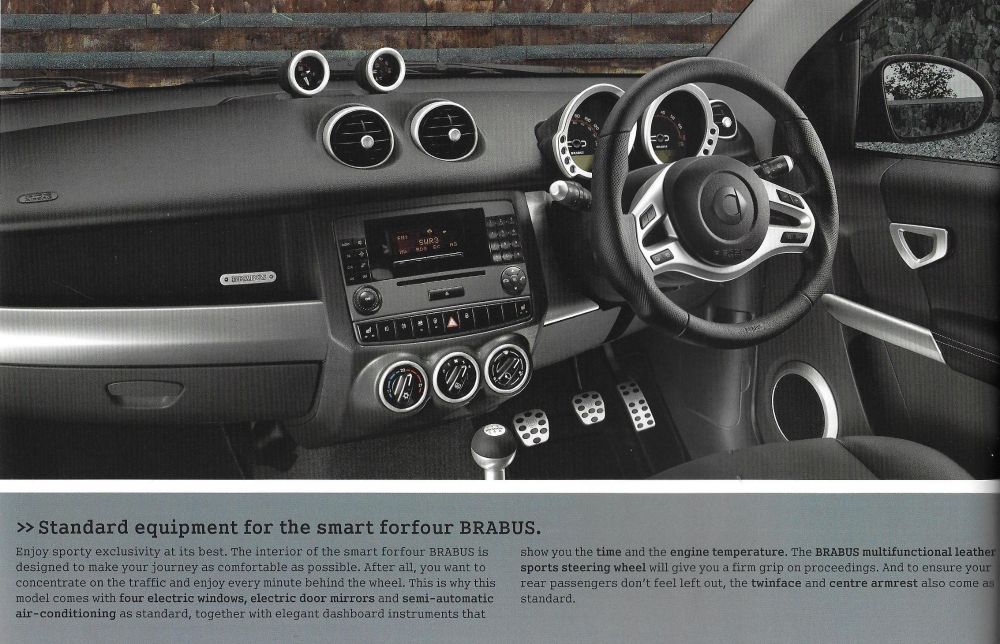
The Smart ForFour used mostly Mitsubishi engines, with the base Pure having a modest 64 bhp 1.1-litre. Topping the range, was the Brabus, which used the 1.5-litre 177 bhp turbo unit from the Colt CZT. It spurned the two-colour look of the rest of the range, being sold in all-black or all-silver.



December 10, 2025 at 4:41 PM
The Smart ForFour used mostly Mitsubishi engines, with the base Pure having a modest 64 bhp 1.1-litre. Topping the range, was the Brabus, which used the 1.5-litre 177 bhp turbo unit from the Colt CZT. It spurned the two-colour look of the rest of the range, being sold in all-black or all-silver.
Made at the Dutch NedCar plant alongside the closely-related, more mainstream, Mitsubishi Colt, the first-generation Smart ForFour turned out to be something of a sales flop, lasting only three years. Buyers were unconvinced by the car's contrived styling and ambitious pricing. #weirdcarbs


December 10, 2025 at 4:41 PM
Made at the Dutch NedCar plant alongside the closely-related, more mainstream, Mitsubishi Colt, the first-generation Smart ForFour turned out to be something of a sales flop, lasting only three years. Buyers were unconvinced by the car's contrived styling and ambitious pricing. #weirdcarbs
In Japan, the Celica nameplate sold alongside the closely-related Carina saloon, but this went further with the appearance there in 1979 of a model called the Toyota Celica Camry, a twin of the Carina. This was the first appearance of the Camry name, later a significant model in its own right.

December 10, 2025 at 12:54 PM
In Japan, the Celica nameplate sold alongside the closely-related Carina saloon, but this went further with the appearance there in 1979 of a model called the Toyota Celica Camry, a twin of the Carina. This was the first appearance of the Camry name, later a significant model in its own right.