




Cambridge Earth Sciences
@cambridge-earthsci.bsky.social
News and events from the Department of Earth Sciences at Cambridge University.
Reposted by Cambridge Earth Sciences
Cambridge researchers have uncovered the earliest evidence of ‘animal GPS’ in tiny magnetic fossils from 97 million years ago.
What left them behind? And what insights can they shed? Dig in: bit.ly/3LQxykH
@cambridge-earthsci.bsky.social @stcatharines.bsky.social @gfz.bsky.social 🧪
What left them behind? And what insights can they shed? Dig in: bit.ly/3LQxykH
@cambridge-earthsci.bsky.social @stcatharines.bsky.social @gfz.bsky.social 🧪

Ancient ‘animal GPS’ identified in magnetic fossils
The earliest evidence of an internal ‘GPS’ system in an animal has been identified by researchers, which could help explain how some modern birds and fish
bit.ly
November 19, 2025 at 3:58 PM
Cambridge researchers have uncovered the earliest evidence of ‘animal GPS’ in tiny magnetic fossils from 97 million years ago.
What left them behind? And what insights can they shed? Dig in: bit.ly/3LQxykH
@cambridge-earthsci.bsky.social @stcatharines.bsky.social @gfz.bsky.social 🧪
What left them behind? And what insights can they shed? Dig in: bit.ly/3LQxykH
@cambridge-earthsci.bsky.social @stcatharines.bsky.social @gfz.bsky.social 🧪
🌍 Thinking about postgrad study in Earth & Environmental Sciences? Explore our taught & research Master's, or dive into a PhD. Find out more on our website: www.esc.cam.ac.uk/postgraduate
#PhD #PhDOpportunities
#PhD #PhDOpportunities


November 4, 2025 at 10:53 AM
🌍 Thinking about postgrad study in Earth & Environmental Sciences? Explore our taught & research Master's, or dive into a PhD. Find out more on our website: www.esc.cam.ac.uk/postgraduate
#PhD #PhDOpportunities
#PhD #PhDOpportunities
Reposted by Cambridge Earth Sciences
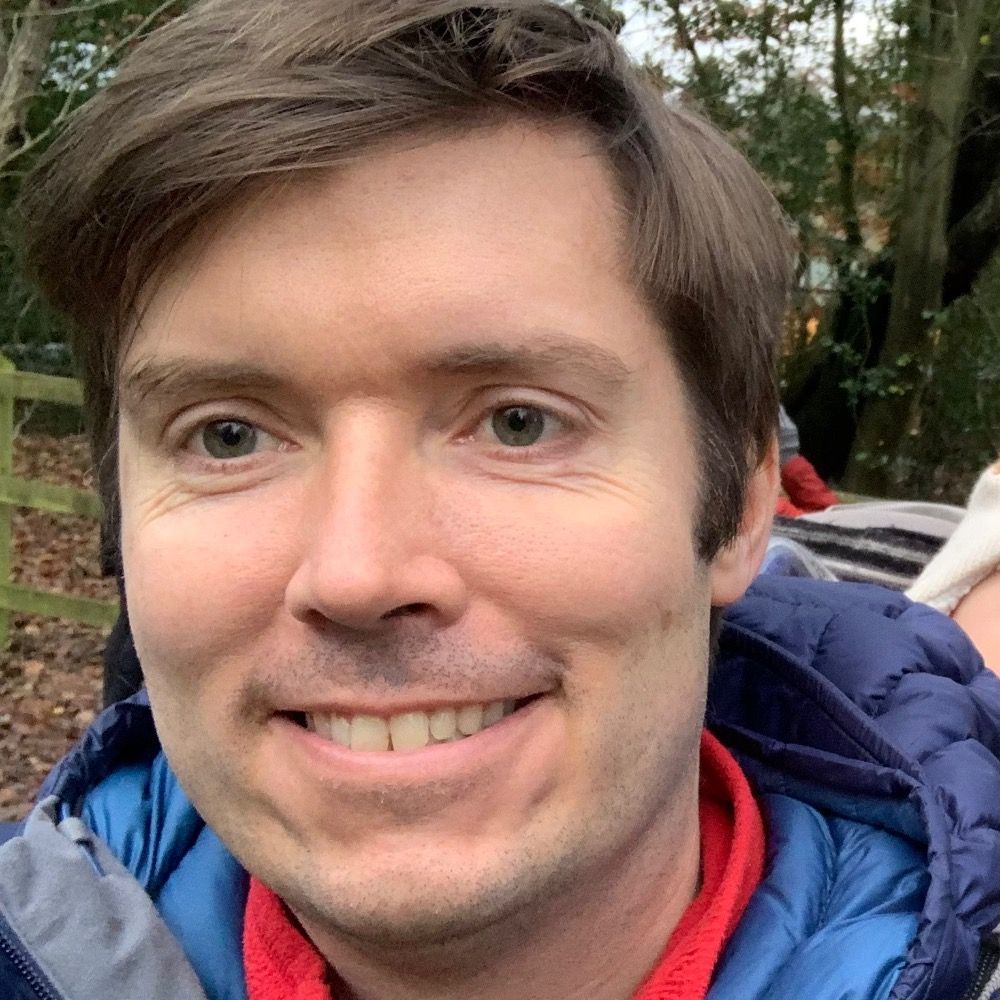
Playing spot the pebbles in the very last meter of ice drilled at Skytrain Ice Rise (~650 meters deep) with @wacswain.bsky.social and PhD student Yu Huang @bas.ac.uk @cambridge-earthsci.bsky.social @gatescambridge.bsky.social


October 28, 2025 at 5:09 PM
Playing spot the pebbles in the very last meter of ice drilled at Skytrain Ice Rise (~650 meters deep) with @wacswain.bsky.social and PhD student Yu Huang @bas.ac.uk @cambridge-earthsci.bsky.social @gatescambridge.bsky.social
Reposted by Cambridge Earth Sciences
🦴New fossil alert🦴 Introducing Aeviperditus gracilis, a possible bowerbird from the Miocene of New Zealand. My first fossil description!
Artwork by the amazing Sasha Votyakova (Te Papa CC-BY-SA) (🧵1/11)
Artwork by the amazing Sasha Votyakova (Te Papa CC-BY-SA) (🧵1/11)

October 23, 2025 at 8:55 AM
🦴New fossil alert🦴 Introducing Aeviperditus gracilis, a possible bowerbird from the Miocene of New Zealand. My first fossil description!
Artwork by the amazing Sasha Votyakova (Te Papa CC-BY-SA) (🧵1/11)
Artwork by the amazing Sasha Votyakova (Te Papa CC-BY-SA) (🧵1/11)
Reposted by Cambridge Earth Sciences
Check out our @aunz.theconversation.com article covering the St Bathans #bowerbird story!
theconversation.com/a-tiny-fossi...
@nicrawlencenz.bsky.social @atennyson.bsky.social @plubbe.bsky.social
theconversation.com/a-tiny-fossi...
@nicrawlencenz.bsky.social @atennyson.bsky.social @plubbe.bsky.social

A tiny fossil suggests bowerbirds once lived in ancient New Zealand – new research
New Zealand’s ancient bowerbird was smaller and more slender than the species living in Australia and New Guinea today.
theconversation.com
October 23, 2025 at 8:57 AM
Check out our @aunz.theconversation.com article covering the St Bathans #bowerbird story!
theconversation.com/a-tiny-fossi...
@nicrawlencenz.bsky.social @atennyson.bsky.social @plubbe.bsky.social
theconversation.com/a-tiny-fossi...
@nicrawlencenz.bsky.social @atennyson.bsky.social @plubbe.bsky.social
Reposted by Cambridge Earth Sciences

🧭Some giant magnetofossils may have acted as magnetoreceptors in motile animals, with a magnetic structure optimised to respond to magnetic field intensity variations.
@cambridge-earthsci.bsky.social
👉Read more here:
www.nature.com/articles/s43...
@cambridge-earthsci.bsky.social
👉Read more here:
www.nature.com/articles/s43...

Magnetic vector tomography reveals giant magnetofossils are optimised for magnetointensity reception - Communications Earth & Environment
Some giant magnetofossils may have acted as magnetoreceptors in motile animals, according to three-dimensional vector tomography of a spearhead giant magnetofossil which identifies a magnetic structur...
www.nature.com
October 20, 2025 at 2:46 PM
🧭Some giant magnetofossils may have acted as magnetoreceptors in motile animals, with a magnetic structure optimised to respond to magnetic field intensity variations.
@cambridge-earthsci.bsky.social
👉Read more here:
www.nature.com/articles/s43...
@cambridge-earthsci.bsky.social
👉Read more here:
www.nature.com/articles/s43...
🌋 Sixty million years ago, a mantle plume beneath the North Atlantic triggered extensive volcanic activity—leaving behind iconic sites like the Giant’s Causeway & Fingal’s Cave🌋
New research explains why: thinner patches in Earth’s lithosphere funnelled the plume’s hot rocks far and wide.
New research explains why: thinner patches in Earth’s lithosphere funnelled the plume’s hot rocks far and wide.


August 28, 2025 at 10:51 AM
🌋 Sixty million years ago, a mantle plume beneath the North Atlantic triggered extensive volcanic activity—leaving behind iconic sites like the Giant’s Causeway & Fingal’s Cave🌋
New research explains why: thinner patches in Earth’s lithosphere funnelled the plume’s hot rocks far and wide.
New research explains why: thinner patches in Earth’s lithosphere funnelled the plume’s hot rocks far and wide.
Reposted by Cambridge Earth Sciences
Magmas move rapidly beneath the Main Ethiopian Rift (MER), suggesting that an efficient rift magmatic system has already developed despite its relative tectonic immaturity! New research in Nature Geoscience: doi.org/10.1038/s415... 1/6

August 15, 2025 at 9:21 AM
Magmas move rapidly beneath the Main Ethiopian Rift (MER), suggesting that an efficient rift magmatic system has already developed despite its relative tectonic immaturity! New research in Nature Geoscience: doi.org/10.1038/s415... 1/6
Reposted by Cambridge Earth Sciences
⚒️ Article: Rapid crustal transit of magmas beneath the Main Ethiopian Rift
@geokevw.bsky.social @murphyqm.bsky.social @envleeds.bsky.social @cambridge-earthsci.bsky.social @oxuniearthsci.bsky.social
www.nature.com/articles/s41...
@geokevw.bsky.social @murphyqm.bsky.social @envleeds.bsky.social @cambridge-earthsci.bsky.social @oxuniearthsci.bsky.social
www.nature.com/articles/s41...

August 15, 2025 at 3:03 PM
⚒️ Article: Rapid crustal transit of magmas beneath the Main Ethiopian Rift
@geokevw.bsky.social @murphyqm.bsky.social @envleeds.bsky.social @cambridge-earthsci.bsky.social @oxuniearthsci.bsky.social
www.nature.com/articles/s41...
@geokevw.bsky.social @murphyqm.bsky.social @envleeds.bsky.social @cambridge-earthsci.bsky.social @oxuniearthsci.bsky.social
www.nature.com/articles/s41...
Reposted by Cambridge Earth Sciences
Spiky-toothed 'penis worms', rock-scraping molluscs and filter-feeding crustaceans are among a new treasure trove of fossils found at the Grand Canyon.
Explore the find from PhD student Giovanni Mussini 👇
www.cam.ac.uk/stories/gran...
Explore the find from PhD student Giovanni Mussini 👇
www.cam.ac.uk/stories/gran...

Grand Canyon was a ‘Goldilocks zone’ for the evolution of early animals
A treasure trove of exceptionally preserved early animals from more than half a billion years ago has been discovered in the Grand Canyon, one of the natural world’s most iconic sites.
www.cam.ac.uk
August 4, 2025 at 4:19 PM
Spiky-toothed 'penis worms', rock-scraping molluscs and filter-feeding crustaceans are among a new treasure trove of fossils found at the Grand Canyon.
Explore the find from PhD student Giovanni Mussini 👇
www.cam.ac.uk/stories/gran...
Explore the find from PhD student Giovanni Mussini 👇
www.cam.ac.uk/stories/gran...
Reposted by Cambridge Earth Sciences
We are delighted to celebrate two outstanding
@uk-comet.bsky.social Scientists, Professor Marie Edmonds @cambridge-earthsci.bsky.social and Professor
@davidmpyle.bsky.social (@ox.ac.uk), elected Fellows of the Royal Society this year: royalsociety.org/news/2025/05... 🎉
Read more: wp.me/p5NBzI-1Zg
@uk-comet.bsky.social Scientists, Professor Marie Edmonds @cambridge-earthsci.bsky.social and Professor
@davidmpyle.bsky.social (@ox.ac.uk), elected Fellows of the Royal Society this year: royalsociety.org/news/2025/05... 🎉
Read more: wp.me/p5NBzI-1Zg

Celebrating Excellence in Earth Sciences: Two COMET Scientists Elected Fellows of the Royal Society - UK Centre for Observation and Modelling of Earthquakes, Volcanoes and Tectonics
We are delighted to celebrate COMET Scientists Professor Marie Edmonds (University of Cambridge) and Professor David Pyle (University of Oxford), who are amongst the outstanding and distinguished grou...
wp.me
May 24, 2025 at 10:00 AM
We are delighted to celebrate two outstanding
@uk-comet.bsky.social Scientists, Professor Marie Edmonds @cambridge-earthsci.bsky.social and Professor
@davidmpyle.bsky.social (@ox.ac.uk), elected Fellows of the Royal Society this year: royalsociety.org/news/2025/05... 🎉
Read more: wp.me/p5NBzI-1Zg
@uk-comet.bsky.social Scientists, Professor Marie Edmonds @cambridge-earthsci.bsky.social and Professor
@davidmpyle.bsky.social (@ox.ac.uk), elected Fellows of the Royal Society this year: royalsociety.org/news/2025/05... 🎉
Read more: wp.me/p5NBzI-1Zg
This time last week our part III students were in southern Spain, exploring Almería’s exceptionally varied geology 🌞⛰️
There's something for everyone on this trip: metamorphic rocks, overlying reefs, evaporites and turbidite basins, volcanic centres, and major fault zones!!
#Fieldwork #Geoscience
There's something for everyone on this trip: metamorphic rocks, overlying reefs, evaporites and turbidite basins, volcanic centres, and major fault zones!!
#Fieldwork #Geoscience


April 2, 2025 at 2:53 PM
This time last week our part III students were in southern Spain, exploring Almería’s exceptionally varied geology 🌞⛰️
There's something for everyone on this trip: metamorphic rocks, overlying reefs, evaporites and turbidite basins, volcanic centres, and major fault zones!!
#Fieldwork #Geoscience
There's something for everyone on this trip: metamorphic rocks, overlying reefs, evaporites and turbidite basins, volcanic centres, and major fault zones!!
#Fieldwork #Geoscience
Reposted by Cambridge Earth Sciences

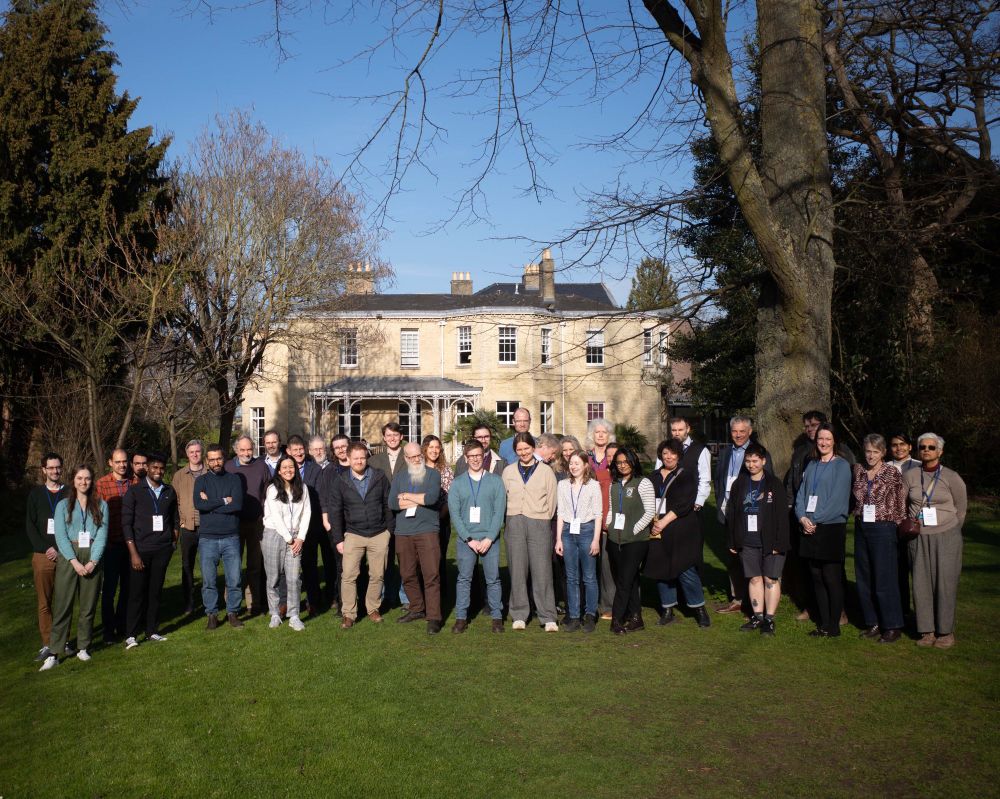
🌿 We're thrilled to be hosted by
Fitzwilliam College today for a conference on research on the Fenland landscape. A fantastic opportunity to discuss the potential future for the landscape.
@NERCscience
#LandscapeRegeneration #Fenland #Sustainability #EnvironmentalResearch #CambridgeUniversity
Fitzwilliam College today for a conference on research on the Fenland landscape. A fantastic opportunity to discuss the potential future for the landscape.
@NERCscience
#LandscapeRegeneration #Fenland #Sustainability #EnvironmentalResearch #CambridgeUniversity
March 19, 2025 at 4:18 PM
🌿 We're thrilled to be hosted by
Fitzwilliam College today for a conference on research on the Fenland landscape. A fantastic opportunity to discuss the potential future for the landscape.
@NERCscience
#LandscapeRegeneration #Fenland #Sustainability #EnvironmentalResearch #CambridgeUniversity
Fitzwilliam College today for a conference on research on the Fenland landscape. A fantastic opportunity to discuss the potential future for the landscape.
@NERCscience
#LandscapeRegeneration #Fenland #Sustainability #EnvironmentalResearch #CambridgeUniversity
Reposted by Cambridge Earth Sciences
May Adam Sedgwick look upon us with favour. #camfest @cambridgefestival.bsky.social @cambridge-earthsci.bsky.social @bas.ac.uk
March 29, 2025 at 10:42 AM
May Adam Sedgwick look upon us with favour. #camfest @cambridgefestival.bsky.social @cambridge-earthsci.bsky.social @bas.ac.uk
🎉 The latest issue of GeoCam is here! Meet our new Head of Department, uncover fascinating research, hear alumni stories, explore student mapping trips, and enjoy vibrant updates from @sedgwickmuseum.bsky.social
📖 Read in full here: www.esc.cam.ac.uk/alumni/alumn...
📖 Read in full here: www.esc.cam.ac.uk/alumni/alumn...

March 27, 2025 at 10:23 AM
🎉 The latest issue of GeoCam is here! Meet our new Head of Department, uncover fascinating research, hear alumni stories, explore student mapping trips, and enjoy vibrant updates from @sedgwickmuseum.bsky.social
📖 Read in full here: www.esc.cam.ac.uk/alumni/alumn...
📖 Read in full here: www.esc.cam.ac.uk/alumni/alumn...
🎶 What if you could play a microscope image of a #mineral like a record? Scientists from Cambridge & Anglia Ruskin have turned #volcanic mineral images into magical music!
Hear their melodies at the #CambridgeFestival tomorrow, 4:30 PM. 🌍✨Register here: www.festival.cam.ac.uk/events/hidde...
Hear their melodies at the #CambridgeFestival tomorrow, 4:30 PM. 🌍✨Register here: www.festival.cam.ac.uk/events/hidde...


March 25, 2025 at 12:36 PM
🎶 What if you could play a microscope image of a #mineral like a record? Scientists from Cambridge & Anglia Ruskin have turned #volcanic mineral images into magical music!
Hear their melodies at the #CambridgeFestival tomorrow, 4:30 PM. 🌍✨Register here: www.festival.cam.ac.uk/events/hidde...
Hear their melodies at the #CambridgeFestival tomorrow, 4:30 PM. 🌍✨Register here: www.festival.cam.ac.uk/events/hidde...
Studying Earth Sciences opens doors to careers that make a real difference in society🌎Former PhD student Matthew Brady now works for a carbon credit ratings agency, helping organisations make better climate decisions.
Read more about Matthew's journey! ➡️ unicamcareers.edublogs.org/2025/03/17/c...
Read more about Matthew's journey! ➡️ unicamcareers.edublogs.org/2025/03/17/c...
Climate Scientist to Ratings Scientist: Matthew on his move to industry from a PhD in climate science – unicamcareers blog
unicamcareers.edublogs.org
March 20, 2025 at 10:09 AM
Studying Earth Sciences opens doors to careers that make a real difference in society🌎Former PhD student Matthew Brady now works for a carbon credit ratings agency, helping organisations make better climate decisions.
Read more about Matthew's journey! ➡️ unicamcareers.edublogs.org/2025/03/17/c...
Read more about Matthew's journey! ➡️ unicamcareers.edublogs.org/2025/03/17/c...
Last week, our first-year students went on their very first field trip to Ketton Quarry! 🪨🐚 🥳
Here they are, proudly showcasing some of their fossil discoveries, including star-shaped segments of crinoid stems, ammonites, brachiopods, and bivalves.
#Geology #Fieldwork #Fossils #Palaeontology
Here they are, proudly showcasing some of their fossil discoveries, including star-shaped segments of crinoid stems, ammonites, brachiopods, and bivalves.
#Geology #Fieldwork #Fossils #Palaeontology


March 18, 2025 at 12:02 PM
Last week, our first-year students went on their very first field trip to Ketton Quarry! 🪨🐚 🥳
Here they are, proudly showcasing some of their fossil discoveries, including star-shaped segments of crinoid stems, ammonites, brachiopods, and bivalves.
#Geology #Fieldwork #Fossils #Palaeontology
Here they are, proudly showcasing some of their fossil discoveries, including star-shaped segments of crinoid stems, ammonites, brachiopods, and bivalves.
#Geology #Fieldwork #Fossils #Palaeontology
Reposted by Cambridge Earth Sciences

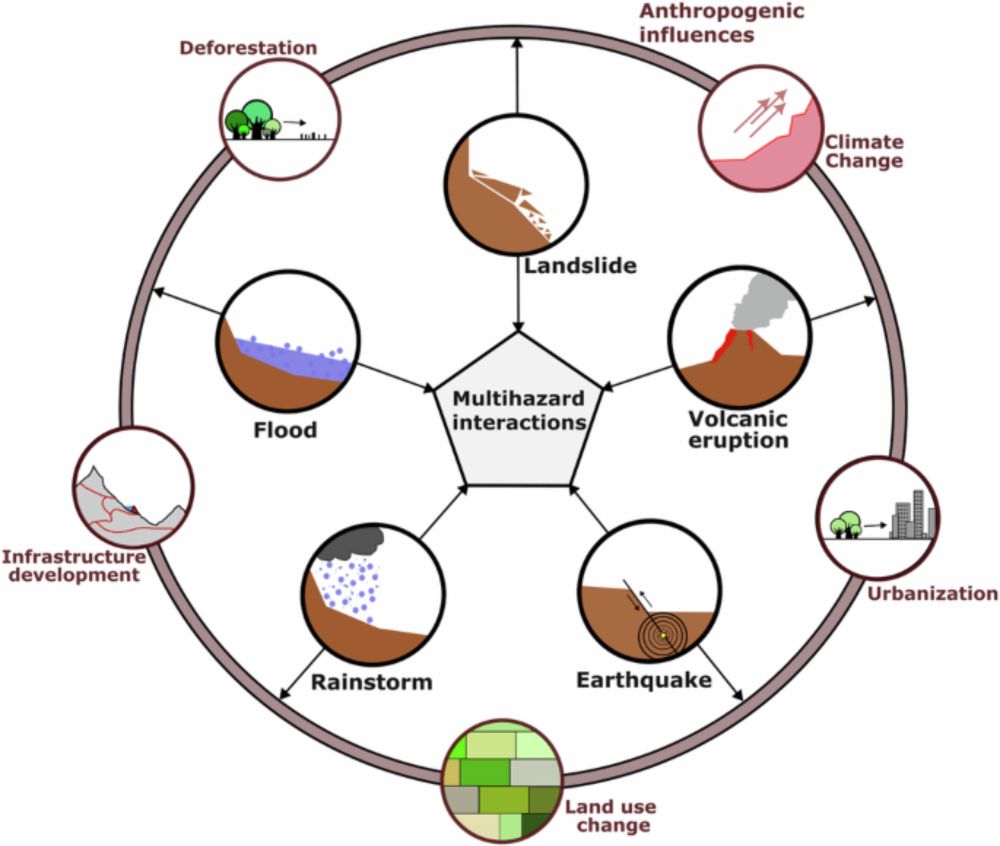
New perspective article discussing how we define natural hazards in today's world.
Key message: a barrier between 'human' and 'natural' events is often unhelpful, and we must consider the interaction between multiple hazards in all cases.
www.nature.com/articles/s44304-025-00071-w
Key message: a barrier between 'human' and 'natural' events is often unhelpful, and we must consider the interaction between multiple hazards in all cases.
www.nature.com/articles/s44304-025-00071-w
All hazards are multihazards, few of them are natural - npj Natural Hazards
npj Natural Hazards - All hazards are multihazards, few of them are natural
www.nature.com
March 5, 2025 at 2:33 PM
New perspective article discussing how we define natural hazards in today's world.
Key message: a barrier between 'human' and 'natural' events is often unhelpful, and we must consider the interaction between multiple hazards in all cases.
www.nature.com/articles/s44304-025-00071-w
Key message: a barrier between 'human' and 'natural' events is often unhelpful, and we must consider the interaction between multiple hazards in all cases.
www.nature.com/articles/s44304-025-00071-w
🌏 How 'natural' are natural hazards?🌋Cambridge geoscientists and geographers will tackle this compelling question in a live webinar tomorrow, 13th March.
Join the conversation and discover how Cambridge research is making real-world impact! Link to register below 👇
#NaturalHazards #Webinar
Join the conversation and discover how Cambridge research is making real-world impact! Link to register below 👇
#NaturalHazards #Webinar

March 12, 2025 at 9:58 AM
🌏 How 'natural' are natural hazards?🌋Cambridge geoscientists and geographers will tackle this compelling question in a live webinar tomorrow, 13th March.
Join the conversation and discover how Cambridge research is making real-world impact! Link to register below 👇
#NaturalHazards #Webinar
Join the conversation and discover how Cambridge research is making real-world impact! Link to register below 👇
#NaturalHazards #Webinar
When warm seawater seeps under #Antarctic ice shelves it melts them from below and destabilizes glaciers🌊
🌍Researchers used model simulations to reveal the importance of seasonal changes in triggering warm water intrusions; urging for these dynamics to be included in ice loss forecasts.
🌍Researchers used model simulations to reveal the importance of seasonal changes in triggering warm water intrusions; urging for these dynamics to be included in ice loss forecasts.

March 6, 2025 at 2:46 PM
When warm seawater seeps under #Antarctic ice shelves it melts them from below and destabilizes glaciers🌊
🌍Researchers used model simulations to reveal the importance of seasonal changes in triggering warm water intrusions; urging for these dynamics to be included in ice loss forecasts.
🌍Researchers used model simulations to reveal the importance of seasonal changes in triggering warm water intrusions; urging for these dynamics to be included in ice loss forecasts.
Cambridge geoscientists are mapping the global distribution of critical metals in unusual igneous rocks to locate secure #RareEarthElement deposits. Sally Gibson and Sergei Lebedev are studying carbonatite rocks, which host rare earths, and their relationship to the thickness of Earth's lithosphere.

March 4, 2025 at 10:00 AM
Cambridge geoscientists are mapping the global distribution of critical metals in unusual igneous rocks to locate secure #RareEarthElement deposits. Sally Gibson and Sergei Lebedev are studying carbonatite rocks, which host rare earths, and their relationship to the thickness of Earth's lithosphere.
Duygu Sevilgen has built a coral lab in the basement of an old Zoology building. Here, 10 experimental tanks host multicoloured miniature forests, with each tank representing a different marine environment. #ClimateChange #Biodiversity


February 26, 2025 at 11:08 AM
Duygu Sevilgen has built a coral lab in the basement of an old Zoology building. Here, 10 experimental tanks host multicoloured miniature forests, with each tank representing a different marine environment. #ClimateChange #Biodiversity
There are many ways to study rocks up-close! 🔬💎 These thin section drawings and images are of feldspar-pyroxene xenoliths, brought up from beneath Fagradalsfjall, Iceland, by erupted basalts🌋 #ThinSectionTuesday #Petrology


February 25, 2025 at 9:57 AM
There are many ways to study rocks up-close! 🔬💎 These thin section drawings and images are of feldspar-pyroxene xenoliths, brought up from beneath Fagradalsfjall, Iceland, by erupted basalts🌋 #ThinSectionTuesday #Petrology
Reposted by Cambridge Earth Sciences
Did you know that mountain ranges like the Himalayas play a role in drawing carbon out of the atmosphere through erosion?
Our researchers headed out to Nepal during the monsoon season to study water-rock interactions, bringing about 60 kgs of rainwater samples back to Cambridge for analysis!
Our researchers headed out to Nepal during the monsoon season to study water-rock interactions, bringing about 60 kgs of rainwater samples back to Cambridge for analysis!


February 13, 2025 at 11:49 AM
Did you know that mountain ranges like the Himalayas play a role in drawing carbon out of the atmosphere through erosion?
Our researchers headed out to Nepal during the monsoon season to study water-rock interactions, bringing about 60 kgs of rainwater samples back to Cambridge for analysis!
Our researchers headed out to Nepal during the monsoon season to study water-rock interactions, bringing about 60 kgs of rainwater samples back to Cambridge for analysis!