




Brecht Verstraete
@brechtverstraete.bsky.social
Botanist at Meise Botanic Garden @meisebotanicgarden.bsky.social | Editor in chief at Plant Ecology and Evolution @plecevo.bsky.social | #Rubiaceae
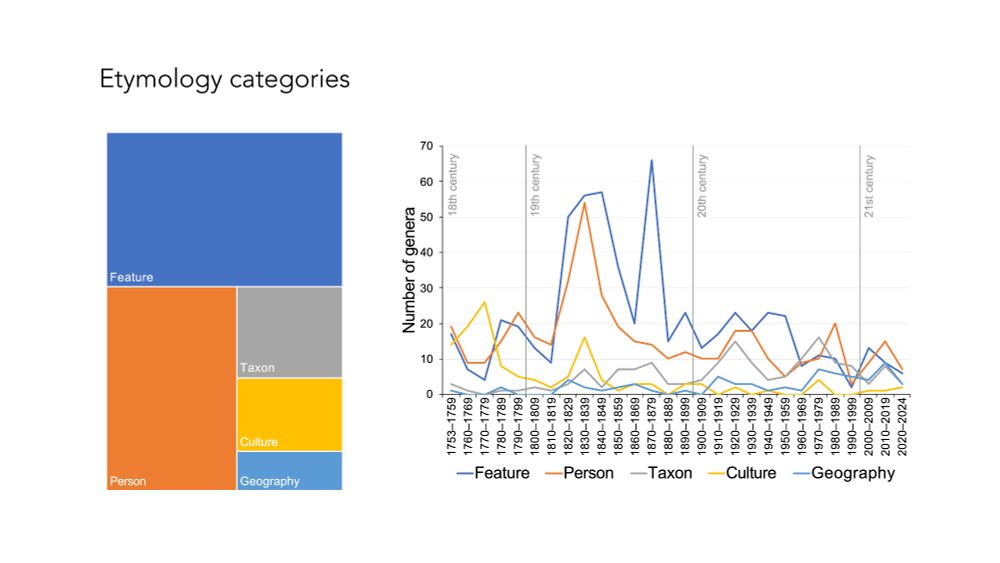
The most common way of naming is referring to a plant feature, often reproductive characters. Eponyms, chiefly commemorating men, have always been common and even became dominant in the last two decades.
June 16, 2025 at 1:35 PM
The most common way of naming is referring to a plant feature, often reproductive characters. Eponyms, chiefly commemorating men, have always been common and even became dominant in the last two decades.
Almost half of the names appeared in the 19th century, but the proportion of accepted names increased over time. The average number of new generic names is 5.05 per year.

June 16, 2025 at 1:35 PM
Almost half of the names appeared in the 19th century, but the proportion of accepted names increased over time. The average number of new generic names is 5.05 per year.
Europeans authored the vast majority of names and, within Europe, it is concentrated in France, the UK, and Germany.

June 16, 2025 at 1:35 PM
Europeans authored the vast majority of names and, within Europe, it is concentrated in France, the UK, and Germany.
A mere 1.80% of the generic names were published by female authors only.

June 16, 2025 at 1:35 PM
A mere 1.80% of the generic names were published by female authors only.
Every letter of the alphabet has been used but P is the most popular letter to start a genus with, while Q has only been used once. These are also other most and least used first letters in the English language.

June 16, 2025 at 1:35 PM
Every letter of the alphabet has been used but P is the most popular letter to start a genus with, while Q has only been used once. These are also other most and least used first letters in the English language.
Generic names are between 3 and 20 letters long and the distribution is a displaced Poisson distribution. The median length is 10 letters. This is the same for words in European languages.

June 16, 2025 at 1:35 PM
Generic names are between 3 and 20 letters long and the distribution is a displaced Poisson distribution. The median length is 10 letters. This is the same for words in European languages.
Rubiaceae has 1386 generic names, of which 615 are accepted and contain 14,266 species. This makes it the fifth-largest angiosperm family.

June 16, 2025 at 1:35 PM
Rubiaceae has 1386 generic names, of which 615 are accepted and contain 14,266 species. This makes it the fifth-largest angiosperm family.
I present the first ever survey of all generic names in the Rubiaceae plant family.
➡️ doi.org/10.1002/tax....
➡️ doi.org/10.1002/tax....

June 16, 2025 at 1:35 PM
I present the first ever survey of all generic names in the Rubiaceae plant family.
➡️ doi.org/10.1002/tax....
➡️ doi.org/10.1002/tax....
However, the Latin caelum can also mean "vault of heaven", referring to the celestial vault in ancient cosmology. So, the original spelling does refer to the arched seeds and is therefore correct.

February 14, 2025 at 5:04 PM
However, the Latin caelum can also mean "vault of heaven", referring to the celestial vault in ancient cosmology. So, the original spelling does refer to the arched seeds and is therefore correct.
The name is derived from Latin caelum (=heaven) and sperma (=seed) but this does not make much sense. So, taxonomists changed the spelling and etymology: from Greek koilos (=hollow), referring to the concave seeds.

February 14, 2025 at 5:04 PM
The name is derived from Latin caelum (=heaven) and sperma (=seed) but this does not make much sense. So, taxonomists changed the spelling and etymology: from Greek koilos (=hollow), referring to the concave seeds.
Caelospermum is the original spelling of this #Rubiaceae genus but the variant Coelospermum is more often used. However, this is wrong...

February 14, 2025 at 5:04 PM
Caelospermum is the original spelling of this #Rubiaceae genus but the variant Coelospermum is more often used. However, this is wrong...
8/8 Finally, a special thanks to my colleagues, Steven and Yves, for their friendship and company.

November 1, 2023 at 2:57 PM
8/8 Finally, a special thanks to my colleagues, Steven and Yves, for their friendship and company.
7/8 The IX International Rubiaceae and Gentianales Conference will take place at Meise Botanic Garden around September or October 2026. Mark your calendars!

November 1, 2023 at 2:57 PM
7/8 The IX International Rubiaceae and Gentianales Conference will take place at Meise Botanic Garden around September or October 2026. Mark your calendars!
5/8 Yves Bawin presented the work on how to identify coffee: development of a low-cost and robust barcoding assay for wild African Coffea species.

November 1, 2023 at 2:56 PM
5/8 Yves Bawin presented the work on how to identify coffee: development of a low-cost and robust barcoding assay for wild African Coffea species.
4/8 Steven Janssens presented the work on the evolution and biogeography of the Pavetteae tribe.

November 1, 2023 at 2:56 PM
4/8 Steven Janssens presented the work on the evolution and biogeography of the Pavetteae tribe.
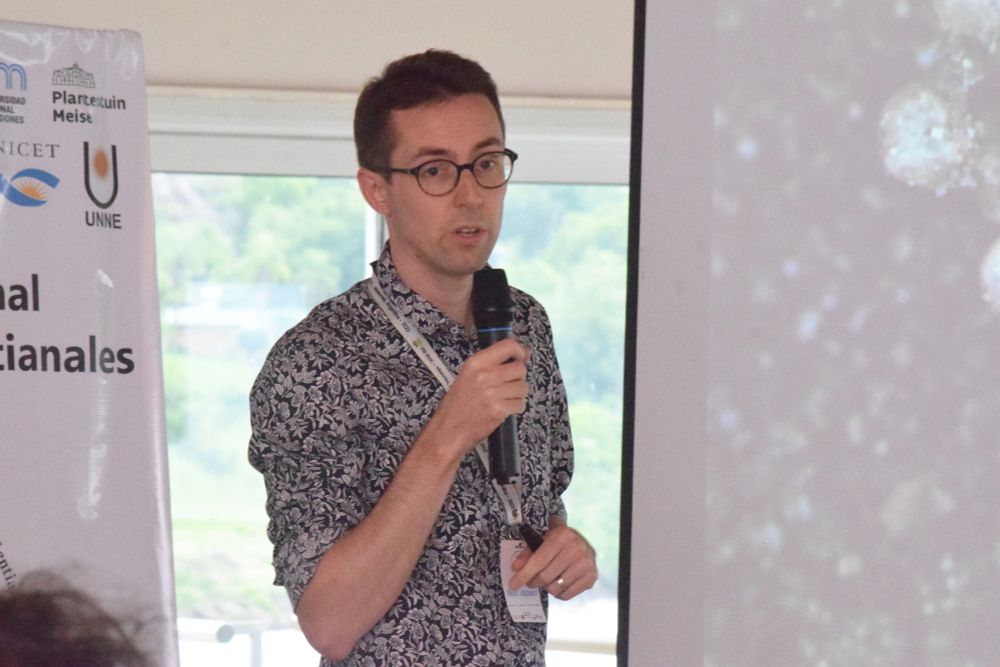
3/8 I shared my work on leaf symbiosis and presented the journal Plant Ecology and Evolution.

November 1, 2023 at 2:56 PM
3/8 I shared my work on leaf symbiosis and presented the journal Plant Ecology and Evolution.
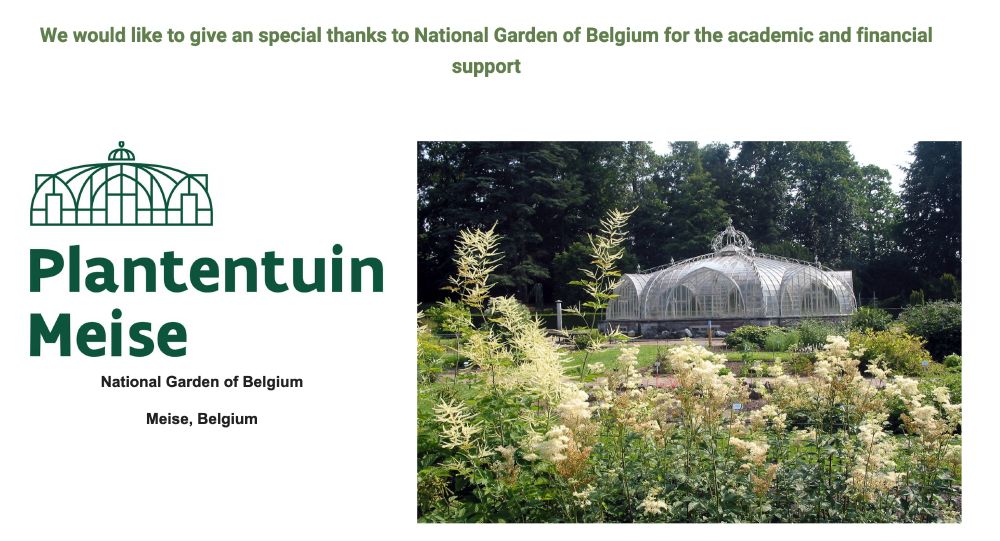
2/8 Meise Botanic Garden supported this conference and was acknowledged in many presentations, showing its leadership in Rubiaceae research.
November 1, 2023 at 2:55 PM
2/8 Meise Botanic Garden supported this conference and was acknowledged in many presentations, showing its leadership in Rubiaceae research.
1/8 The VIII International Rubiaceae and Gentianales Conference organised by IBONE in Argentina has come to an end. A sincere thank you to all participants for making it a memorable meeting.

November 1, 2023 at 2:54 PM
1/8 The VIII International Rubiaceae and Gentianales Conference organised by IBONE in Argentina has come to an end. A sincere thank you to all participants for making it a memorable meeting.