


Katya Isabelle
@botanykat.bsky.social
PhD student in lutruwita | evolution, anatomy & physiology of southern conifers | Bookworm 📚 | Co-host @thatssciencetas.bsky.social 🌲🌿🌳 (she/her)
https://www.inaturalist.org/people/katyabandow
https://www.inaturalist.org/people/katyabandow
Reposted by Katya Isabelle
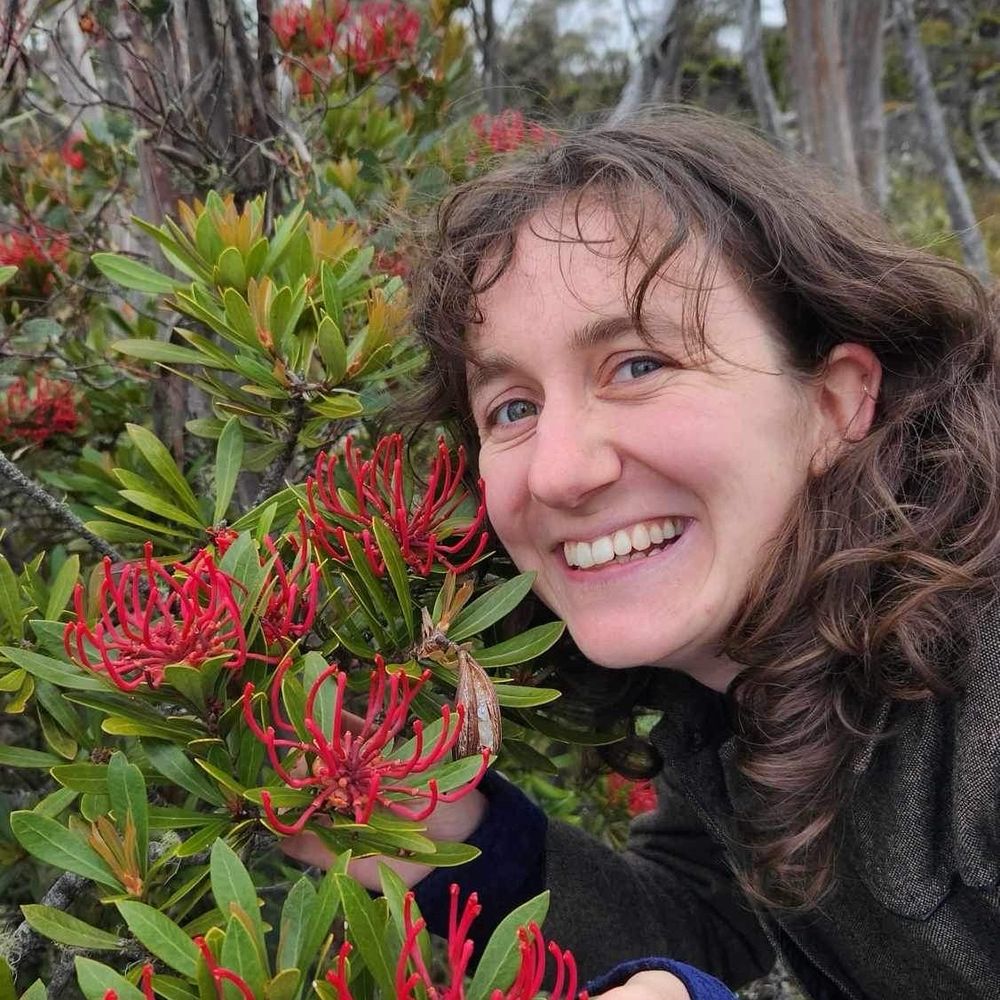
The cover of @jxbotany.bsky.social is my painting of Tulip Poplar, a North-American native & global street tree that was the focus of our paper visualising freezing spread & freeze-thaw embolism in leaves!
A lovely way to finish this multi-year mutli-country project
🔗below
@brodersenlab.bsky.social
A lovely way to finish this multi-year mutli-country project
🔗below
@brodersenlab.bsky.social


November 5, 2025 at 5:11 PM
The cover of @jxbotany.bsky.social is my painting of Tulip Poplar, a North-American native & global street tree that was the focus of our paper visualising freezing spread & freeze-thaw embolism in leaves!
A lovely way to finish this multi-year mutli-country project
🔗below
@brodersenlab.bsky.social
A lovely way to finish this multi-year mutli-country project
🔗below
@brodersenlab.bsky.social
Reposted by Katya Isabelle
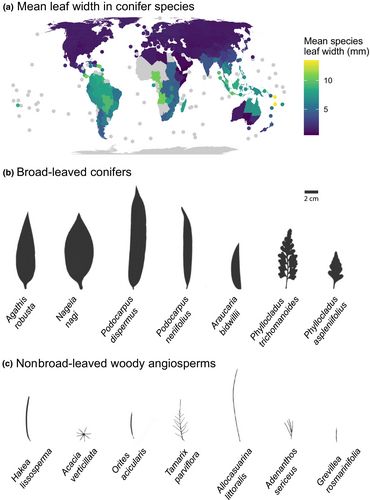
Showing off our figure of global conifer leaf-widths & leaf silhouettes highlighting that conifers can be broad-leaved & angiosperms can be narrow/ needle-leaved! 🍃
Our paper: tinyurl.com/mss2me7v
@newphyt.bsky.social
@vallicrosah.bsky.social @botanykat.bsky.social & Matilda Brown
Our paper: tinyurl.com/mss2me7v
@newphyt.bsky.social
@vallicrosah.bsky.social @botanykat.bsky.social & Matilda Brown
June 6, 2025 at 10:27 AM
Showing off our figure of global conifer leaf-widths & leaf silhouettes highlighting that conifers can be broad-leaved & angiosperms can be narrow/ needle-leaved! 🍃
Our paper: tinyurl.com/mss2me7v
@newphyt.bsky.social
@vallicrosah.bsky.social @botanykat.bsky.social & Matilda Brown
Our paper: tinyurl.com/mss2me7v
@newphyt.bsky.social
@vallicrosah.bsky.social @botanykat.bsky.social & Matilda Brown
Reposted by Katya Isabelle
Do you define trees as either needle- or broad-leaved? Are you doing this correctly? Read our OA paper: Cones & Consequences @newphyt.bsky.social
tinyurl.com/mss2me7v
@vallicrosah.bsky.social @botanykat.bsky.social @creaf.cat @wslresearch.bsky.social @rbgkew.bsky.social @coeplantsuccess.bsky.social
tinyurl.com/mss2me7v
@vallicrosah.bsky.social @botanykat.bsky.social @creaf.cat @wslresearch.bsky.social @rbgkew.bsky.social @coeplantsuccess.bsky.social
Cones and consequences: the false dichotomy of conifers vs broad‐leaves has critical implications for research and modelling
You have to enable JavaScript in your browser's settings in order to use the eReader.
tinyurl.com
June 6, 2025 at 9:26 AM
Do you define trees as either needle- or broad-leaved? Are you doing this correctly? Read our OA paper: Cones & Consequences @newphyt.bsky.social
tinyurl.com/mss2me7v
@vallicrosah.bsky.social @botanykat.bsky.social @creaf.cat @wslresearch.bsky.social @rbgkew.bsky.social @coeplantsuccess.bsky.social
tinyurl.com/mss2me7v
@vallicrosah.bsky.social @botanykat.bsky.social @creaf.cat @wslresearch.bsky.social @rbgkew.bsky.social @coeplantsuccess.bsky.social
Reposted by Katya Isabelle

Happy 2025 from That's What I Call Science!
We kicked off this year with a deep dive into all things TWICS—reflecting on our experiences and brainstorming ideas for 2025.
We can’t wait to bring you more incredible episodes this year!
#TWICS #Tasmania #twics #scicomm #science #STEMM
We kicked off this year with a deep dive into all things TWICS—reflecting on our experiences and brainstorming ideas for 2025.
We can’t wait to bring you more incredible episodes this year!
#TWICS #Tasmania #twics #scicomm #science #STEMM

February 11, 2025 at 8:19 PM
Reposted by Katya Isabelle
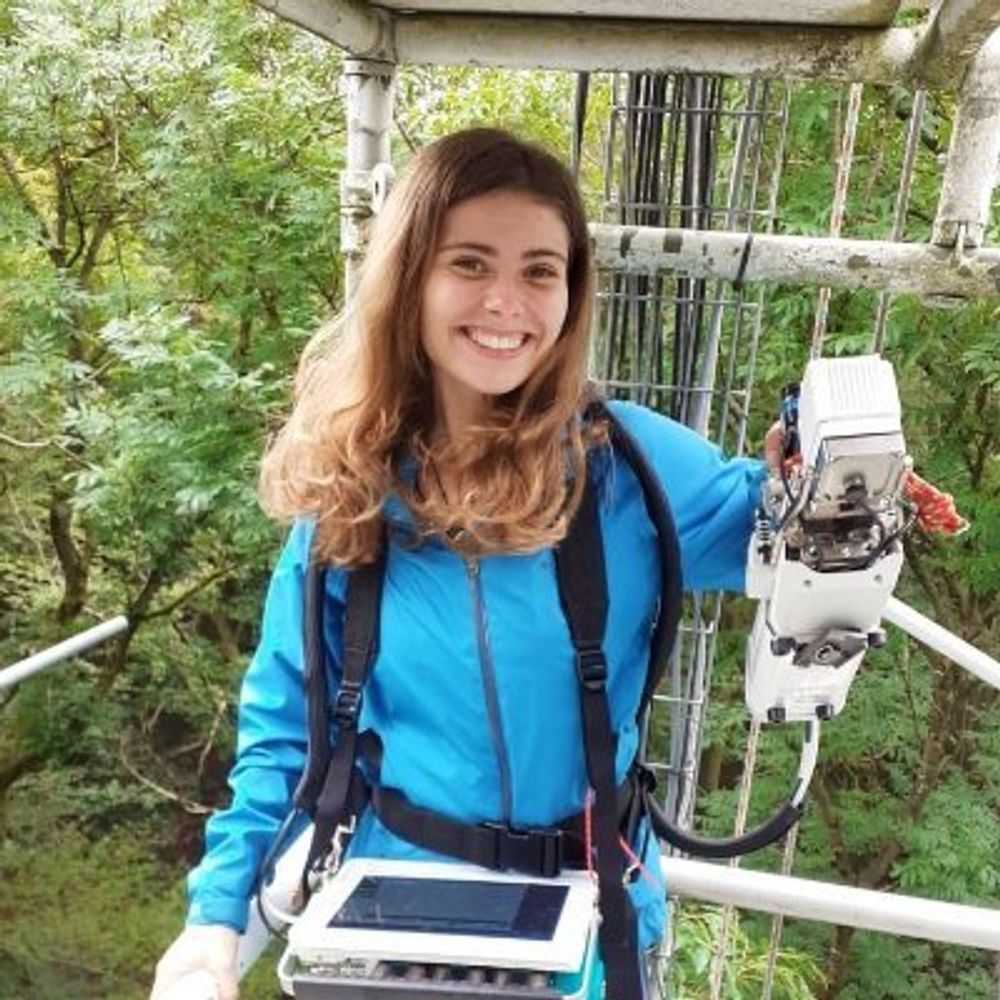
Check out our new article just out in The Conversation highlighting the effects of warming leaves +4°C in tropical trees. 🌿🌡️ theconversation.com/study-shows-...

Study shows hot leaves can’t catch carbon from the air. It’s bad news for rainforests – and Earth
An experiment in the Daintree rainforest found the rate of photosynthesis in leaves warmed by 4°C dropped by an average of 35% compared to non-warmed controls.
theconversation.com
January 15, 2025 at 2:37 AM
Check out our new article just out in The Conversation highlighting the effects of warming leaves +4°C in tropical trees. 🌿🌡️ theconversation.com/study-shows-...
check out these bioluminescent ghost fungi (Omphalotus nidiformis)


December 14, 2024 at 10:10 PM
check out these bioluminescent ghost fungi (Omphalotus nidiformis)
Reposted by Katya Isabelle
Time to introduce myself! Recently, I defended my thesis titled "Patterns and Drivers of Leaf Thermoregulation in Rainforest Trees of the Australian Wet Tropics" where I focused on the role of within-species acclimation and adaptation on leaf temperature. Here’s a little summary of what went on…

December 6, 2024 at 1:01 AM
Time to introduce myself! Recently, I defended my thesis titled "Patterns and Drivers of Leaf Thermoregulation in Rainforest Trees of the Australian Wet Tropics" where I focused on the role of within-species acclimation and adaptation on leaf temperature. Here’s a little summary of what went on…
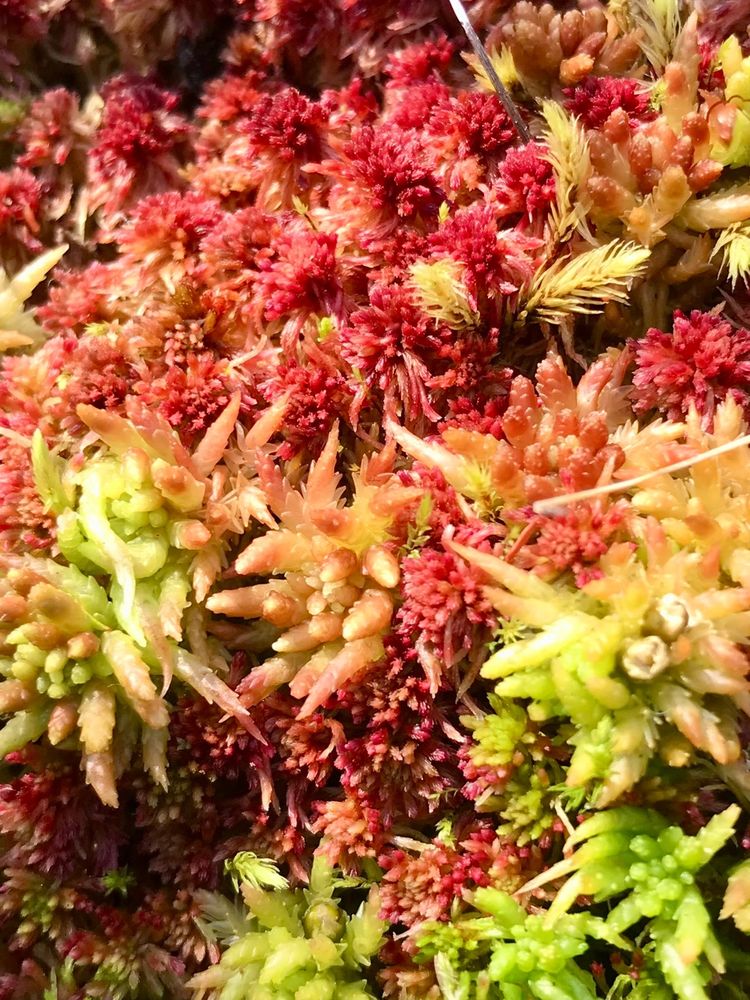
i always stop and admire sphagnum on a walk 💚
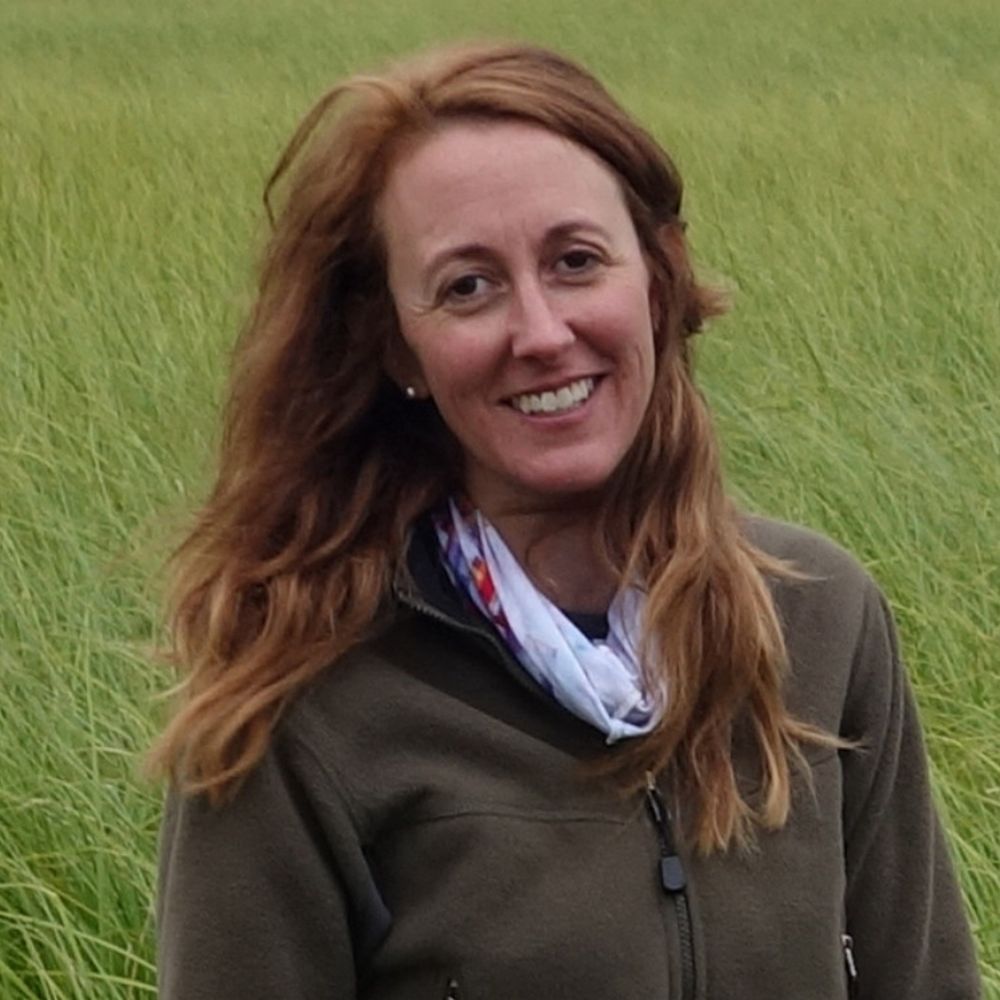
Individual Sphagnum mosses lack structure and are prone to stress and desiccation. As an intertwined community, they fight off massive wildfires and protect the world’s largest soil carbon stock. They also nonchalantly preserve bog bodies.
Learn from Sphagnum. Be the Sphagnum.
Learn from Sphagnum. Be the Sphagnum.
December 1, 2024 at 9:29 PM
i always stop and admire sphagnum on a walk 💚

Reposted by Katya Isabelle
Are you in Lausanne, Switzerland next week? Come and hear me (a scientist) and Maja Renn (a performance artist) discuss Maja’s current piece '[Pheno]plasticity' from scientific & artistic perspectives!!
Wednesday, 4 December 24, 2.45pm – 3.45pm
Salle MED 2 2423 EPFL, Lausanne
Free admission (1/4)
Wednesday, 4 December 24, 2.45pm – 3.45pm
Salle MED 2 2423 EPFL, Lausanne
Free admission (1/4)
November 29, 2024 at 12:24 PM
Are you in Lausanne, Switzerland next week? Come and hear me (a scientist) and Maja Renn (a performance artist) discuss Maja’s current piece '[Pheno]plasticity' from scientific & artistic perspectives!!
Wednesday, 4 December 24, 2.45pm – 3.45pm
Salle MED 2 2423 EPFL, Lausanne
Free admission (1/4)
Wednesday, 4 December 24, 2.45pm – 3.45pm
Salle MED 2 2423 EPFL, Lausanne
Free admission (1/4)
this has to be the prettiest cladogram i've ever seen! #botany #plantscience #phylogeny #sciart #twitterrepost

November 22, 2024 at 2:52 AM
this has to be the prettiest cladogram i've ever seen! #botany #plantscience #phylogeny #sciart #twitterrepost
Reposted by Katya Isabelle
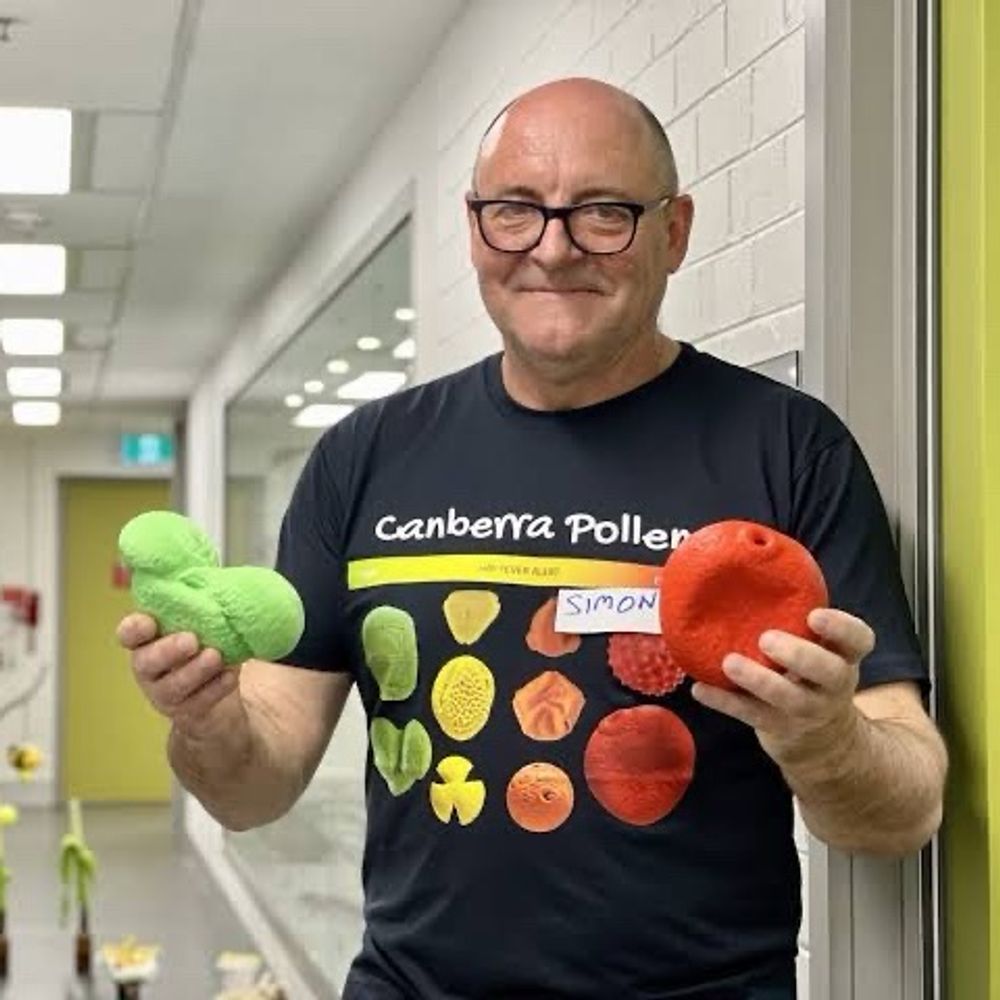
Our new study out in @ScienceAdvances shows human presence in Tasmania at least 41,600 years ago, nearly 2000 years earlier than previously thought, and Aboriginal people burned and used wet forests.
Link: www.science.org/doi/10.1126/...
Link: www.science.org/doi/10.1126/...

Landscape burning facilitated Aboriginal migration into Lutruwita/Tasmania 41,600 years ago
Paleoecological records show that Aboriginal people burned wet forest to first settle in Tasmania 41,600 years ago.
www.science.org
November 17, 2024 at 2:04 AM
Our new study out in @ScienceAdvances shows human presence in Tasmania at least 41,600 years ago, nearly 2000 years earlier than previously thought, and Aboriginal people burned and used wet forests.
Link: www.science.org/doi/10.1126/...
Link: www.science.org/doi/10.1126/...
Hello bsky! My name is Katya, and i am a botany PhD student, wilderness enthusiast, science communicator with @thatssciencetas.bsky.social and an all around plant nerd. Happy to be here 🦋


November 19, 2024 at 5:29 AM
Hello bsky! My name is Katya, and i am a botany PhD student, wilderness enthusiast, science communicator with @thatssciencetas.bsky.social and an all around plant nerd. Happy to be here 🦋