


Botany Chris
@botanychris.bsky.social
Canadian botanist and educator currently exploring the flora and fauna of Australia.
Instagram: instagram.com/Botany_Chris
Instagram: instagram.com/Botany_Chris
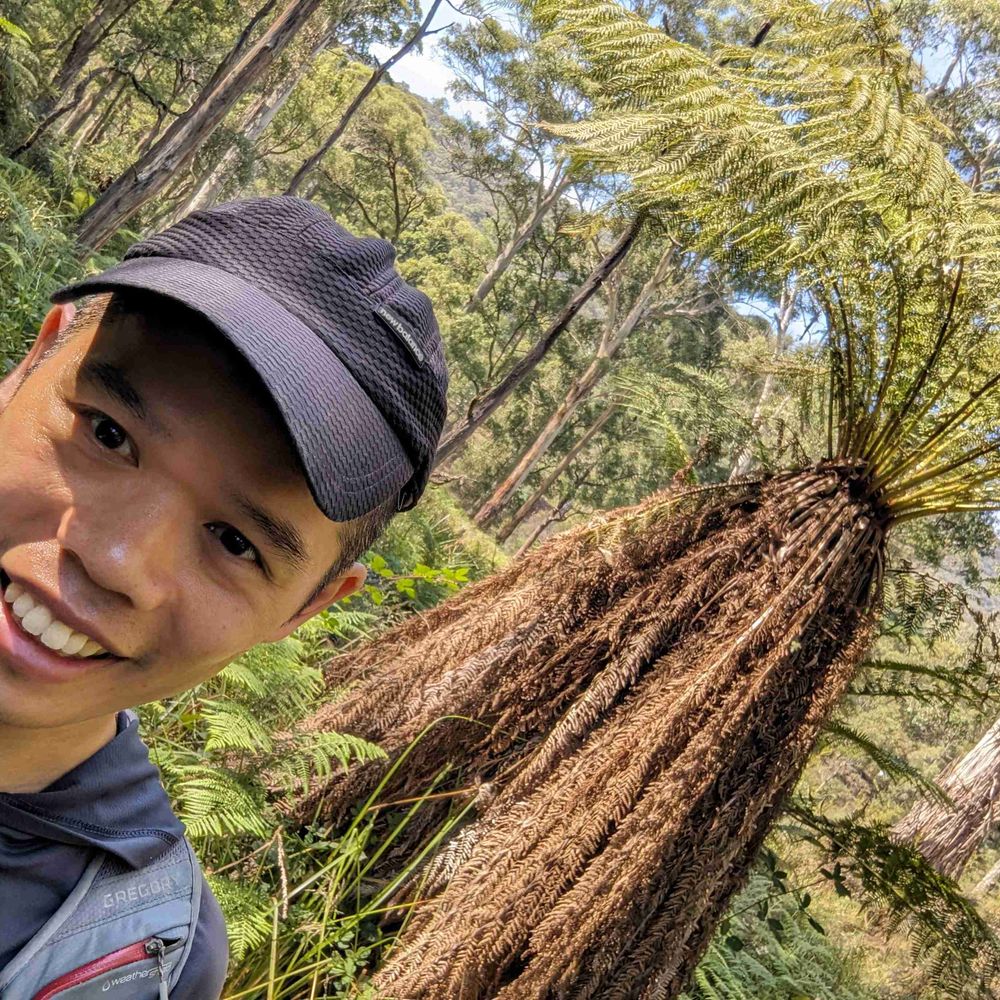
There have been times in-semester when I wished I could undergo clonal propagation, but this wasn't quite what I expected 😅.

July 31, 2025 at 11:27 PM
There have been times in-semester when I wished I could undergo clonal propagation, but this wasn't quite what I expected 😅.
Without the need to photosynthesize to create its own sugars, the hyacinth orchid has lost its green chlorophyll, making it the brilliant pink color common in many parasitic plants.

December 26, 2024 at 9:10 PM
Without the need to photosynthesize to create its own sugars, the hyacinth orchid has lost its green chlorophyll, making it the brilliant pink color common in many parasitic plants.
This plants remains fresh and lively in the summer heat due to mycoheterotrophy, which means the plant obtains its energy and nutrients from an associated fungi, which in turn take energy from decomposing wood.

December 26, 2024 at 9:10 PM
This plants remains fresh and lively in the summer heat due to mycoheterotrophy, which means the plant obtains its energy and nutrients from an associated fungi, which in turn take energy from decomposing wood.
Fellow botanists might find today's Aussie Botany Photo of the Day a bit basic, but I can't help but get a bit excited when this splash of red/pink crosses my gaze. The blotched hyacinth orchid reveals itself in summer as most other plants start to dry up and die back.

December 26, 2024 at 9:10 PM
Fellow botanists might find today's Aussie Botany Photo of the Day a bit basic, but I can't help but get a bit excited when this splash of red/pink crosses my gaze. The blotched hyacinth orchid reveals itself in summer as most other plants start to dry up and die back.
to send their roots into the sand and start growing into a new tree.
I imagine ourselves as mangroves floating through the sea of life. It's not always clear where we'll end up, but I hope that we all find a place to settle where we can grow up to protect and nourish others and the land we live on.
I imagine ourselves as mangroves floating through the sea of life. It's not always clear where we'll end up, but I hope that we all find a place to settle where we can grow up to protect and nourish others and the land we live on.

December 21, 2024 at 5:17 AM
to send their roots into the sand and start growing into a new tree.
I imagine ourselves as mangroves floating through the sea of life. It's not always clear where we'll end up, but I hope that we all find a place to settle where we can grow up to protect and nourish others and the land we live on.
I imagine ourselves as mangroves floating through the sea of life. It's not always clear where we'll end up, but I hope that we all find a place to settle where we can grow up to protect and nourish others and the land we live on.
...future mangroves, while also minimizing shore erosion and protecting Suva city.
Mangroves bear "live young" meaning the seeds germinate into little plants while on the tree. The baby mangroves eventually drop into the ocean and bob along in the salty water until they find just the right spot...
Mangroves bear "live young" meaning the seeds germinate into little plants while on the tree. The baby mangroves eventually drop into the ocean and bob along in the salty water until they find just the right spot...

December 21, 2024 at 5:17 AM
...future mangroves, while also minimizing shore erosion and protecting Suva city.
Mangroves bear "live young" meaning the seeds germinate into little plants while on the tree. The baby mangroves eventually drop into the ocean and bob along in the salty water until they find just the right spot...
Mangroves bear "live young" meaning the seeds germinate into little plants while on the tree. The baby mangroves eventually drop into the ocean and bob along in the salty water until they find just the right spot...
Today's Fiji Botany Photo of the Day is none other than the orange mangrove/dogo (Bruguiera gymnorrhiza), a species that thrives in the silty, low-energy coastline around Suva. These salt tolerant trees grow sturdy trunks and stilt roots that calm wave action, creating a safe haven for...

December 21, 2024 at 5:17 AM
Today's Fiji Botany Photo of the Day is none other than the orange mangrove/dogo (Bruguiera gymnorrhiza), a species that thrives in the silty, low-energy coastline around Suva. These salt tolerant trees grow sturdy trunks and stilt roots that calm wave action, creating a safe haven for...
At Domoika Adventures, I saw the leaves strewn over tin sheets to dry and prepare for making Ibe (Fijian mats). What an incredibly useful plant group!

December 12, 2024 at 1:45 PM
At Domoika Adventures, I saw the leaves strewn over tin sheets to dry and prepare for making Ibe (Fijian mats). What an incredibly useful plant group!
At USP lower campus, fruits strewn about over the grounds. Although I've learnt of no such uses in Fiji, in Samoa some people used the frayed tips as paint brushes.

December 12, 2024 at 1:45 PM
At USP lower campus, fruits strewn about over the grounds. Although I've learnt of no such uses in Fiji, in Samoa some people used the frayed tips as paint brushes.
Throughout Colo-I-Suva many pandanus trees border the creeks along the path.


December 12, 2024 at 1:45 PM
Throughout Colo-I-Suva many pandanus trees border the creeks along the path.
Today is the first native Fijian species for Fiji Botany Photo of the Day #5. There are a few different species of Screwpines/Voivoi/Vadra (Pandanus spp) native to Fiji. With their pineapple-like fruits and long, strappy leaves, it is pretty easy to pick them out from the crowd.


December 12, 2024 at 1:45 PM
Today is the first native Fijian species for Fiji Botany Photo of the Day #5. There are a few different species of Screwpines/Voivoi/Vadra (Pandanus spp) native to Fiji. With their pineapple-like fruits and long, strappy leaves, it is pretty easy to pick them out from the crowd.
They would have been brought here by humans including the Lapita people, Europeans and Indians. Some of these plants would have been beneficial crops, while others are invasive weeds, but all the same, they have displaced much of the native vegetation in Fiji.

December 5, 2024 at 5:31 AM
They would have been brought here by humans including the Lapita people, Europeans and Indians. Some of these plants would have been beneficial crops, while others are invasive weeds, but all the same, they have displaced much of the native vegetation in Fiji.
...this plant was brought to the Pacific Islands for its economic value.
As I traveled from Suva today it was impossible not to notice the lush vegetation and greenery that carpeted the landscape. So full of life, yet the vast majority of these plants are not native to Fiji.
As I traveled from Suva today it was impossible not to notice the lush vegetation and greenery that carpeted the landscape. So full of life, yet the vast majority of these plants are not native to Fiji.

December 5, 2024 at 5:31 AM
...this plant was brought to the Pacific Islands for its economic value.
As I traveled from Suva today it was impossible not to notice the lush vegetation and greenery that carpeted the landscape. So full of life, yet the vast majority of these plants are not native to Fiji.
As I traveled from Suva today it was impossible not to notice the lush vegetation and greenery that carpeted the landscape. So full of life, yet the vast majority of these plants are not native to Fiji.
Today's Fiji Botany Photo of the Day doesn't look like much but the smell will have you planting more. Ylang-Ylang/Mokosoi (Cananga odorata) is a tree with green-yellow flowers that produce essentials oils that are frequently used in beauty products. Originally from Malaysia, Philipines, PNG...

December 5, 2024 at 5:31 AM
Today's Fiji Botany Photo of the Day doesn't look like much but the smell will have you planting more. Ylang-Ylang/Mokosoi (Cananga odorata) is a tree with green-yellow flowers that produce essentials oils that are frequently used in beauty products. Originally from Malaysia, Philipines, PNG...
Originally from Malaysia, Philipines, PNG, this plant was brought to the Pacific Islands for its economic value. As traveled from Suva today it was impossible not to notice the lush vegetation and greenery that carpeted the landscape. So full of life, yet the vast majority of these...

December 5, 2024 at 5:23 AM
Originally from Malaysia, Philipines, PNG, this plant was brought to the Pacific Islands for its economic value. As traveled from Suva today it was impossible not to notice the lush vegetation and greenery that carpeted the landscape. So full of life, yet the vast majority of these...
The abundance of this blue flower in Hattah-Kulkyne NP led me to immediately assume it was an introduced weed. This native plant is actually Bluerod (Stemodia florulenta). Adapted to the floodplain lifestyle, it temporarily shows its face as the flood fed lakes dry up over summer. #botany #australia


November 18, 2024 at 2:52 PM
The abundance of this blue flower in Hattah-Kulkyne NP led me to immediately assume it was an introduced weed. This native plant is actually Bluerod (Stemodia florulenta). Adapted to the floodplain lifestyle, it temporarily shows its face as the flood fed lakes dry up over summer. #botany #australia
Where there's a will, there's a way. Blue bush (Marieana sedifolia) and samphire (Sarcocornia sp.) manage to survive and flower even on the fringes of Australia's salt lakes. #botany


November 17, 2024 at 12:07 AM
Where there's a will, there's a way. Blue bush (Marieana sedifolia) and samphire (Sarcocornia sp.) manage to survive and flower even on the fringes of Australia's salt lakes. #botany