


Ben Travaglini
@ben-travaglini.bsky.social
Beneath their spiny exterior, #urchins are immaculately sculptured.
Here is a composite showing the urchin species Holopneustes purpurascens, both alive and in its skeletal state.
Here is a composite showing the urchin species Holopneustes purpurascens, both alive and in its skeletal state.

June 14, 2025 at 2:36 AM
Beneath their spiny exterior, #urchins are immaculately sculptured.
Here is a composite showing the urchin species Holopneustes purpurascens, both alive and in its skeletal state.
Here is a composite showing the urchin species Holopneustes purpurascens, both alive and in its skeletal state.
Reposted by Ben Travaglini

🌿📍 #MorningtonPeninsula Shire returns for the #GSB2025!
📅 October 24–27, 2025
🔗 Join here
www.inaturalist.org/projects/gre...
Join @ben-travaglini.bsky.social and put wildlife on the world map!
All observations help build data for science, conservation, and education.
#iNaturalist #CitizenScience
📅 October 24–27, 2025
🔗 Join here
www.inaturalist.org/projects/gre...
Join @ben-travaglini.bsky.social and put wildlife on the world map!
All observations help build data for science, conservation, and education.
#iNaturalist #CitizenScience

June 9, 2025 at 4:00 AM
🌿📍 #MorningtonPeninsula Shire returns for the #GSB2025!
📅 October 24–27, 2025
🔗 Join here
www.inaturalist.org/projects/gre...
Join @ben-travaglini.bsky.social and put wildlife on the world map!
All observations help build data for science, conservation, and education.
#iNaturalist #CitizenScience
📅 October 24–27, 2025
🔗 Join here
www.inaturalist.org/projects/gre...
Join @ben-travaglini.bsky.social and put wildlife on the world map!
All observations help build data for science, conservation, and education.
#iNaturalist #CitizenScience
Reposted by Ben Travaglini
The #GSB2025 Banner has been released, looking forward to seeing all your observations this year.
Find your local project here,
inaturalist.org/projects/gre...
or organise your own just get in contact via our socials or email. #inaturalist #citizenscience #naturelovers
Find your local project here,
inaturalist.org/projects/gre...
or organise your own just get in contact via our socials or email. #inaturalist #citizenscience #naturelovers

May 31, 2025 at 2:43 AM
The #GSB2025 Banner has been released, looking forward to seeing all your observations this year.
Find your local project here,
inaturalist.org/projects/gre...
or organise your own just get in contact via our socials or email. #inaturalist #citizenscience #naturelovers
Find your local project here,
inaturalist.org/projects/gre...
or organise your own just get in contact via our socials or email. #inaturalist #citizenscience #naturelovers
I'll never tire of photographing native bees. Check out this overzealous sweat bee (Lasioglossum sp.).
From Mount Martha. Victoria, Australia.
From Mount Martha. Victoria, Australia.

May 23, 2025 at 11:45 PM
I'll never tire of photographing native bees. Check out this overzealous sweat bee (Lasioglossum sp.).
From Mount Martha. Victoria, Australia.
From Mount Martha. Victoria, Australia.
Reposted by Ben Travaglini

Before / after the bloom at Edithburgh jetty.
The impacts of SA's Harmful Algal Bloom have so far, only been recorded on our shorelines. But underwater, the full effects, remain unknown.
Underwater monitoring is essential to fully understand what’s happening to our marine ecosystems.
The impacts of SA's Harmful Algal Bloom have so far, only been recorded on our shorelines. But underwater, the full effects, remain unknown.
Underwater monitoring is essential to fully understand what’s happening to our marine ecosystems.
May 22, 2025 at 2:59 AM
Before / after the bloom at Edithburgh jetty.
The impacts of SA's Harmful Algal Bloom have so far, only been recorded on our shorelines. But underwater, the full effects, remain unknown.
Underwater monitoring is essential to fully understand what’s happening to our marine ecosystems.
The impacts of SA's Harmful Algal Bloom have so far, only been recorded on our shorelines. But underwater, the full effects, remain unknown.
Underwater monitoring is essential to fully understand what’s happening to our marine ecosystems.
Reposted by Ben Travaglini

propaganda we're not falling for:
- there's no nature in cities/urban areas
- we already know everything about plants & animals
- nature photography requires expensive camera equipment
- you need a degree to contribute to science
- you need to travel far to see interesting species
- there's no nature in cities/urban areas
- we already know everything about plants & animals
- nature photography requires expensive camera equipment
- you need a degree to contribute to science
- you need to travel far to see interesting species
May 21, 2025 at 10:48 PM
propaganda we're not falling for:
- there's no nature in cities/urban areas
- we already know everything about plants & animals
- nature photography requires expensive camera equipment
- you need a degree to contribute to science
- you need to travel far to see interesting species
- there's no nature in cities/urban areas
- we already know everything about plants & animals
- nature photography requires expensive camera equipment
- you need a degree to contribute to science
- you need to travel far to see interesting species
A giant among its microscopic congeners, this dragon springtail (Womersleymeria) is no longer than 5 mm.
#Springtails represent an ancient lineage of #hexapods separate from insects. They are named for their furcula – a tail-like appendage that helps them 'jump' away from predators.
#Springtails represent an ancient lineage of #hexapods separate from insects. They are named for their furcula – a tail-like appendage that helps them 'jump' away from predators.

May 22, 2025 at 2:48 AM
A giant among its microscopic congeners, this dragon springtail (Womersleymeria) is no longer than 5 mm.
#Springtails represent an ancient lineage of #hexapods separate from insects. They are named for their furcula – a tail-like appendage that helps them 'jump' away from predators.
#Springtails represent an ancient lineage of #hexapods separate from insects. They are named for their furcula – a tail-like appendage that helps them 'jump' away from predators.
Tucked away amongst the rolling hills of the inner Mornington Peninsula is a special place – Endeavour Fern Gully. It is one of the few remnant rainforests in the region, boasting many undescribed species.
This ~5 mm-long armadillid #isopod is one such example.
This ~5 mm-long armadillid #isopod is one such example.

May 20, 2025 at 11:19 PM
Tucked away amongst the rolling hills of the inner Mornington Peninsula is a special place – Endeavour Fern Gully. It is one of the few remnant rainforests in the region, boasting many undescribed species.
This ~5 mm-long armadillid #isopod is one such example.
This ~5 mm-long armadillid #isopod is one such example.
Dashing between reeds, this golden-headed #cisticola immediately struck me as a perfect photographic subject. Once they struck this pose, positioned perfectly in the harsh sunlight, I knew my opportunity had come.

April 25, 2025 at 11:26 AM
Dashing between reeds, this golden-headed #cisticola immediately struck me as a perfect photographic subject. Once they struck this pose, positioned perfectly in the harsh sunlight, I knew my opportunity had come.
This is no ant. It's an ant-mimicking jumping #spider (Myrmarachne sp.)
There is a vast diversity of these spiders, each masquerading as a particular group of ants – this one resembling those of the genus Camponotus.
From Mount Martha. Victoria, #Australia.
There is a vast diversity of these spiders, each masquerading as a particular group of ants – this one resembling those of the genus Camponotus.
From Mount Martha. Victoria, #Australia.

April 15, 2025 at 8:30 AM
This is no ant. It's an ant-mimicking jumping #spider (Myrmarachne sp.)
There is a vast diversity of these spiders, each masquerading as a particular group of ants – this one resembling those of the genus Camponotus.
From Mount Martha. Victoria, #Australia.
There is a vast diversity of these spiders, each masquerading as a particular group of ants – this one resembling those of the genus Camponotus.
From Mount Martha. Victoria, #Australia.
It is humanly impossible to react quickly enough to photograph native bees just as they take off. This miracle shot of a sweat #bee (Lasioglossum sp.) in flight was a total accident.

April 11, 2025 at 2:52 AM
It is humanly impossible to react quickly enough to photograph native bees just as they take off. This miracle shot of a sweat #bee (Lasioglossum sp.) in flight was a total accident.

April 9, 2025 at 12:28 AM
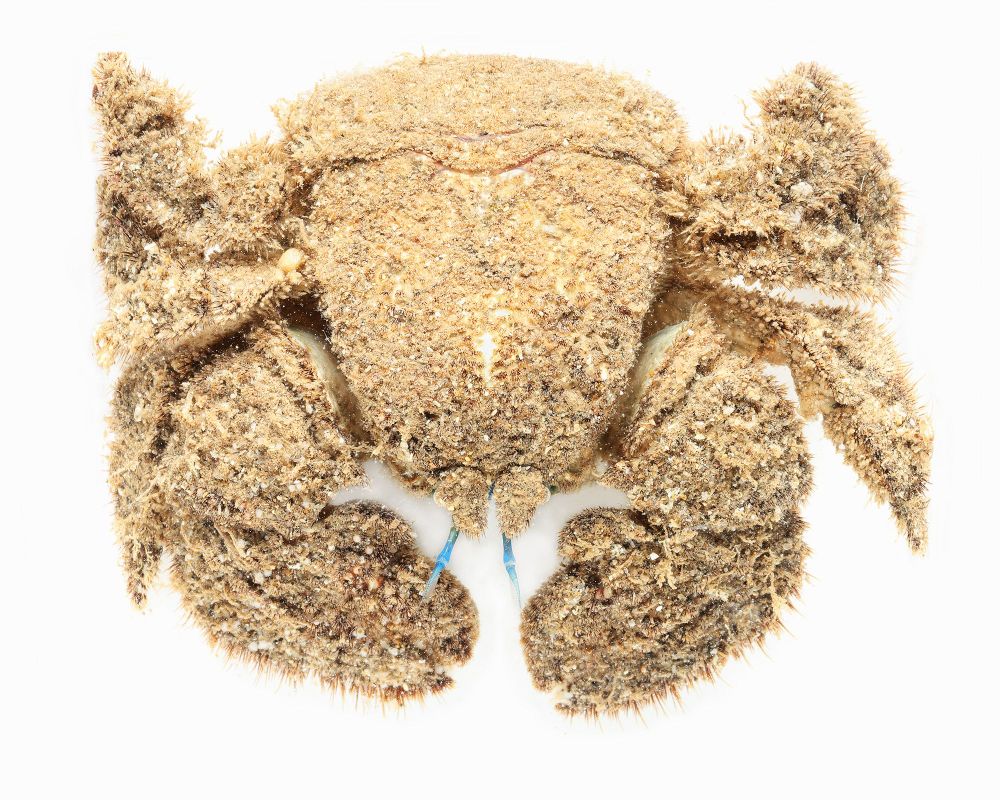
#Carcinisation is an evolutionary phenomenon in which many unrelated #crustaceans have evolved a crab-like appearance independently. In other words, crustaceans really like being crabs.
This is Lomis hirta, more closely related to squat lobsters than to 'true crabs'.
This is Lomis hirta, more closely related to squat lobsters than to 'true crabs'.
April 4, 2025 at 5:32 AM
#Carcinisation is an evolutionary phenomenon in which many unrelated #crustaceans have evolved a crab-like appearance independently. In other words, crustaceans really like being crabs.
This is Lomis hirta, more closely related to squat lobsters than to 'true crabs'.
This is Lomis hirta, more closely related to squat lobsters than to 'true crabs'.
Reposted by Ben Travaglini
New field guide incoming: Sydney Harbour Fishes
2,500+ colour photographs
>700 species
>300 photographers
almost all images from Australasian Fishes (www.inaturalist.org/projects/aus...) on @inaturalist.bsky.social
May release, now accepting pre-orders at sydneyharbourfishes.company.site
2,500+ colour photographs
>700 species
>300 photographers
almost all images from Australasian Fishes (www.inaturalist.org/projects/aus...) on @inaturalist.bsky.social
May release, now accepting pre-orders at sydneyharbourfishes.company.site
Sydney Harbour Fishes
sydneyharbourfishes.company.site
April 3, 2025 at 7:32 AM
New field guide incoming: Sydney Harbour Fishes
2,500+ colour photographs
>700 species
>300 photographers
almost all images from Australasian Fishes (www.inaturalist.org/projects/aus...) on @inaturalist.bsky.social
May release, now accepting pre-orders at sydneyharbourfishes.company.site
2,500+ colour photographs
>700 species
>300 photographers
almost all images from Australasian Fishes (www.inaturalist.org/projects/aus...) on @inaturalist.bsky.social
May release, now accepting pre-orders at sydneyharbourfishes.company.site
The spotted #pardalote, Pardalotus punctatus. Tiny yet spectacular.
From Hastings. Victoria, #Australia.
From Hastings. Victoria, #Australia.

March 30, 2025 at 2:43 AM
The spotted #pardalote, Pardalotus punctatus. Tiny yet spectacular.
From Hastings. Victoria, #Australia.
From Hastings. Victoria, #Australia.
Reposted by Ben Travaglini

MSA is now part of BSKY!

March 24, 2025 at 5:45 AM
MSA is now part of BSKY!
Reposted by Ben Travaglini
T is for Tonna in today’s #AtoZ
Look at this lovely big Tun with its wavy egg mass like the banner behind a skywriting plane. What a gentle giant.
I see. Holothurians, you say. Sea cucumbers can’t win. (1/10)
Pics: © mirtaiolo © Marek Koszorek CC BY-NC
Look at this lovely big Tun with its wavy egg mass like the banner behind a skywriting plane. What a gentle giant.
I see. Holothurians, you say. Sea cucumbers can’t win. (1/10)
Pics: © mirtaiolo © Marek Koszorek CC BY-NC


March 22, 2025 at 5:25 AM
T is for Tonna in today’s #AtoZ
Look at this lovely big Tun with its wavy egg mass like the banner behind a skywriting plane. What a gentle giant.
I see. Holothurians, you say. Sea cucumbers can’t win. (1/10)
Pics: © mirtaiolo © Marek Koszorek CC BY-NC
Look at this lovely big Tun with its wavy egg mass like the banner behind a skywriting plane. What a gentle giant.
I see. Holothurians, you say. Sea cucumbers can’t win. (1/10)
Pics: © mirtaiolo © Marek Koszorek CC BY-NC

March 19, 2025 at 5:10 AM

March 18, 2025 at 3:20 AM
With its speckled patterning, the beach #isopod (Actaecia thomsoni) blends seamlessly into its coastal habitat.
Your best chance to spot them is at night, when they emerge to hunt for other #invertebrates.
From Balnarring Beach. Victoria, #Australia.
Your best chance to spot them is at night, when they emerge to hunt for other #invertebrates.
From Balnarring Beach. Victoria, #Australia.

March 17, 2025 at 12:19 AM
With its speckled patterning, the beach #isopod (Actaecia thomsoni) blends seamlessly into its coastal habitat.
Your best chance to spot them is at night, when they emerge to hunt for other #invertebrates.
From Balnarring Beach. Victoria, #Australia.
Your best chance to spot them is at night, when they emerge to hunt for other #invertebrates.
From Balnarring Beach. Victoria, #Australia.


March 15, 2025 at 9:20 PM

March 14, 2025 at 9:16 AM

March 13, 2025 at 1:54 AM
Reposted by Ben Travaglini

A beautiful bubble-snail with stunning speckle galaxies in its skin. Help me ID it!
About 1cm long in tidepool, Sydney, Australia. Have it down to the Haminoeidae family so far, but would love to get it to species if possible! 🧪🦑🐙 🐌 Here's the iNat for it too:
www.inaturalist.org/observations...
About 1cm long in tidepool, Sydney, Australia. Have it down to the Haminoeidae family so far, but would love to get it to species if possible! 🧪🦑🐙 🐌 Here's the iNat for it too:
www.inaturalist.org/observations...

March 11, 2025 at 11:30 PM
A beautiful bubble-snail with stunning speckle galaxies in its skin. Help me ID it!
About 1cm long in tidepool, Sydney, Australia. Have it down to the Haminoeidae family so far, but would love to get it to species if possible! 🧪🦑🐙 🐌 Here's the iNat for it too:
www.inaturalist.org/observations...
About 1cm long in tidepool, Sydney, Australia. Have it down to the Haminoeidae family so far, but would love to get it to species if possible! 🧪🦑🐙 🐌 Here's the iNat for it too:
www.inaturalist.org/observations...
When sea urchins die, they leave behind their 'test', which is essentially a skeleton.
#Urchins and their tests come in many forms. Here, a selection of three urchins – (L-R) Microcyphus zigzag, Goniocidaris tubaria, and Protenaster australis – demonstrate this incredible variety.
#Urchins and their tests come in many forms. Here, a selection of three urchins – (L-R) Microcyphus zigzag, Goniocidaris tubaria, and Protenaster australis – demonstrate this incredible variety.

March 11, 2025 at 12:12 AM
When sea urchins die, they leave behind their 'test', which is essentially a skeleton.
#Urchins and their tests come in many forms. Here, a selection of three urchins – (L-R) Microcyphus zigzag, Goniocidaris tubaria, and Protenaster australis – demonstrate this incredible variety.
#Urchins and their tests come in many forms. Here, a selection of three urchins – (L-R) Microcyphus zigzag, Goniocidaris tubaria, and Protenaster australis – demonstrate this incredible variety.