


RP Pornmongkolsuk
@arepee.bsky.social
phd candidate in genetics at duke studying human adaptation to vivax malaria.
i love scicomm, movies, and cats.
my links: linktr.ee/arepee
i love scicomm, movies, and cats.
my links: linktr.ee/arepee
My fav glowing review I got from the class:
“Goated lesson. Very engaging and helpful, like the flexibility, energy, and analogy explanations. If u do make this content on YouTube, it would be goated educational content.”
“Goated lesson. Very engaging and helpful, like the flexibility, energy, and analogy explanations. If u do make this content on YouTube, it would be goated educational content.”
January 31, 2025 at 3:12 AM
My fav glowing review I got from the class:
“Goated lesson. Very engaging and helpful, like the flexibility, energy, and analogy explanations. If u do make this content on YouTube, it would be goated educational content.”
“Goated lesson. Very engaging and helpful, like the flexibility, energy, and analogy explanations. If u do make this content on YouTube, it would be goated educational content.”
Beyond these insights, I had the chance to connect with so many amazing attendees. I can’t wait to see the fantastic writing projects you all create—keep me posted! 🚀✍️
Check out the 3 lessons I learned from Day 1 ComSciCon here: bsky.app/profile/arep...
Check out the 3 lessons I learned from Day 1 ComSciCon here: bsky.app/profile/arep...
#ComSciCom-Triangle2025 Day 1 ✅
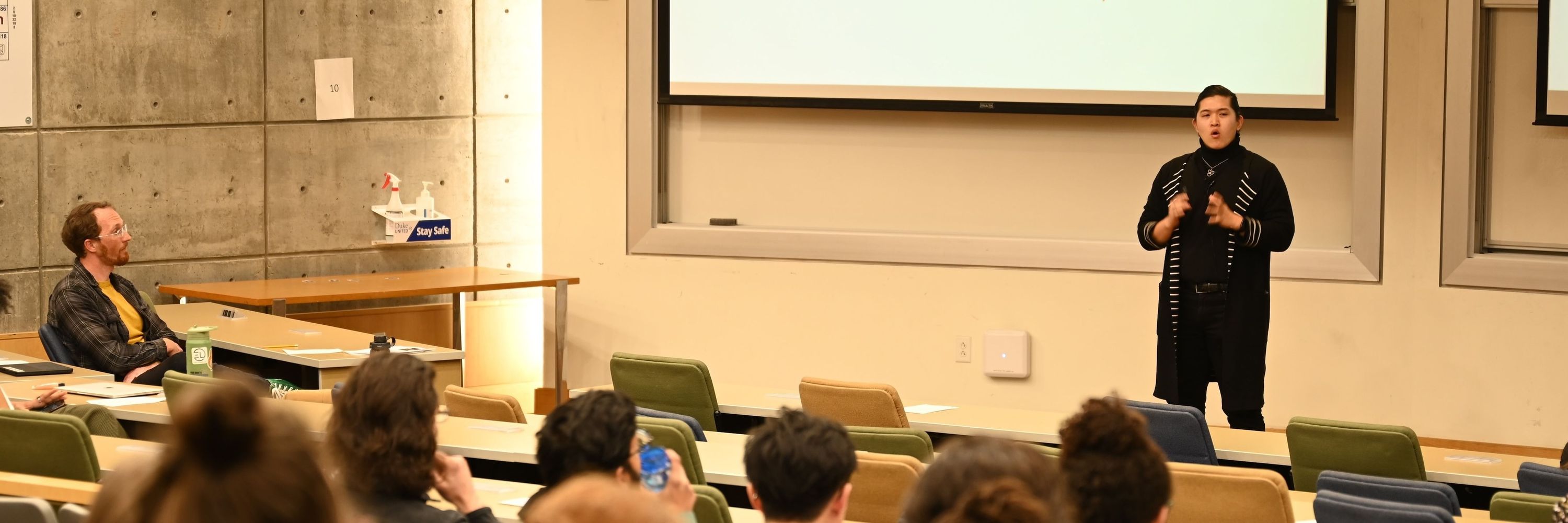
I just attended my first ComSciCon! I had a lot of fun and learned a ton from the speakers and panelists today!
Learn more about the workshop: www.comscicon.org/comscicon-tr...
Here are my top 3 favorite takeaways from today: 🧵
#scicomm #duke #northcarolina
I just attended my first ComSciCon! I had a lot of fun and learned a ton from the speakers and panelists today!
Learn more about the workshop: www.comscicon.org/comscicon-tr...
Here are my top 3 favorite takeaways from today: 🧵
#scicomm #duke #northcarolina

ComSciCon-Triangle 2025
We are excited to announce the 2025 rendition of ComSciCon-Triangle! This year represents our 10 year anniversary, so get excited for an awesome workshop. See the pages to the left for more details.
www.comscicon.org
January 29, 2025 at 4:03 AM
Beyond these insights, I had the chance to connect with so many amazing attendees. I can’t wait to see the fantastic writing projects you all create—keep me posted! 🚀✍️
Check out the 3 lessons I learned from Day 1 ComSciCon here: bsky.app/profile/arep...
Check out the 3 lessons I learned from Day 1 ComSciCon here: bsky.app/profile/arep...
It’s essential to align your writing with the reading level of your intended audience or publisher. You can check readability stats in Word using this guide: support.microsoft.com/en-us/office...
Get your document's readability and level statistics - Microsoft SupportYour Privacy Choices Opt-Out Icon
See the reading level and readability scores for documents according to the Flesch-Kincaid Grade Level and Flesch Reading Ease tests.
support.microsoft.com
January 29, 2025 at 4:03 AM
It’s essential to align your writing with the reading level of your intended audience or publisher. You can check readability stats in Word using this guide: support.microsoft.com/en-us/office...
3. Be mindful of reading level 🤓
I learned that Microsoft Word has a built-in tool that assesses the readability of your writing. One key metric is the Flesch-Kincaid Grade Level, which estimates how accessible your text is based on the U.S. school system.
I learned that Microsoft Word has a built-in tool that assesses the readability of your writing. One key metric is the Flesch-Kincaid Grade Level, which estimates how accessible your text is based on the U.S. school system.
January 29, 2025 at 4:03 AM
3. Be mindful of reading level 🤓
I learned that Microsoft Word has a built-in tool that assesses the readability of your writing. One key metric is the Flesch-Kincaid Grade Level, which estimates how accessible your text is based on the U.S. school system.
I learned that Microsoft Word has a built-in tool that assesses the readability of your writing. One key metric is the Flesch-Kincaid Grade Level, which estimates how accessible your text is based on the U.S. school system.
Attending ComSciCon is valuable, but what will stand out to hiring managers is a published piece born from this workshop—which I fully intend to create.
January 29, 2025 at 4:03 AM
Attending ComSciCon is valuable, but what will stand out to hiring managers is a published piece born from this workshop—which I fully intend to create.
2. Have tangible work to showcase 📚
“You can talk about your skills all day, but you need to show your work.”
This statement really resonated with me. As I apply for science communication internships and fellowships, I realize my portfolio is still sparse.
“You can talk about your skills all day, but you need to show your work.”
This statement really resonated with me. As I apply for science communication internships and fellowships, I realize my portfolio is still sparse.
January 29, 2025 at 4:03 AM
2. Have tangible work to showcase 📚
“You can talk about your skills all day, but you need to show your work.”
This statement really resonated with me. As I apply for science communication internships and fellowships, I realize my portfolio is still sparse.
“You can talk about your skills all day, but you need to show your work.”
This statement really resonated with me. As I apply for science communication internships and fellowships, I realize my portfolio is still sparse.
The earlier steps in this process can also tell fascinating stories. For example, sharing how you connected seemingly unrelated ideas for the first time or how you designed an experiment to test an observation can be just as compelling as the final results.
January 29, 2025 at 4:03 AM
The earlier steps in this process can also tell fascinating stories. For example, sharing how you connected seemingly unrelated ideas for the first time or how you designed an experiment to test an observation can be just as compelling as the final results.
However, as scientists, we engage with the entire process: observe → hypothesize → experiment → analyze → interpret.
January 29, 2025 at 4:03 AM
However, as scientists, we engage with the entire process: observe → hypothesize → experiment → analyze → interpret.
1. Science communication isn’t just about interpreting results 🔬
We often think of science communication as explaining the interpretation of scientific findings—like how understanding a cellular mechanism might lead to a cure.
We often think of science communication as explaining the interpretation of scientific findings—like how understanding a cellular mechanism might lead to a cure.
January 29, 2025 at 4:03 AM
1. Science communication isn’t just about interpreting results 🔬
We often think of science communication as explaining the interpretation of scientific findings—like how understanding a cellular mechanism might lead to a cure.
We often think of science communication as explaining the interpretation of scientific findings—like how understanding a cellular mechanism might lead to a cure.
Thank you so much to the organizers, speakers, and panelists for the fun and informative workshop today. And it was only day 1! I can not wait for next week!
January 20, 2025 at 2:12 AM
Thank you so much to the organizers, speakers, and panelists for the fun and informative workshop today. And it was only day 1! I can not wait for next week!
I also got to hear cool stories about the NC Museum of Natural Sciences, examined how scientists vs teachers selected visualizations to talk about climate change, and connected with other aspiring scicommers in the area.
January 20, 2025 at 2:12 AM
I also got to hear cool stories about the NC Museum of Natural Sciences, examined how scientists vs teachers selected visualizations to talk about climate change, and connected with other aspiring scicommers in the area.
3) Make Your Audience Feel Smart 🧠
Lead the conversation in a way that allows the audience to arrive at the same conclusion just before you get to the conclusion yourself. This way, you are giving the reader a compliment and making them feel smart!
Lead the conversation in a way that allows the audience to arrive at the same conclusion just before you get to the conclusion yourself. This way, you are giving the reader a compliment and making them feel smart!
January 20, 2025 at 2:12 AM
3) Make Your Audience Feel Smart 🧠
Lead the conversation in a way that allows the audience to arrive at the same conclusion just before you get to the conclusion yourself. This way, you are giving the reader a compliment and making them feel smart!
Lead the conversation in a way that allows the audience to arrive at the same conclusion just before you get to the conclusion yourself. This way, you are giving the reader a compliment and making them feel smart!
Here's article structure that readers expect:
* Lede (aka Lead): Your hook. Start in the middle like an action movie!
* Give the background
* What they found (or what you found if it is your research)
* How it works
* Why it matters
* Conclusion
* Lede (aka Lead): Your hook. Start in the middle like an action movie!
* Give the background
* What they found (or what you found if it is your research)
* How it works
* Why it matters
* Conclusion
January 20, 2025 at 2:12 AM
Here's article structure that readers expect:
* Lede (aka Lead): Your hook. Start in the middle like an action movie!
* Give the background
* What they found (or what you found if it is your research)
* How it works
* Why it matters
* Conclusion
* Lede (aka Lead): Your hook. Start in the middle like an action movie!
* Give the background
* What they found (or what you found if it is your research)
* How it works
* Why it matters
* Conclusion
2) Structure Your Article 📝
We humans look for patterns and predictability in everything. So, when we read an article, we also look for certain structure. A well-composed narrative is more likely to be remembered!
We humans look for patterns and predictability in everything. So, when we read an article, we also look for certain structure. A well-composed narrative is more likely to be remembered!
January 20, 2025 at 2:12 AM
2) Structure Your Article 📝
We humans look for patterns and predictability in everything. So, when we read an article, we also look for certain structure. A well-composed narrative is more likely to be remembered!
We humans look for patterns and predictability in everything. So, when we read an article, we also look for certain structure. A well-composed narrative is more likely to be remembered!
Sometimes it is less about what the author thinks is best, but what captures the audience's interest the most. How will your content provide values to their lives? How can you help them understand the world around them better?
January 20, 2025 at 2:12 AM
Sometimes it is less about what the author thinks is best, but what captures the audience's interest the most. How will your content provide values to their lives? How can you help them understand the world around them better?
1) Know Thy Audience 👀
"Unless you are putting up a billboard in Times Square, your audience is not 'the general public.'" Tailor material differently depending on each audience in each setting.
"Unless you are putting up a billboard in Times Square, your audience is not 'the general public.'" Tailor material differently depending on each audience in each setting.
January 20, 2025 at 2:12 AM
1) Know Thy Audience 👀
"Unless you are putting up a billboard in Times Square, your audience is not 'the general public.'" Tailor material differently depending on each audience in each setting.
"Unless you are putting up a billboard in Times Square, your audience is not 'the general public.'" Tailor material differently depending on each audience in each setting.