




Aprajita Verma
@aprajitaverma.bsky.social
Astrophysicist: galaxies at all redshifts, high-z universe, gravitational lenses (@Spacewarps), citizen science, telescopes & more
Reposted by Aprajita Verma

With today’s #Q1Release, we get a preview of #ESAEuclid’s three Deep Fields: North, South and Fornax. 🤩
The location of the Deep Fields can be seen as the yellow patches on this all-sky view of ESA Gaia’s star map from its second data release in 2018, and ESA Planck’s dust map from 2014. (1/3)
The location of the Deep Fields can be seen as the yellow patches on this all-sky view of ESA Gaia’s star map from its second data release in 2018, and ESA Planck’s dust map from 2014. (1/3)


March 19, 2025 at 11:00 AM
With today’s #Q1Release, we get a preview of #ESAEuclid’s three Deep Fields: North, South and Fornax. 🤩
The location of the Deep Fields can be seen as the yellow patches on this all-sky view of ESA Gaia’s star map from its second data release in 2018, and ESA Planck’s dust map from 2014. (1/3)
The location of the Deep Fields can be seen as the yellow patches on this all-sky view of ESA Gaia’s star map from its second data release in 2018, and ESA Planck’s dust map from 2014. (1/3)
Check out this thread from @eucliduk.bsky.social - nice summary about the Euclid Quick-1 data release #Q1release
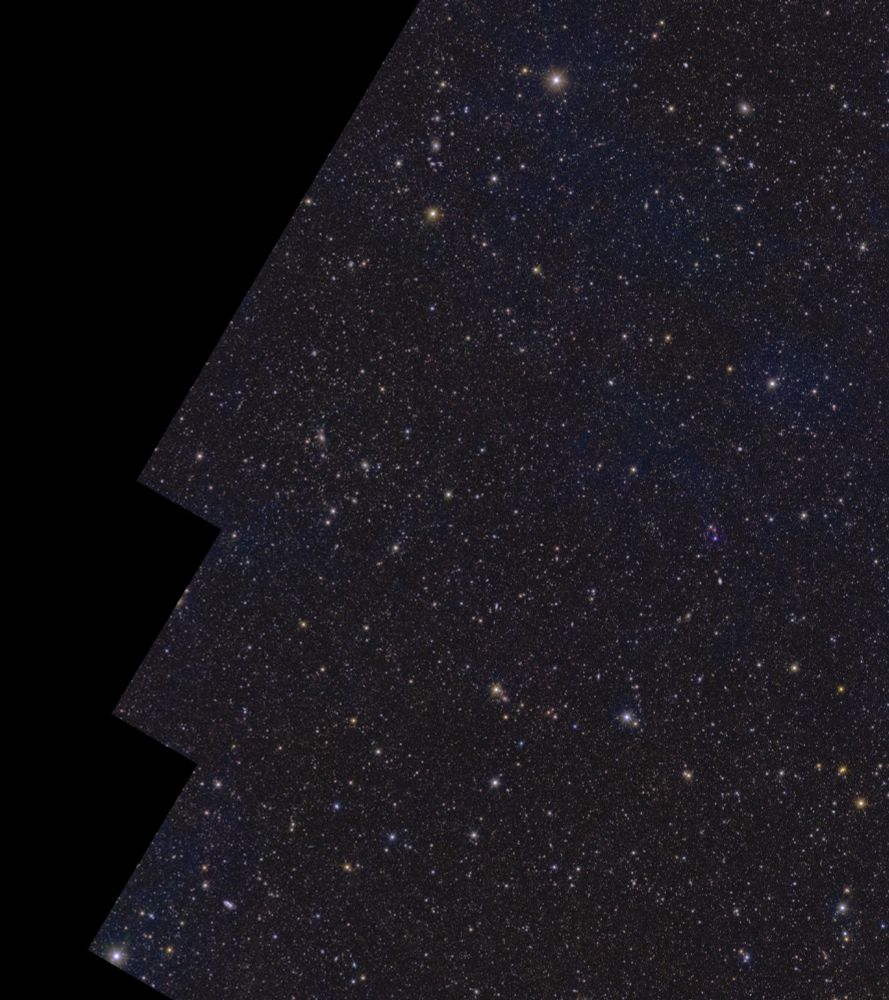
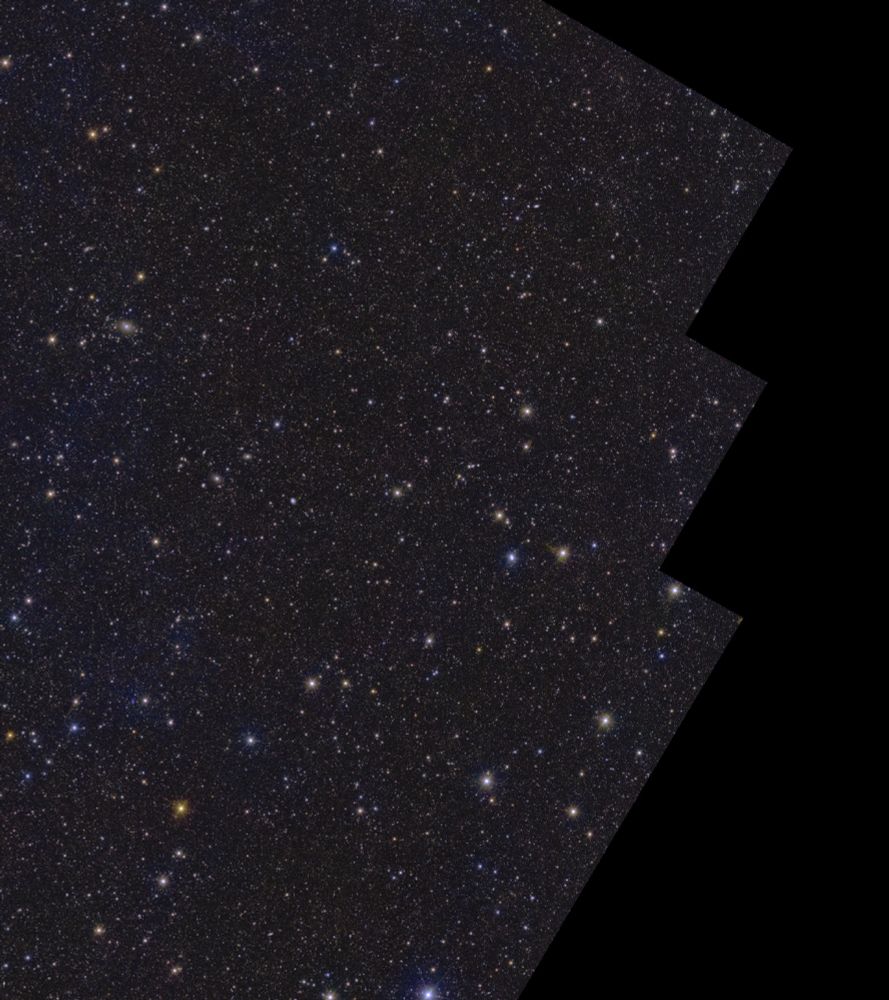
#ESAEuclid reveals its #Q1release data of three deep fields. In this image is a preview of Deep Field North.
Just to reiterate…this is Just. A. Preview.
But, in an area of sky equivalent to holding up an apple at arm’s length, Euclid has already seen more than 10 million galaxies! 😍 (1/4)
Just to reiterate…this is Just. A. Preview.
But, in an area of sky equivalent to holding up an apple at arm’s length, Euclid has already seen more than 10 million galaxies! 😍 (1/4)
March 19, 2025 at 12:37 PM
Check out this thread from @eucliduk.bsky.social - nice summary about the Euclid Quick-1 data release #Q1release
Reposted by Aprajita Verma
Time for a close up! 📸
Here we zoom into #ESAEuclid ‘s Deep Field North and bump into the beautiful Cat’s Eye Nebula! 😻
(1/3)
Here we zoom into #ESAEuclid ‘s Deep Field North and bump into the beautiful Cat’s Eye Nebula! 😻
(1/3)

March 19, 2025 at 11:36 AM
Time for a close up! 📸
Here we zoom into #ESAEuclid ‘s Deep Field North and bump into the beautiful Cat’s Eye Nebula! 😻
(1/3)
Here we zoom into #ESAEuclid ‘s Deep Field North and bump into the beautiful Cat’s Eye Nebula! 😻
(1/3)
An amazing array of first results from #ESAEuclid!! Some of the studies on Galaxy Morphology and Gravitational Lenses also include incredible work from thousands of volunteers through @zooniverse.bsky.social , @galaxyzoo.org and
Space Warps!
Space Warps!

The mysteries of the dark universe are set to be revealed, thanks to cutting-edge UK science. 🌌🔭
New data from @esa.int's #Euclid mission includes details of galaxies experiencing strong gravitational lensing, helping scientists identify where dark matter is located.🔎
👉 gov.uk/government/n...
New data from @esa.int's #Euclid mission includes details of galaxies experiencing strong gravitational lensing, helping scientists identify where dark matter is located.🔎
👉 gov.uk/government/n...
March 19, 2025 at 11:54 AM
An amazing array of first results from #ESAEuclid!! Some of the studies on Galaxy Morphology and Gravitational Lenses also include incredible work from thousands of volunteers through @zooniverse.bsky.social , @galaxyzoo.org and
Space Warps!
Space Warps!
The world's largest digital camera is installed at the NSF-DoE Vera C. Rubin Observatory! What a milestone, congratulations to all the team!!
Lights, camera, action!
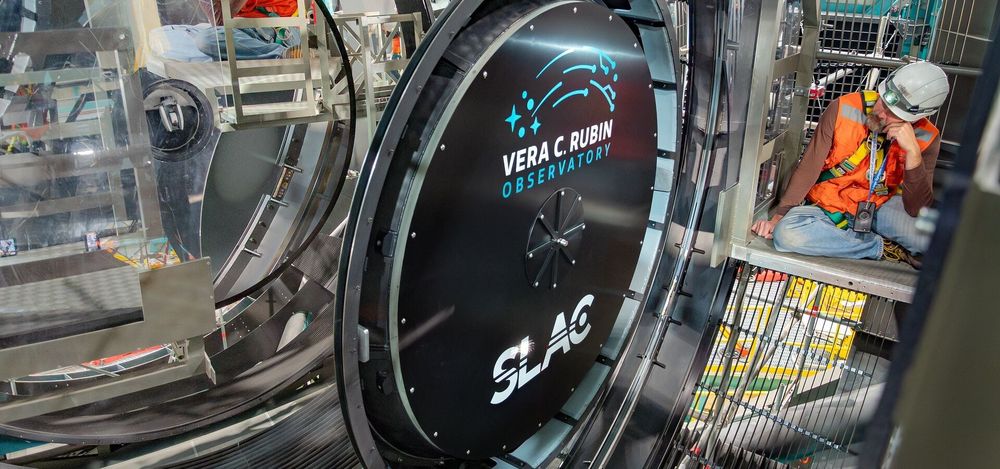
The world's largest digital camera has been installed at NSF–DOE Rubin Observatory! 🤩
The LSST Camera was the final major component of the observatory. With it in place, Rubin officially enters its final phase of testing!🔭
🔗: rubinobservatory.org/news/lsst-camera-installed
The world's largest digital camera has been installed at NSF–DOE Rubin Observatory! 🤩
The LSST Camera was the final major component of the observatory. With it in place, Rubin officially enters its final phase of testing!🔭
🔗: rubinobservatory.org/news/lsst-camera-installed
March 13, 2025 at 11:41 AM
The world's largest digital camera is installed at the NSF-DoE Vera C. Rubin Observatory! What a milestone, congratulations to all the team!!
Reposted by Aprajita Verma

🧵 Successful engineering with test camera (“ComCam”) at NSF-DOE Rubin Observatory! 🔭 Woo - hoo!
When you turn it on and it works spectacularly!
The Rubin team has successfully completed the first on-sky engineering tests using the 144-Mpx engineering camera. Up next: installing the largest digital camera in the world, LSST Camera! 🔭🧪
rubinobservatory.org/news/rubin-completes-comcam-tests
The Rubin team has successfully completed the first on-sky engineering tests using the 144-Mpx engineering camera. Up next: installing the largest digital camera in the world, LSST Camera! 🔭🧪
rubinobservatory.org/news/rubin-completes-comcam-tests

January 14, 2025 at 6:27 PM
🧵 Successful engineering with test camera (“ComCam”) at NSF-DOE Rubin Observatory! 🔭 Woo - hoo!