


Anna Püsök
@annapusok.bsky.social
Now: Psychology PhD student @UCSD
Previously: Postbacc in Turk-Browne Lab and LLAMB Lab @Yale
Previously: Postbacc in Turk-Browne Lab and LLAMB Lab @Yale
Reposted by Anna Püsök
A brave (and patient) group of neuroscientists have figured out how to do task-based fMRI in babies and toddlers. They aim to uncover how the infant mind takes shape—and the method has already provided new insight into infantile amnesia. My latest www.thetransmitter.org/cognitive-ne... #neuroskyence
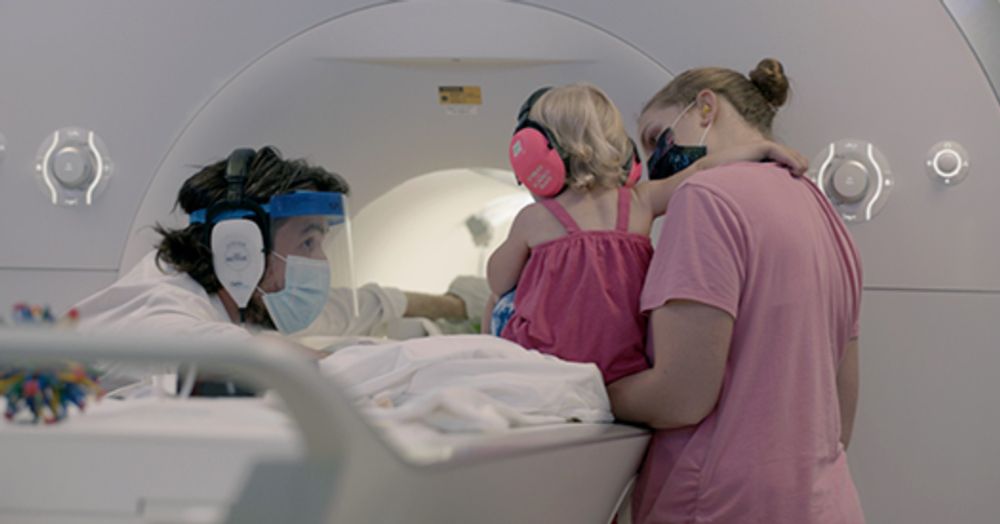
What infant fMRI is revealing about the developing mind
Cognitive neuroscientists have finally clocked how to perform task-based fMRI experiments in awake babies. Now they want watch cognition take shape.
www.thetransmitter.org
March 20, 2025 at 6:55 PM
A brave (and patient) group of neuroscientists have figured out how to do task-based fMRI in babies and toddlers. They aim to uncover how the infant mind takes shape—and the method has already provided new insight into infantile amnesia. My latest www.thetransmitter.org/cognitive-ne... #neuroskyence
Reposted by Anna Püsök
Why do we not remember being a baby? One idea is that the hippocampus, which is essential for episodic memory in adults, is too immature to form individual memories in infancy. We tested this using awake infant fMRI, new in @science.org #ScienceResearch www.science.org/doi/10.1126/...
Hippocampal encoding of memories in human infants
Humans lack memories for specific events from the first few years of life. We investigated the mechanistic basis of this infantile amnesia by scanning the brains of awake infants with functional magne...
www.science.org
March 20, 2025 at 6:37 PM
Why do we not remember being a baby? One idea is that the hippocampus, which is essential for episodic memory in adults, is too immature to form individual memories in infancy. We tested this using awake infant fMRI, new in @science.org #ScienceResearch www.science.org/doi/10.1126/...
Reposted by Anna Püsök
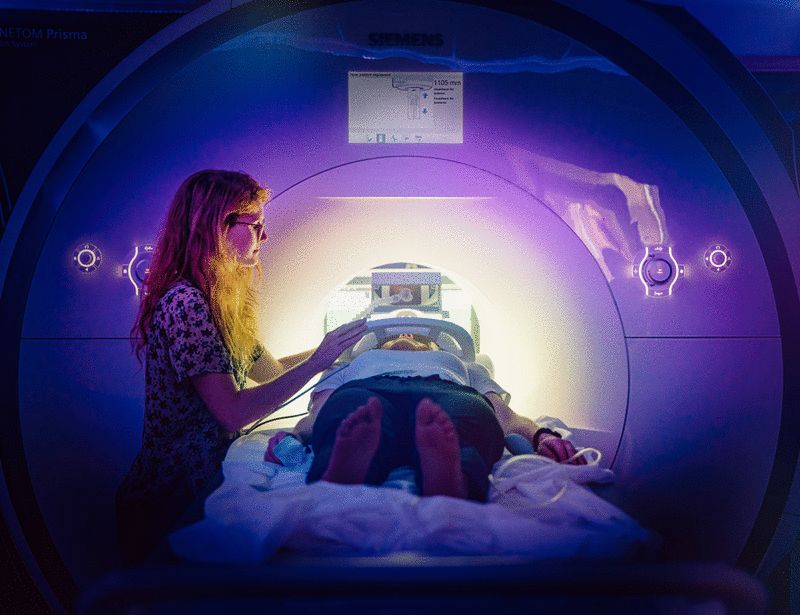
What factors impact the success of an awake infant fMRI scan? What can be done to maximize the data we collect from each infant?
In our new preprint, the Turk-Browne Lab and Saxe Lab combine our data from over 750 attempted scans to try to answer these questions:
www.biorxiv.org/content/10.1...
In our new preprint, the Turk-Browne Lab and Saxe Lab combine our data from over 750 attempted scans to try to answer these questions:
www.biorxiv.org/content/10.1...

Data retention in awake infant fMRI: Lessons from more than 750 scanning sessions
Functional magnetic resonance imaging (fMRI) in awake infants has the potential to reveal how the early developing brain gives rise to cognition and behavior. However, awake infant fMRI poses signific...
www.biorxiv.org
February 26, 2025 at 5:09 PM
What factors impact the success of an awake infant fMRI scan? What can be done to maximize the data we collect from each infant?
In our new preprint, the Turk-Browne Lab and Saxe Lab combine our data from over 750 attempted scans to try to answer these questions:
www.biorxiv.org/content/10.1...
In our new preprint, the Turk-Browne Lab and Saxe Lab combine our data from over 750 attempted scans to try to answer these questions:
www.biorxiv.org/content/10.1...