



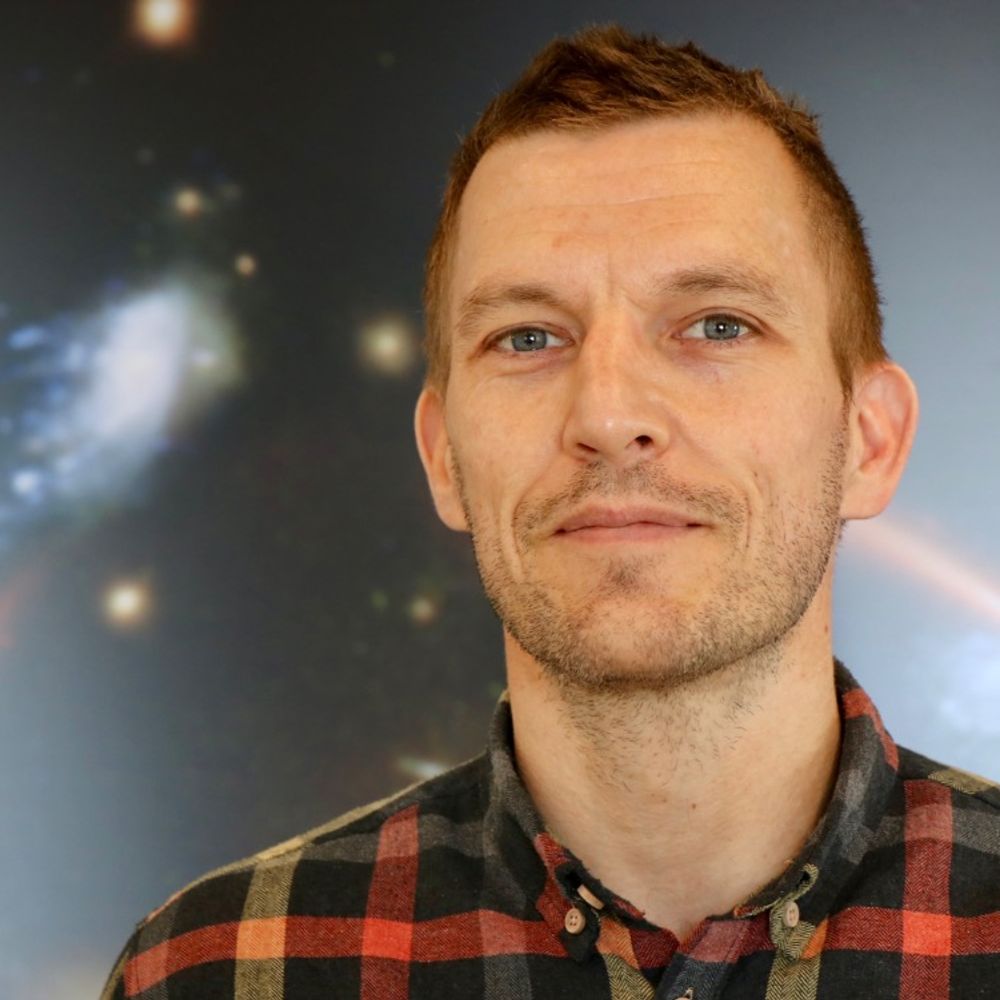
Peter Laursen
@anisotropela.bsky.social
Astrophysicist/#scicomm'er at the Cosmic Dawn Center (NBI/UCPH), admirer of galaxies, amateur boxer, and appreciator of comic books, indiepop, and white chocolate.
I was very confused for too long, until I realized we weren’t talking about the author of possibly the highest-cited non-refereed paper in cosmology (arxiv.org/abs/astro-ph...).

Distance measures in cosmology
Formulae for the line-of-sight and transverse comoving distances, proper motion distance, angular diameter distance, luminosity distance, k-correction, distance modulus, comoving volume, lookback time...
arxiv.org
November 4, 2025 at 10:39 PM
I was very confused for too long, until I realized we weren’t talking about the author of possibly the highest-cited non-refereed paper in cosmology (arxiv.org/abs/astro-ph...).
Actually it was almost completely clouded, but there was a small hole I the clouds I tried to take advantage of, but failed.
Luckily they didn’t question what I was doing with a telescoping a cloudy evening 😄
Luckily they didn’t question what I was doing with a telescoping a cloudy evening 😄
October 24, 2025 at 4:45 PM
Actually it was almost completely clouded, but there was a small hole I the clouds I tried to take advantage of, but failed.
Luckily they didn’t question what I was doing with a telescoping a cloudy evening 😄
Luckily they didn’t question what I was doing with a telescoping a cloudy evening 😄
Planetmæssigt kommer Saturn og Neptun op tidligt. Neptun kræver dog en kikkert, men står lige ved siden af Saturn
Jupiter og Venus som bliver flottest, også lige ved siden af hinanden (1°), står op ca. 2:30.
Jupiter og Venus som bliver flottest, også lige ved siden af hinanden (1°), står op ca. 2:30.
August 11, 2025 at 9:07 AM
Planetmæssigt kommer Saturn og Neptun op tidligt. Neptun kræver dog en kikkert, men står lige ved siden af Saturn
Jupiter og Venus som bliver flottest, også lige ved siden af hinanden (1°), står op ca. 2:30.
Jupiter og Venus som bliver flottest, også lige ved siden af hinanden (1°), står op ca. 2:30.
Punktet hvorfra meteorerne kommer (“radianten”) stiger højere op på himlen i løbet af natten, så flere stjerneskud ud på morgenen. På den anden side kommer en næsten fuld Måne også længere op og spolerer det lidt.
Så stjerneskudsmæssigt ville jeg gå efter det mest skyfri tidspunkt.
Så stjerneskudsmæssigt ville jeg gå efter det mest skyfri tidspunkt.
August 11, 2025 at 9:06 AM
Punktet hvorfra meteorerne kommer (“radianten”) stiger højere op på himlen i løbet af natten, så flere stjerneskud ud på morgenen. På den anden side kommer en næsten fuld Måne også længere op og spolerer det lidt.
Så stjerneskudsmæssigt ville jeg gå efter det mest skyfri tidspunkt.
Så stjerneskudsmæssigt ville jeg gå efter det mest skyfri tidspunkt.
Amazing! I love how the long exposure lets you see the stars’ temperatures 🤩
February 24, 2025 at 2:45 PM
Amazing! I love how the long exposure lets you see the stars’ temperatures 🤩
Right, if you're aiming to illustrate peak wavelength it makes sense. I just meant that O stars don't look purple to the human eye, so *personally* I would prefer a Planckian locus color scheme :)
February 17, 2025 at 11:41 AM
Right, if you're aiming to illustrate peak wavelength it makes sense. I just meant that O stars don't look purple to the human eye, so *personally* I would prefer a Planckian locus color scheme :)
Nice! Is that all 1½ billion stars (or how many the full sample is)?
One comment: Personally I prefer HR diagram with "real" colors, i.e. how it would look to the human eye. Blackbodies tend to be red below a few 10³, white at T☉, and saturate at a pale blue above ~10⁴ K. And never green or violet.
One comment: Personally I prefer HR diagram with "real" colors, i.e. how it would look to the human eye. Blackbodies tend to be red below a few 10³, white at T☉, and saturate at a pale blue above ~10⁴ K. And never green or violet.
February 17, 2025 at 11:04 AM
Nice! Is that all 1½ billion stars (or how many the full sample is)?
One comment: Personally I prefer HR diagram with "real" colors, i.e. how it would look to the human eye. Blackbodies tend to be red below a few 10³, white at T☉, and saturate at a pale blue above ~10⁴ K. And never green or violet.
One comment: Personally I prefer HR diagram with "real" colors, i.e. how it would look to the human eye. Blackbodies tend to be red below a few 10³, white at T☉, and saturate at a pale blue above ~10⁴ K. And never green or violet.
More like STONEDWACK (aSTrONomErs Don't understand hoW ACronyms worK).
January 17, 2025 at 9:21 AM
More like STONEDWACK (aSTrONomErs Don't understand hoW ACronyms worK).
…then proceeds to hit the Klein bottle.
January 16, 2025 at 1:16 PM
…then proceeds to hit the Klein bottle.
Ha ha ha I was somewhat confused 😄
January 3, 2025 at 11:26 PM
Ha ha ha I was somewhat confused 😄
Jeg fik engang at vide, at jeg var tabt bag af en vogn…
December 30, 2024 at 10:13 AM
Jeg fik engang at vide, at jeg var tabt bag af en vogn…
You might be consistent, but you’re incomplete. Unrecoverably sick 🔥
December 30, 2024 at 10:12 AM
You might be consistent, but you’re incomplete. Unrecoverably sick 🔥
With four kids, they need all the support they can get 😓
October 20, 2023 at 3:08 PM
With four kids, they need all the support they can get 😓
I think I have four different Dinosaur Comic T-shirts :)
September 25, 2023 at 8:41 PM
I think I have four different Dinosaur Comic T-shirts :)
I love them! But… has it really been 20 years… 😬🫠
I just turned old…
I just turned old…
September 25, 2023 at 8:38 PM
I love them! But… has it really been 20 years… 😬🫠
I just turned old…
I just turned old…
3/3
I describe how astrophysics is hard because of the huge span of timescales, but easy because of the huge span of timescales.
There's also an account of the first ~half year of galaxy observations with James Webb.
And lots of illustrative figures that you can use in your talks👍🏽
I describe how astrophysics is hard because of the huge span of timescales, but easy because of the huge span of timescales.
There's also an account of the first ~half year of galaxy observations with James Webb.
And lots of illustrative figures that you can use in your talks👍🏽
September 7, 2023 at 6:45 AM
3/3
I describe how astrophysics is hard because of the huge span of timescales, but easy because of the huge span of timescales.
There's also an account of the first ~half year of galaxy observations with James Webb.
And lots of illustrative figures that you can use in your talks👍🏽
I describe how astrophysics is hard because of the huge span of timescales, but easy because of the huge span of timescales.
There's also an account of the first ~half year of galaxy observations with James Webb.
And lots of illustrative figures that you can use in your talks👍🏽
2/3
Context:
The article is a chapter in a multidisciplinary anthology, "Multiplicity of Time Scales in Complex Systems", aimed at non-astronomer scientists, but may also be fun for astro-students.
And "island" is also a hat-tip to "island universes"…🙂
Context:
The article is a chapter in a multidisciplinary anthology, "Multiplicity of Time Scales in Complex Systems", aimed at non-astronomer scientists, but may also be fun for astro-students.
And "island" is also a hat-tip to "island universes"…🙂
September 7, 2023 at 6:45 AM
2/3
Context:
The article is a chapter in a multidisciplinary anthology, "Multiplicity of Time Scales in Complex Systems", aimed at non-astronomer scientists, but may also be fun for astro-students.
And "island" is also a hat-tip to "island universes"…🙂
Context:
The article is a chapter in a multidisciplinary anthology, "Multiplicity of Time Scales in Complex Systems", aimed at non-astronomer scientists, but may also be fun for astro-students.
And "island" is also a hat-tip to "island universes"…🙂
2/3
Context:
The article is a chapter in a multidisciplinary anthology, "Multiplicity of Time Scales in Complex Systems", aimed at non-astronomer scientists, but may also be fun for astro-students.
And "island" is also a hat-tip to "island universes"…🙂
Context:
The article is a chapter in a multidisciplinary anthology, "Multiplicity of Time Scales in Complex Systems", aimed at non-astronomer scientists, but may also be fun for astro-students.
And "island" is also a hat-tip to "island universes"…🙂
September 7, 2023 at 6:43 AM
2/3
Context:
The article is a chapter in a multidisciplinary anthology, "Multiplicity of Time Scales in Complex Systems", aimed at non-astronomer scientists, but may also be fun for astro-students.
And "island" is also a hat-tip to "island universes"…🙂
Context:
The article is a chapter in a multidisciplinary anthology, "Multiplicity of Time Scales in Complex Systems", aimed at non-astronomer scientists, but may also be fun for astro-students.
And "island" is also a hat-tip to "island universes"…🙂