




yknow like the tree
@alnusrhombifolia.bsky.social
Alnus rhombifolia, the white alder, is an alder tree native to western North America. (They/he, previous trans kid and current trans adult)
Ran into this forest sharp-tailed snake (Contia longicauda), a species that is described as "secretive" because of its leaf litter dwelling lifestyle. Little has been published on the species' behavior because of this - I'd never seen one before! 📍Santa Cruz, CA
🐍
🐍


August 14, 2025 at 6:42 PM
Ran into this forest sharp-tailed snake (Contia longicauda), a species that is described as "secretive" because of its leaf litter dwelling lifestyle. Little has been published on the species' behavior because of this - I'd never seen one before! 📍Santa Cruz, CA
🐍
🐍
Creeping snowberry (Symphoricarpos mollis) is currently showing off its namesake berries! The berries are edible and allegedly have a light mint flavor (I have yet to test them out).


August 13, 2025 at 11:44 PM
Creeping snowberry (Symphoricarpos mollis) is currently showing off its namesake berries! The berries are edible and allegedly have a light mint flavor (I have yet to test them out).
if this was in effect when I was under 19, I genuinely probably wouldn't be here today. gender affirming care saves lives, and banning it (and "prosecuting the practice") will cause them to be lost. Remember when a member of congress was censured for saying the right has kid's blood on their hands?

January 29, 2025 at 12:25 AM
if this was in effect when I was under 19, I genuinely probably wouldn't be here today. gender affirming care saves lives, and banning it (and "prosecuting the practice") will cause them to be lost. Remember when a member of congress was censured for saying the right has kid's blood on their hands?
eeee!! I've seen lots too :)


January 28, 2025 at 9:12 PM
eeee!! I've seen lots too :)
adult southern alligator lizard (Elgaria multicarinata) found in Santa Cruz, CA. One of the things I love about this area is the fact we have both northern and southern species ranges overlapping! 🦎

January 28, 2025 at 9:08 PM
adult southern alligator lizard (Elgaria multicarinata) found in Santa Cruz, CA. One of the things I love about this area is the fact we have both northern and southern species ranges overlapping! 🦎
omg omg flamepoint thread this is my son pie

January 28, 2025 at 5:43 AM
omg omg flamepoint thread this is my son pie
He looks just like my boy 🥺

January 28, 2025 at 5:42 AM
He looks just like my boy 🥺
adult vs juvenile California slender salamanders (Batrachoseps attenuatus) (found in Santa Cruz, CA) 🦎


January 26, 2025 at 7:15 PM
adult vs juvenile California slender salamanders (Batrachoseps attenuatus) (found in Santa Cruz, CA) 🦎
4 juvenile arboreal salamanders (Aneides lugubris) 🦎


January 26, 2025 at 12:53 AM
4 juvenile arboreal salamanders (Aneides lugubris) 🦎
This little guy is an adult California slender salamander (Batrachoseps attenuatus)! They are very common in the areas of Northern California where I grew up, as well as in a limited part of the Sierra Nevada, patches of the northern Central Valley of California, and extreme southwestern Oregon 🦎


December 4, 2024 at 10:43 PM
This little guy is an adult California slender salamander (Batrachoseps attenuatus)! They are very common in the areas of Northern California where I grew up, as well as in a limited part of the Sierra Nevada, patches of the northern Central Valley of California, and extreme southwestern Oregon 🦎
(...) And cavity nesters like pileated woodpeckers or red-breasted nuthatches sometimes nest in white alders. (Img: White-headed Woodpecker excavating nest cavity, from birdsoftheworld.org/bow/species/... )

December 3, 2024 at 6:25 AM
(...) And cavity nesters like pileated woodpeckers or red-breasted nuthatches sometimes nest in white alders. (Img: White-headed Woodpecker excavating nest cavity, from birdsoftheworld.org/bow/species/... )
(...) Beavers eat their bark and build their dams and lodges with alder wood. Western Tiger Swallowtail butterflies use them as a host plant. The nitrogen-rich leaf litter that drops from an alder into the stream nourishes stream invertebrates, like caddisfly larvae. (bugguide.net/node/view/10...)

December 3, 2024 at 6:23 AM
(...) Beavers eat their bark and build their dams and lodges with alder wood. Western Tiger Swallowtail butterflies use them as a host plant. The nitrogen-rich leaf litter that drops from an alder into the stream nourishes stream invertebrates, like caddisfly larvae. (bugguide.net/node/view/10...)
white alder facts from www.nps.gov/articles/whi...
White alders, like many riparian plants, feed and shelter much wildlife. Flocks of pine siskins devour their seeds. Mule deer eat their twigs, leaves, and buds. (Instagram post link: shorturl.at/dJNsB )
White alders, like many riparian plants, feed and shelter much wildlife. Flocks of pine siskins devour their seeds. Mule deer eat their twigs, leaves, and buds. (Instagram post link: shorturl.at/dJNsB )

December 2, 2024 at 9:42 PM
white alder facts from www.nps.gov/articles/whi...
White alders, like many riparian plants, feed and shelter much wildlife. Flocks of pine siskins devour their seeds. Mule deer eat their twigs, leaves, and buds. (Instagram post link: shorturl.at/dJNsB )
White alders, like many riparian plants, feed and shelter much wildlife. Flocks of pine siskins devour their seeds. Mule deer eat their twigs, leaves, and buds. (Instagram post link: shorturl.at/dJNsB )
A subspecies of Western Skink, Skilton's Skink (Plestiodon skiltonianus skiltonianus)! The bright blue tail - only seen on juveniles - detaches easily and writhes back and forth to distract predators.

December 2, 2024 at 9:19 PM
A subspecies of Western Skink, Skilton's Skink (Plestiodon skiltonianus skiltonianus)! The bright blue tail - only seen on juveniles - detaches easily and writhes back and forth to distract predators.
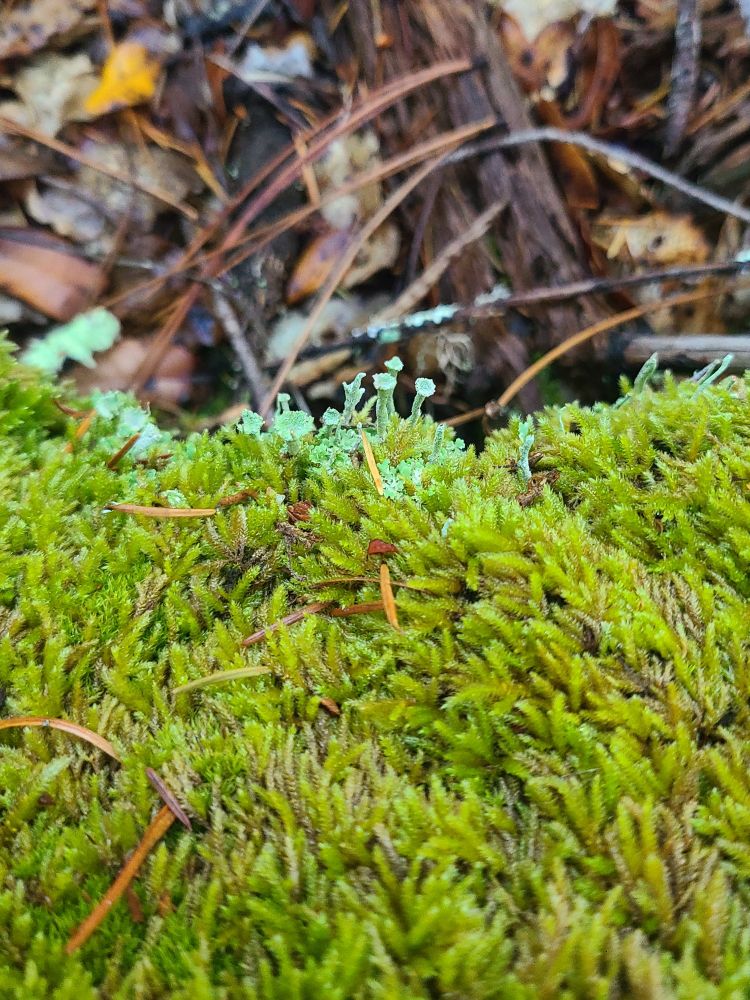
look at this cool lichen I found. it's a species in the genus Cladonia, a group of moss-like lichens in the family Cladoniaceae. They are the primary food source for reindeer and caribou, and antibiotic compounds are extracted from some species to create antibiotic cream.


November 17, 2024 at 5:01 AM
look at this cool lichen I found. it's a species in the genus Cladonia, a group of moss-like lichens in the family Cladoniaceae. They are the primary food source for reindeer and caribou, and antibiotic compounds are extracted from some species to create antibiotic cream.