


Aline Ghilardi
@alinemghilardi.bsky.social
Paleontóloga 🦴🦖🦕, Profa. no Departamento de Geologia ⚒️ da UFRN e Divulgadora Científica 🧪 | Professor of Paleontology at UFRN, Brazil, and Science Communicator | ✨Opinions are my own✨ | #UbirajaraBelongstoBR
🦋elder #4,156
https://linktr.ee/alinemghilardi
🦋elder #4,156
https://linktr.ee/alinemghilardi
Galera, Bakiribu está pronto para voar de novo! 110 milhões de anos depois do seu último voo 🥹…
Agora ele está voltando pra casa, onde vai se juntar aos seus de novo. 🛫🙏🏻
Até o Cariri!!
Agora ele está voltando pra casa, onde vai se juntar aos seus de novo. 🛫🙏🏻
Até o Cariri!!

December 2, 2025 at 2:22 PM
Galera, Bakiribu está pronto para voar de novo! 110 milhões de anos depois do seu último voo 🥹…
Agora ele está voltando pra casa, onde vai se juntar aos seus de novo. 🛫🙏🏻
Até o Cariri!!
Agora ele está voltando pra casa, onde vai se juntar aos seus de novo. 🛫🙏🏻
Até o Cariri!!

Descoberta coordenada e feita por pesquisadores BRASILEIROS, tudo BR, sangue verde e amarelo, mídias 🤡:


November 19, 2025 at 9:29 PM
Descoberta coordenada e feita por pesquisadores BRASILEIROS, tudo BR, sangue verde e amarelo, mídias 🤡:
You can see Bakiribu fossil in 3D! Access it here: www.morphosource.org/projects/000...
November 12, 2025 at 2:40 PM
You can see Bakiribu fossil in 3D! Access it here: www.morphosource.org/projects/000...
Limpem seus olhos vendo uma paleoarte DE VERDADE, por um dos melhores paleoartistas do mundo, que fez a obra com carinho para o nosso trabalho. E sigam ele: @lacerdajulio.bsky.social

November 11, 2025 at 4:38 PM
Limpem seus olhos vendo uma paleoarte DE VERDADE, por um dos melhores paleoartistas do mundo, que fez a obra com carinho para o nosso trabalho. E sigam ele: @lacerdajulio.bsky.social
🧪⚒️🚨Não deu nem pra engolir ainda o pterossauro vomitado?? Pois toma mais um artigo de pterossaurooo do nosso time (que tá em chamas 🔥):
anatomypubs.onlinelibrary.wiley.com/doi/10.1002/...
Trabalho liderado pelo querido @titoaureliano.bsky.social
anatomypubs.onlinelibrary.wiley.com/doi/10.1002/...
Trabalho liderado pelo querido @titoaureliano.bsky.social


November 11, 2025 at 1:01 PM
🧪⚒️🚨Não deu nem pra engolir ainda o pterossauro vomitado?? Pois toma mais um artigo de pterossaurooo do nosso time (que tá em chamas 🔥):
anatomypubs.onlinelibrary.wiley.com/doi/10.1002/...
Trabalho liderado pelo querido @titoaureliano.bsky.social
anatomypubs.onlinelibrary.wiley.com/doi/10.1002/...
Trabalho liderado pelo querido @titoaureliano.bsky.social
O nosso regurgito ganhou uma página inteira no Le Monde por Bruno Meyerfeld 🤍

November 10, 2025 at 12:58 PM
O nosso regurgito ganhou uma página inteira no Le Monde por Bruno Meyerfeld 🤍
Ganhamos uma página inteira no LeMonde 💪🤍
November 10, 2025 at 12:03 PM
Ganhamos uma página inteira no LeMonde 💪🤍
The new species is closely related to Pterodaustro, from Argentina.

November 10, 2025 at 11:33 AM
The new species is closely related to Pterodaustro, from Argentina.
Nosso bebê nasceu 🥹
Uma nova espécie de pterossauro do Araripe, encontrada dentro de um vômito fossilizado de dinossauro 🤍. A natureza é linda! Kkk
Seja bem-vindo, Bakiribu waridza!
Acesse o artigo: www.nature.com/articles/s41...
Uma nova espécie de pterossauro do Araripe, encontrada dentro de um vômito fossilizado de dinossauro 🤍. A natureza é linda! Kkk
Seja bem-vindo, Bakiribu waridza!
Acesse o artigo: www.nature.com/articles/s41...

November 10, 2025 at 11:29 AM
Nosso bebê nasceu 🥹
Uma nova espécie de pterossauro do Araripe, encontrada dentro de um vômito fossilizado de dinossauro 🤍. A natureza é linda! Kkk
Seja bem-vindo, Bakiribu waridza!
Acesse o artigo: www.nature.com/articles/s41...
Uma nova espécie de pterossauro do Araripe, encontrada dentro de um vômito fossilizado de dinossauro 🤍. A natureza é linda! Kkk
Seja bem-vindo, Bakiribu waridza!
Acesse o artigo: www.nature.com/articles/s41...
The name Bakiribu waridza derives from Kariri words: bakiribú (“comb”) and waridzá (“mouth”), referring to the animal’s comb-like dentition. The name also honors the Indigenous peoples native to the Araripe region, Brazil.
🎨 by @lacerdajulio.bsky.social
🎨 by @lacerdajulio.bsky.social
November 10, 2025 at 10:34 AM
The name Bakiribu waridza derives from Kariri words: bakiribú (“comb”) and waridzá (“mouth”), referring to the animal’s comb-like dentition. The name also honors the Indigenous peoples native to the Araripe region, Brazil.
🎨 by @lacerdajulio.bsky.social
🎨 by @lacerdajulio.bsky.social
O American Museum of Natural History (EUA) e o Staatliches Museum für Naturkunde Stuttgart (Alemanha; o mesmo museu que ainda detém Irritator) são os museus estrangeiros que mais possuem fósseis de macroinvertebrados do Araripe. #IrritatorBelongstoBR

November 3, 2025 at 12:26 PM
O American Museum of Natural History (EUA) e o Staatliches Museum für Naturkunde Stuttgart (Alemanha; o mesmo museu que ainda detém Irritator) são os museus estrangeiros que mais possuem fósseis de macroinvertebrados do Araripe. #IrritatorBelongstoBR
Alemanha 🇩🇪 e EUA 🇺🇸 no topo da lista de países que levaram nossos fósseis do Araripe embora #DecolonizeScience #IrritatorBelongstoBR
Neste artigo também explicamos como os fósseis foram parar lá fora e porque isso é tão ruim para o Brasil:
palaeo-electronica.org/content/2025...
Neste artigo também explicamos como os fósseis foram parar lá fora e porque isso é tão ruim para o Brasil:
palaeo-electronica.org/content/2025...

November 2, 2025 at 11:23 AM
Alemanha 🇩🇪 e EUA 🇺🇸 no topo da lista de países que levaram nossos fósseis do Araripe embora #DecolonizeScience #IrritatorBelongstoBR
Neste artigo também explicamos como os fósseis foram parar lá fora e porque isso é tão ruim para o Brasil:
palaeo-electronica.org/content/2025...
Neste artigo também explicamos como os fósseis foram parar lá fora e porque isso é tão ruim para o Brasil:
palaeo-electronica.org/content/2025...
But behind this scientific richness lies a complex story.
Almost half of all holotypes (the specimens used to describe species) are kept in foreign institutions, outside Brazil. And even those preserved within the country are mostly kept away from their region of origin.
Almost half of all holotypes (the specimens used to describe species) are kept in foreign institutions, outside Brazil. And even those preserved within the country are mostly kept away from their region of origin.

October 30, 2025 at 1:06 AM
But behind this scientific richness lies a complex story.
Almost half of all holotypes (the specimens used to describe species) are kept in foreign institutions, outside Brazil. And even those preserved within the country are mostly kept away from their region of origin.
Almost half of all holotypes (the specimens used to describe species) are kept in foreign institutions, outside Brazil. And even those preserved within the country are mostly kept away from their region of origin.
🚨 New paper alert! ⚒️🧪
Our team just published a comprehensive study on fossil macroinvertebrates from the Santana Group (Araripe Basin, NE Brazil), one of the world’s most iconic Cretaceous fossil sites.
Our team just published a comprehensive study on fossil macroinvertebrates from the Santana Group (Araripe Basin, NE Brazil), one of the world’s most iconic Cretaceous fossil sites.

October 30, 2025 at 1:06 AM
🚨 New paper alert! ⚒️🧪
Our team just published a comprehensive study on fossil macroinvertebrates from the Santana Group (Araripe Basin, NE Brazil), one of the world’s most iconic Cretaceous fossil sites.
Our team just published a comprehensive study on fossil macroinvertebrates from the Santana Group (Araripe Basin, NE Brazil), one of the world’s most iconic Cretaceous fossil sites.
Hi Cam!! Hope you’re doing well! 😊
The specimen you posted is not a Dastilbe elongatus.
D. elongatus is actually the one shown in the photos I’m sending. You can see the clear differences in morphology.
I don’t know exactly which species yours is, but it’s definitely not from the Araripe.
The specimen you posted is not a Dastilbe elongatus.
D. elongatus is actually the one shown in the photos I’m sending. You can see the clear differences in morphology.
I don’t know exactly which species yours is, but it’s definitely not from the Araripe.


October 11, 2025 at 11:20 AM
Hi Cam!! Hope you’re doing well! 😊
The specimen you posted is not a Dastilbe elongatus.
D. elongatus is actually the one shown in the photos I’m sending. You can see the clear differences in morphology.
I don’t know exactly which species yours is, but it’s definitely not from the Araripe.
The specimen you posted is not a Dastilbe elongatus.
D. elongatus is actually the one shown in the photos I’m sending. You can see the clear differences in morphology.
I don’t know exactly which species yours is, but it’s definitely not from the Araripe.
Minha figurinha nos grupos de família hj

September 12, 2025 at 12:48 PM
Minha figurinha nos grupos de família hj
Amanhã estaremos ao vivo no Canal do Pirulla!! Vamos bater um papo sobre a Paleontologia do Brasil! Bora?
#ForçaPirulla 💪
#ForçaPirulla 💪

September 5, 2025 at 5:46 PM
Amanhã estaremos ao vivo no Canal do Pirulla!! Vamos bater um papo sobre a Paleontologia do Brasil! Bora?
#ForçaPirulla 💪
#ForçaPirulla 💪
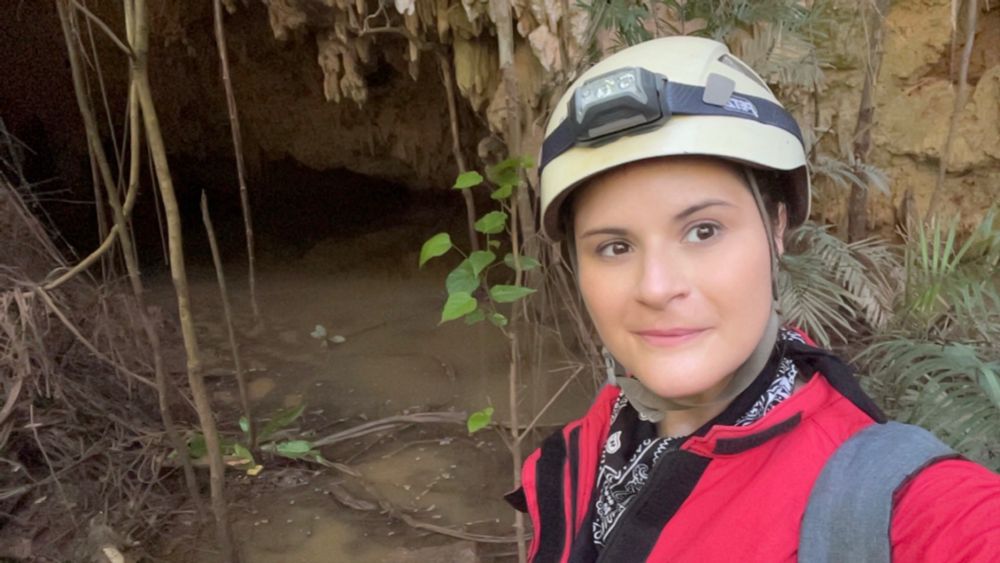
Feliz dia do biólogo! 🦎🐍🦞🐟🐊🐪🦜🌿🍄🟫
September 3, 2025 at 11:58 AM
Feliz dia do biólogo! 🦎🐍🦞🐟🐊🐪🦜🌿🍄🟫
🧪⚒️ Have you seen our latest paper in Journal of Anatomy?
We trace the origin of air sacs in pterosaurs back to their Triassic forerunners. Using micro-CT on the pterosauromorph Venetoraptor, we show invasive air sacs were in place before true pterosaurs.
We trace the origin of air sacs in pterosaurs back to their Triassic forerunners. Using micro-CT on the pterosauromorph Venetoraptor, we show invasive air sacs were in place before true pterosaurs.


August 19, 2025 at 11:26 AM
🧪⚒️ Have you seen our latest paper in Journal of Anatomy?
We trace the origin of air sacs in pterosaurs back to their Triassic forerunners. Using micro-CT on the pterosauromorph Venetoraptor, we show invasive air sacs were in place before true pterosaurs.
We trace the origin of air sacs in pterosaurs back to their Triassic forerunners. Using micro-CT on the pterosauromorph Venetoraptor, we show invasive air sacs were in place before true pterosaurs.

Queridos artistas da minha TL, venham fazer pixel art em Stuttgart! #IrritatorBelongstoBR #RepatriateIrritator #DecolonizeScience

August 14, 2025 at 12:48 PM
Queridos artistas da minha TL, venham fazer pixel art em Stuttgart! #IrritatorBelongstoBR #RepatriateIrritator #DecolonizeScience

August 14, 2025 at 12:41 PM
📢 Hey, paleopeople! ⚒️🧪
The International Meeting of Early-stage Researchers in Paleontology (IMERP) is coming to Santana do Cariri, Brazil, this December! 🦖🪨
Get ready for talks, workshops, field trips, and networking in one of the most fossil-rich regions in the world.
The International Meeting of Early-stage Researchers in Paleontology (IMERP) is coming to Santana do Cariri, Brazil, this December! 🦖🪨
Get ready for talks, workshops, field trips, and networking in one of the most fossil-rich regions in the world.


August 14, 2025 at 12:06 PM
📢 Hey, paleopeople! ⚒️🧪
The International Meeting of Early-stage Researchers in Paleontology (IMERP) is coming to Santana do Cariri, Brazil, this December! 🦖🪨
Get ready for talks, workshops, field trips, and networking in one of the most fossil-rich regions in the world.
The International Meeting of Early-stage Researchers in Paleontology (IMERP) is coming to Santana do Cariri, Brazil, this December! 🦖🪨
Get ready for talks, workshops, field trips, and networking in one of the most fossil-rich regions in the world.