



Alexey Markin
@alexey-markin.bsky.social
Computational Biologist with the USDA Flu-Crew
Phylogenetics 🌳
Phylogenetic networks 🕸️
Virus evolution 🦠
https://markin-alex.github.io
Phylogenetics 🌳
Phylogenetic networks 🕸️
Virus evolution 🦠
https://markin-alex.github.io
Pinned
Alexey Markin
@alexey-markin.bsky.social
· Aug 11
TreeSort is out at MBE! Fresh off the press so DOI below is not yet working, but you can find the article here: academic.oup.com/mbe/article/...
💡If you want to apply it to your data - please see the tutorial here github.com/flu-crew/Tre...
💡If you want to apply it to your data - please see the tutorial here github.com/flu-crew/Tre...
Reposted by Alexey Markin

🗓️ One week to go until our next ISCBacademy webinar, presented by the EvolCompGen COSI.
🔬 Michael Barnett will discuss new experimental evidence on the evolution of evolvability in bacterial populations.
🔬 Michael Barnett will discuss new experimental evidence on the evolution of evolvability in bacterial populations.

November 28, 2025 at 11:16 AM
🗓️ One week to go until our next ISCBacademy webinar, presented by the EvolCompGen COSI.
🔬 Michael Barnett will discuss new experimental evidence on the evolution of evolvability in bacterial populations.
🔬 Michael Barnett will discuss new experimental evidence on the evolution of evolvability in bacterial populations.
Excited to share a new preprint! “Ordered Leaf Attachment (OLA) Vectors can Identify Reticulation
Events even in Multifurcated Trees”
We link reticulations (eg introgression or virus recombination) to an ordering of taxa, which opens some new directions! arxiv.org/pdf/2509.16405
1/3
Events even in Multifurcated Trees”
We link reticulations (eg introgression or virus recombination) to an ordering of taxa, which opens some new directions! arxiv.org/pdf/2509.16405
1/3
arxiv.org
September 24, 2025 at 6:38 PM
Excited to share a new preprint! “Ordered Leaf Attachment (OLA) Vectors can Identify Reticulation
Events even in Multifurcated Trees”
We link reticulations (eg introgression or virus recombination) to an ordering of taxa, which opens some new directions! arxiv.org/pdf/2509.16405
1/3
Events even in Multifurcated Trees”
We link reticulations (eg introgression or virus recombination) to an ordering of taxa, which opens some new directions! arxiv.org/pdf/2509.16405
1/3
TreeSort is out at MBE! Fresh off the press so DOI below is not yet working, but you can find the article here: academic.oup.com/mbe/article/...
💡If you want to apply it to your data - please see the tutorial here github.com/flu-crew/Tre...
💡If you want to apply it to your data - please see the tutorial here github.com/flu-crew/Tre...
August 11, 2025 at 1:34 PM
TreeSort is out at MBE! Fresh off the press so DOI below is not yet working, but you can find the article here: academic.oup.com/mbe/article/...
💡If you want to apply it to your data - please see the tutorial here github.com/flu-crew/Tre...
💡If you want to apply it to your data - please see the tutorial here github.com/flu-crew/Tre...
Good overview of what’s been happening with HPAI H5N1 recently
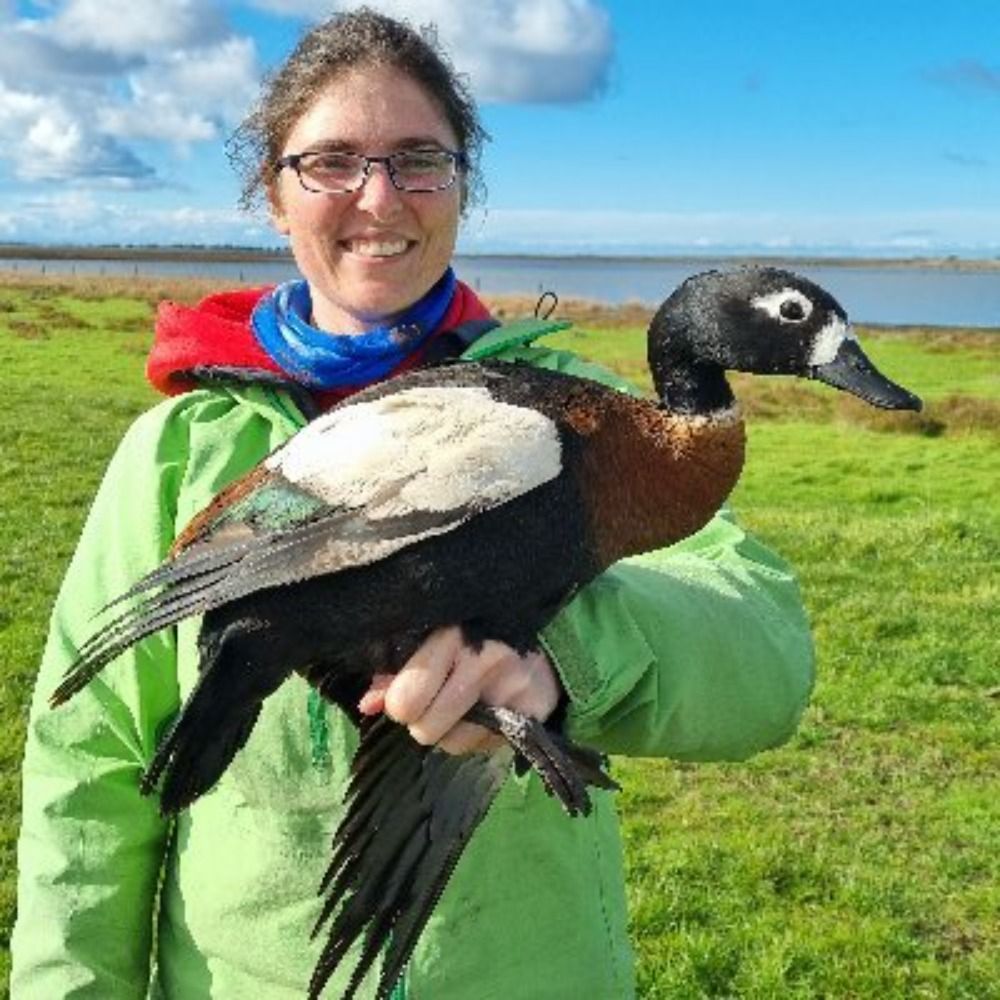
Repeated spillover of HPAI to cattle challenge the food supply system, and there is tremedous benefit to controlling this. Review of HPAI in cattle situation.
👉 www.nature.com/articles/s44...
👉 www.nature.com/articles/s44...

July 10, 2025 at 5:09 AM
Good overview of what’s been happening with HPAI H5N1 recently
A new paper out: fast (n logn) computation of cophenetic distances between phylogenetic trees. What’s great is that our algorithm applies to a very broad class of cophenetic distances including the popular Kendall-Colijn distance - check it out!
journals.plos.org/ploscompbiol...
journals.plos.org/ploscompbiol...

Computing generalized cophenetic distances under all Lp norms: A near-linear time algorithmic framework
Author summary Biological research often relies on large-scale comparisons of evolutionary trees to extract valuable insights across different subfields of biology. To effectively compare trees on a l...
journals.plos.org
June 21, 2025 at 9:05 PM
A new paper out: fast (n logn) computation of cophenetic distances between phylogenetic trees. What’s great is that our algorithm applies to a very broad class of cophenetic distances including the popular Kendall-Colijn distance - check it out!
journals.plos.org/ploscompbiol...
journals.plos.org/ploscompbiol...
Join us on Friday!

🧬EvolCompGen presents: Megan Owen on the Billera-Holmes-Vogtmann phylogenetic space, applications to Evol Bio, and visualization of phylogenetic landscapes.
💡Join us on Friday, May 2nd at 11:00 AM EDT through iscb.junolive.co
Not an ISCB member? Register here: iscb.swoogo.com/ISCBnucleus-...
💡Join us on Friday, May 2nd at 11:00 AM EDT through iscb.junolive.co
Not an ISCB member? Register here: iscb.swoogo.com/ISCBnucleus-...

April 29, 2025 at 3:40 PM
Join us on Friday!
Reposted by Alexey Markin

Important work from Tavis Anderson and our Penn-CEIRR USDA colleagues:
www.science.org/doi/10.1126/...
www.science.org/doi/10.1126/...

Emergence and interstate spread of highly pathogenic avian influenza A(H5N1) in dairy cattle in the United States
Highly pathogenic avian influenza (HPAI) viruses cross species barriers and have the potential to cause pandemics. In North America, HPAI A(H5N1) viruses related to the goose/Guangdong 2.3.4.4b hemagg...
www.science.org
April 25, 2025 at 1:58 AM
Important work from Tavis Anderson and our Penn-CEIRR USDA colleagues:
www.science.org/doi/10.1126/...
www.science.org/doi/10.1126/...
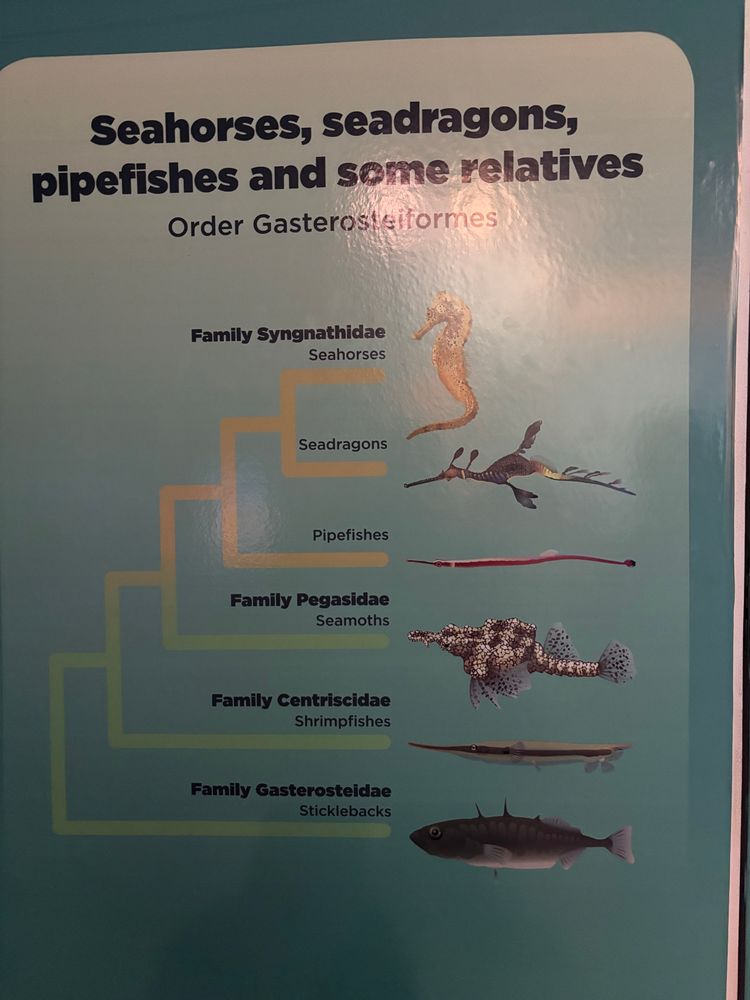
Phylogenetics don’t let you go even on vacation. Also, never seen sea dragons before, they look insane

April 23, 2025 at 8:57 PM
Phylogenetics don’t let you go even on vacation. Also, never seen sea dragons before, they look insane
Late repost but thanks to the TWiV team for revisiting our human -> 🐷 reverse-zoonoses of influenza A viruses paper. Discussion is from ~9:00 to ~40:00 for anyone interested in IAV interface between humans and pigs. The dementia paper discussion was also fascinating

TWiV 1207: Taking a shot at dementia
TWiV reviews reverse-zoonoses of 2009 H1N1 pandemic influenza A viruses and evolution in United States swine.
TWiV reviews reverse-zoonoses of 2009 H1N1 pandemic influenza A viruses and evolution in United States swine.
April 21, 2025 at 8:30 PM
Late repost but thanks to the TWiV team for revisiting our human -> 🐷 reverse-zoonoses of influenza A viruses paper. Discussion is from ~9:00 to ~40:00 for anyone interested in IAV interface between humans and pigs. The dementia paper discussion was also fascinating
Anyone knows what’s happening with the Rocky bioinformatics conference and if they plan to continue it? I never had a chance to go so far, but really wish they would continue
February 10, 2025 at 8:11 PM
Anyone knows what’s happening with the Rocky bioinformatics conference and if they plan to continue it? I never had a chance to go so far, but really wish they would continue
Reposted by Alexey Markin

Just in time for the holidays, our lab has just submitted our first lab led paper www.biorxiv.org/content/10.1...! We use phylodynamics to reconstruct how H5N1 got to North America and spread so rapidly. Full thread coming post holidays, but for now, super proud of @lambod50.bsky.social

Intensive transmission in wild, migratory birds drove rapid geographic dissemination and repeated spillovers of H5N1 into agriculture in North America
Since late 2021, a panzootic of highly pathogenic H5N1 avian influenza virus has driven significant morbidity and mortality in wild birds, domestic poultry, and mammals. In North America, infections i...
www.biorxiv.org
December 20, 2024 at 10:44 PM
Just in time for the holidays, our lab has just submitted our first lab led paper www.biorxiv.org/content/10.1...! We use phylodynamics to reconstruct how H5N1 got to North America and spread so rapidly. Full thread coming post holidays, but for now, super proud of @lambod50.bsky.social
EvolCompGen presents an online seminar: Megan Smith on Using machine learning to accommodate complexity in phylogenetics and population genetics. Join us on Friday, December 6, at 11 am EST through iscb.junolive.co
For non-ISCB members, registration here: iscb.swoogo.com/ISCBnucleus-...
For non-ISCB members, registration here: iscb.swoogo.com/ISCBnucleus-...

December 2, 2024 at 3:58 PM
EvolCompGen presents an online seminar: Megan Smith on Using machine learning to accommodate complexity in phylogenetics and population genetics. Join us on Friday, December 6, at 11 am EST through iscb.junolive.co
For non-ISCB members, registration here: iscb.swoogo.com/ISCBnucleus-...
For non-ISCB members, registration here: iscb.swoogo.com/ISCBnucleus-...