


Kate Britton
@whatkatiedigs.bsky.social
Archaeology, ancient biomolecules and Ice Age beasts
PALaEoScot is in Orkney this week working with Dr Ben Elliott sampling bone from early Mesolithic site, Tarradale. Project PhD student Tayla Sanders is looking at mammalian faunal biodiversity in Scotland at the end of the Ice Age and during the Mesolithic - watch this space!


January 14, 2026 at 4:35 PM
PALaEoScot is in Orkney this week working with Dr Ben Elliott sampling bone from early Mesolithic site, Tarradale. Project PhD student Tayla Sanders is looking at mammalian faunal biodiversity in Scotland at the end of the Ice Age and during the Mesolithic - watch this space!
Reposted by Kate Britton
This is an amazing figure, showing the power of ZooMS taxonomic corrections in isotopic study design.
Sulfur isotope analysis shows differences in range use between ungulates with known differences in home range sizes today. This is shown well in reindeer compared to all other fauna. We also integrate important ZooMS data to optimise palaeoecological interpretations.

December 18, 2025 at 7:22 AM
This is an amazing figure, showing the power of ZooMS taxonomic corrections in isotopic study design.
Reposted by Kate Britton

So excited to announce the publication of this paper which is the first to come from my PhD! Combing data from the PleistoHERD and DeerPal project we analyse carbon, nitrogen, and sulfur in ungulate bones from the Aquitaine Basin dating between the Ante-Quina and Quina periods.

December 17, 2025 at 2:28 PM
So excited to announce the publication of this paper which is the first to come from my PhD! Combing data from the PleistoHERD and DeerPal project we analyse carbon, nitrogen, and sulfur in ungulate bones from the Aquitaine Basin dating between the Ante-Quina and Quina periods.
Reposted by Kate Britton
Sulfur isotope analysis shows differences in range use between ungulates with known differences in home range sizes today. This is shown well in reindeer compared to all other fauna. We also integrate important ZooMS data to optimise palaeoecological interpretations.
December 17, 2025 at 2:29 PM
Sulfur isotope analysis shows differences in range use between ungulates with known differences in home range sizes today. This is shown well in reindeer compared to all other fauna. We also integrate important ZooMS data to optimise palaeoecological interpretations.
New paper alert! Sulfur isotopes evidence Late Pleistocene faunal spatial ecology - 100s of data points, years of combined research effort, and an isotope-zooarch-zooms collab. Congrats to @sarahbarakat.bsky.social who led this to fruition!
@ukri.org @leverhulme.ac.uk doi.org/10.1016/j.qu...
@ukri.org @leverhulme.ac.uk doi.org/10.1016/j.qu...
Redirecting
doi.org
December 17, 2025 at 1:23 PM
New paper alert! Sulfur isotopes evidence Late Pleistocene faunal spatial ecology - 100s of data points, years of combined research effort, and an isotope-zooarch-zooms collab. Congrats to @sarahbarakat.bsky.social who led this to fruition!
@ukri.org @leverhulme.ac.uk doi.org/10.1016/j.qu...
@ukri.org @leverhulme.ac.uk doi.org/10.1016/j.qu...
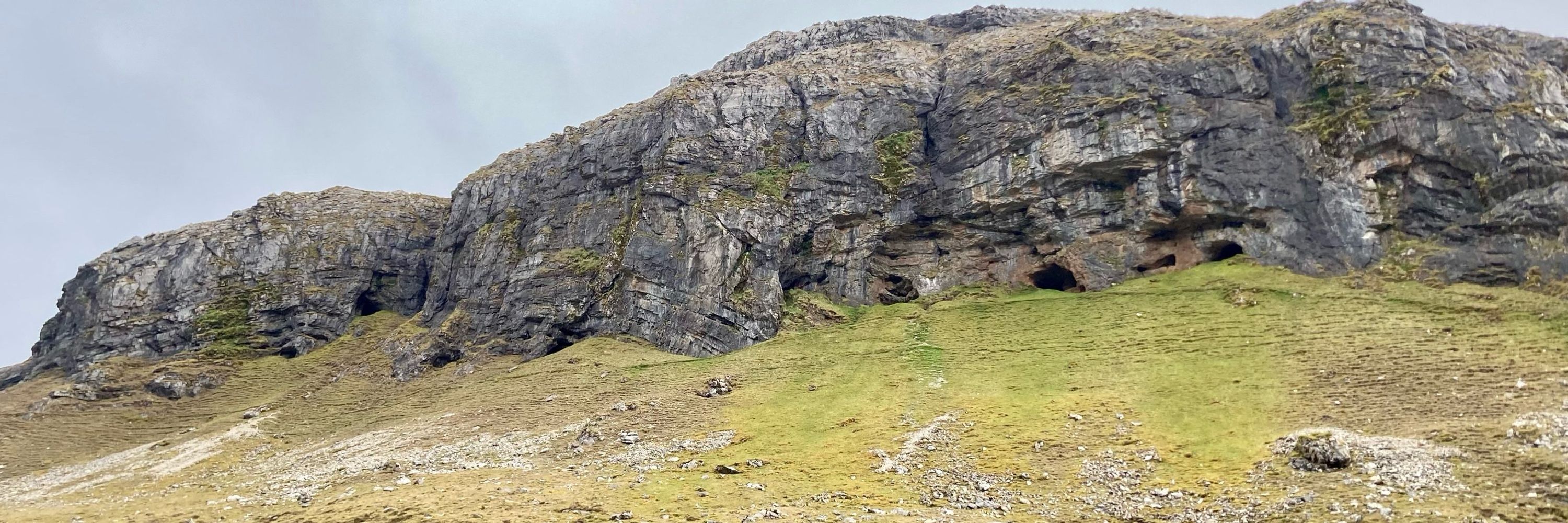
In Edinburgh this week for PALaEoScot, meeting specialists at NMS with our Edinburgh-based project zooarchaeology post-doc Alicia Sanz-Royo. We’re spending the week exploring the wonderful animal remains of the Assynt bone caves - kicking the day off with breakfast at an aptly-named cafe!

December 3, 2025 at 9:54 AM
In Edinburgh this week for PALaEoScot, meeting specialists at NMS with our Edinburgh-based project zooarchaeology post-doc Alicia Sanz-Royo. We’re spending the week exploring the wonderful animal remains of the Assynt bone caves - kicking the day off with breakfast at an aptly-named cafe!
Hippos?! In Devon?! Check out this fully-funded PhD opportunity @uoa-archaeology.bsky.social focused on the isotope ecology of the non-analogue faunal communities of MIS5e Britain @ukri.org NERC/BBSRC funded via QUARTILES - open to U.K. & international applicants! 🦛 www.findaphd.com/phds/project...

QUARTILES DLA CASE: Hippo and hyena haven: Exploring the isotope palaeoecology of a non-analogue ecosystem in MIS5e Britain at University of Aberdeen on FindAPhD.com
PhD Project - QUARTILES DLA CASE: Hippo and hyena haven: Exploring the isotope palaeoecology of a non-analogue ecosystem in MIS5e Britain at University of Aberdeen , listed on FindAPhD.com
www.findaphd.com
November 26, 2025 at 5:16 PM
Hippos?! In Devon?! Check out this fully-funded PhD opportunity @uoa-archaeology.bsky.social focused on the isotope ecology of the non-analogue faunal communities of MIS5e Britain @ukri.org NERC/BBSRC funded via QUARTILES - open to U.K. & international applicants! 🦛 www.findaphd.com/phds/project...
Reposted by Kate Britton

NEW Bone fragment with butchery marks from Middle Palaeolithic (260–45 ka cal BP) Ormagi Ekhi, Georgia.
The cave was a hibernation site for cave bears, but the butchery indicates humans are responsible for the accumulation of most faunal remains.
Learn more 🆓 doi.org/10.15184/aqy...
🏺#Archaeology
The cave was a hibernation site for cave bears, but the butchery indicates humans are responsible for the accumulation of most faunal remains.
Learn more 🆓 doi.org/10.15184/aqy...
🏺#Archaeology

October 11, 2025 at 1:12 PM
NEW Bone fragment with butchery marks from Middle Palaeolithic (260–45 ka cal BP) Ormagi Ekhi, Georgia.
The cave was a hibernation site for cave bears, but the butchery indicates humans are responsible for the accumulation of most faunal remains.
Learn more 🆓 doi.org/10.15184/aqy...
🏺#Archaeology
The cave was a hibernation site for cave bears, but the butchery indicates humans are responsible for the accumulation of most faunal remains.
Learn more 🆓 doi.org/10.15184/aqy...
🏺#Archaeology
PALaEoScot is at the British Cave Research Association Science Symposium in Bristol today, spreading the word about the amazing MIS3/MIS2 faunas of Reindeer Cave, Assynt - great line up too! #archaeology #caving #pleistocene

October 11, 2025 at 1:26 PM
PALaEoScot is at the British Cave Research Association Science Symposium in Bristol today, spreading the word about the amazing MIS3/MIS2 faunas of Reindeer Cave, Assynt - great line up too! #archaeology #caving #pleistocene
At a recent outreach event we tried a bit of living prehistory to bring the final Palaeolithic and Mesolithic in Scotland to life - we opted for some body paints, sticking to white, black and red. Turns out we could have added blue! www.cambridge.org/core/journal...

The earliest evidence of blue pigment use in Europe | Antiquity | Cambridge Core
The earliest evidence of blue pigment use in Europe
www.cambridge.org
October 2, 2025 at 5:54 AM
At a recent outreach event we tried a bit of living prehistory to bring the final Palaeolithic and Mesolithic in Scotland to life - we opted for some body paints, sticking to white, black and red. Turns out we could have added blue! www.cambridge.org/core/journal...
Châtelperronian cultural diversity at its western limits: Shell beads and pigments from La Roche-à-Pierrot, Saint-Césaire | PNAS www.pnas.org/doi/10.1073/...
PNAS
Proceedings of the National Academy of Sciences (PNAS), a peer reviewed journal of the National Academy of Sciences (NAS) - an authoritative source of high-impact, original research that broadly spans...
www.pnas.org
September 30, 2025 at 7:56 PM
Châtelperronian cultural diversity at its western limits: Shell beads and pigments from La Roche-à-Pierrot, Saint-Césaire | PNAS www.pnas.org/doi/10.1073/...
Test audience for these wonderful colouring sheets our new PhD student Tayla has prepared for our event on Sunday 14th at UoA. Tayla is joining PALaEoScot to work on fragmentary bones from late glacial-early Holocene sites in Scotland using molecular approaches - she’s quite the artist too!


September 9, 2025 at 7:33 PM
Test audience for these wonderful colouring sheets our new PhD student Tayla has prepared for our event on Sunday 14th at UoA. Tayla is joining PALaEoScot to work on fragmentary bones from late glacial-early Holocene sites in Scotland using molecular approaches - she’s quite the artist too!
Reposted by Kate Britton
Ever wondered what life was like at the end of the Ice Age? What did people eat? How did they make tools? Come and meet the PALaEoScot team at Explorathon on Sept 14th 11am-4pm at UoA’s King’s College in Old Aberdeen and meet our living prehistorians at their camp! Link below ⬇️

September 4, 2025 at 8:46 AM
Ever wondered what life was like at the end of the Ice Age? What did people eat? How did they make tools? Come and meet the PALaEoScot team at Explorathon on Sept 14th 11am-4pm at UoA’s King’s College in Old Aberdeen and meet our living prehistorians at their camp! Link below ⬇️
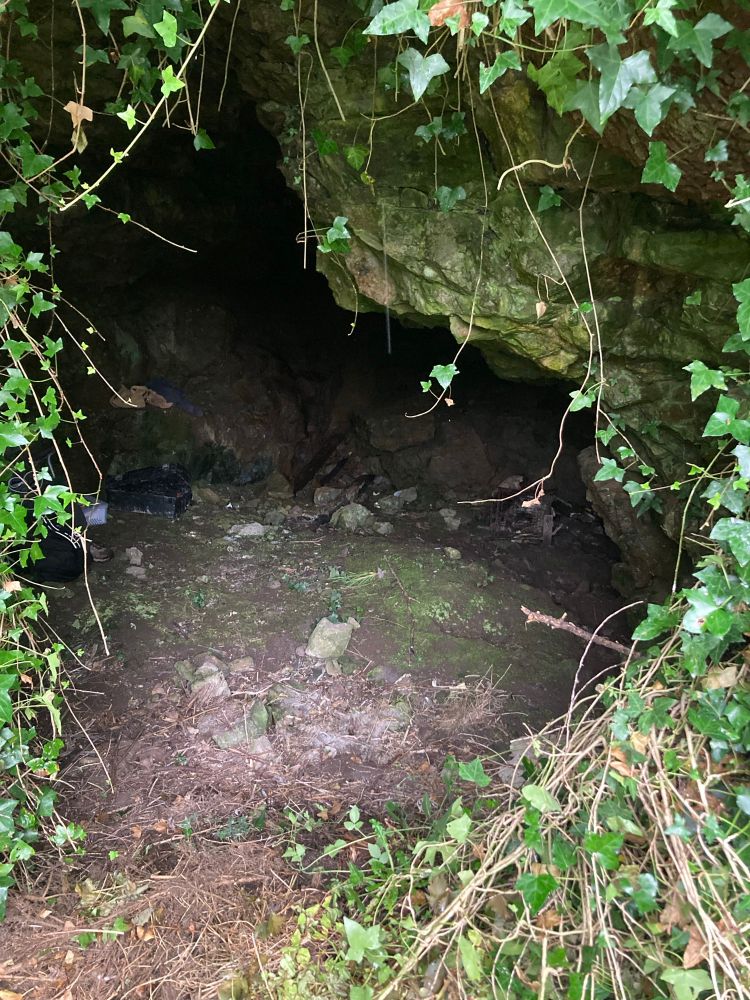
PalaeoScot is down in Pembroke for the week - it’s a PalaeoScot-PalaeoWales collab! We’ve done some isotope work at Wogan Cavern over the last few years and it’s great to finally see the site & to check out a potential new cave with some of the Wogan team too 👀 🦣 🦌 @ukri.org


August 4, 2025 at 9:04 AM
PalaeoScot is down in Pembroke for the week - it’s a PalaeoScot-PalaeoWales collab! We’ve done some isotope work at Wogan Cavern over the last few years and it’s great to finally see the site & to check out a potential new cave with some of the Wogan team too 👀 🦣 🦌 @ukri.org
Reposted by Kate Britton

(Very) Late to the party but enjoying it immensely - wonderful words @lemoustier.bsky.social would recommend KINDRED to anyone interested in learning more about Neanderthals, visiting the other-worlds of the past, or learning more about the process of field and research archaeology

July 27, 2025 at 6:32 AM
(Very) Late to the party but enjoying it immensely - wonderful words @lemoustier.bsky.social would recommend KINDRED to anyone interested in learning more about Neanderthals, visiting the other-worlds of the past, or learning more about the process of field and research archaeology
Reposted by Kate Britton

A memorable, creative and restorative week at Moniack Mhor for a writing retreat. Met some wonderful people, was fed like a Queen and broke out of the academic writing bubble just a little bit - like a spa for the brain!


July 26, 2025 at 12:11 PM
A memorable, creative and restorative week at Moniack Mhor for a writing retreat. Met some wonderful people, was fed like a Queen and broke out of the academic writing bubble just a little bit - like a spa for the brain!
So proud of you @lucyjkoster.bsky.social !!
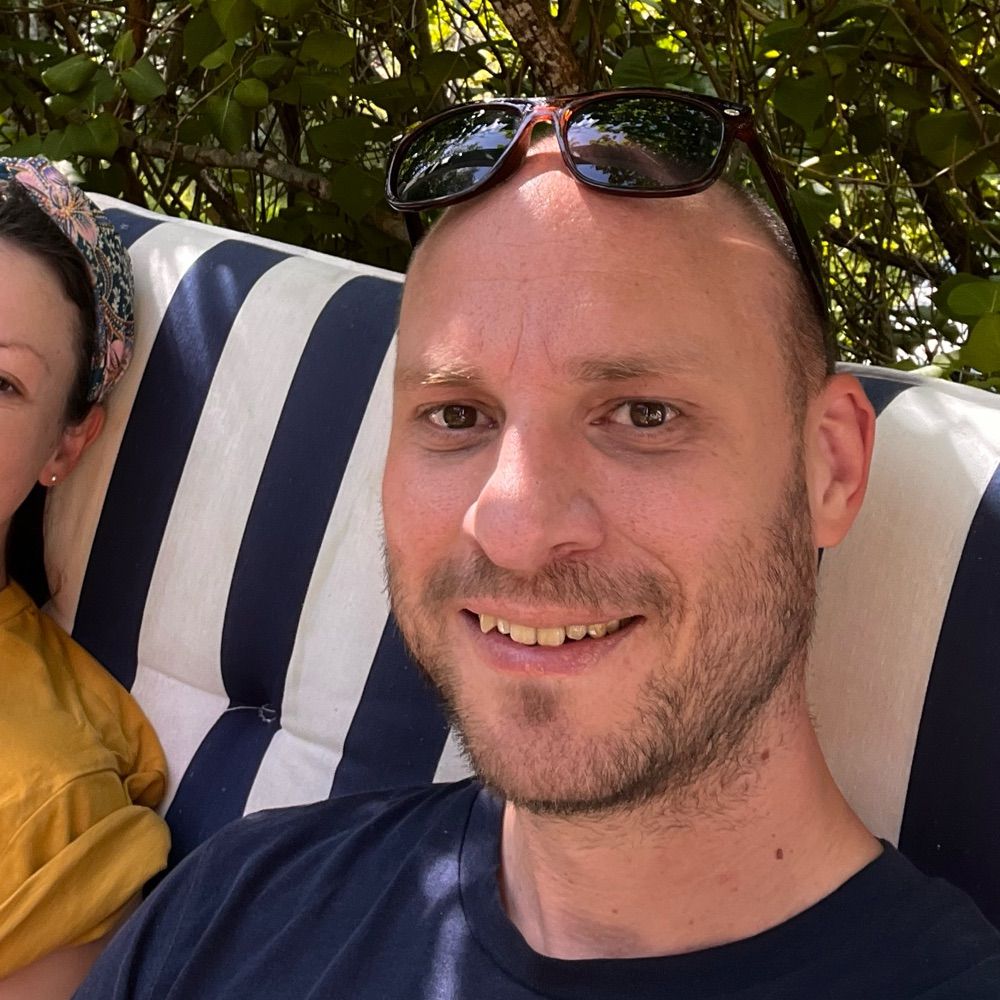
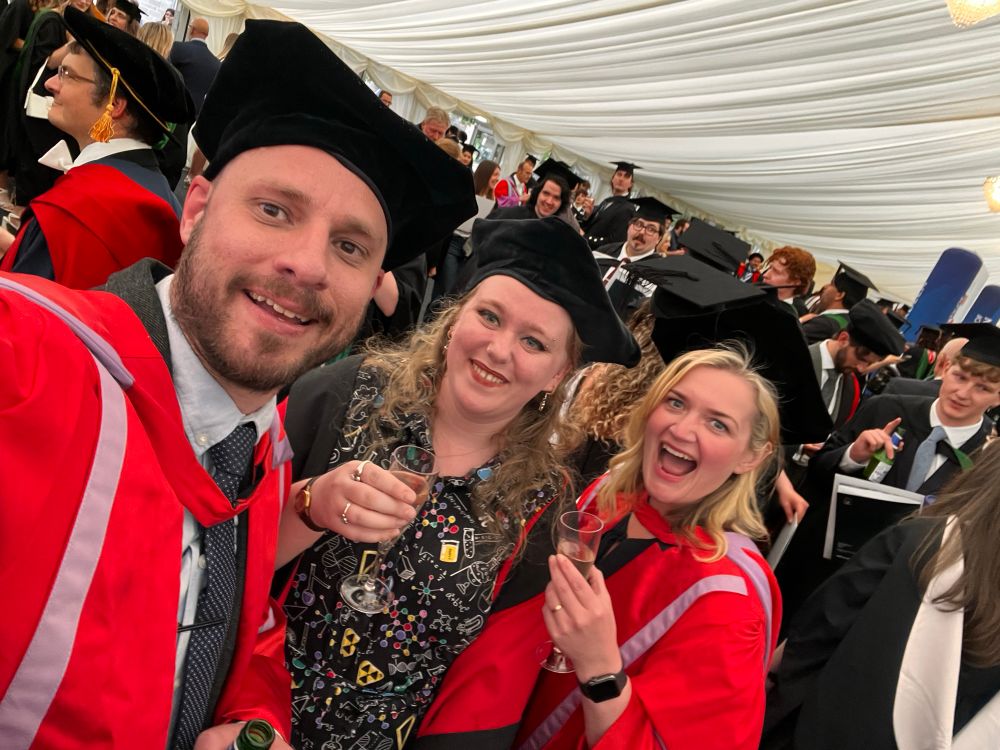
Graduation time, congrats again @lucyjkoster.bsky.social! With @whatkatiedigs.bsky.social
July 8, 2025 at 11:58 AM
So proud of you @lucyjkoster.bsky.social !!
This week #PALaEoScot has been part of a team testing this wee rock shelter, hopeful for signs of Late Glacial/early Holocene archaeology (or palaeontology!). So far just some cracking lithology (literally) and a very friendly dog - but watch this space! 🦴 🦌 🦣 🪨 @ukri.org @willmills.bsky.social


July 8, 2025 at 11:57 AM
This week #PALaEoScot has been part of a team testing this wee rock shelter, hopeful for signs of Late Glacial/early Holocene archaeology (or palaeontology!). So far just some cracking lithology (literally) and a very friendly dog - but watch this space! 🦴 🦌 🦣 🪨 @ukri.org @willmills.bsky.social
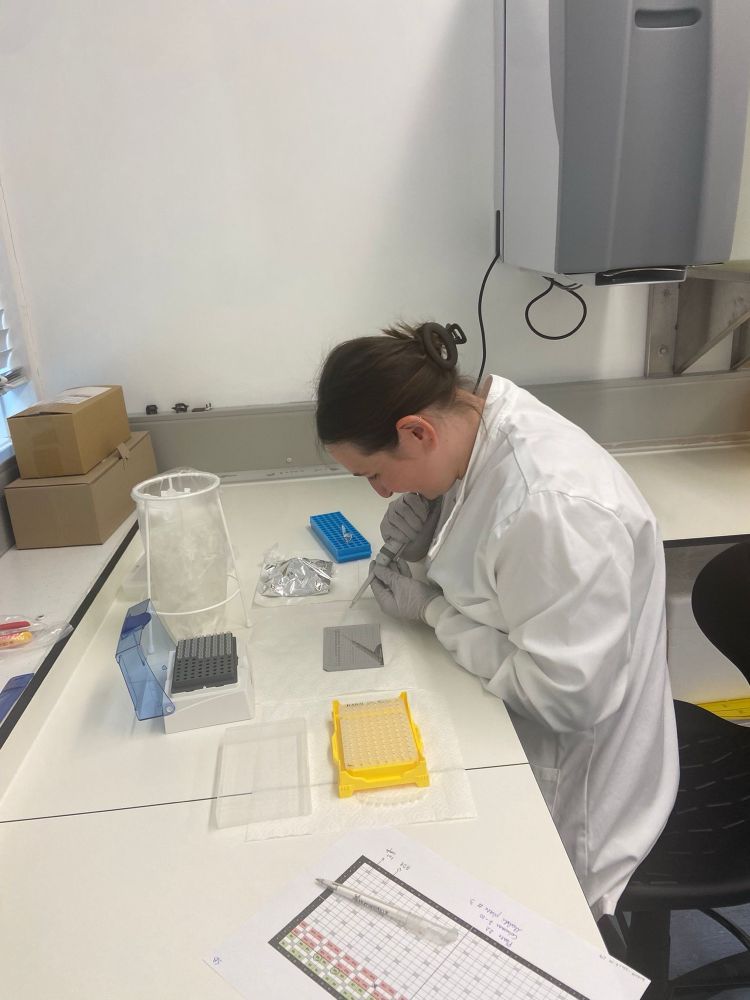
Spotting her first MALDI plate! Thanks to @archaeoprotein.bsky.social for offering this wonderful training opportunity to @sarahbarakat.bsky.social and helping us further develop our ZooMS capacity in Aberdeen @uoa-archaeology.bsky.social - and for running our first PALaEoScot samples with us!
July 2, 2025 at 12:23 PM
Spotting her first MALDI plate! Thanks to @archaeoprotein.bsky.social for offering this wonderful training opportunity to @sarahbarakat.bsky.social and helping us further develop our ZooMS capacity in Aberdeen @uoa-archaeology.bsky.social - and for running our first PALaEoScot samples with us!
Lovely to see some experimental archaeology for our PalaeoScot project!

Friday fun! A friend offered me a Scottish red deer antler—perfect timing, as I needed an antler hammer for Late Glacial blade work. Used the burn-and-groove method (makes collagen brittle). Huge thanks to Kiki for the help! It’s already made a lovely blade 🤩🥳

June 17, 2025 at 2:36 PM
Lovely to see some experimental archaeology for our PalaeoScot project!
This week we also had a full-day PALaEoScot team meeting and welcomed our new PhD student, Tayla! It was wonderful to hear updates on the incredible lithics, palaeontological and palaeoenvironmental work the team is doing, and to discuss what’s next & to have bit of social time together too! 🦣


June 8, 2025 at 8:54 AM
This week we also had a full-day PALaEoScot team meeting and welcomed our new PhD student, Tayla! It was wonderful to hear updates on the incredible lithics, palaeontological and palaeoenvironmental work the team is doing, and to discuss what’s next & to have bit of social time together too! 🦣
This week I’ve scoured letters at NMS for glimpses of Pleistocene animals; celebrated Medieval life at an exhibition opening; & been immersed in prehistoric landscapes at the Europa in Reading. Archaeology is so rich and varied. Thank you to everyone who shared their knowledge & passion this week!🏺🦣
June 8, 2025 at 8:47 AM
This week I’ve scoured letters at NMS for glimpses of Pleistocene animals; celebrated Medieval life at an exhibition opening; & been immersed in prehistoric landscapes at the Europa in Reading. Archaeology is so rich and varied. Thank you to everyone who shared their knowledge & passion this week!🏺🦣
And now to the main event - the Europa lecture from Martin Bell - route-ways and paths as ‘entanglement made manifest’ for human and non-human entities. Movement is the ‘connective tissue between sites’ - inspirational! @prehistoricsociety.bsky.social

June 7, 2025 at 4:20 PM
And now to the main event - the Europa lecture from Martin Bell - route-ways and paths as ‘entanglement made manifest’ for human and non-human entities. Movement is the ‘connective tissue between sites’ - inspirational! @prehistoricsociety.bsky.social