



The Warren Center for Network & Data Sciences
@warrencenter.bsky.social
A research center at Penn Engineering, working to foster research and innovation in interconnected social, economic and technological systems.
Reposted by The Warren Center for Network & Data Sciences
Planyourscience.com now applauds the good changes you make - and pushes back on the less good one.

February 9, 2026 at 8:43 PM
Planyourscience.com now applauds the good changes you make - and pushes back on the less good one.
Reposted by The Warren Center for Network & Data Sciences
Professor Dolores Albarracín has long studied how to curb disease and improve health. Learn about her efforts, along with the team at the Social Action Lab, working with people in the parts of the United States most vulnerable to HIV and Hepatitis C (HCV):

Fighting the Opioid Epidemic: Transforming Community Health and Social Connections in Rural Areas of the U.S.
www.asc.upenn.edu
February 9, 2026 at 4:46 PM
Professor Dolores Albarracín has long studied how to curb disease and improve health. Learn about her efforts, along with the team at the Social Action Lab, working with people in the parts of the United States most vulnerable to HIV and Hepatitis C (HCV):
Reposted by The Warren Center for Network & Data Sciences

Prithvi Parthasarathy, C'26, designed an AI triage tool to improve hospital efficiency and patient care. "I'm really interested in not only being a physician but also bringing the health care system to the patients, and designing the system aspects as well,” he says. @upenn.edu

An innovative AI tool to improve health care delivery in rural India | Penn Today
Prithvi Parthasarathy, a fourth-year neuroscience major, designed an AI triage tool to improve hospital efficiency and patient care.
penntoday.upenn.edu
February 9, 2026 at 7:22 PM
Prithvi Parthasarathy, C'26, designed an AI triage tool to improve hospital efficiency and patient care. "I'm really interested in not only being a physician but also bringing the health care system to the patients, and designing the system aspects as well,” he says. @upenn.edu
Reposted by The Warren Center for Network & Data Sciences

Today in our AI & the APA symposium: @cary-coglianese.bsky.social discusses the place of those very confident-sounding chatbots in administrative decisionmaking. www.yalejreg.com/nc/ai-taxi-d...
February 6, 2026 at 8:12 PM
Today in our AI & the APA symposium: @cary-coglianese.bsky.social discusses the place of those very confident-sounding chatbots in administrative decisionmaking. www.yalejreg.com/nc/ai-taxi-d...
Reposted by The Warren Center for Network & Data Sciences

Three Penn Carey Law professors rank in the top 40 on SSRN's 2025 author rankings: Cary Coglianese (@cary-coglianese.bsky.social) (#19), Elizabeth Pollman (#32), and Herbert Hovenkamp (#36). Their scholarship continues to shape legal thinking worldwide. https://penncareylaw.news/4a0dvdj

Three Penn Carey Law Professors Rank Among Top Legal Authors on SSRN
Cary Coglianese, Elizabeth Pollman, and Herbert Hovenkamp place in the top 40 by total downloads, demonstrating the global reach of Penn Carey Law scholar...
penncareylaw.news
February 6, 2026 at 9:15 PM
Three Penn Carey Law professors rank in the top 40 on SSRN's 2025 author rankings: Cary Coglianese (@cary-coglianese.bsky.social) (#19), Elizabeth Pollman (#32), and Herbert Hovenkamp (#36). Their scholarship continues to shape legal thinking worldwide. https://penncareylaw.news/4a0dvdj
Reposted by The Warren Center for Network & Data Sciences
Well-predicting machine learning in no way means that you can understand how the world works.
open.substack.com/pub/kording/...
open.substack.com/pub/kording/...

Forward vs Inverse problems: why high performance machine learning usually means little about how the world works
Understanding causality from machine learning is unfortunately usually impossible; life sciences take note
open.substack.com
February 7, 2026 at 6:31 PM
Well-predicting machine learning in no way means that you can understand how the world works.
open.substack.com/pub/kording/...
open.substack.com/pub/kording/...
Reposted by The Warren Center for Network & Data Sciences

A new Q&A with my colleagues Justin Khoury and Bhuvnesh Jain in the Department of Physics and Astronomy discuss a cosmological breakthrough that could alter our understanding of dark energy, its link to dark matter, and Einstein’s theory of gravity. @upenn.edu @sas.upenn.edu

Upending What We Know about Dark Energy
Physicists Justin Khoury and Bhuvnesh Jain discuss a cosmological breakthrough that, if proven true, could alter our understanding of dark energy, its link to dark matter, and even Einstein’s theory…
omnia.sas.upenn.edu
February 6, 2026 at 5:30 PM
A new Q&A with my colleagues Justin Khoury and Bhuvnesh Jain in the Department of Physics and Astronomy discuss a cosmological breakthrough that could alter our understanding of dark energy, its link to dark matter, and Einstein’s theory of gravity. @upenn.edu @sas.upenn.edu
Reposted by The Warren Center for Network & Data Sciences

Feed: "The Regulatory Review"
By: Cary Coglianese on Monday, February 9, 2026
By: Cary Coglianese on Monday, February 9, 2026

The Opposite of Smart Regulation
The federal government is moving backwards in its regulatory analysis and decision-making.
www.theregreview.org
February 9, 2026 at 8:48 AM
Feed: "The Regulatory Review"
By: Cary Coglianese on Monday, February 9, 2026
By: Cary Coglianese on Monday, February 9, 2026
Congratulations to Warren Center faculty affiliate Cary Coglianese, who placed 19th in SSRN's 2025 author rankings by total new downloads, reflecting the global reach and influence of his scholarship. www.law.upenn.edu/li...

February 7, 2026 at 12:56 AM
Congratulations to Warren Center faculty affiliate Cary Coglianese, who placed 19th in SSRN's 2025 author rankings by total new downloads, reflecting the global reach and influence of his scholarship. www.law.upenn.edu/li...
Reposted by The Warren Center for Network & Data Sciences
Physicists Justin Khoury and Bhuvnesh Jain discuss a cosmological breakthrough that, if proven true, could alter our understanding of dark energy, its link to dark matter—even Einstein’s theory of gravity.

Upending What We Know about Dark Energy
Physicists Justin Khoury and Bhuvnesh Jain discuss a cosmological breakthrough that, if proven true, could alter our understanding of dark energy, its link to dark matter, and even Einstein’s theory…
buff.ly
February 6, 2026 at 5:00 PM
Physicists Justin Khoury and Bhuvnesh Jain discuss a cosmological breakthrough that, if proven true, could alter our understanding of dark energy, its link to dark matter—even Einstein’s theory of gravity.
Reposted by The Warren Center for Network & Data Sciences

Let’s talk more about our mistakes — science will be better for it. Huge props to our PI, @kordinglab.bsky.social, for truly walking the talk.

How I contributed to rejecting one of my favorite papers of all time
I believe we should talk about the mistakes we make.
buff.ly
February 6, 2026 at 1:01 PM
Let’s talk more about our mistakes — science will be better for it. Huge props to our PI, @kordinglab.bsky.social, for truly walking the talk.
Reposted by The Warren Center for Network & Data Sciences

📣 CALL FOR APPLICATIONS
Join us at the 2026 Summer Institute in Computational Social Science at Penn, from June 15–26!
ℹ️ More info: sicss.io/2026/penn
.
⏳ Deadline: Friday, March 6, 2026, at 11:59 pm EST.
#SICSS #ComputationalSocialScience
Join us at the 2026 Summer Institute in Computational Social Science at Penn, from June 15–26!
ℹ️ More info: sicss.io/2026/penn
.
⏳ Deadline: Friday, March 6, 2026, at 11:59 pm EST.
#SICSS #ComputationalSocialScience
Summer Institute in Computational Social Science
sicss.io
February 4, 2026 at 4:19 PM
📣 CALL FOR APPLICATIONS
Join us at the 2026 Summer Institute in Computational Social Science at Penn, from June 15–26!
ℹ️ More info: sicss.io/2026/penn
.
⏳ Deadline: Friday, March 6, 2026, at 11:59 pm EST.
#SICSS #ComputationalSocialScience
Join us at the 2026 Summer Institute in Computational Social Science at Penn, from June 15–26!
ℹ️ More info: sicss.io/2026/penn
.
⏳ Deadline: Friday, March 6, 2026, at 11:59 pm EST.
#SICSS #ComputationalSocialScience
The labor market is reorganizing at a pace that outstrips workers’ ability to adapt. “The skills that companies are saying they want in job postings are just not the way people are representing themselves,” says Warren Center affiliate Eric Bradlow.

Welcome to the ‘skills mismatch economy’: The shift from roles to skills is making your résumé—and your job title—worthless | Fortune
Wharton and Accenture partnered on a huge “skills index” that crunched data on 100 million job postings. They found a “striking and persistent disconnect.”
fortune.com
February 4, 2026 at 1:34 PM
The labor market is reorganizing at a pace that outstrips workers’ ability to adapt. “The skills that companies are saying they want in job postings are just not the way people are representing themselves,” says Warren Center affiliate Eric Bradlow.
A warm welcome to our newest Warren Center faculty affiliate- Wharton OID Assistant Professor Sophie Yu!
Sophie's research interests focus on data analysis, algorithm design, and performance evaluation in large-scale networks and stochastic systems.
https://sophieyu.me/
Sophie's research interests focus on data analysis, algorithm design, and performance evaluation in large-scale networks and stochastic systems.
https://sophieyu.me/

February 2, 2026 at 6:56 PM
A warm welcome to our newest Warren Center faculty affiliate- Wharton OID Assistant Professor Sophie Yu!
Sophie's research interests focus on data analysis, algorithm design, and performance evaluation in large-scale networks and stochastic systems.
https://sophieyu.me/
Sophie's research interests focus on data analysis, algorithm design, and performance evaluation in large-scale networks and stochastic systems.
https://sophieyu.me/
Reposted by The Warren Center for Network & Data Sciences
Reproducibility and open science are great, but they don't necessarily equate to rigor. You can perfectly share a study and still draw weak conclusions. True rigor lives in the questions we ask, the designs we choose, and the inferences we make.


February 2, 2026 at 5:15 PM
Reproducibility and open science are great, but they don't necessarily equate to rigor. You can perfectly share a study and still draw weak conclusions. True rigor lives in the questions we ask, the designs we choose, and the inferences we make.
Reposted by The Warren Center for Network & Data Sciences
How do you prepare future lawyers for a world where AI is embedded in practice and policy? At Penn Carey Law, we’re integrating responsible AI skills, ethical frameworks, and interdisciplinary insight across our curriculum. https://penncareylaw.news/3NXK3Ml

Forging the Future: AI at Penn Carey Law
Penn Carey Law is leading a changing landscape of legal education and AI with a focus on technological fluency and ethical practices.
penncareylaw.news
January 31, 2026 at 6:59 PM
How do you prepare future lawyers for a world where AI is embedded in practice and policy? At Penn Carey Law, we’re integrating responsible AI skills, ethical frameworks, and interdisciplinary insight across our curriculum. https://penncareylaw.news/3NXK3Ml
Reposted by The Warren Center for Network & Data Sciences
Regulation is about relationships—between the people who regulate, are regulated, and third parties. Good regulators promote trustworthy, valuable relationships where all people are treated with dignity and respect. The latest from the Penn Program on Regulation:
mailchi.mp/fe0b91c3fbbd...
mailchi.mp/fe0b91c3fbbd...
Your Latest Regulatory Analysis from Penn
mailchi.mp
February 1, 2026 at 11:41 PM
Regulation is about relationships—between the people who regulate, are regulated, and third parties. Good regulators promote trustworthy, valuable relationships where all people are treated with dignity and respect. The latest from the Penn Program on Regulation:
mailchi.mp/fe0b91c3fbbd...
mailchi.mp/fe0b91c3fbbd...
Reposted by The Warren Center for Network & Data Sciences
In 1776, an anonymous pamphlet published in Philadelphia had an outsize effect on American independence. 250 years after Thomas Paine first released Common Sense, Emma Hart, Sophia Rosenfeld, and Duncan Watts discuss its continued influence. @upenn.edu @sas.upenn.edu

Seven things to know about ‘Common Sense’ | Penn Today
Penn experts share insights into Thomas Paine’s influential written work, 250 years after its publication.
penntoday.upenn.edu
January 30, 2026 at 5:15 PM
In 1776, an anonymous pamphlet published in Philadelphia had an outsize effect on American independence. 250 years after Thomas Paine first released Common Sense, Emma Hart, Sophia Rosenfeld, and Duncan Watts discuss its continued influence. @upenn.edu @sas.upenn.edu
Commenting on the concept of common sense, Duncan Watts said that people aren’t born with it.
“You learn it, usually from your parents and other people around you. And the way you learn it is just by being told things over and over again,” he said.
“You learn it, usually from your parents and other people around you. And the way you learn it is just by being told things over and over again,” he said.

Seven things to know about ‘Common Sense’ | Penn Today
Penn experts share insights into Thomas Paine’s influential written work, 250 years after its publication.
penntoday.upenn.edu
January 29, 2026 at 6:32 PM
Commenting on the concept of common sense, Duncan Watts said that people aren’t born with it.
“You learn it, usually from your parents and other people around you. And the way you learn it is just by being told things over and over again,” he said.
“You learn it, usually from your parents and other people around you. And the way you learn it is just by being told things over and over again,” he said.
Reposted by The Warren Center for Network & Data Sciences

Penn experts discuss Thomas Paine’s impactful work, “Common Sense,” 250 years after its release. They believe the pamphlet has had a tremendous influence on thinkers and revolutionary movements. https://bit.ly/4t1dKMB

Seven things to know about ‘Common Sense' | Penn Today
Penn experts share insights into Thomas Paine's influential written work, 250 years after its publication.
bit.ly
January 29, 2026 at 3:15 PM
Penn experts discuss Thomas Paine’s impactful work, “Common Sense,” 250 years after its release. They believe the pamphlet has had a tremendous influence on thinkers and revolutionary movements. https://bit.ly/4t1dKMB
Reposted by The Warren Center for Network & Data Sciences
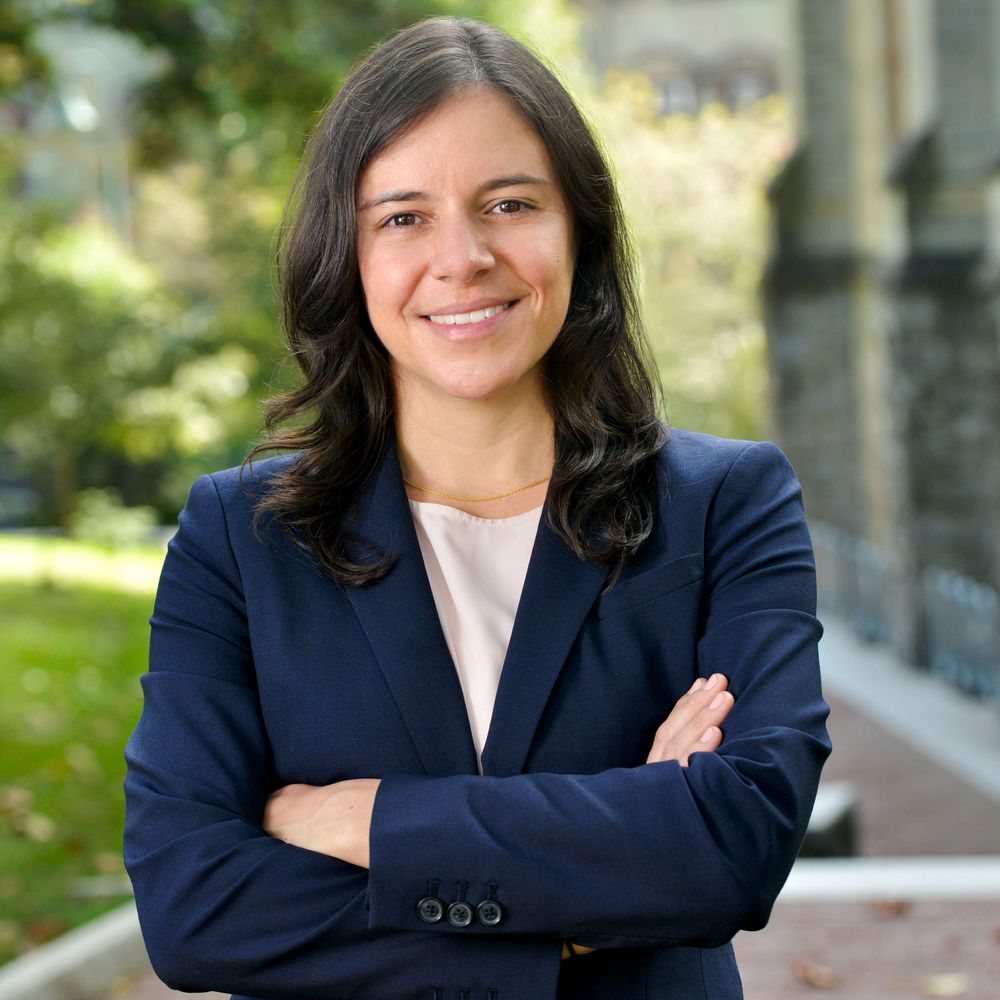
I’m honored and humbled to give a plenary talk at ACIC this year with such an impressive group of speakers.
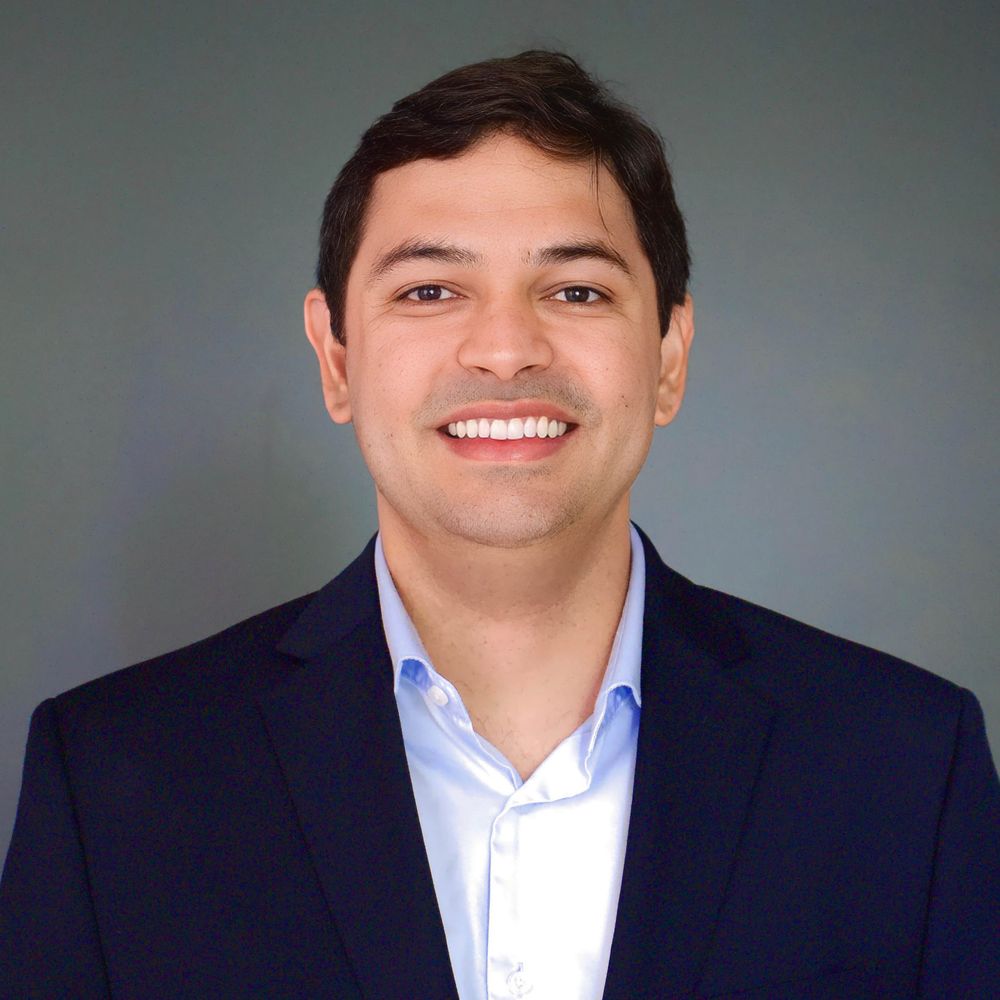
January is almost over, which means conference season planning is in full swing! If causal inference is your thing—and it should be—join us at the ACIC
The American Causal Inference Conference is coming to Salt Lake City, May 11-14, and it’d be great to see some of you there!
The American Causal Inference Conference is coming to Salt Lake City, May 11-14, and it’d be great to see some of you there!

January 29, 2026 at 5:43 PM
I’m honored and humbled to give a plenary talk at ACIC this year with such an impressive group of speakers.
Reposted by The Warren Center for Network & Data Sciences
🚨 Webinar alert! PlanYourScience.com - Less Rushing = Better Science.
Wednesday, March 11, 2026 @ 12 pm ET
RSVP at c4r.io/events
#ScientificRigor #PhDLife #PlanYourScience #Communityforrigor
Wednesday, March 11, 2026 @ 12 pm ET
RSVP at c4r.io/events
#ScientificRigor #PhDLife #PlanYourScience #Communityforrigor

January 29, 2026 at 1:01 PM
🚨 Webinar alert! PlanYourScience.com - Less Rushing = Better Science.
Wednesday, March 11, 2026 @ 12 pm ET
RSVP at c4r.io/events
#ScientificRigor #PhDLife #PlanYourScience #Communityforrigor
Wednesday, March 11, 2026 @ 12 pm ET
RSVP at c4r.io/events
#ScientificRigor #PhDLife #PlanYourScience #Communityforrigor
Reposted by The Warren Center for Network & Data Sciences

The other paper accepted to @iclr-conf.bsky.social 2026 🇧🇷. Our work on replicable RL sheds some light on how to consistently make decisions in RL.
@ericeaton.bsky.social @mkearnsphilly.bsky.social @aaroth.bsky.social @sikatasengupta.bsky.social @optimistsinc.bsky.social
@ericeaton.bsky.social @mkearnsphilly.bsky.social @aaroth.bsky.social @sikatasengupta.bsky.social @optimistsinc.bsky.social
I think I posted about it before but never with a thread. We recently put a new preprint on arxiv.
📖 Replicable Reinforcement Learning with Linear Function Approximation
🔗 arxiv.org/abs/2509.08660
In this paper, we study formal replicability in RL with linear function approximation. The... (1/6)
📖 Replicable Reinforcement Learning with Linear Function Approximation
🔗 arxiv.org/abs/2509.08660
In this paper, we study formal replicability in RL with linear function approximation. The... (1/6)

Replicable Reinforcement Learning with Linear Function Approximation
Replication of experimental results has been a challenge faced by many scientific disciplines, including the field of machine learning. Recent work on the theory of machine learning has formalized rep...
arxiv.org
January 26, 2026 at 4:08 PM
The other paper accepted to @iclr-conf.bsky.social 2026 🇧🇷. Our work on replicable RL sheds some light on how to consistently make decisions in RL.
@ericeaton.bsky.social @mkearnsphilly.bsky.social @aaroth.bsky.social @sikatasengupta.bsky.social @optimistsinc.bsky.social
@ericeaton.bsky.social @mkearnsphilly.bsky.social @aaroth.bsky.social @sikatasengupta.bsky.social @optimistsinc.bsky.social
Reposted by The Warren Center for Network & Data Sciences
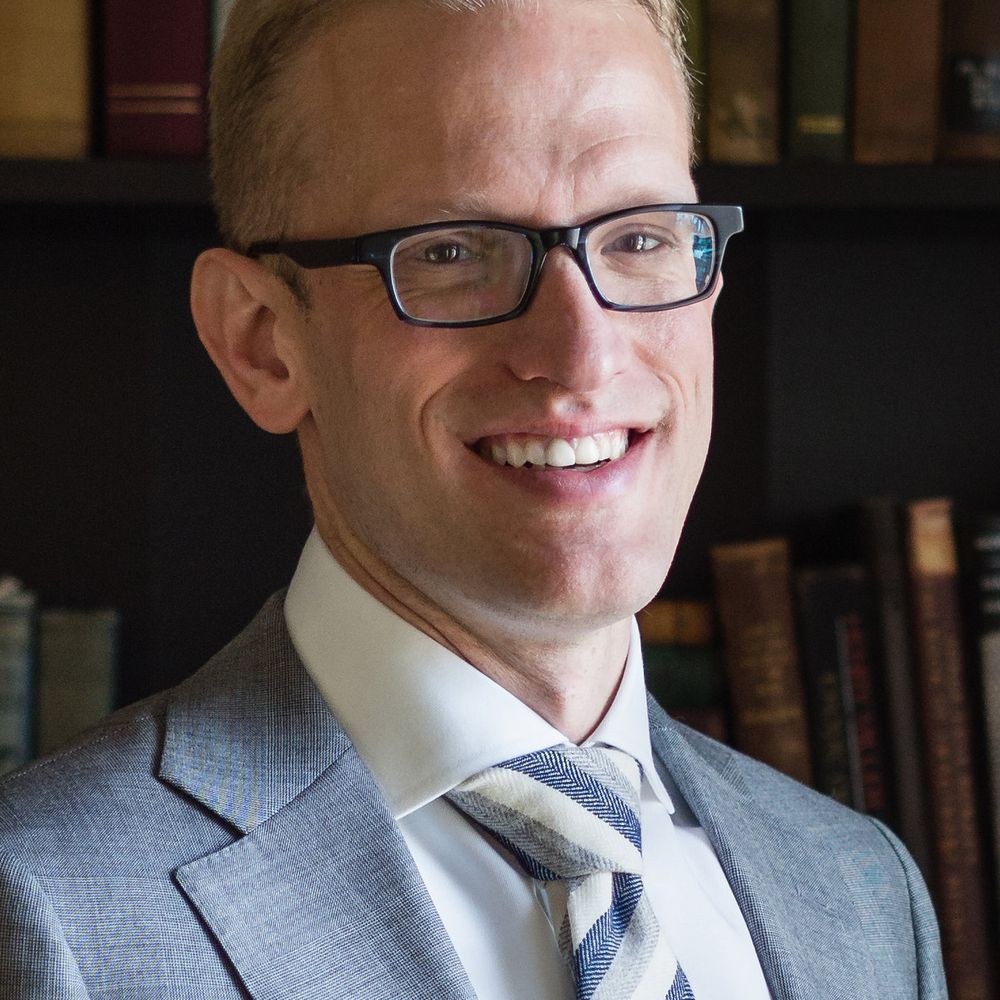
So happy to see this new, growing open data resource out -- all credit to the amazing @juliettebrook.bsky.social + @tsalo.bsky.social + a superb team!!!!
NOTE: @juliettebrook.bsky.social is currently applying to clinical psych PhD programs -- great opportunity to recruit a ⭐TOTAL ⭐ STAR ⭐
NOTE: @juliettebrook.bsky.social is currently applying to clinical psych PhD programs -- great opportunity to recruit a ⭐TOTAL ⭐ STAR ⭐
Brook and Salo et al. describe the study protocol and initial release of an open dataset of behavioral and neuroimaging measures in youth: doi.org/10.52294/001...
@juliettebrook.bsky.social @tsalo.bsky.social @ted-satterthwaite.bsky.social @ohbmossig.bsky.social
#OpenDatasets #SpecialIssue
@juliettebrook.bsky.social @tsalo.bsky.social @ted-satterthwaite.bsky.social @ohbmossig.bsky.social
#OpenDatasets #SpecialIssue

January 26, 2026 at 6:32 PM
So happy to see this new, growing open data resource out -- all credit to the amazing @juliettebrook.bsky.social + @tsalo.bsky.social + a superb team!!!!
NOTE: @juliettebrook.bsky.social is currently applying to clinical psych PhD programs -- great opportunity to recruit a ⭐TOTAL ⭐ STAR ⭐
NOTE: @juliettebrook.bsky.social is currently applying to clinical psych PhD programs -- great opportunity to recruit a ⭐TOTAL ⭐ STAR ⭐