


UNSW Biological, Earth and Environmental Sciences
@unswbees.bsky.social
News, events and the latest research from the School of BEES, University of New South Wales - www.unsw.edu.au/science/our-schools/bees
Reposted by UNSW Biological, Earth and Environmental Sciences

"Engaging landholders with science and the natural world and getting them more passionate about diversity makes them far more likely to be invested in protecting that diversity," said @thebeachcomber.bsky.social, lead author of paper.
Via @unswbees.bsky.social:
www.unsw.edu.au/newsroom/new...
Via @unswbees.bsky.social:
www.unsw.edu.au/newsroom/new...

No longer extinct, just critically endangered
Citizen science platforms including iNaturalist are leading to major new discoveries and are becoming crucial to the work of scientists. How do we make them even better?
www.unsw.edu.au
January 23, 2026 at 4:01 AM
"Engaging landholders with science and the natural world and getting them more passionate about diversity makes them far more likely to be invested in protecting that diversity," said @thebeachcomber.bsky.social, lead author of paper.
Via @unswbees.bsky.social:
www.unsw.edu.au/newsroom/new...
Via @unswbees.bsky.social:
www.unsw.edu.au/newsroom/new...


Reposted by UNSW Biological, Earth and Environmental Sciences

Exciting news 🎉 Our CCRC scientist Andréa Taschetto and team have just released “Meteorology and Climate of the Southern Hemisphere” book, an updated edition of David Karoly’s 1998 monograph, published by Cambridge University Press. +
Available at lnkd.in/g4SFsM9k
www.cambridge.org/au/universit...
Available at lnkd.in/g4SFsM9k
www.cambridge.org/au/universit...

Meteorology and Climate of the Southern Hemisphere | Cambridge University Press & Assessment
www.cambridge.org
December 19, 2025 at 2:47 AM
Exciting news 🎉 Our CCRC scientist Andréa Taschetto and team have just released “Meteorology and Climate of the Southern Hemisphere” book, an updated edition of David Karoly’s 1998 monograph, published by Cambridge University Press. +
Available at lnkd.in/g4SFsM9k
www.cambridge.org/au/universit...
Available at lnkd.in/g4SFsM9k
www.cambridge.org/au/universit...
Reposted by UNSW Biological, Earth and Environmental Sciences

We’ve partnered with DP World to create port infrastructure that benefits both people and nature. Living Ports @JebelAli has 1,000+ panels, the largest Living Seawall in the world!

December 11, 2025 at 5:46 AM
We’ve partnered with DP World to create port infrastructure that benefits both people and nature. Living Ports @JebelAli has 1,000+ panels, the largest Living Seawall in the world!
Reposted by UNSW Biological, Earth and Environmental Sciences
If you're interested in drought and AI, our PhD student Matt Grant and researcher Dr Sanaa Hobeichi have been featured in this UNSW Newsroom! It shows Australian droughts are lasting longer (especially SE & SW), with AI ++
www.unsw.edu.au/newsroom/new...
#Drought #ClimateChange #AI #UNSWResearch
www.unsw.edu.au/newsroom/new...
#Drought #ClimateChange #AI #UNSWResearch

Study shows droughts lasting longer across Australia
UNSW research shows droughts are lasting longer in Australia, particularly in regions where most people live.
www.unsw.edu.au
December 15, 2025 at 12:08 AM
If you're interested in drought and AI, our PhD student Matt Grant and researcher Dr Sanaa Hobeichi have been featured in this UNSW Newsroom! It shows Australian droughts are lasting longer (especially SE & SW), with AI ++
www.unsw.edu.au/newsroom/new...
#Drought #ClimateChange #AI #UNSWResearch
www.unsw.edu.au/newsroom/new...
#Drought #ClimateChange #AI #UNSWResearch

Reposted by UNSW Biological, Earth and Environmental Sciences

🌱Angela also sat down with our Executive Editor Richard Bardgett to talk about how she went from seed science to applied ecology, and falling into a career in academia
🎧Listen to the podcast here: buff.ly/2augoKE
🎧Listen to the podcast here: buff.ly/2augoKE

Eminent Ecologist 2025: Angela Moles | Lessons in starting out as an ecologist
British Ecological Society · Episode
open.spotify.com
December 11, 2025 at 10:11 AM
🌱Angela also sat down with our Executive Editor Richard Bardgett to talk about how she went from seed science to applied ecology, and falling into a career in academia
🎧Listen to the podcast here: buff.ly/2augoKE
🎧Listen to the podcast here: buff.ly/2augoKE
Reposted by UNSW Biological, Earth and Environmental Sciences
🏆We are pleased to announce that our Eminent Ecologist for 2025 is Angela Moles!
✨Angela has collected a few of her favourite Journal of Ecology papers together here: buff.ly/86uQ6v5
✨Angela has collected a few of her favourite Journal of Ecology papers together here: buff.ly/86uQ6v5
December 11, 2025 at 10:11 AM
🏆We are pleased to announce that our Eminent Ecologist for 2025 is Angela Moles!
✨Angela has collected a few of her favourite Journal of Ecology papers together here: buff.ly/86uQ6v5
✨Angela has collected a few of her favourite Journal of Ecology papers together here: buff.ly/86uQ6v5
Excited to be the new home for the ARC Centre of Excellence for Our Future Oceans, led by @profmattengland.bsky.social here at UNSW Science www.unsw.edu.au/newsroom/new...

Driving discovery: UNSW receives $70m for two Centres of Excellence
Two new national research centres will unite leading experts to tackle challenges in ocean sustainability and quantum computing – areas critical to Australia’s future prosperity.
www.unsw.edu.au
December 10, 2025 at 10:59 PM
Excited to be the new home for the ARC Centre of Excellence for Our Future Oceans, led by @profmattengland.bsky.social here at UNSW Science www.unsw.edu.au/newsroom/new...
Reposted by UNSW Biological, Earth and Environmental Sciences

Measuring rainfall recharge thresholds allows researchers to assess how much rainfall is needed to recharge groundwater and when this recharge occurs, write @andy-baker.bsky.social + colleagues at CSIRO, UNSW, @flindersuniversity.bsky.social, & @deakinuniversity.bsky.social
eos.org/science-upda...
eos.org/science-upda...

When Does Rainfall Become Recharge? - Eos
Counting drips in caves is helping to reveal how much precipitation is needed to start refilling underground aquifers.
eos.org
December 4, 2025 at 3:34 PM
Measuring rainfall recharge thresholds allows researchers to assess how much rainfall is needed to recharge groundwater and when this recharge occurs, write @andy-baker.bsky.social + colleagues at CSIRO, UNSW, @flindersuniversity.bsky.social, & @deakinuniversity.bsky.social
eos.org/science-upda...
eos.org/science-upda...
Reposted by UNSW Biological, Earth and Environmental Sciences
New paper alert!! Repetition and order of exposure to salinization and nutrient enrichment drive freshwater microbial community responses, led by PhD student Rose Fuggle with supervisors Mariana Mayer Pinto, Miguel Matias and Ziggy Marzinelli. 🧪🌐🦠
Read here: doi.org/10.1002/ecy....
#microbes
Read here: doi.org/10.1002/ecy....
#microbes

Repetition and order of exposure to salinization and nutrient enrichment drive freshwater microbial community responses
Biological systems face multiple stressors that impact biodiversity and ecosystem functions, with complex interactions that vary spatially and temporally leading to unpredictable outcomes. In freshwa...
doi.org
December 1, 2025 at 10:16 PM
New paper alert!! Repetition and order of exposure to salinization and nutrient enrichment drive freshwater microbial community responses, led by PhD student Rose Fuggle with supervisors Mariana Mayer Pinto, Miguel Matias and Ziggy Marzinelli. 🧪🌐🦠
Read here: doi.org/10.1002/ecy....
#microbes
Read here: doi.org/10.1002/ecy....
#microbes
Reposted by UNSW Biological, Earth and Environmental Sciences

Queensland’s had a rough run of storms with giant hail recently - I talked with ABC news about them. www.abc.net.au/news/2025-11...

'Unusually active': Ten giant hail warnings for SEQ this storm season
The region has been hit by another round of storms which brought large and even giant hailstones. Is this the new normal?
www.abc.net.au
November 25, 2025 at 9:54 PM
Queensland’s had a rough run of storms with giant hail recently - I talked with ABC news about them. www.abc.net.au/news/2025-11...

Reposted by UNSW Biological, Earth and Environmental Sciences

Just like everyone and everything else that was already in Australia when the First Fleet arrived in 1788, dingoes had to adapt to their new reality.

Impacts of colonisation on dingoes are ‘written in their bones’, new research finds
theconversation.com
November 25, 2025 at 3:16 AM
Just like everyone and everything else that was already in Australia when the First Fleet arrived in 1788, dingoes had to adapt to their new reality.
Reposted by UNSW Biological, Earth and Environmental Sciences

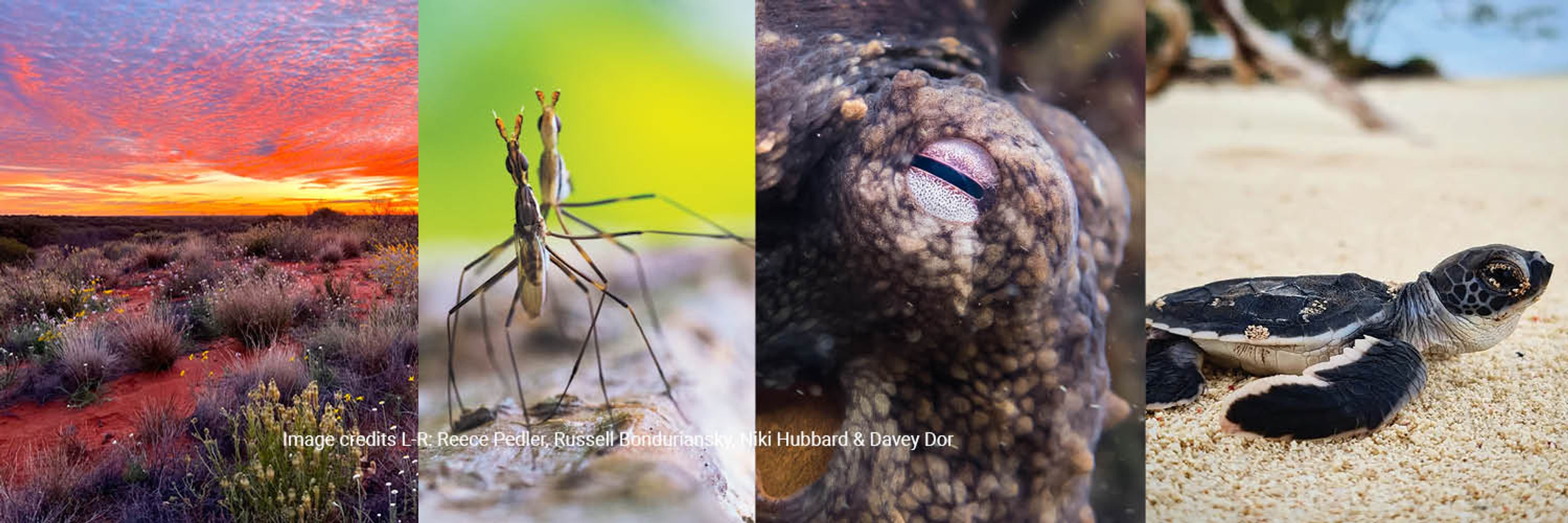
📖Cover Stories!📖
📙Dr. Russell Bonduriansky discusses the story behind the cover of Volume 30, Issue 10, published in 2016!
📸Russell shares his memories of capturing neriid flies in combat and how, thanks to a chance encounter on a walk with his son, he came to study them🪰
buff.ly/7PmIZKW
🧪🌍
📙Dr. Russell Bonduriansky discusses the story behind the cover of Volume 30, Issue 10, published in 2016!
📸Russell shares his memories of capturing neriid flies in combat and how, thanks to a chance encounter on a walk with his son, he came to study them🪰
buff.ly/7PmIZKW
🧪🌍

Cover Stories: Dr. Russell Bonduriansky
In this week’s blog post, Dr. Russell Bonduriansky, professor at University of New South Wales, discusses the story behind the cover for 2016’s Volume 30, Issue 10 of Functional Ecology. Russ…
buff.ly
November 21, 2025 at 4:15 PM
📖Cover Stories!📖
📙Dr. Russell Bonduriansky discusses the story behind the cover of Volume 30, Issue 10, published in 2016!
📸Russell shares his memories of capturing neriid flies in combat and how, thanks to a chance encounter on a walk with his son, he came to study them🪰
buff.ly/7PmIZKW
🧪🌍
📙Dr. Russell Bonduriansky discusses the story behind the cover of Volume 30, Issue 10, published in 2016!
📸Russell shares his memories of capturing neriid flies in combat and how, thanks to a chance encounter on a walk with his son, he came to study them🪰
buff.ly/7PmIZKW
🧪🌍
Reposted by UNSW Biological, Earth and Environmental Sciences
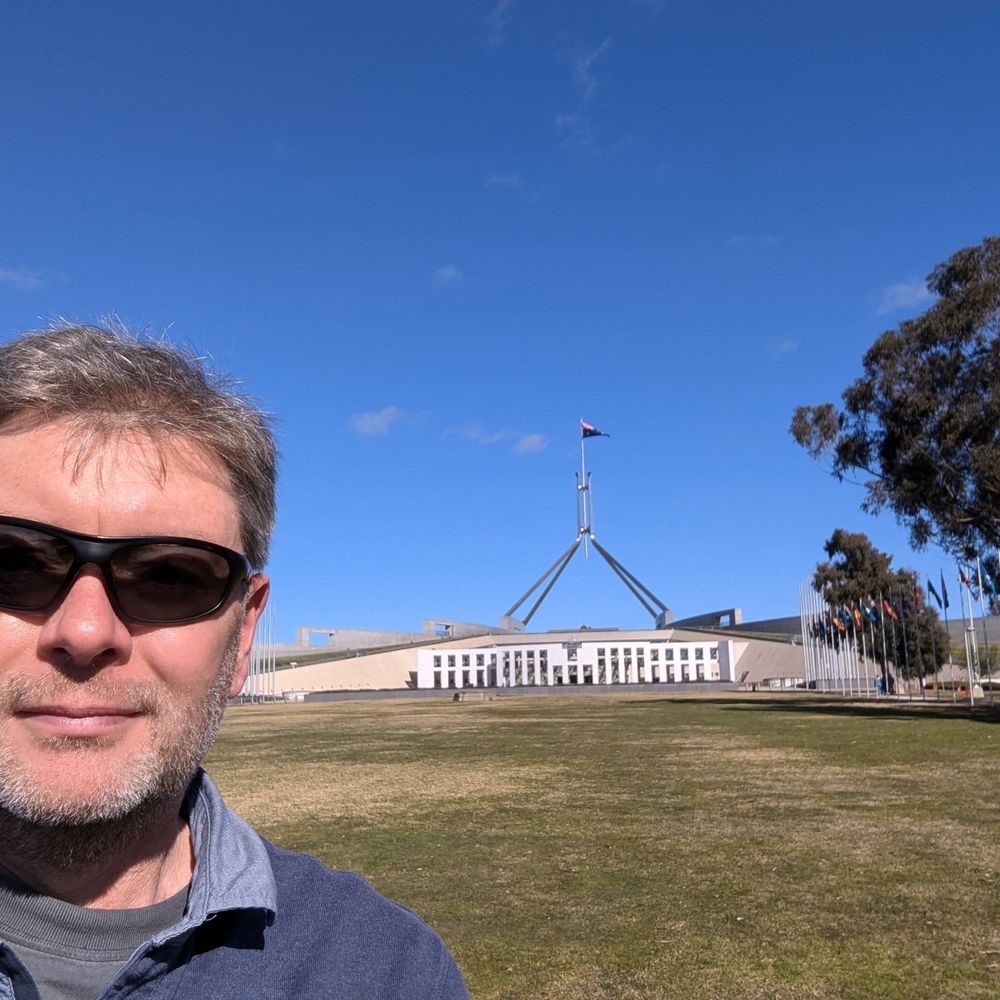
It's a wrap on our Wellington Caves fieldwork and filming about groundwater recharge. I have some superstar UNSW colleagues, happy to film and be filmed. Looking forward to see how all this looks. Thanks to @marilumelozurita.bsky.social and the
@unswbees.bsky.social team
@unswbees.bsky.social team


November 12, 2025 at 6:32 PM
It's a wrap on our Wellington Caves fieldwork and filming about groundwater recharge. I have some superstar UNSW colleagues, happy to film and be filmed. Looking forward to see how all this looks. Thanks to @marilumelozurita.bsky.social and the
@unswbees.bsky.social team
@unswbees.bsky.social team

Our work with the Gamay Rangers to restore the environmental and cultural values of seagrass in Gamay - Botany Bay www.abc.net.au/news/2025-10...

'Localised extinction' risk for seagrass in Botany Bay
It is estimated half of the local seagrass habitat in Gamay (Botany Bay) has already been lost. Researchers and Aboriginal rangers are replanting seagrass fragments and using biochar to restore the ar...
www.abc.net.au
October 22, 2025 at 8:46 PM
Our work with the Gamay Rangers to restore the environmental and cultural values of seagrass in Gamay - Botany Bay www.abc.net.au/news/2025-10...
Reposted by UNSW Biological, Earth and Environmental Sciences

New research from UNSW and the University of Tasmania reveals how predator size and diversity influence urchin predation on New South Wales reefs. Large male blue gropers were responsible for three-quarters of all urchin attacks. Learn more: greatsouthernreef.com/urchin-preda...
October 12, 2025 at 9:23 PM
New research from UNSW and the University of Tasmania reveals how predator size and diversity influence urchin predation on New South Wales reefs. Large male blue gropers were responsible for three-quarters of all urchin attacks. Learn more: greatsouthernreef.com/urchin-preda...
Reposted by UNSW Biological, Earth and Environmental Sciences
CCRC Senior Research Fellow @drjucker.bsky.social explains in this Conversation article what is happening above Antarctica right now, and how it might impact us: theconversation.com/air-temperat...
@unswbees.bsky.social
@unswbees.bsky.social

Air temperatures over Antarctica have soared 35ºC above average. What does this unusual event mean for Australia?
The stratospheric polar vortex high above Antarctica has rapidly heated up. These sudden bursts of heat can bring rapid weather changes in Australia
theconversation.com
September 30, 2025 at 1:37 AM
CCRC Senior Research Fellow @drjucker.bsky.social explains in this Conversation article what is happening above Antarctica right now, and how it might impact us: theconversation.com/air-temperat...
@unswbees.bsky.social
@unswbees.bsky.social
UNSW scientists outline what makes Antarctica a laboratory like no other news.unsw.edu.au/en/breaking-...

Breaking the ice: why study Antarctica?
From unique wildlife to resilient microbes, world-changing climate dynamics to untapped biotechnological potential – four UNSW scientists outline what makes Antarctica a laboratory like no other.
news.unsw.edu.au
September 21, 2025 at 9:47 PM
UNSW scientists outline what makes Antarctica a laboratory like no other news.unsw.edu.au/en/breaking-...
Excited to share that we’re part of ANZIC! This collaboration means our researchers (and students!) get a seat at the table for international drilling expeditions — bringing home samples and discoveries that shape our understanding of Earth. www.iodp.org.au/2025/09/18/1...


September 19, 2025 at 2:21 AM
Excited to share that we’re part of ANZIC! This collaboration means our researchers (and students!) get a seat at the table for international drilling expeditions — bringing home samples and discoveries that shape our understanding of Earth. www.iodp.org.au/2025/09/18/1...
Reposted by UNSW Biological, Earth and Environmental Sciences
We’re honoured to have won the Australian Museum Eureka Prize for Environmental Research! Huge thanks to our amazing partners Reef Design Lab, global collaborators, and the many supporters who made this possible. It was incredible to celebrate alongside so many of the nation’s leading scientists!

September 4, 2025 at 4:47 AM
We’re honoured to have won the Australian Museum Eureka Prize for Environmental Research! Huge thanks to our amazing partners Reef Design Lab, global collaborators, and the many supporters who made this possible. It was incredible to celebrate alongside so many of the nation’s leading scientists!
Reposted by UNSW Biological, Earth and Environmental Sciences

🏆 Dr Aaron Eger from @unsw.edu.au is awarded the Eureka Prize for Emerging Leader in Science. #EurekaPrizes
Learn more: youtu.be/M06od5P7s1s
Learn more: youtu.be/M06od5P7s1s

September 3, 2025 at 11:34 AM
🏆 Dr Aaron Eger from @unsw.edu.au is awarded the Eureka Prize for Emerging Leader in Science. #EurekaPrizes
Learn more: youtu.be/M06od5P7s1s
Learn more: youtu.be/M06od5P7s1s