


UC Davis CLEAR Center
@ucdavisclear.bsky.social
Bringing clarity to the relationship between livestock and the environment. Led by Dr. Frank Mitloehner.
Soil health plays a huge role in both crop farming and livestock production. Recently, Dr. Frank Mitloehner visited pig farmer turned crop farmer, Gary Asay in Osco, Illinois to learn how his no-till operation keeps soil healthy and his farm sustainable. 🌱 1/

January 14, 2026 at 10:45 PM
Soil health plays a huge role in both crop farming and livestock production. Recently, Dr. Frank Mitloehner visited pig farmer turned crop farmer, Gary Asay in Osco, Illinois to learn how his no-till operation keeps soil healthy and his farm sustainable. 🌱 1/
Researchers at UC Davis, have found that introducing seaweed pellets into cattle feed can reduce enteric methane emissions by 40%. 🐄 🐂 1/
January 12, 2026 at 6:23 PM
Researchers at UC Davis, have found that introducing seaweed pellets into cattle feed can reduce enteric methane emissions by 40%. 🐄 🐂 1/
On #NationalMilkDay, a reminder of what sustainability looks like. CA dairy cows upcycle feed that's 85% inedible to humans (grasses, grains & ag byproducts). In CA, 20% of ag byproducts ends up in a cow's rumen instead of landfill, or as Dr. Frank Mitloehner says, "rotting under the sky." 🐄

January 11, 2026 at 8:18 PM
On #NationalMilkDay, a reminder of what sustainability looks like. CA dairy cows upcycle feed that's 85% inedible to humans (grasses, grains & ag byproducts). In CA, 20% of ag byproducts ends up in a cow's rumen instead of landfill, or as Dr. Frank Mitloehner says, "rotting under the sky." 🐄
Researchers at Michigan State University & forward-thinking producers at Preston Farms are charting a new path for dairy sustainability and profitability thanks to high-oleic soybeans, a crop innovation that's already delivering measurable results on real farms. 🐄
scitechdaily.com/a-once-in-a-...
scitechdaily.com/a-once-in-a-...

A Once-in-a-Generation Discovery Could Transform the Future of Dairy Farming
Research-backed adoption of high-oleic soybeans is improving milk quality and lowering costs for Michigan dairy farms. At first look, the 400 acres of soybeans on the Preston family’s dairy farm in so...
scitechdaily.com
January 9, 2026 at 7:29 PM
Researchers at Michigan State University & forward-thinking producers at Preston Farms are charting a new path for dairy sustainability and profitability thanks to high-oleic soybeans, a crop innovation that's already delivering measurable results on real farms. 🐄
scitechdaily.com/a-once-in-a-...
scitechdaily.com/a-once-in-a-...
In our new episode on the CLEAR Conversations podcast, Dr. Kelly Nichols discusses how climate research goes beyond just measuring cattle's methane output. 🐄 1/
January 9, 2026 at 12:13 AM
In our new episode on the CLEAR Conversations podcast, Dr. Kelly Nichols discusses how climate research goes beyond just measuring cattle's methane output. 🐄 1/
New CLEAR Conversations Podcast episode! 🎙️
We had the pleasure of having Dr. Kelly Nichols sit down with us to discuss the most complex challenges in livestock production: how to feed cows in ways that support productivity, animal health, and environmental stewardship. 1/
We had the pleasure of having Dr. Kelly Nichols sit down with us to discuss the most complex challenges in livestock production: how to feed cows in ways that support productivity, animal health, and environmental stewardship. 1/
January 7, 2026 at 9:06 PM
New CLEAR Conversations Podcast episode! 🎙️
We had the pleasure of having Dr. Kelly Nichols sit down with us to discuss the most complex challenges in livestock production: how to feed cows in ways that support productivity, animal health, and environmental stewardship. 1/
We had the pleasure of having Dr. Kelly Nichols sit down with us to discuss the most complex challenges in livestock production: how to feed cows in ways that support productivity, animal health, and environmental stewardship. 1/
Burps, not farts. 🐮💨
January 6, 2026 at 9:55 PM
Burps, not farts. 🐮💨
Methane has taken center stage in climate discourse, not just scientifically, but politically. Once topic reserved for technical discussions on manure management & feed efficiency, has become flashpoint in debates over sustainability, regulation & even the legitimacy of livestock farming itself. 1/
January 5, 2026 at 10:43 PM
Methane has taken center stage in climate discourse, not just scientifically, but politically. Once topic reserved for technical discussions on manure management & feed efficiency, has become flashpoint in debates over sustainability, regulation & even the legitimacy of livestock farming itself. 1/
Happy New Year! 🎉
2025 was full of community, impact & growth at the CLEAR Center. From hosting State of the Science Summit to connecting with producers on the ground & advancing livestock sustainability research, these highlights are just part of the journey.
Ready for 2026 & the progress ahead.
2025 was full of community, impact & growth at the CLEAR Center. From hosting State of the Science Summit to connecting with producers on the ground & advancing livestock sustainability research, these highlights are just part of the journey.
Ready for 2026 & the progress ahead.

January 1, 2026 at 8:01 AM
Happy New Year! 🎉
2025 was full of community, impact & growth at the CLEAR Center. From hosting State of the Science Summit to connecting with producers on the ground & advancing livestock sustainability research, these highlights are just part of the journey.
Ready for 2026 & the progress ahead.
2025 was full of community, impact & growth at the CLEAR Center. From hosting State of the Science Summit to connecting with producers on the ground & advancing livestock sustainability research, these highlights are just part of the journey.
Ready for 2026 & the progress ahead.
Farming isn’t as easy as planting crops and feeding livestock. Producers like Dave Mensink show that agriculture requires resiliency and tactic when faced with challenging circumstances. 🌱 🐷 1/
December 29, 2025 at 7:41 PM
Farming isn’t as easy as planting crops and feeding livestock. Producers like Dave Mensink show that agriculture requires resiliency and tactic when faced with challenging circumstances. 🌱 🐷 1/
Moo-y Christmas! On behalf of the entire UC Davis CLEAR Center Team, we wish you and your loved ones a happy holiday season. 🎄

December 25, 2025 at 2:05 PM
Moo-y Christmas! On behalf of the entire UC Davis CLEAR Center Team, we wish you and your loved ones a happy holiday season. 🎄
Over the past 50 years, milk production has doubled while the number of dairy cows has stayed nearly the same.
By improving productivity and efficiency through genetics, feed, and improved management, cows now produce more milk than ever before. More milk, fewer cows, less climate impact. 📉
By improving productivity and efficiency through genetics, feed, and improved management, cows now produce more milk than ever before. More milk, fewer cows, less climate impact. 📉
December 22, 2025 at 10:56 PM
Over the past 50 years, milk production has doubled while the number of dairy cows has stayed nearly the same.
By improving productivity and efficiency through genetics, feed, and improved management, cows now produce more milk than ever before. More milk, fewer cows, less climate impact. 📉
By improving productivity and efficiency through genetics, feed, and improved management, cows now produce more milk than ever before. More milk, fewer cows, less climate impact. 📉
At our last annual State of the Science Summit: Reducing Methane from Animal Agriculture, Anna Trillingsgaard spoke about Denmark's progressive new climate initiative — to reduce greenhouse gas emissions by 70% by 2030. 1/
December 19, 2025 at 10:51 PM
At our last annual State of the Science Summit: Reducing Methane from Animal Agriculture, Anna Trillingsgaard spoke about Denmark's progressive new climate initiative — to reduce greenhouse gas emissions by 70% by 2030. 1/
We're proud to highlight the active role UC Davis took at the California Cattlemen's Association's 109th Convention early this month. 1/
December 18, 2025 at 2:54 AM
We're proud to highlight the active role UC Davis took at the California Cattlemen's Association's 109th Convention early this month. 1/
What is AMR? 👉 Antimicrobial Resistance.
Antimicrobials can be lifesaving tool to treat bacterial infections in livestock animals, but using too much of an antimicrobial can cause bacteria to develop resistance to the antibiotics that were once meant to eliminate them. 1/
Antimicrobials can be lifesaving tool to treat bacterial infections in livestock animals, but using too much of an antimicrobial can cause bacteria to develop resistance to the antibiotics that were once meant to eliminate them. 1/
December 16, 2025 at 10:31 PM
What is AMR? 👉 Antimicrobial Resistance.
Antimicrobials can be lifesaving tool to treat bacterial infections in livestock animals, but using too much of an antimicrobial can cause bacteria to develop resistance to the antibiotics that were once meant to eliminate them. 1/
Antimicrobials can be lifesaving tool to treat bacterial infections in livestock animals, but using too much of an antimicrobial can cause bacteria to develop resistance to the antibiotics that were once meant to eliminate them. 1/
In this episode of #CLEARConversations, Conor McCabe dives into the science behind methane-reducing feed additives & breaks down how they can lower enteric methane (methane belched by cows). 🐄
Tune in 👉 www.youtube.com/watch?v=qL8e... 🔗
Tune in 👉 www.youtube.com/watch?v=qL8e... 🔗
December 15, 2025 at 10:18 PM
In this episode of #CLEARConversations, Conor McCabe dives into the science behind methane-reducing feed additives & breaks down how they can lower enteric methane (methane belched by cows). 🐄
Tune in 👉 www.youtube.com/watch?v=qL8e... 🔗
Tune in 👉 www.youtube.com/watch?v=qL8e... 🔗
Livestock methane emissions account for 11% of global greenhouse gases, but what if we could reduce that in grazing systems? 🌍 🐂 1/
December 12, 2025 at 4:22 AM
Livestock methane emissions account for 11% of global greenhouse gases, but what if we could reduce that in grazing systems? 🌍 🐂 1/
New release from Spark Climate Solutions! 🚀
SOTS Bot: Interactive tool that pulls from 2025 State of Science Summit video library, provided by the CLEAR Center, to give expert-backed, science-based answers on feed additives, genetics, manure management and more. 👇
clear.ucdavis.edu/news/new-int...
SOTS Bot: Interactive tool that pulls from 2025 State of Science Summit video library, provided by the CLEAR Center, to give expert-backed, science-based answers on feed additives, genetics, manure management and more. 👇
clear.ucdavis.edu/news/new-int...

New Interactive Tool Answers Questions About Methane from the 2025 State of the Science Summit
The State of the Science Summit, hosted by the UC Davis CLEAR Center, Spark Climate Solutions, California Department of Food and Agriculture and College of Agricultural and Environmental Sciences is b...
clear.ucdavis.edu
December 9, 2025 at 11:55 PM
New release from Spark Climate Solutions! 🚀
SOTS Bot: Interactive tool that pulls from 2025 State of Science Summit video library, provided by the CLEAR Center, to give expert-backed, science-based answers on feed additives, genetics, manure management and more. 👇
clear.ucdavis.edu/news/new-int...
SOTS Bot: Interactive tool that pulls from 2025 State of Science Summit video library, provided by the CLEAR Center, to give expert-backed, science-based answers on feed additives, genetics, manure management and more. 👇
clear.ucdavis.edu/news/new-int...
What's research without a team?
Through the California Department of Food and Agriculture's Livestock Enteric Methane Emission Reduction Research Program (LEMER-RP), we're introducing a methane-reducing bolus at the very start of a calf's life to influence emissions across its entire lifetime. 💊 🐂
Through the California Department of Food and Agriculture's Livestock Enteric Methane Emission Reduction Research Program (LEMER-RP), we're introducing a methane-reducing bolus at the very start of a calf's life to influence emissions across its entire lifetime. 💊 🐂
December 8, 2025 at 11:02 PM
What's research without a team?
Through the California Department of Food and Agriculture's Livestock Enteric Methane Emission Reduction Research Program (LEMER-RP), we're introducing a methane-reducing bolus at the very start of a calf's life to influence emissions across its entire lifetime. 💊 🐂
Through the California Department of Food and Agriculture's Livestock Enteric Methane Emission Reduction Research Program (LEMER-RP), we're introducing a methane-reducing bolus at the very start of a calf's life to influence emissions across its entire lifetime. 💊 🐂
Episode 7 on CLEAR Conversations out now! 🎙️
In this episode, we explore:
👉 What a ruminant is and how their stomach functions
👉 Methane as a natural byproduct from digestion
👉 How feed additives help reduce enteric methane in dairy cows
Tune in: www.youtube.com/watch?v=qL8e...
In this episode, we explore:
👉 What a ruminant is and how their stomach functions
👉 Methane as a natural byproduct from digestion
👉 How feed additives help reduce enteric methane in dairy cows
Tune in: www.youtube.com/watch?v=qL8e...
December 6, 2025 at 1:00 AM
Episode 7 on CLEAR Conversations out now! 🎙️
In this episode, we explore:
👉 What a ruminant is and how their stomach functions
👉 Methane as a natural byproduct from digestion
👉 How feed additives help reduce enteric methane in dairy cows
Tune in: www.youtube.com/watch?v=qL8e...
In this episode, we explore:
👉 What a ruminant is and how their stomach functions
👉 Methane as a natural byproduct from digestion
👉 How feed additives help reduce enteric methane in dairy cows
Tune in: www.youtube.com/watch?v=qL8e...
Happy World Soil Day! Healthy soil stores carbon, protects against erosion, and keeps farms thriving. Combined with climate-smart livestock practices including genetics, feed additives, optimized feed, and methane-inhibiting boluses for cattle, ag can tackle climate change from the ground up. 🌾🐂

December 5, 2025 at 7:51 PM
Happy World Soil Day! Healthy soil stores carbon, protects against erosion, and keeps farms thriving. Combined with climate-smart livestock practices including genetics, feed additives, optimized feed, and methane-inhibiting boluses for cattle, ag can tackle climate change from the ground up. 🌾🐂
Heading into day two at CCA/CCW Annual Convention with brief remark from Dean Ashley Stokes on vision & priorities of UC Davis College of Agricultural and Environmental Sciences. Advancing research we’re currently doing & connecting with communities & agricultural industries is high on that list.

December 4, 2025 at 5:12 PM
Heading into day two at CCA/CCW Annual Convention with brief remark from Dean Ashley Stokes on vision & priorities of UC Davis College of Agricultural and Environmental Sciences. Advancing research we’re currently doing & connecting with communities & agricultural industries is high on that list.
Media training at California Cattlemen’s Association’s 109th Convention happening now! Our Associate Director for Comms on why it's important to do good things & talk about them. "If you're not sharing your story, someone else is going to tell them." Here's the kicker — may not be the most accurate.

December 3, 2025 at 9:19 PM
Media training at California Cattlemen’s Association’s 109th Convention happening now! Our Associate Director for Comms on why it's important to do good things & talk about them. "If you're not sharing your story, someone else is going to tell them." Here's the kicker — may not be the most accurate.
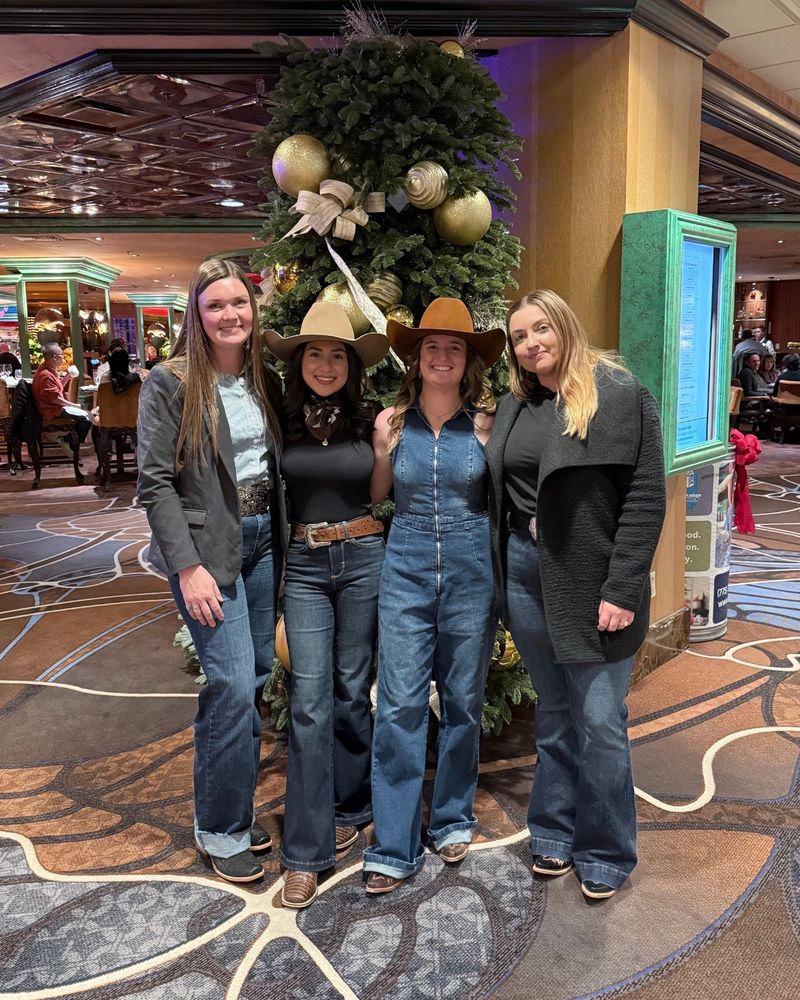
It’s been a great start here in Reno at the California Cattlemen's Association’s 109th Annual Convention!
Yesterday, our graduate students interviewed for CCA scholarships and today, the team at UC Davis CLEAR Center is here to talk science, sustainability, and solutions.
Yesterday, our graduate students interviewed for CCA scholarships and today, the team at UC Davis CLEAR Center is here to talk science, sustainability, and solutions.
December 3, 2025 at 5:03 PM
It’s been a great start here in Reno at the California Cattlemen's Association’s 109th Annual Convention!
Yesterday, our graduate students interviewed for CCA scholarships and today, the team at UC Davis CLEAR Center is here to talk science, sustainability, and solutions.
Yesterday, our graduate students interviewed for CCA scholarships and today, the team at UC Davis CLEAR Center is here to talk science, sustainability, and solutions.
We're excited to be co-hosting a session at the California Cattlemen's Association's 109th Annual Convention and engaging with the ranching community! 🤠 1/
December 2, 2025 at 9:34 PM
We're excited to be co-hosting a session at the California Cattlemen's Association's 109th Annual Convention and engaging with the ranching community! 🤠 1/