


Tara Murphy
@taramurphy.bsky.social
Professor and Head of School of Physics at the University of Sydney. Radio astronomer looking for transients and gravitational wave events. OzGrav CI. Teaching physics and the apocalypse. https://taramurphy.github.io
Views expressed here are my own :)
Views expressed here are my own :)
Reverse engineering cosmic dust in the lab...
Interesting new result from @sydney.edu.au plasma physics PhD student Linda Losurdo and supervisor David McKenzie.
www.youtube.com/watch?v=Nwvp...
⚛️ ☄️🔭 #WomenInSTEM
Interesting new result from @sydney.edu.au plasma physics PhD student Linda Losurdo and supervisor David McKenzie.
www.youtube.com/watch?v=Nwvp...
⚛️ ☄️🔭 #WomenInSTEM


February 1, 2026 at 10:27 PM
Reverse engineering cosmic dust in the lab...
Interesting new result from @sydney.edu.au plasma physics PhD student Linda Losurdo and supervisor David McKenzie.
www.youtube.com/watch?v=Nwvp...
⚛️ ☄️🔭 #WomenInSTEM
Interesting new result from @sydney.edu.au plasma physics PhD student Linda Losurdo and supervisor David McKenzie.
www.youtube.com/watch?v=Nwvp...
⚛️ ☄️🔭 #WomenInSTEM
Reposted by Tara Murphy
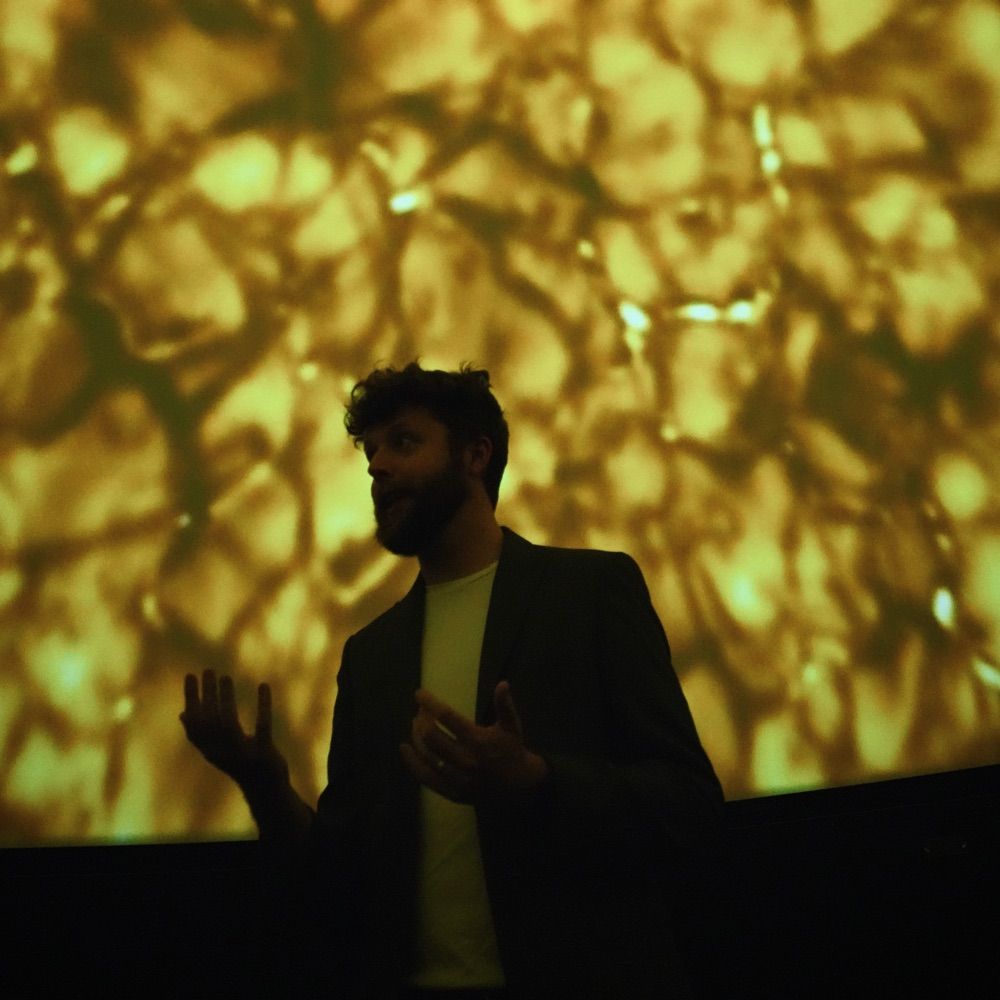
In today’s issue of Astronomy & Geophysics, the Royal Astronomical Society share the story of accidentally discovering a lost photograph of Carrington – bringing to light the only known photograph of the most iconic figure in solar astrophysics.
January 31, 2026 at 10:20 PM
In today’s issue of Astronomy & Geophysics, the Royal Astronomical Society share the story of accidentally discovering a lost photograph of Carrington – bringing to light the only known photograph of the most iconic figure in solar astrophysics.
Reposted by Tara Murphy
BREAKING: This is Richard Carrington, the first person to document solar flares on the Sun & suggest their influence on aurora at Earth. The largest solar storm on record, the Carrington Event, bares his name. But, there has been no photograph available of Carrington – until now!

January 31, 2026 at 10:20 PM
BREAKING: This is Richard Carrington, the first person to document solar flares on the Sun & suggest their influence on aurora at Earth. The largest solar storm on record, the Carrington Event, bares his name. But, there has been no photograph available of Carrington – until now!
Interesting new model for Long Period Transients, observed with three #RadioAstronomy telescopes - ASKAP, MeerKAT and the VLA!
theconversation.com/puzzling-slo...
☄️ 🔭 🧪
theconversation.com/puzzling-slo...
☄️ 🔭 🧪

Puzzling slow radio pulses are coming from space. A new study could finally explain them
Radio pulses repeating every minute-to-hour have puzzled astronomers, but a new paper in Nature Astronomy might finally shed some light.
theconversation.com
January 31, 2026 at 2:35 AM
Interesting new model for Long Period Transients, observed with three #RadioAstronomy telescopes - ASKAP, MeerKAT and the VLA!
theconversation.com/puzzling-slo...
☄️ 🔭 🧪
theconversation.com/puzzling-slo...
☄️ 🔭 🧪
Reposted by Tara Murphy

"While almost everything that astronomers study occurs in the vacuum of space, astronomy itself does not 'happen in a vacuum'.
Interactions between scientists, as well as outreach to members of the public, improve extensively from access to good communication tools."
Paper day! ⤵️
Interactions between scientists, as well as outreach to members of the public, improve extensively from access to good communication tools."
Paper day! ⤵️

The Astrosky Ecosystem: An independent online platform for science communication and social networking
While almost everything that astronomers study occurs in the vacuum of space, astronomy itself does not `happen in a vacuum'. Interactions between scientists, as well as outreach to members of the pub...
arxiv.org
January 26, 2026 at 10:29 AM
"While almost everything that astronomers study occurs in the vacuum of space, astronomy itself does not 'happen in a vacuum'.
Interactions between scientists, as well as outreach to members of the public, improve extensively from access to good communication tools."
Paper day! ⤵️
Interactions between scientists, as well as outreach to members of the public, improve extensively from access to good communication tools."
Paper day! ⤵️
Reposted by Tara Murphy
The night sky looks steady. It's not. 💥
In the night sky, asteroids drift. Stars pulse and flicker. Distant galaxies flare when something dramatic like a supernova is happening inside them.
The Universe is constantly changing, even when our eyes can’t see it. 🔭🧪☄️
In the night sky, asteroids drift. Stars pulse and flicker. Distant galaxies flare when something dramatic like a supernova is happening inside them.
The Universe is constantly changing, even when our eyes can’t see it. 🔭🧪☄️
January 26, 2026 at 6:50 PM
The night sky looks steady. It's not. 💥
In the night sky, asteroids drift. Stars pulse and flicker. Distant galaxies flare when something dramatic like a supernova is happening inside them.
The Universe is constantly changing, even when our eyes can’t see it. 🔭🧪☄️
In the night sky, asteroids drift. Stars pulse and flicker. Distant galaxies flare when something dramatic like a supernova is happening inside them.
The Universe is constantly changing, even when our eyes can’t see it. 🔭🧪☄️
Join us @sydney.edu.au for the annual Stibbs Lecture.
Deciphering the Music of the Stars: Asteroseismology, presented by astrophysicist Professor Conny Aerts.
Listen to the music of the stars, and see them in a whole new way!
Thurs 12 Feb 6pm.
Register: www.sydney.edu.au/science/news...
🔭 ⚛️ ☄️ 🧪
Deciphering the Music of the Stars: Asteroseismology, presented by astrophysicist Professor Conny Aerts.
Listen to the music of the stars, and see them in a whole new way!
Thurs 12 Feb 6pm.
Register: www.sydney.edu.au/science/news...
🔭 ⚛️ ☄️ 🧪

January 20, 2026 at 11:24 PM
Join us @sydney.edu.au for the annual Stibbs Lecture.
Deciphering the Music of the Stars: Asteroseismology, presented by astrophysicist Professor Conny Aerts.
Listen to the music of the stars, and see them in a whole new way!
Thurs 12 Feb 6pm.
Register: www.sydney.edu.au/science/news...
🔭 ⚛️ ☄️ 🧪
Deciphering the Music of the Stars: Asteroseismology, presented by astrophysicist Professor Conny Aerts.
Listen to the music of the stars, and see them in a whole new way!
Thurs 12 Feb 6pm.
Register: www.sydney.edu.au/science/news...
🔭 ⚛️ ☄️ 🧪
Welcome to Thomas Ohki, appointed Professor of Practice @sydney.edu.au #Physics!
Prof Ohki is a leader is commercialisation of quantum technologies and will (among other things) be helping train our students for the rapidly growing quantum tech industry.
www.sydney.edu.au/news-opinion...
⚛️ ⚛️ ⚛️
Prof Ohki is a leader is commercialisation of quantum technologies and will (among other things) be helping train our students for the rapidly growing quantum tech industry.
www.sydney.edu.au/news-opinion...
⚛️ ⚛️ ⚛️

Quantum industry leader Thomas Ohki appointed Professor of Practice
The University of Sydney has enlisted quantum computing expert Thomas Ohki to forge closer links with the commercial sector while training a new generation of researchers.
www.sydney.edu.au
January 20, 2026 at 8:50 PM
Welcome to Thomas Ohki, appointed Professor of Practice @sydney.edu.au #Physics!
Prof Ohki is a leader is commercialisation of quantum technologies and will (among other things) be helping train our students for the rapidly growing quantum tech industry.
www.sydney.edu.au/news-opinion...
⚛️ ⚛️ ⚛️
Prof Ohki is a leader is commercialisation of quantum technologies and will (among other things) be helping train our students for the rapidly growing quantum tech industry.
www.sydney.edu.au/news-opinion...
⚛️ ⚛️ ⚛️
#RadioAstronomy (well radio telescope, silhouetted against the aurora)
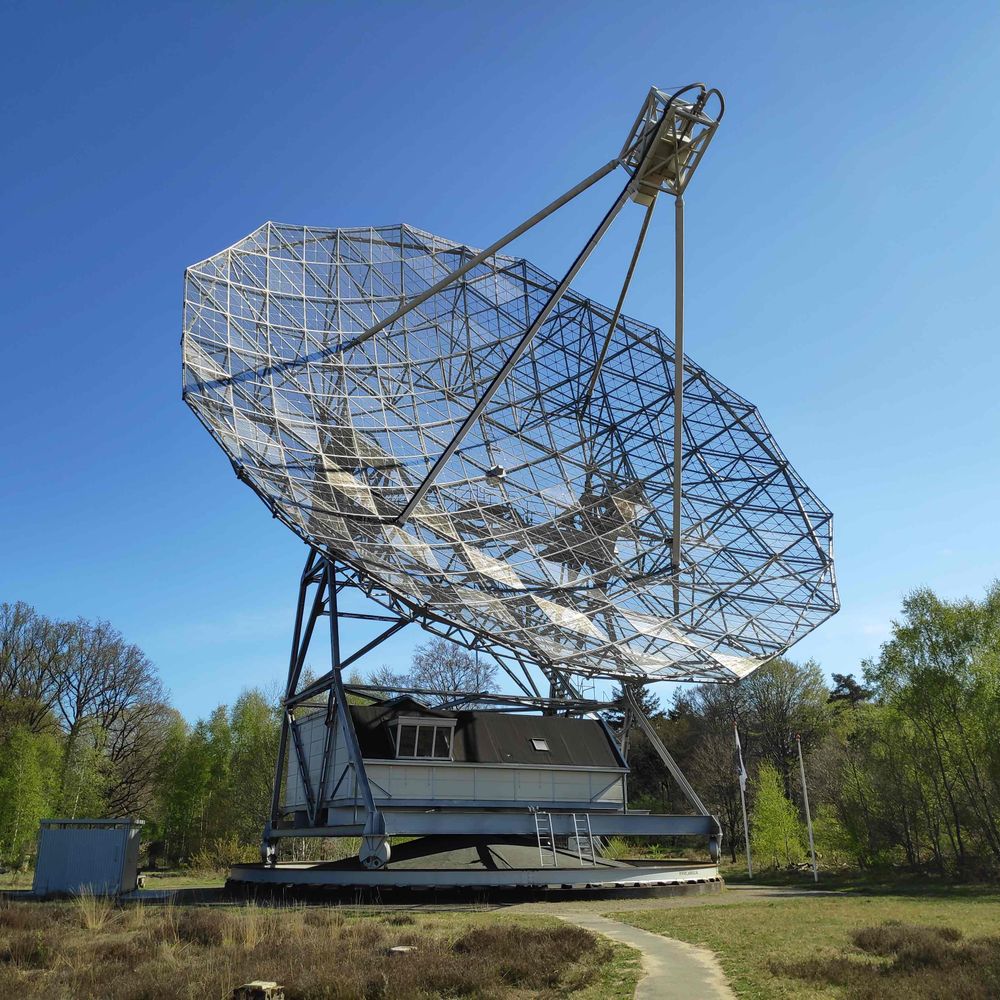
Great aurora visible in Dwingeloo yesterday!

January 20, 2026 at 8:26 PM
#RadioAstronomy (well radio telescope, silhouetted against the aurora)
Reposted by Tara Murphy
The final version of our Dawes Review on the Dynamic Radio Sky is now published!
doi.org/10.1017/pasa...
Everything you need to know about what causes radio transients: how we detect them, the history of radio transient surveys, and what new widefield radio telescopes will do.
#RadioAstronomy 🔭☄️🧪
doi.org/10.1017/pasa...
Everything you need to know about what causes radio transients: how we detect them, the history of radio transient surveys, and what new widefield radio telescopes will do.
#RadioAstronomy 🔭☄️🧪

January 12, 2026 at 8:36 PM
The final version of our Dawes Review on the Dynamic Radio Sky is now published!
doi.org/10.1017/pasa...
Everything you need to know about what causes radio transients: how we detect them, the history of radio transient surveys, and what new widefield radio telescopes will do.
#RadioAstronomy 🔭☄️🧪
doi.org/10.1017/pasa...
Everything you need to know about what causes radio transients: how we detect them, the history of radio transient surveys, and what new widefield radio telescopes will do.
#RadioAstronomy 🔭☄️🧪
The final version of our Dawes Review on the Dynamic Radio Sky is now published!
doi.org/10.1017/pasa...
Everything you need to know about what causes radio transients: how we detect them, the history of radio transient surveys, and what new widefield radio telescopes will do.
#RadioAstronomy 🔭☄️🧪
doi.org/10.1017/pasa...
Everything you need to know about what causes radio transients: how we detect them, the history of radio transient surveys, and what new widefield radio telescopes will do.
#RadioAstronomy 🔭☄️🧪
January 12, 2026 at 8:36 PM
The final version of our Dawes Review on the Dynamic Radio Sky is now published!
doi.org/10.1017/pasa...
Everything you need to know about what causes radio transients: how we detect them, the history of radio transient surveys, and what new widefield radio telescopes will do.
#RadioAstronomy 🔭☄️🧪
doi.org/10.1017/pasa...
Everything you need to know about what causes radio transients: how we detect them, the history of radio transient surveys, and what new widefield radio telescopes will do.
#RadioAstronomy 🔭☄️🧪
@scixcommunity.bsky.social - I find the search results and private library fonts small and faded compared to ADS (see screenshots).
Is it possible for the user to change these? The current results are not easy to read comfortably - higher contrast defaults would be more accessible.
Is it possible for the user to change these? The current results are not easy to read comfortably - higher contrast defaults would be more accessible.


January 5, 2026 at 2:07 AM
@scixcommunity.bsky.social - I find the search results and private library fonts small and faded compared to ADS (see screenshots).
Is it possible for the user to change these? The current results are not easy to read comfortably - higher contrast defaults would be more accessible.
Is it possible for the user to change these? The current results are not easy to read comfortably - higher contrast defaults would be more accessible.
Sometimes when I'm quickly checking whether someone in my team has classified a #RadioAstronomy source correctly, I paste the coordinates into the Aladin Sky Atlas , and confirm...
Yes, it is a star!
Such a great #AstroSci tool :) (aladin.cds.unistra.fr)
Yes, it is a star!
Such a great #AstroSci tool :) (aladin.cds.unistra.fr)

December 12, 2025 at 8:24 PM
Sometimes when I'm quickly checking whether someone in my team has classified a #RadioAstronomy source correctly, I paste the coordinates into the Aladin Sky Atlas , and confirm...
Yes, it is a star!
Such a great #AstroSci tool :) (aladin.cds.unistra.fr)
Yes, it is a star!
Such a great #AstroSci tool :) (aladin.cds.unistra.fr)
Some #Physics photography from the Australian Institute of Physics photography competition.
#Science #Art
#Science #Art

Winners of the 2025 AIP photo comp:
“Tesla Coil” by Flavio Spedalieri, Grand Prize
“Schrödinger’s Dog” by Lara Roychoudhry, Best Quantum-Themed Photo
“Sunset ripples” by Sarah O'Neill, University Student Prize
“Drill bit plasma” by Ermia Firouzabadi, School Student Prize
aip.org.au/ACT-Branch/1...
“Tesla Coil” by Flavio Spedalieri, Grand Prize
“Schrödinger’s Dog” by Lara Roychoudhry, Best Quantum-Themed Photo
“Sunset ripples” by Sarah O'Neill, University Student Prize
“Drill bit plasma” by Ermia Firouzabadi, School Student Prize
aip.org.au/ACT-Branch/1...


December 12, 2025 at 4:00 AM
Very happy to announce that our review of radio transients has now been published by PASA!
bit.ly/3Yg3hyD
Unlike most radio sources, transients change rapidly.
My favourite bit are these lightcurve cartoons that show how different types of transients change with time.
#RadioAstronomy
🔭 ☄️🧪
bit.ly/3Yg3hyD
Unlike most radio sources, transients change rapidly.
My favourite bit are these lightcurve cartoons that show how different types of transients change with time.
#RadioAstronomy
🔭 ☄️🧪

December 9, 2025 at 6:39 PM
Very happy to announce that our review of radio transients has now been published by PASA!
bit.ly/3Yg3hyD
Unlike most radio sources, transients change rapidly.
My favourite bit are these lightcurve cartoons that show how different types of transients change with time.
#RadioAstronomy
🔭 ☄️🧪
bit.ly/3Yg3hyD
Unlike most radio sources, transients change rapidly.
My favourite bit are these lightcurve cartoons that show how different types of transients change with time.
#RadioAstronomy
🔭 ☄️🧪
#RadioAstronomy of stars is a rapidly growing area of research as we discover more of them :)
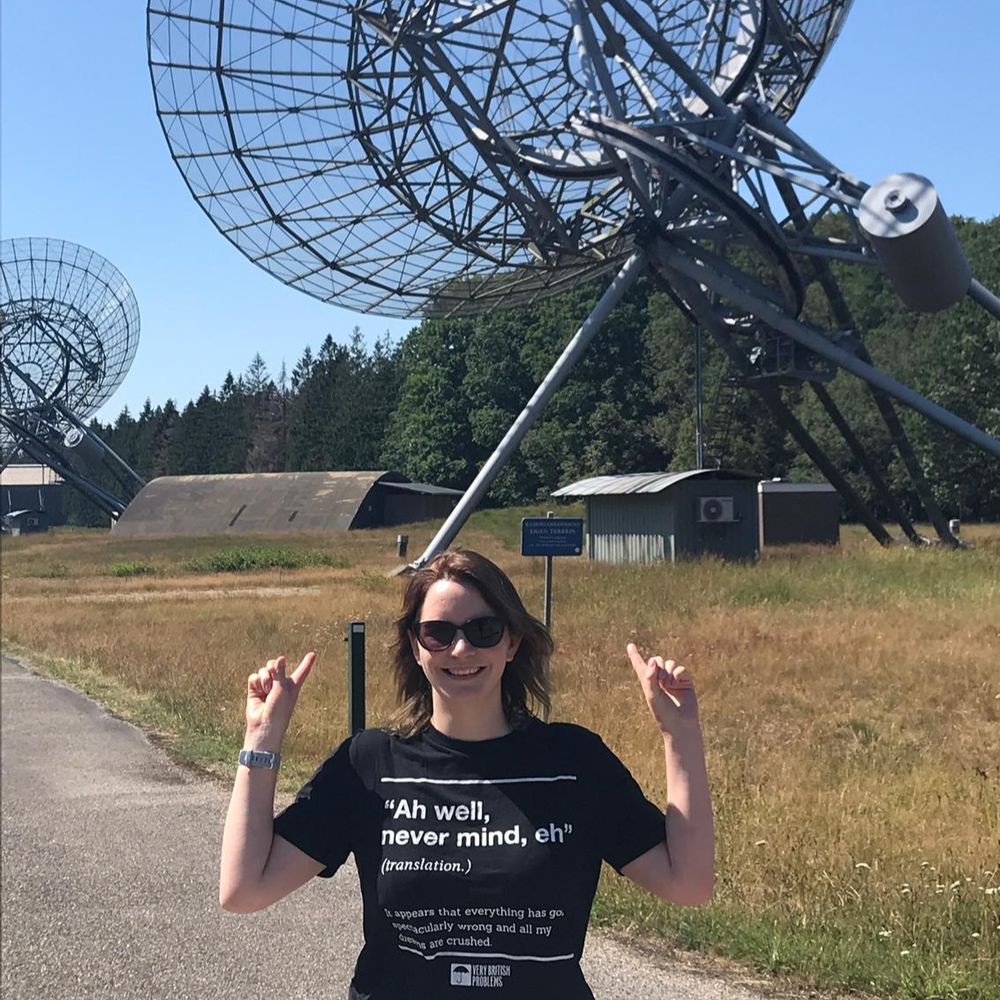
Excellent talk on Radio Stars by @astrolaura.com. We observe radio emissions from stars all over the H-R diagram. Their flares help us understand space weather. Also radio telescopes can see ultra-cool tiny stars - analogues for planets that help us understand exoplanetary magnetic fields 🔭 #SALFXI

December 8, 2025 at 9:49 AM
#RadioAstronomy of stars is a rapidly growing area of research as we discover more of them :)
I've had an amazing week discussing gravitational wave science (instrumentation, detection and cosmology) at our @ozgrav.bsky.social annual retreat in Melbourne.
Here's our group photo from Carl Knox!
#Physics + #Astronomy
Here's our group photo from Carl Knox!
#Physics + #Astronomy

November 28, 2025 at 3:08 AM
I've had an amazing week discussing gravitational wave science (instrumentation, detection and cosmology) at our @ozgrav.bsky.social annual retreat in Melbourne.
Here's our group photo from Carl Knox!
#Physics + #Astronomy
Here's our group photo from Carl Knox!
#Physics + #Astronomy
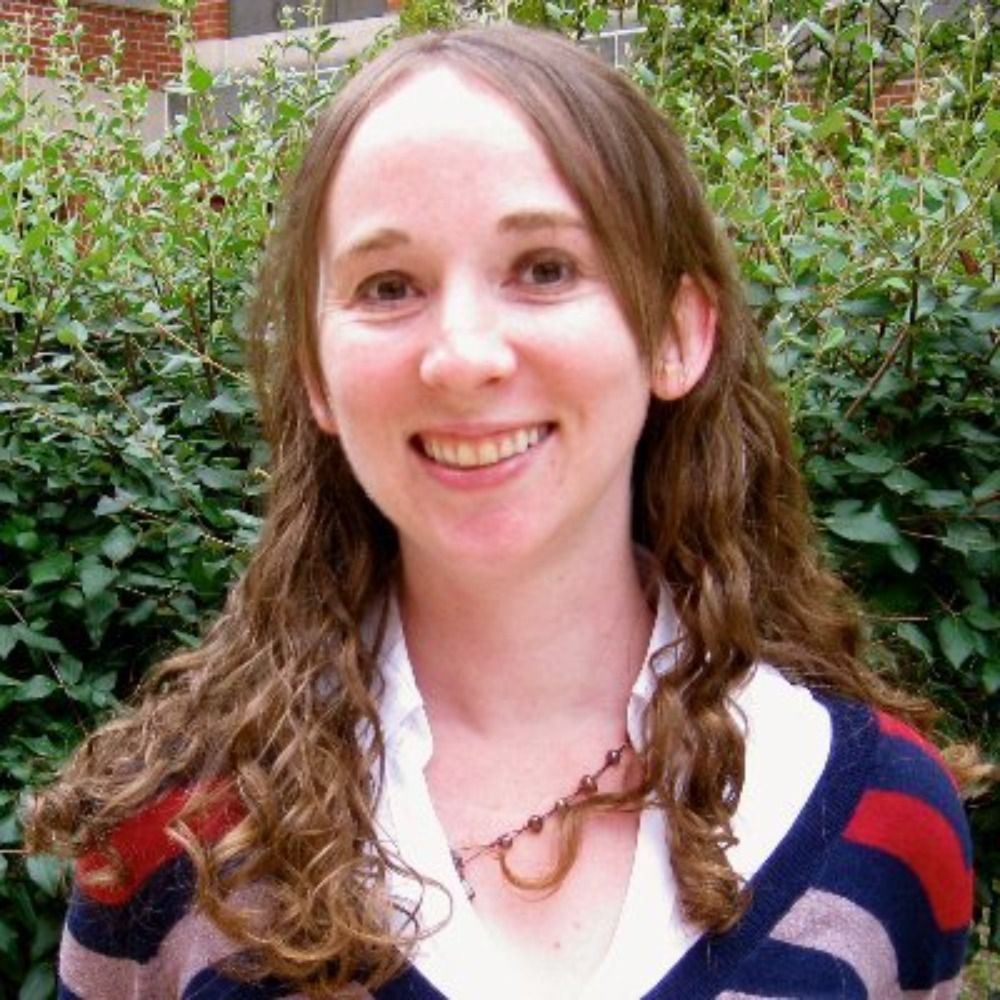
Astrophysics PhD Chris Williams is going to the ISS for eight months on November 27!! 🔭 physics.mit.edu/news/bound-f...

Bound for the Stars: Chris Williams PhD ’12 Set for ISS Launch on November 27, 2025
On November 27, 2025, Christopher L. Williams PhD ’12 will begin an approximately eight-month stay aboard the International Space Station. He joined NASA’s Astronaut Candidate Class in December 2021 a...
physics.mit.edu
November 25, 2025 at 7:02 PM
Reposted by Tara Murphy
We’re hiring! Research DevOps Engineer (Data Workflows) @ Australian Imaging Service, a new $10.5M national effort to build cutting-edge digital infrastructure for biomedical imaging research. Work on data workflows for moving & analysing instrument data.
Apply by 7 Dec ➡️ https://bit.ly/3MhKX5s
Apply by 7 Dec ➡️ https://bit.ly/3MhKX5s

November 24, 2025 at 2:56 AM
We’re hiring! Research DevOps Engineer (Data Workflows) @ Australian Imaging Service, a new $10.5M national effort to build cutting-edge digital infrastructure for biomedical imaging research. Work on data workflows for moving & analysing instrument data.
Apply by 7 Dec ➡️ https://bit.ly/3MhKX5s
Apply by 7 Dec ➡️ https://bit.ly/3MhKX5s
One of our @sydney.edu.au students, Stephanie Rossini-Bryson has made it to the final of the Universitas21 3-minute-thesis competition. Vote for her (or one of the other great PhD student entries) here:
"Finding the Glimmer of Alien Worlds with GLINT"
universitas21.com/opportunitie...
⚛️ 🔭 ☄️ 🧪
"Finding the Glimmer of Alien Worlds with GLINT"
universitas21.com/opportunitie...
⚛️ 🔭 ☄️ 🧪

U21 3MT® 2025/26 Competition - Universitas 21
3MT® People’s Choice Awards 3MT Showcase
universitas21.com
November 23, 2025 at 7:28 PM
One of our @sydney.edu.au students, Stephanie Rossini-Bryson has made it to the final of the Universitas21 3-minute-thesis competition. Vote for her (or one of the other great PhD student entries) here:
"Finding the Glimmer of Alien Worlds with GLINT"
universitas21.com/opportunitie...
⚛️ 🔭 ☄️ 🧪
"Finding the Glimmer of Alien Worlds with GLINT"
universitas21.com/opportunitie...
⚛️ 🔭 ☄️ 🧪
Reposted by Tara Murphy
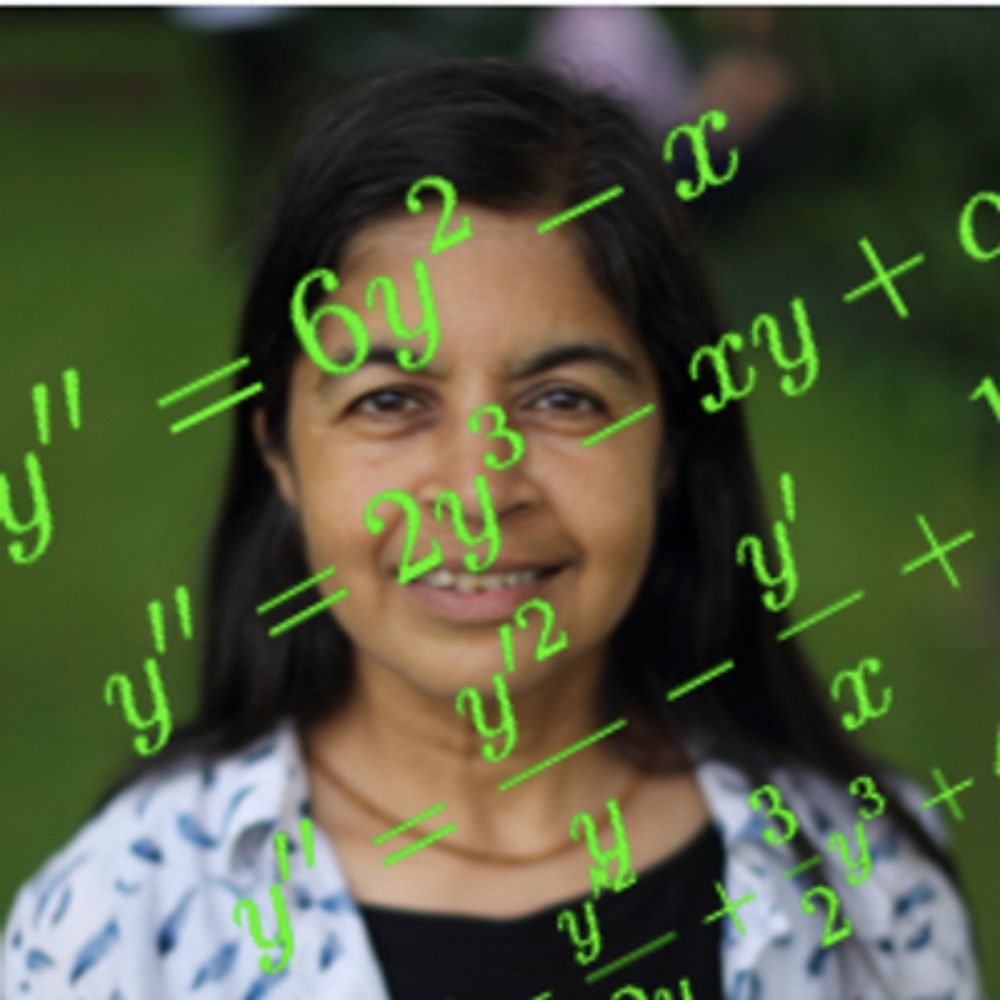
An article from @sydney.edu.au about today’s significant event #NSWPremiersPrizes news-opinion.sydney.edu.au/link/id/zzzz...

Nalini Joshi named 2025 NSW Scientist of the Year
Trailblazing mathematician Professor Nalini Joshi has been awarded the top scientific accolade in NSW for 2025.
news-opinion.sydney.edu.au
November 18, 2025 at 9:38 PM
An article from @sydney.edu.au about today’s significant event #NSWPremiersPrizes news-opinion.sydney.edu.au/link/id/zzzz...
Our @sydney.edu.au Laureate Fellow, Professor Catherine Stampfl is generously supporting these awards for women in STEM in Australia.
1) Georgina Sweet Early Career Researcher STEM Parents Award
2) Georgina Sweet Regional and Remote STEM Award
⚛️ 🔭 ☄️ 🧪
www.georgina-sweet-awards-cmt.com/awards
1) Georgina Sweet Early Career Researcher STEM Parents Award
2) Georgina Sweet Regional and Remote STEM Award
⚛️ 🔭 ☄️ 🧪
www.georgina-sweet-awards-cmt.com/awards

Georgina Sweet Awards
The Georgina Sweet Awards for Women in Physics/STEM were created by Professor Catherine Stampfl as part of her Australian Research Council Laureate Fellowship program to promote and support female sci...
www.georgina-sweet-awards-cmt.com
November 17, 2025 at 10:43 PM
Our @sydney.edu.au Laureate Fellow, Professor Catherine Stampfl is generously supporting these awards for women in STEM in Australia.
1) Georgina Sweet Early Career Researcher STEM Parents Award
2) Georgina Sweet Regional and Remote STEM Award
⚛️ 🔭 ☄️ 🧪
www.georgina-sweet-awards-cmt.com/awards
1) Georgina Sweet Early Career Researcher STEM Parents Award
2) Georgina Sweet Regional and Remote STEM Award
⚛️ 🔭 ☄️ 🧪
www.georgina-sweet-awards-cmt.com/awards
Interesting new #RadioAstronomy result - "Radio burst from a stellar coronal mass ejection"
www.nature.com/articles/s41...
www.nature.com/articles/s41...
November 12, 2025 at 8:06 PM
Interesting new #RadioAstronomy result - "Radio burst from a stellar coronal mass ejection"
www.nature.com/articles/s41...
www.nature.com/articles/s41...
At @sydney.edu.au astroparticle physicist Professor Celine Boehm is hunting for a particle – or something else – that could change our beliefs in the structure of the Universe...
Read more about dark matter research at Sydney here: go.sydney.edu.au/qbZbg0
⚛️ 🔭☄️🧪
Read more about dark matter research at Sydney here: go.sydney.edu.au/qbZbg0
⚛️ 🔭☄️🧪

Reshaping our understanding of the Universe
Is dark matter real? Is there an unknown particle that could reshape our thinking of the fabric of the Universe? What is time? What's the extent of the observer’s role in the world we investigate in s...
go.sydney.edu.au
November 12, 2025 at 1:36 AM
At @sydney.edu.au astroparticle physicist Professor Celine Boehm is hunting for a particle – or something else – that could change our beliefs in the structure of the Universe...
Read more about dark matter research at Sydney here: go.sydney.edu.au/qbZbg0
⚛️ 🔭☄️🧪
Read more about dark matter research at Sydney here: go.sydney.edu.au/qbZbg0
⚛️ 🔭☄️🧪
Reposted by Tara Murphy
i’m excited to announce that i am hiring (again)!
i am looking for a postdoc in computational astrophysics that’s excited about models of stellar transients and multi-messenger astronomy to join my group (star stuff @ steward) at @uarizona.bsky.social!
apply here ✨💥: aas.org/jobregister/...
i am looking for a postdoc in computational astrophysics that’s excited about models of stellar transients and multi-messenger astronomy to join my group (star stuff @ steward) at @uarizona.bsky.social!
apply here ✨💥: aas.org/jobregister/...
Postdoctoral Research Associate I Computational Stellar Astrophysics (Steward Observatory) | American Astronomical Society
The University of Arizona (U of A) Department of Astronomy and Steward Observatory (SO) invites applications for a Postdoctoral Research Associate. The successful candidate will work with Professor Ca...
aas.org
November 10, 2025 at 10:25 PM
i’m excited to announce that i am hiring (again)!
i am looking for a postdoc in computational astrophysics that’s excited about models of stellar transients and multi-messenger astronomy to join my group (star stuff @ steward) at @uarizona.bsky.social!
apply here ✨💥: aas.org/jobregister/...
i am looking for a postdoc in computational astrophysics that’s excited about models of stellar transients and multi-messenger astronomy to join my group (star stuff @ steward) at @uarizona.bsky.social!
apply here ✨💥: aas.org/jobregister/...