


Sumit Mandal
@sumitkmandal.bsky.social
Muhammad Alagil Chair in Arabia Asia Studies at the Asia Research Institute, National University of Singapore. I am a historian who researches the outcome of longstanding inter-cultural and inter-religious interaction in the Malay world.
#PramoedyaAnantaToer: 2025 Centenary Roundtable. As today is the Indonesian novelist, essayist & historian’s birthday, I share a video of Muhammad Alagil Chair event @nus_ari @NUSingapore: tinyurl.com/2wwnjwf2. Thank you Ismah, Karib & Taomo for collaborating
@arielheryanto.com @avick.bsky.social
@arielheryanto.com @avick.bsky.social

Pramoedya Ananta Toer: Revisiting the Indonesian Author’s Work on the Centenary of His Birth
𝗧𝗵𝗶𝘀 𝗿𝗼𝘂𝗻𝗱𝘁𝗮𝗯𝗹𝗲 𝗱𝗶𝘀𝗰𝘂𝘀𝘀𝗶𝗼𝗻 𝘄𝗮𝘀 𝗼𝗿𝗴𝗮𝗻𝗶𝘀𝗲𝗱 𝗯𝘆 𝘁𝗵𝗲 𝗠𝘂𝗵𝗮𝗺𝗺𝗮𝗱 𝗔𝗹𝗮𝗴𝗶𝗹 𝗗𝗶𝘀𝘁𝗶𝗻𝗴𝘂𝗶𝘀𝗵𝗲𝗱 𝗣𝗿𝗼𝗳𝗲𝘀𝘀𝗼𝗿𝘀𝗵𝗶𝗽 𝗶𝗻 𝗔𝗿𝗮𝗯𝗶𝗮 𝗔𝘀𝗶𝗮 𝗦𝘁𝘂𝗱𝗶𝗲𝘀 𝗮𝘁 𝘁𝗵𝗲 𝗔𝘀𝗶𝗮 𝗥𝗲𝘀𝗲𝗮𝗿𝗰𝗵 𝗜𝗻𝘀𝘁𝗶𝘁𝘂𝘁𝗲, 𝗡𝗮𝘁𝗶𝗼𝗻𝗮𝗹 𝗨𝗻𝗶𝘃𝗲𝗿𝘀𝗶𝘁𝘆 𝗼𝗳 𝗦𝗶𝗻𝗴𝗮𝗽𝗼𝗿𝗲. 𝗔𝗕𝗦𝗧𝗥𝗔𝗖𝗧 Pramoedya Ananta Toer (1925-2006) is considered one of the foremost Indonesian authors. He was a novelist, essayist, and historian whose body of work was marked by an inclusive and critical politics that went against the grain of nationalism in independent Indonesia. In the Buru Tetralogy, the author envisions an Indonesia that was constructed not only by those considered indigenous but the Chinese, Indians, Arabs, Europeans and others who inhabited the nation. At the same time, his work places at the centre subaltern groups such as women and peasants. Pramoedya’s attention to cultural inclusivity and subaltern groups was a rare combination in Indonesia and, arguably, other newly independent nation-states across Asia and Africa. Pramoedya’s framing of an inclusive and critical nationalism has not been sufficiently highlighted and deserves further attention at this time because of the challenges to identity, belonging, social cohesion, and human security by new forms of exclusive nationalisms in a multi-polar world. From India to Israel, territorial claims along ethnic and religious lines have deepened—often with devastating outcomes—and draw on reified understandings of the past, as demonstrated by Nadim N. Rouhana and Nadera Shalhoub-Kevorkian (Cambridge, 2021). Contested understandings of national histories are central to the contemporary crisis. On the occasion of the centenary of Pramoedya’s birth, this roundtable revisits our understandings of nation-states, keeping in mind the centrality of history. Adrian Vickers (Cambridge, 2013) observes that Pramoedya was “[o]ne of the few Indonesians with a coherent and developed vision of the nation’s history”. On the one hand, Pramoedya’s understanding of Indonesia is founded on the view that the nation-state is constituted by creole histories and anticipates the research and debate sparked by Arabia Asia and Inter-Asian Studies in the past two decades. On the other hand, as Vickers observes, Pramoedya’s hopes for a socially just and prosperous Indonesia remain a struggle. Taking these lines of thinking as cues, the roundtable explores the narratives and conceptual foundations of Pramoedya’s work and how they might be significant today. ────────────────── For more information, please visit: https://ari.nus.edu.sg/events/20250206-pramoedya-ananta-toer/
tinyurl.com
February 6, 2026 at 3:54 PM
#PramoedyaAnantaToer: 2025 Centenary Roundtable. As today is the Indonesian novelist, essayist & historian’s birthday, I share a video of Muhammad Alagil Chair event @nus_ari @NUSingapore: tinyurl.com/2wwnjwf2. Thank you Ismah, Karib & Taomo for collaborating
@arielheryanto.com @avick.bsky.social
@arielheryanto.com @avick.bsky.social
Participants in “Exploring the Sacred,” the 8th Muhammad Alagil Conference in Arabia Asia Studies, contributed towards filling a huge gap in knowledge & conceptualisation about the Islamic Indian Ocean by drawing deeply & imaginatively on texts, societies and sites.
#sacred #Islam #IndianOcean
#sacred #Islam #IndianOcean

December 11, 2025 at 8:46 AM
Participants in “Exploring the Sacred,” the 8th Muhammad Alagil Conference in Arabia Asia Studies, contributed towards filling a huge gap in knowledge & conceptualisation about the Islamic Indian Ocean by drawing deeply & imaginatively on texts, societies and sites.
#sacred #Islam #IndianOcean
#sacred #Islam #IndianOcean
Paper proposals (title, abstract and bio) are due on 12 Sep 2025 for the conference “Exploring the Sacred: People, Place and Power in the Islamic Indian Ocean” to be held at the Asia Research Institute, National University of Singapore: shorturl.at/PL4Ye.
#sacred #Islam #IndianOcean
#sacred #Islam #IndianOcean

August 23, 2025 at 3:49 AM
Paper proposals (title, abstract and bio) are due on 12 Sep 2025 for the conference “Exploring the Sacred: People, Place and Power in the Islamic Indian Ocean” to be held at the Asia Research Institute, National University of Singapore: shorturl.at/PL4Ye.
#sacred #Islam #IndianOcean
#sacred #Islam #IndianOcean
Reposted by Sumit Mandal

Yang dibutuhkan bukan revisi sejarah resmi, tak peduli siapa penulisnya, siapa sponsornya, dan apa kontennya. Yang lebih dibutuhkan meluasnya mendorong sebanyak mungkin warga peduli, meneliti, menulis, dan membaca narasi berbeda2 tentang masa lampau.
arielheryanto.com/2025/05/18/s...
arielheryanto.com/2025/05/18/s...

Sejarah Bukan Propaganda
Download Berbeda dari indoktrinasi, pendidikan sejarah terbuka pada berbagai versi narasi tentang masa lampau. Sejarah bukan propaganda tentang dunia yang hitam-putih. Bukan sekadar kumpulan fakta,…
arielheryanto.com
May 18, 2025 at 2:29 AM
Yang dibutuhkan bukan revisi sejarah resmi, tak peduli siapa penulisnya, siapa sponsornya, dan apa kontennya. Yang lebih dibutuhkan meluasnya mendorong sebanyak mungkin warga peduli, meneliti, menulis, dan membaca narasi berbeda2 tentang masa lampau.
arielheryanto.com/2025/05/18/s...
arielheryanto.com/2025/05/18/s...
@sulinlewis.bsky.social reposted her 2016 essay in Afro-Asian Visions to mark the 70th anniversary of #BandungConference (18 April 2025): tinyurl.com/2t2dkuej. Her final paragraph on reframing the present & future remains inspiring & worthwhile. (1/3)
#connectingimaginaries
#transregionalstudies
#connectingimaginaries
#transregionalstudies

We had a really fun blog for a while about all things #afroasia with wonderful contributions, but to mark the 70th anniversary of the #Bandung conference here's my first post: medium.com/afro-asian-v... 1/2
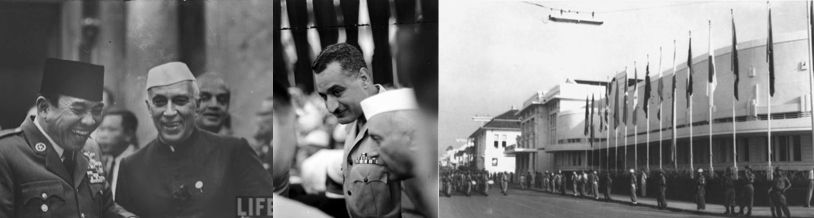
The Afro-Asian Moment
Before I became a professional historian, I was lucky enough to visit Bandung — a cool, green city in the hills of Java, and a welcome…
medium.com
April 20, 2025 at 6:57 AM
@sulinlewis.bsky.social reposted her 2016 essay in Afro-Asian Visions to mark the 70th anniversary of #BandungConference (18 April 2025): tinyurl.com/2t2dkuej. Her final paragraph on reframing the present & future remains inspiring & worthwhile. (1/3)
#connectingimaginaries
#transregionalstudies
#connectingimaginaries
#transregionalstudies